No portrait yet
Maale Erotic
Maale district in South Omo Zone, South Ethiopia Regional State, southwestern Ethiopia, east of the Ari highlands and north of the Banna and Tsamai
Maale (Omotic, Ometo branch); Amharic as a second language for government and trade
Protestant Christianity, traditional Maale religion centered on ancestors and sacred kingship, and an Ethiopian Orthodox minority
Omotic-speaking peoples of southwestern Ethiopia; linguistically part of the Ometo cluster with Wolaytta, Gamo and Gofa
About Maale People
The Maale are hill farmers in Ethiopia's South Omo, and for most of their history, being Maale meant owing loyalty to a king. Before the Ethiopian empire reached them, Maale was a small kingdom. People held its ruler responsible for rain and for the fertility of fields, herds and people. Below him ran a ladder of ritual seniority: chiefs, lineage heads and household heads, each carrying part of that duty toward the people beneath them. Birth order was not a minor detail. A firstborn son outranked his younger brothers, and the welfare of juniors was thought to depend on their seniors making sacrifices properly.
Their land lies east of the Ari highlands and north of the Banna and Tsamai, running from cooler uplands down toward drier lowland. Sorghum and maize are the staple crops, alongside cattle and goats, and households have long called on neighbors for work parties at the busiest points of the farming year. The Maale language adds a twist to the local map. It belongs to the Ometo branch of Omotic, so its close relatives, such as Wolaytta, Gamo and Gofa, are spoken well to the north. The Ari and Hamer-Banna next door speak a separate South Omotic branch, and the Tsamai speak a Cushitic language. Amharic serves for government and wider trade.
The old order broke open in the late nineteenth century. Menelik II's expansion brought Maale into the Ethiopian state. Northern settlers and officials took tribute and labor, and the king survived largely as a go-between for imperial rule. Later, evangelical missionaries won converts, many of them people who had little to gain from a hierarchy that favored elders and firstborn sons. When the 1974 revolution arrived, some of those Protestants made common cause with the new Marxist government, and both treated the kingship and its rituals as backwardness to be swept away. The anthropologist Donald Donham, who was working in Maale when the revolution reached it, built his book Marxist Modern around that unlikely alliance.
Today, Protestant churches have a large presence in Maale, alongside Orthodox Christianity and older ancestral practice. Most Maale still farm the same hills, in a district that carries their name.
Related ethnic groups
Groups that share Maale's homeland, region, language, or religious tradition. These are likely candidates for comparative phenotype reference.
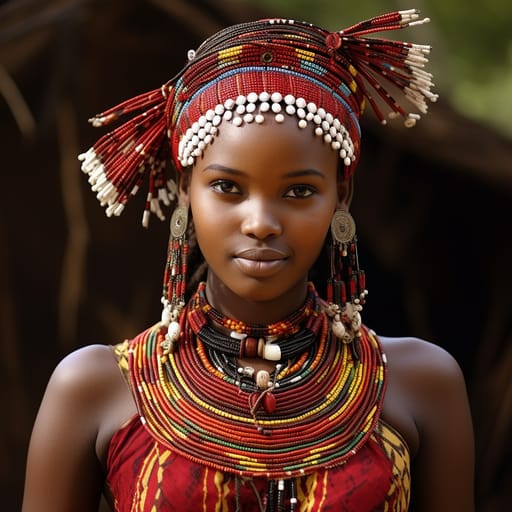
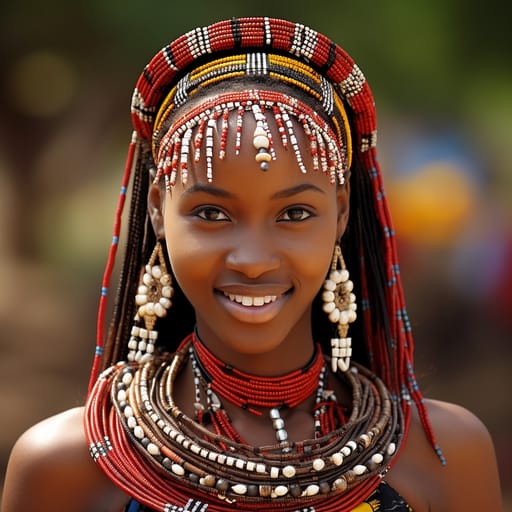
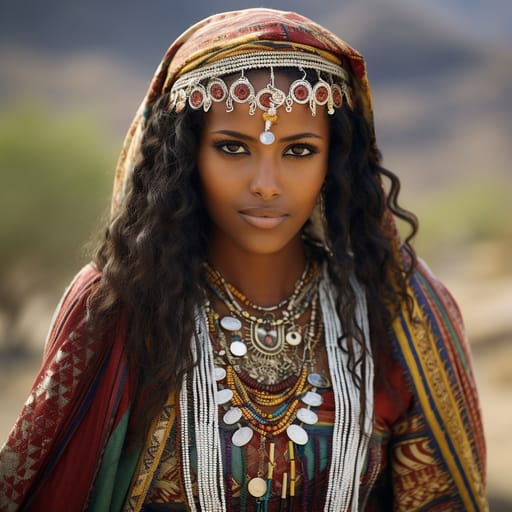
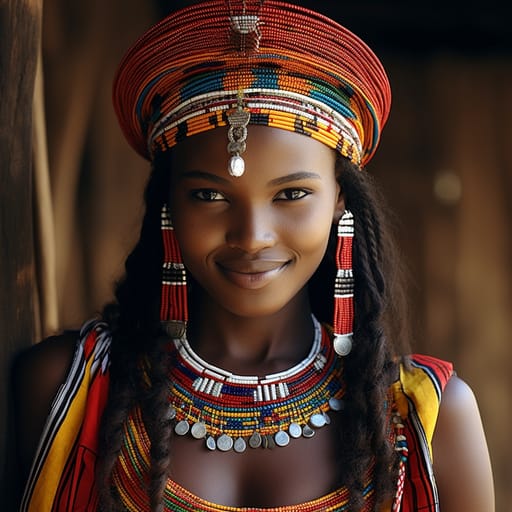
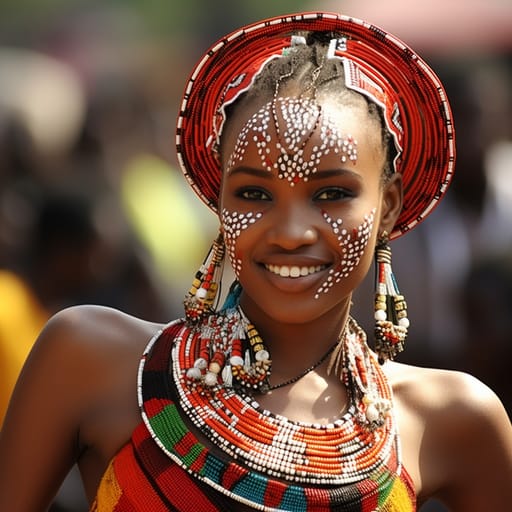
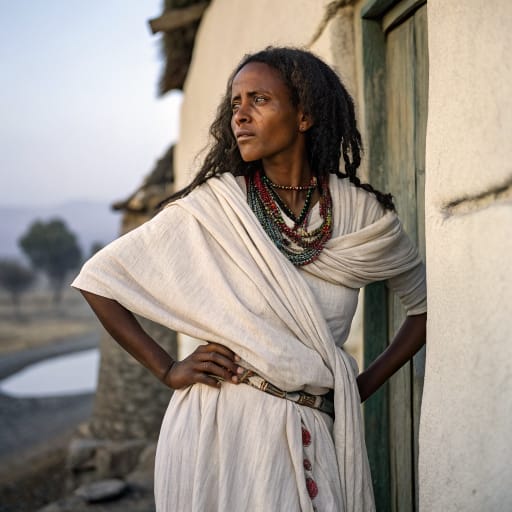
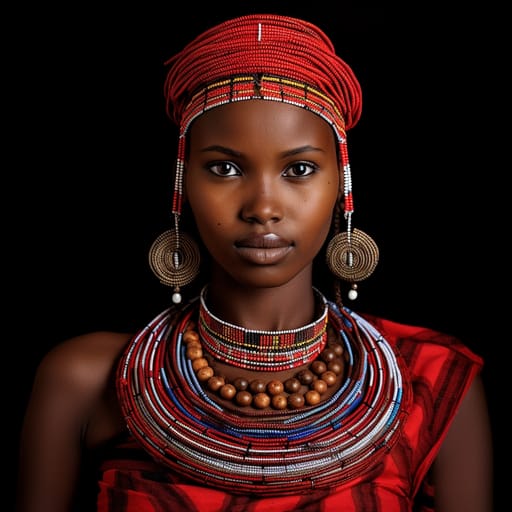
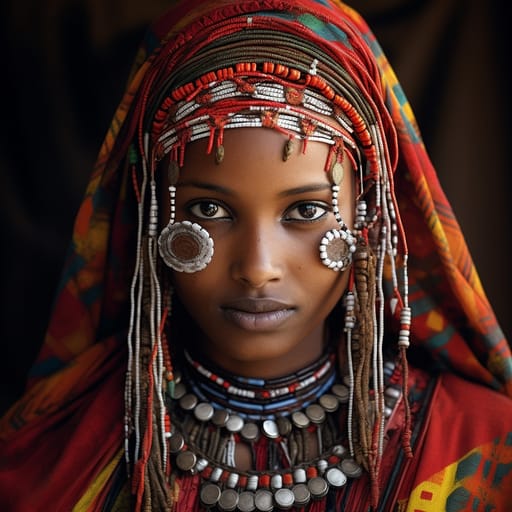
Typical Maale Phenotypes
Reference for AI generation: hair, eyes, skin, facial structure, build
Maale Body & Anatomy Reference
Per-feature anatomical profile for AI nude generation: Cushitic / Nilo-Cushitic East African phenotype
Maale Boobs & Breasts
Maale boobs follow the Cushitic / Nilo-Cushitic East African profile: small-to-medium-cup, high-set, conical. Areolar diameter is usually 28-38mm, and the coloring is moderate-to-high areolar pigmentation against the brown-to-deep-brown skin tone. Breast shape tracks body composition (lean ectomorph-to-mesomorph, mean adult female BMI 19-22), so Maale breasts tend to be firmer and less projecting than the African-American or West African norm. Expect a forward-set shape, not the lateral spread of the West African phenotype.
Maale Ass & Hips
Maale ass and hip morphology presents as small-to-medium, high-set, rounded, distinctly different from the wide-set heavy-projection West African or African-American norm. The Maale pelvic profile shows narrow-to-medium iliac crests, longer torso-to-leg ratio, anchored in the Cushitic / Nilo-Cushitic East African skeletal pattern. Maale butt shots in adult AI imagery should render the small-to-medium, high-set, rounded silhouette with the overall build (lean ectomorph-to-mesomorph) and the fat distribution typical of the Cushitic / Nilo-Cushitic East African phenotype.
Maale Vagina & Pussy
Maale pussy anatomy typically shows brown-to-deep-brown labial pigmentation, narrow-to-medium labia minora projection. Pubic hair is usually tightly-coiled coarse texture, densely distributed. In AI-generated Maale nudes, labial color should blend into the brown to deep brown skin with a gradual transition, and the hair should keep its tightly-coiled coarse texture.
Maale Dicks & Penis
Penis reference for Maale men: regional mean ~13.5cm erect, moderate girth, ~12cm circumference. Coloring: deeper-pigmented than the West African norm. An accurate Maale cock in AI imagery matches the surrounding brown to deep brown skin rather than a generic porn default. Circumcision depends on religion and custom, not ancestry.
Maale Body, Curves & Build
The Maale figure is generally lean ectomorph-to-mesomorph, with mean adult female BMI 19-22, characteristic of Cushitic / Nilo-Cushitic East African ancestry. AI image tools tend to flatten regional body types into a few stock shapes; here the Maale build is kept as its own reference.
Maale Skin Tone & Hair Texture
Skin: brown to deep brown (Fitzpatrick V-VI). Hair: tight 4A-4C coil, often worn natural or in braided/twisted protective styles. Both are typical of Cushitic / Nilo-Cushitic East African ancestry. The most common mistake in AI nudes of Maale women is a body rendered lighter than the face.
Explore phenotype categories
Structured taxonomy with peer-reviewed scales · 22 anatomical categories
Erotic Poses & Sex Positions
From the pose catalog: 219 named positions with reference skeletons
Frequently asked questions about Maale people
Where is the Maale homeland?
The Maale homeland is Maale district in South Omo Zone, South Ethiopia Regional State, southwestern Ethiopia, east of the Ari highlands and north of the Banna and Tsamai in Eastern Africa.
What language do Maale people speak?
Maale people primarily speak Maale (Omotic, Ometo branch); Amharic as a second language for government and trade.
What religion do Maale people practice?
The predominant religion among Maale people is Protestant Christianity, traditional Maale religion centered on ancestors and sacred kingship, and an Ethiopian Orthodox minority.






Make your own Maale images
Five a day, free, no credits to buy. The studio starts from this group's phenotype data, so you can set body type, pose and style and keep the traits accurate.
Start with Maale