Help us get this right
Does this portrait look right for Mạ?
Nobody has judged this one yet. You would be the first.
Mạ Erotic
The upper Đồng Nai River basin in the southern Central Highlands of Vietnam, chiefly Lâm Đồng province around Bảo Lộc and Di Linh, extending into Đắk Nông, Đồng Nai and Bình Phước.
Mạ, with dialects shading into Koho (Austroasiatic, South Bahnaric); Vietnamese widely spoken as a second language.
Traditional yang spirit worship, with large Catholic and Protestant minorities and frequent overlap between the two.
Mạ Ngăn, Mạ Tô, Mạ Krung and Mạ Xốp; part of the South Bahnaric cluster alongside Koho, Stieng, Chrau and Mnong.
About Mạ People
The Mạ call themselves Cau Maa, which is close to saying simply the Maa, and they have lived for centuries in the folded uplands where the Đồng Nai River drops off the southern shoulder of Vietnam's Central Highlands. That country is Lâm Đồng today, the hills around Bảo Lộc and Di Linh, with Mạ villages spilling north into Đắk Nông and south toward Đồng Nai and Bình Phước. Their language is written across the provincial map whether anyone reads it or not: đạ in Mạ, and in the closely related Koho, means water or stream, which is why the district names run Đạ Tẻh, Đạ Huoai, Đạ M'ri. Da Lat is the same word, by the usual etymology the stream of the Lạch. The language belongs to the South Bahnaric branch of Austroasiatic, so its nearest kin are Koho, Stieng, Chrau and Mnong rather than Vietnamese, and the border between Mạ and Koho speech is a gradient rather than a line. About fifty thousand people are counted as Mạ, one of Vietnam's fifty-four recognized ethnic groups.
Life was built around the bon, a village of stilted longhouses holding extended families, with swidden plots cut and burned out of the forest for dry rice, cotton, tobacco and gourds. The Mạ grew their own cotton and wove it, and they still do: dark indigo and black ground banded with tight red and white geometry, some of the best known cloth in the highlands. Mạ smiths also worked iron, forging blades and hoes rather than trading for them. Ritual life addresses the yang, the spirits resident in rivers, rice and stone, and the large ceremonies bring out bronze gongs and jars of rice wine drunk through reed straws; that gong repertoire is part of the UNESCO listed Space of Gong Culture. Filed incisors and stretched earlobes, once the mark of an adult, survive now only on the oldest faces. The fullest outside account of Mạ country remains Jean Boulbet's, published in 1967, just as the war closed over the region. What came after rearranged everything: displacement, then post-1975 resettlement and a heavy wave of lowland Kinh migration as the highlands were planted with coffee, tea and mulberry. Swidden ground became plantation ground. Most Mạ households now farm coffee and cashew on fixed plots, and many are Catholic or Protestant, without the yang having gone anywhere.
Related ethnic groups
Groups that share Mạ's homeland, region, language, or religious tradition. These are likely candidates for comparative phenotype reference.
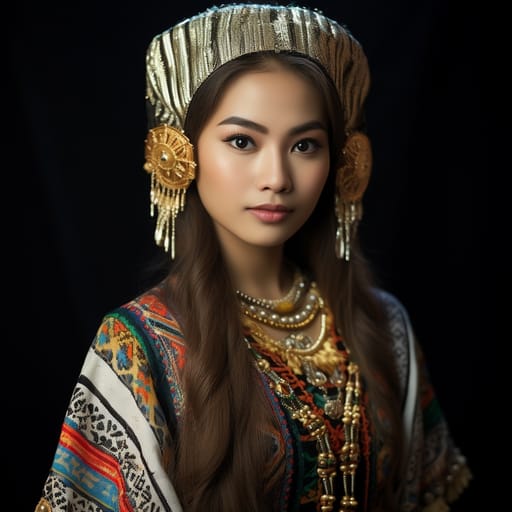
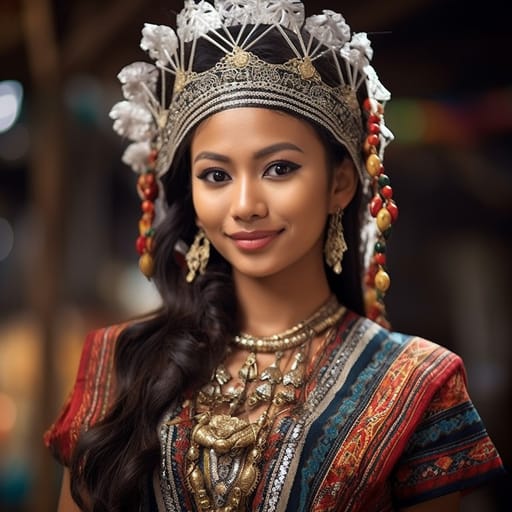
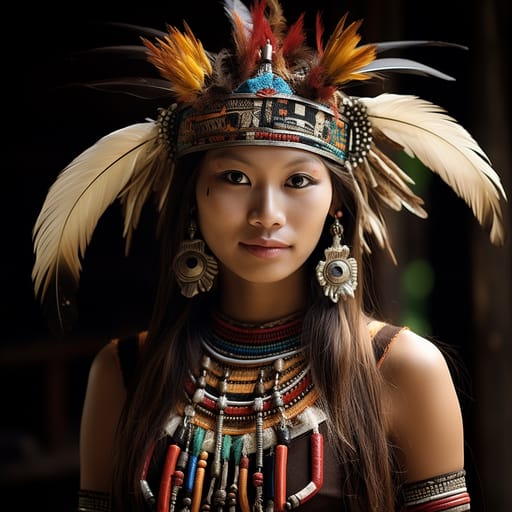
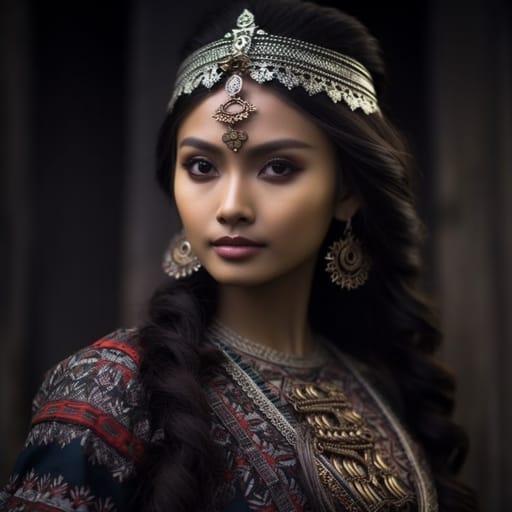
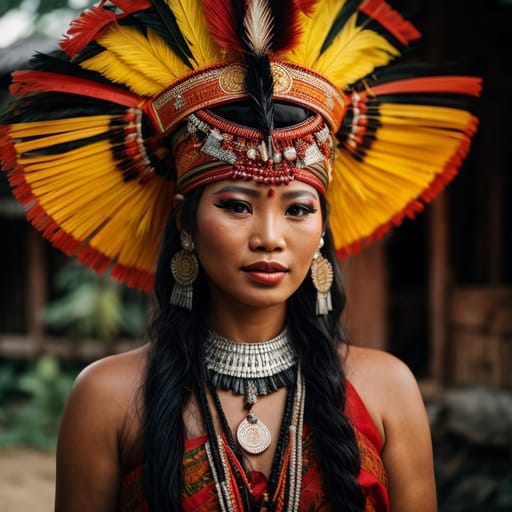
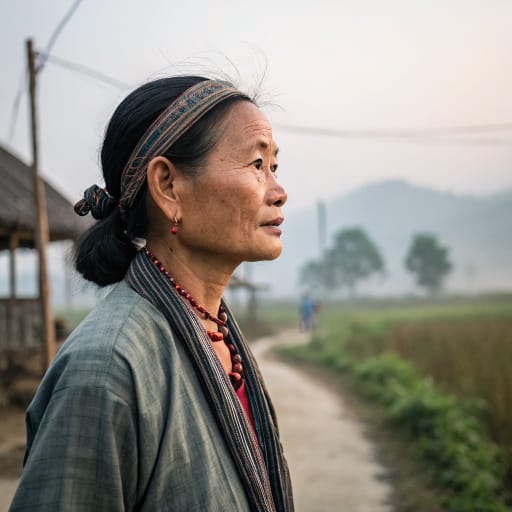
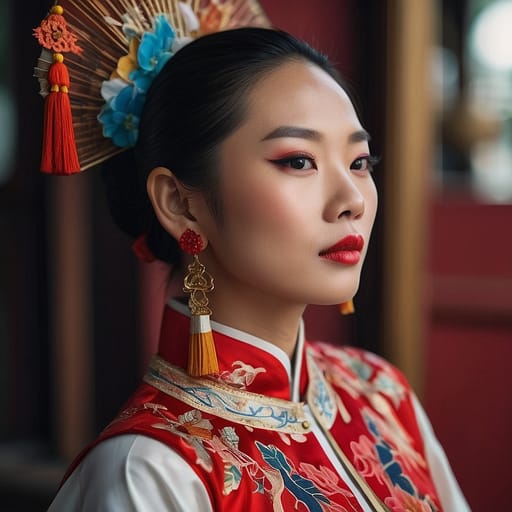
Typical Mạ Phenotypes
Reference for AI generation: hair, eyes, skin, facial structure, build
Mạ Body & Anatomy Reference
Southeast Asian Austronesian / Austroasiatic phenotype: anatomy reference for AI nude generation
Mạ Boobs & Breasts
Mạ tits and boobs run small-to-medium cup, modest projection, the classic Southeast Asian Austronesian / Austroasiatic bust profile. Mạ nipples and areolas show medium-brown to dark-brown areolar pigmentation against the tan-to-medium-brown skin tone, with areolar diameter typically in the 26-38mm range and forward-set positioning rather than the fuller South Asian or Polynesian bust. Mạ breasts trend firm, modest projection, a function of the ectomorph, petite frame body habitus and the mean adult female BMI 20-23. For anatomically accurate AI-generated Mạ nudes the render preserves the small-to-medium cup, modest projection shape, 26-38mm areolas with medium-brown to dark-brown pigmentation, and the torso proportions of the Southeast Asian Austronesian / Austroasiatic phenotype.
Mạ Ass & Hips
Mạ hips and butt usually read as small-to-medium, modest projection, narrower hip profile. The skeletal base is narrow-to-medium iliac crests, the Southeast Asian Austronesian / Austroasiatic pattern. Set against the fuller glutes of the Pacific Islander phenotype, the difference is easy to see, and the hip-to-waist ratio is often what identifies Mạ women in photos.
Mạ Vagina & Pussy
Expect medium-brown to dark-brown labial pigmentation on Mạ women, in keeping with Southeast Asian Austronesian / Austroasiatic ancestry. The pubic hair is straight-to-wavy fine-to-medium texture. Coloring should run evenly from the tan to medium-brown skin of the thighs to the labia, and Mạ nude imagery should keep the hair's straight-to-wavy fine-to-medium texture.
Mạ Dicks & Penis
Mạ dick and penile anatomy in adult AI generation should anchor on the regional reference data: regional mean ~11cm erect, moderate girth, and medium-brown shaft pigmentation. The Mạ cock profile reflects the Southeast Asian Austronesian / Austroasiatic population's anthropometric measurements. The shaft pigmentation should track the surrounding tan to medium-brown skin tone, and the pubic hair should keep its straight-to-wavy fine-to-medium texture in the typical inverted-V escutcheon.
Mạ Body, Curves & Build
Mạ body type: ectomorph, petite frame, with mean adult female BMI 20-23. This is the typical Southeast Asian Austronesian / Austroasiatic build. Height range, shoulder-to-hip ratio and fat distribution all follow from it, which is what an accurate Mạ nude body should show.
Mạ Skin Tone & Hair Texture
Mạ skin tone falls in the tan to medium-brown (Fitzpatrick III-V) band, the surface signal most often miscalibrated by generic AI nude generators. Mạ hair texture is typically straight-to-wavy 1A-2A, dark-brown to black, characteristic of the Southeast Asian Austronesian / Austroasiatic phenotype. In Mạ nude renders the skin should hold that band consistently across the body.
Explore phenotype categories
Structured taxonomy with peer-reviewed scales · 22 anatomical categories
Erotic Poses & Sex Positions
From the pose catalog: 219 named positions with reference skeletons
Frequently asked questions about Mạ people
Where is the Mạ homeland?
The Mạ homeland is The upper Đồng Nai River basin in the southern Central Highlands of Vietnam, chiefly Lâm Đồng province around Bảo Lộc and Di Linh, extending into Đắk Nông, Đồng Nai and Bình Phước. in Southeast Asia.
What language do Mạ people speak?
Mạ people primarily speak Mạ, with dialects shading into Koho (Austroasiatic, South Bahnaric); Vietnamese widely spoken as a second language..
What religion do Mạ people practice?
The predominant religion among Mạ people is Traditional yang spirit worship, with large Catholic and Protestant minorities and frequent overlap between the two..






Make your own Mạ images
Five a day, free, no credits to buy. The studio starts from this group's phenotype data, so you can set body type, pose and style and keep the traits accurate.
Start with Mạ