No portrait yet
Ta Oi Erotic
The Annamite range along the Vietnam and Laos border: A Luoi district and western Quang Tri in Vietnam, Salavan and Sekong provinces in Laos.
Ta'oi and Pacoh (Katuic branch of Austroasiatic), with Vietnamese or Lao as a second language.
Animist: veneration of yang spirits and of ancestors, with secondary burial rites; a small Christian minority.
Katuic-speaking peoples, close kin to the Katu and Bru. Vietnam's official Ta Oi category covers the Ta Oi proper, the Pa Co and the Pa Hi.
About Ta Oi People
The Ta Oi live in the Annamite range where Vietnam and Laos meet, a belt of steep forest and narrow river valleys that has never been easy to govern from either capital. They are hill farmers by long habit, clearing swidden plots on the slopes for upland rice, and their villages traditionally clustered around a communal house, with families sharing long timber dwellings that could run most of the length of the settlement. Vietnam counts them among its 54 official ethnicities and folds three related populations under one label: the Ta Oi proper, the Pa Co, and the Pa Hi. The Pa Co in particular tend to say they are Pa Co first, and the merger reads as an administrative convenience more than a self description.
Their language belongs to the Katuic branch of Austroasiatic, which puts them in close company with the Katu, the Bru and the Pacoh next door, and at a considerable distance from Vietnamese and Lao, the two national languages pressing on them from either side. Religious life runs on spirits rather than scripture: the yang who inhabit fields, streams, stones and the house itself, addressed through buffalo sacrifice and rice liquor, alongside a heavy attention to the dead. The A Rieu Ping is the clearest expression of it, a reburial ceremony held every few years in which families exhume their dead, clean the bones and reinter them together in a shared tomb, turning scattered individual graves into one lineage house.
The twentieth century arrived violently. The A Luoi valley on the Vietnamese side carried the Ho Chi Minh Trail and absorbed some of the heaviest bombing and defoliation of the war. Villages were destroyed, populations moved, and afterward many Ta Oi were resettled into lowland style villages on flatter ground. A great many took Ho as a surname in the years that followed. What survived best is the weaving. Ta Oi women work a backstrap loom to produce zeng, a dark brocade with beads strung directly into the cloth as it is made, so the pattern stands up in glass rather than sitting in dye. It functions as bride wealth, funeral offering and formal dress at once, and its recent recognition as national intangible heritage has given a handful of A Luoi weavers a market past the end of the valley.
Related ethnic groups
Groups that share Ta Oi's homeland, region, language, or religious tradition. These are likely candidates for comparative phenotype reference.
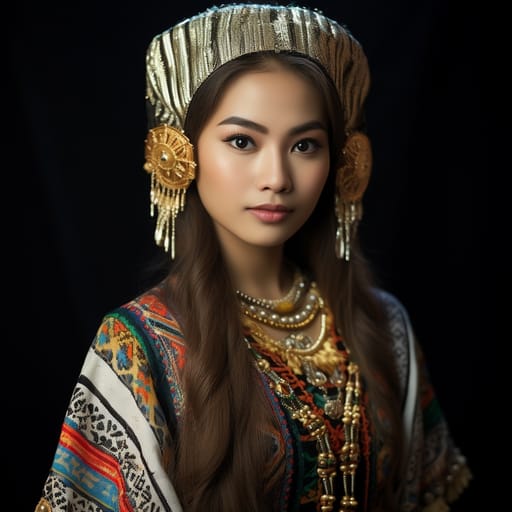
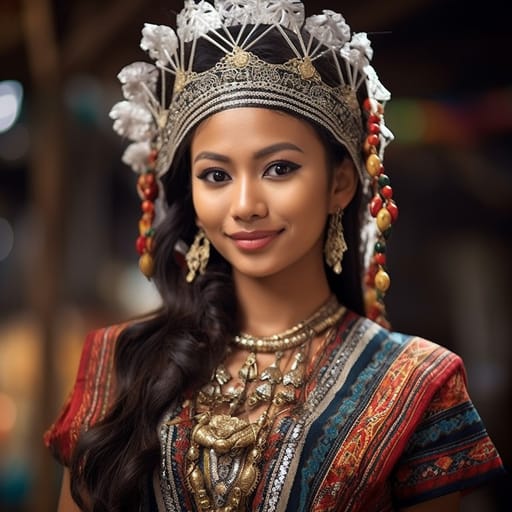
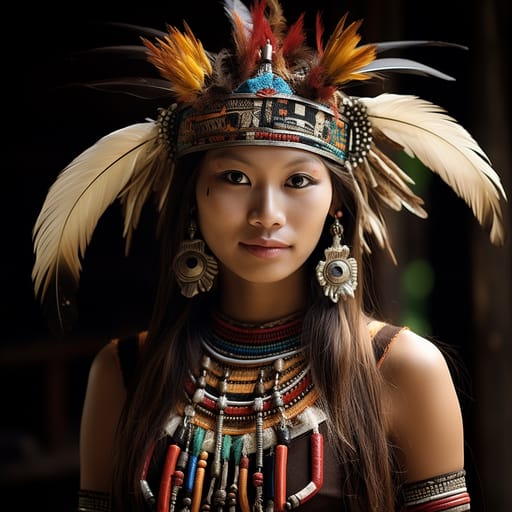
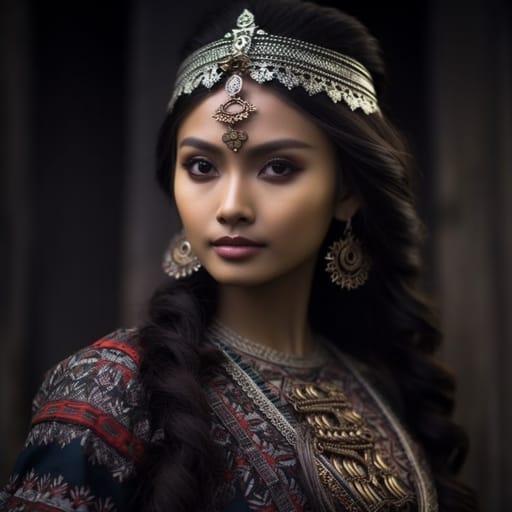
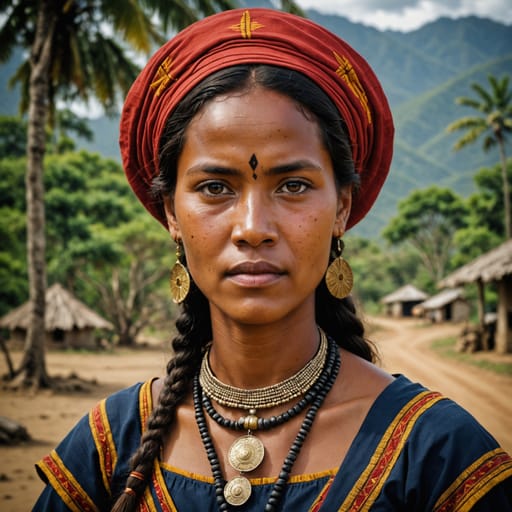
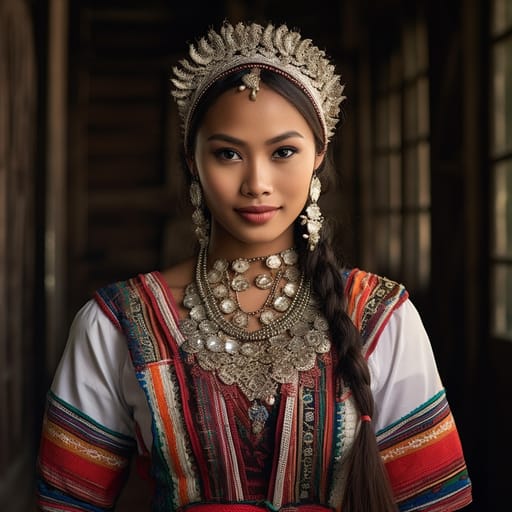
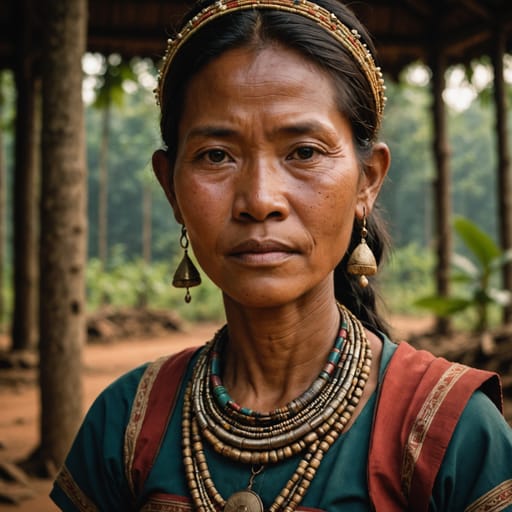
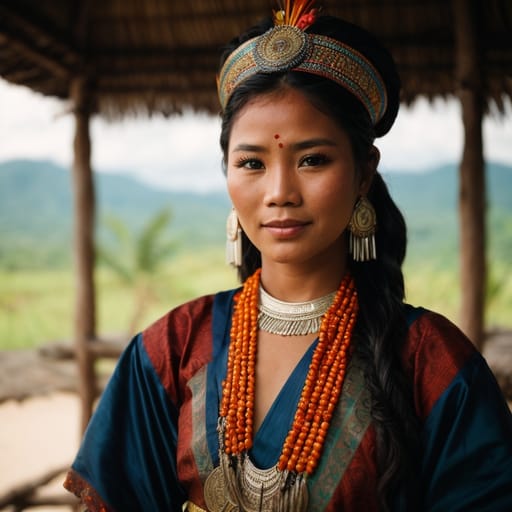
Typical Ta Oi Phenotypes
Reference for AI generation: hair, eyes, skin, facial structure, build
Ta Oi Body & Anatomy Reference
Anatomy by feature, Southeast Asian Austronesian / Austroasiatic phenotype
Ta Oi Boobs & Breasts
The typical Ta Oi bust is small-to-medium cup, modest projection, in line with the wider Southeast Asian Austronesian / Austroasiatic pattern. Areolas usually fall in the 26-38mm range, with medium-brown to dark-brown areolar pigmentation against the tan-to-medium-brown skin tone. Compared with the fuller South Asian or Polynesian bust, Ta Oi breasts sit forward and are generally firm, modest projection. A faithful AI render of Ta Oi tits keeps that shape and areola size.
Ta Oi Ass & Hips
Butt shape among Ta Oi women: small-to-medium, modest projection, narrower hip profile, over narrow-to-medium iliac crests. This follows Southeast Asian Austronesian / Austroasiatic ancestry and looks quite unlike the fuller glutes of the Pacific Islander phenotype. An accurate Ta Oi ass in adult AI imagery keeps both the silhouette and the overall build (ectomorph, petite frame) instead of a generic average.
Ta Oi Vagina & Pussy
Vulvar anatomy among Ta Oi women: medium-brown to dark-brown labial pigmentation. Pubic hair tends to be straight-to-wavy fine-to-medium texture, in the usual inverted-triangle pattern. Both follow Southeast Asian Austronesian / Austroasiatic pigmentation, which is why Ta Oi pussy renders should not fall back on a pale, sparse Western template.
Ta Oi Dicks & Penis
The Ta Oi cock profile, from Southeast Asian Austronesian / Austroasiatic anthropometric data: regional mean ~11cm erect; moderate girth; medium-brown shaft pigmentation. Pubic hair has a straight-to-wavy fine-to-medium texture and forms the usual inverted-V pattern. Whether Ta Oi men are circumcised follows religious and cultural practice rather than phenotype.
Ta Oi Body, Curves & Build
Build and curves among Ta Oi women follow the Southeast Asian Austronesian / Austroasiatic pattern: ectomorph, petite frame, mean adult female BMI 20-23. Proportions matter as much as skin tone, so Ta Oi figures should keep their regional height and limb ratios.
Ta Oi Skin Tone & Hair Texture
The Ta Oi skin range is tan to medium-brown (Fitzpatrick III-V), and hair tends to be straight-to-wavy 1A-2A, dark-brown to black. That combination marks the Southeast Asian Austronesian / Austroasiatic phenotype, and skin tone is the trait AI generators most often get wrong for Ta Oi women.
Explore phenotype categories
Structured taxonomy with peer-reviewed scales · 22 anatomical categories
Erotic Poses & Sex Positions
From the pose catalog: 219 named positions with reference skeletons
Frequently asked questions about Ta Oi people
Where is the Ta Oi homeland?
The Ta Oi homeland is The Annamite range along the Vietnam and Laos border: A Luoi district and western Quang Tri in Vietnam, Salavan and Sekong provinces in Laos. in Southeast Asia.
What language do Ta Oi people speak?
Ta Oi people primarily speak Ta'oi and Pacoh (Katuic branch of Austroasiatic), with Vietnamese or Lao as a second language..
What religion do Ta Oi people practice?
The predominant religion among Ta Oi people is Animist: veneration of yang spirits and of ancestors, with secondary burial rites; a small Christian minority..






Make your own Ta Oi images
Five a day, free, no credits to buy. The studio starts from this group's phenotype data, so you can set body type, pose and style and keep the traits accurate.
Start with Ta Oi