No image yet

Ladakhis Erotic

Homeland

Ladakh union territory, India: the upper Indus valley around Leh, with Zanskar, Nubra, the Changthang plateau and Kargil district.

Language

Ladakhi (Tibetic, Sino-Tibetan), with Zangskari, Purgi and Balti as close relatives; written in the Tibetan script (Bhoti); Hindi, Urdu and English widely used as second languages.

Religion

Tibetan Buddhism (Drukpa Kagyu, Gelug, Drikung Kagyu) in Leh district; Shia Islam in Kargil district; small Sunni (Argon) and Moravian Christian communities in Leh.

Subgroups

Bodpa (Leh valley Buddhists), Shamma of lower Ladakh, Changpa nomads of Changthang, Zangskarpa, Nubra communities, Argon Sunni Muslims of Leh; the Purigpa and Balti of Kargil are often counted with them.

About Ladakhis People

Ladakhis are the people of the upper Indus and its side valleys in India's far north, where the Karakoram and the Himalaya close in and the land is a cold desert mostly above three thousand meters. Everything about the culture answers that geography: fields of barley fed by channels cut from glacier melt, a growing season of a few months, yaks and dzo for the plow, and long winters when passes shut and villages turn inward. Their language belongs to the Tibetic group but is not Tibetan as spoken in Lhasa. Ladakhi keeps old consonant clusters that central Tibetan lost centuries ago and sits closest to Balti and Purgi on the Kargil side, so a Ladakhi and a Balti can manage a conversation while a Lhasa speaker struggles with both. It is written in the Tibetan script, called Bhoti locally.

Ladakh was an independent Buddhist kingdom for about nine centuries, founded by a branch of the Tibetan royal line and ruled last by the Namgyals, whose palace still looks down on Leh. Buddhism here is the Tibetan kind, chiefly Drukpa Kagyu and Gelug, and it shapes the landscape: whitewashed monasteries on cliff shelves, mani walls, prayer flags, and the masked cham dances of the Hemis festival. Kargil district to the west is mostly Shia Muslim, and Leh town has the Argons, a Sunni community descended from Kashmiri traders and Ladakhi wives. Whether the Muslim Purigpa and Balti count as Ladakhi is a question Ladakhis themselves answer differently. Dogra armies took the kingdom in the 1830s and folded it into Jammu and Kashmir. Leh's role as the caravan junction between Punjab, Yarkand and Tibet died when the borders closed at mid-century. Ladakh became a union territory in 2019, and a sustained movement has since demanded statehood and constitutional protection for land and jobs.

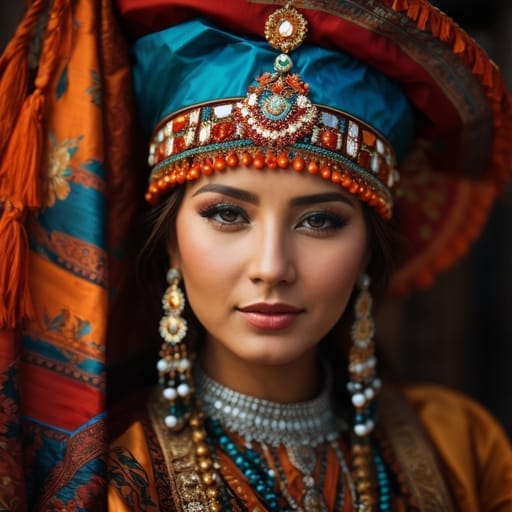
Some customs are Ladakh's own. Losar, the New Year, falls two months before Tibet's because a king centuries ago celebrated early to march on a winter campaign, and nobody moved it back. Households once practiced fraternal polyandry to keep farms undivided, a system that faded within living memory. Married women wear the perak on ceremonial days, a heavy headdress sewn with rows of turquoise and handed from mother to eldest daughter. Lower Ladakh holds spring archery contests lubricated with chang, the barley beer, and polo, borrowed from Baltistan, is played in Leh and Drass. Everyone drinks gur-gur cha, butter tea churned salty. The Changpa nomads of the Changthang plateau, herding pashmina goats on high pasture, are the most distinct branch, and Zanskar, Nubra and Sham each keep their own accent and festival calendar.

Typical Ladakhis Phenotypes

Reference for AI generation — hair, eyes, skin, facial structure, build

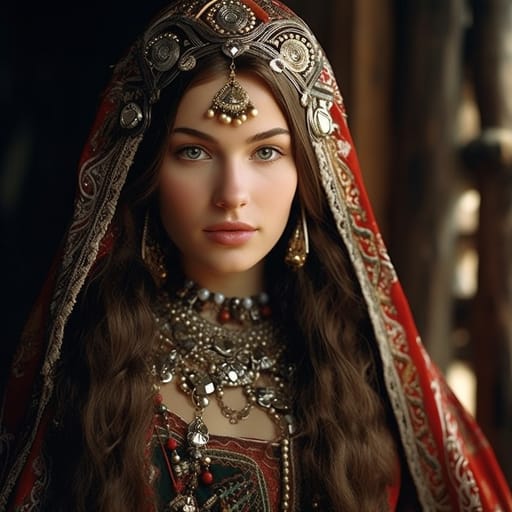
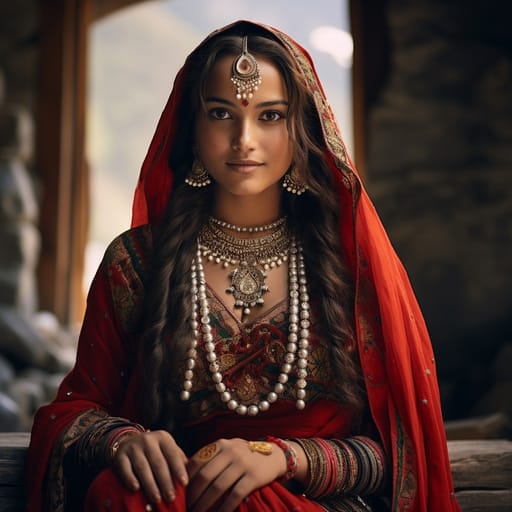
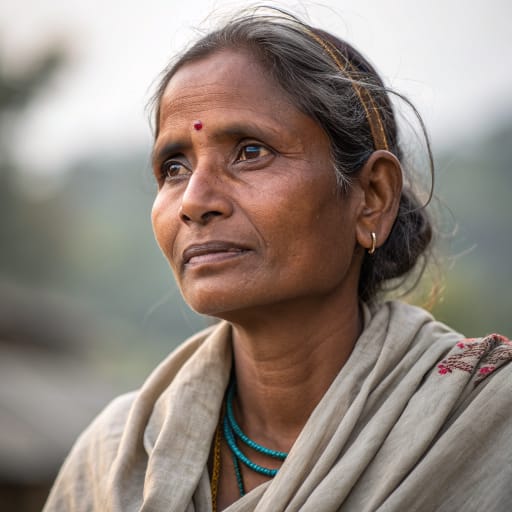
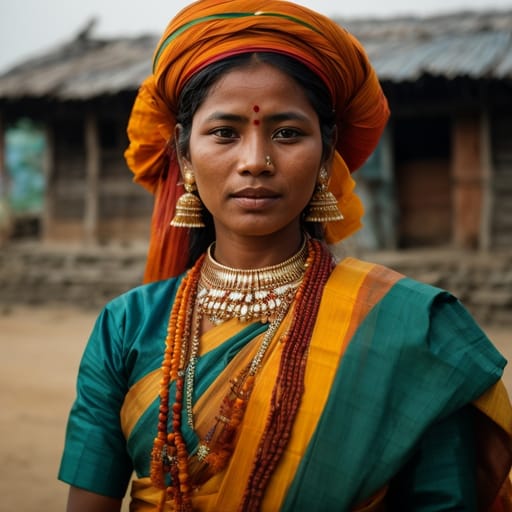
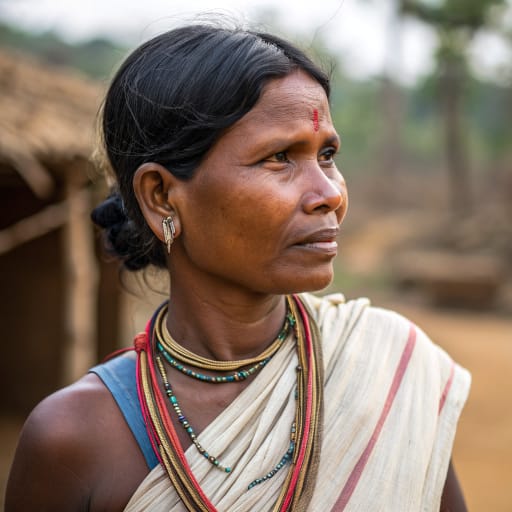
Ladakhis commonly show East Asian and Tibetan features, straight black hair, dark eyes and light to medium brown skin that weathers deeply at altitude, often with sun-reddened cheeks. Stature is medium and build compact, with Kargil communities showing more Indo-Iranian admixture. Traditional dress is the goncha, a thick woolen robe in maroon or dark tones tied with a sash, worn with a brocade tibi hat for men and, for women on formal occasions, the turquoise perak headdress and a sheepskin cape over the shoulders. In Leh town down jackets, jeans and shawls are everyday wear, and the goncha appears mainly at festivals, weddings and among older and rural people.

Ladakhis Body & Anatomy Reference

Per-feature anatomical profile for AI nude generation — Indo-Aryan / Dravidian South Asian phenotype

Ladakhis Boobs & Breasts

Ladakhis tits and boobs run medium-to-large cup, moderate-to-full projection — the classic Indo-Aryan / Dravidian South Asian bust profile. Ladakhis nipples and areolas show medium-brown to dark-brown areolar pigmentation against the wheatish-to-brown skin tone, with areolar diameter typically in the 32-46mm range and forward-set positioning rather than the the smaller East Asian bust profile. Ladakhis breasts trend full and soft, generally fuller than the East Asian norm, a function of the endomorph-to-mesomorph with fuller hip deposition body habitus and the mean adult female BMI 22-25. For anatomically-accurate AI-generated Ladakhis nudes the render preserves: medium-to-large cup, moderate-to-full projection shape, 32-46mm areolas with medium-brown to dark-brown pigmentation, and the torso proportions of the Indo-Aryan / Dravidian South Asian phenotype.

Ladakhis Ass & Hips

Ladakhis ass and hip morphology presents as medium-to-full, moderate-to-high projection, classic curvy hip profile — distinctly different from the slim hip profile of East Asian women. The Ladakhis pelvic profile shows medium-to-wide iliac crests, full gluteal-femoral fat distribution, anchored in the Indo-Aryan / Dravidian South Asian skeletal pattern. Ladakhis butt shots in adult AI imagery should render the medium-to-full, moderate-to-high projection, classic curvy hip profile silhouette with the endomorph-to-mesomorph with fuller hip deposition build and the gluteal-femoral fat distribution typical of the Indo-Aryan / Dravidian South Asian phenotype rather than defaulting to a globally-averaged "ethnic" butt that generic AI generators produce. The hip-to-waist ratio characteristic of Ladakhis women is one of the identifying features of the Indo-Aryan / Dravidian South Asian regional phenotype.

Ladakhis Vagina & Pussy

Ladakhis pussy and vulvar anatomy presents medium-brown to dark-brown labial pigmentation, fuller labia minora projection — consistent with the Indo-Aryan / Dravidian South Asian phenotype's pigmentation pattern. Ladakhis pubic hair is typically straight-to-wavy coarse texture, dense distribution, distributed in the inverted-triangle pattern with regional-typical density. AI-generated Ladakhis nude imagery should preserve the medium-brown to dark-brown labial pigmentation and the straight-to-wavy coarse texture hair texture rather than defaulting to a Western-European pink-and-sparse template. For anatomically-accurate Ladakhis pussy renders the labial pigmentation and coloration should match the surrounding wheatish to brown skin tone of the Indo-Aryan / Dravidian South Asian phenotype, with continuous gradient rather than an abrupt color transition.

Ladakhis Dicks & Penis

Ladakhis dick and penile anatomy in adult AI generation should anchor on the regional reference data: regional mean ~13cm erect, moderate girth, and medium-brown shaft pigmentation. The Ladakhis cock profile reflects the Indo-Aryan / Dravidian South Asian ancestral population's anthropometric measurements rather than a globally-averaged Western-pornography default. For anatomically-accurate Ladakhis nude male imagery the shaft pigmentation should track the surrounding wheatish to brown skin tone, the glans-to-shaft pigmentation transition should be continuous, and the pubic hair pattern should match straight-to-wavy coarse texture texture distributed in the typical inverted-V escutcheon. Circumcision status in Ladakhis populations varies by religious-cultural tradition rather than ancestral phenotype.

Ladakhis Body, Curves & Build

Ladakhis body type and overall build presents as endomorph-to-mesomorph with fuller hip deposition, with mean adult female BMI 22-25 — the characteristic Indo-Aryan / Dravidian South Asian habitus. Ladakhis curves and proportions in adult AI imagery should preserve the regional skeletal frame (height, shoulder-to-hip ratio, limb proportions) rather than scaling to a Western-European mesomorph default. The Ladakhis nude female form, when rendered with anatomical fidelity, shows the height range, frame width, and adipose distribution pattern typical of the Indo-Aryan / Dravidian South Asian phenotype. Generic AI image generators tend to collapse regional body types into a few default shapes; the EthnicErotic phenotype-anchored approach preserves the Ladakhis build as its own reference category.

Ladakhis Skin Tone & Hair Texture

Ladakhis skin tone falls in the wheatish to brown (Fitzpatrick III-V) band — the surface signal most often miscalibrated by generic AI nude generators trained on Western-photographic datasets. Ladakhis hair texture is typically straight-to-wavy 1A-2B, dense, dark-brown to black, characteristic of the Indo-Aryan / Dravidian South Asian phenotype. For anatomically-accurate Ladakhis nude renders the skin should hold the Fitzpatrick band consistently across body surface rather than showing the lighter-than-face body shading that AI generators default to. Ladakhis hair pigmentation and texture on body, pubic, and head should match across the figure rather than mixing textures (a common AI artefact).

Get notified when there’s a new post about Ladakhis.

Discussion Board

Have a view on this? Sign in to post — your first one earns 2 generation credits.

No posts on this board yet

Log in to start the conversation.

See what’s active across the community →

Erotic Poses & Sex Positions

From the pose catalog — 219 named positions with reference skeletons

Frequently asked questions about Ladakhis people

Where is the Ladakhis homeland?

The Ladakhis homeland is Ladakh union territory, India: the upper Indus valley around Leh, with Zanskar, Nubra, the Changthang plateau and Kargil district. in Southern Asia.

What language do Ladakhis people speak?

Ladakhis people primarily speak Ladakhi (Tibetic, Sino-Tibetan), with Zangskari, Purgi and Balti as close relatives; written in the Tibetan script (Bhoti); Hindi, Urdu and English widely used as second languages..

What religion do Ladakhis people practice?

The predominant religion among Ladakhis people is Tibetan Buddhism (Drukpa Kagyu, Gelug, Drikung Kagyu) in Leh district; Shia Islam in Kargil district; small Sunni (Argon) and Moravian Christian communities in Leh..


What does a typical Ladakhis woman look like?

Ladakhis commonly show East Asian and Tibetan features, straight black hair, dark eyes and light to medium brown skin that weathers deeply at altitude, often with sun-reddened cheeks. Stature is medium and build compact, with Kargil communities showing more Indo-Iranian admixture.