Kʼómoks Erotic
Comox Harbour and the Comox Valley on the east coast of Vancouver Island, British Columbia, Canada; historically extending north toward Campbell River
English; Kwakʼwala (Wakashan) as heritage language; historically Island Comox and Pentlatch (both Coast Salish, Salishan)
Christianity, alongside potlatch and Big House ceremonial practice
Amalgamation of the Sathloot, Sasitla, Eiksan and Pentlatch; Coast Salish in origin, closely tied to the Laichwiltach Kwakwakaʼwakw
About Kʼómoks People
The Kʼómoks take their name from the Kwakʼwala word Kwʼumuxws, usually rendered as "land of plenty", and the name holds up. Their home is Comox Harbour and the river mouths that feed it on the east coast of Vancouver Island, British Columbia. It is a shore where salmon runs, clam beds and herring spawn have fed people for millennia. The Kʼómoks are one people today less because of a single origin than because of a shared history. The nation joins the Sathloot, Sasitla, Eiksan and Pentlatch, communities pushed together by raiding, disease and colonial rule in the nineteenth century. Their language history is the unusual part. The older peoples of this coast spoke Salishan languages. One was Island Comox, a dialect of the language the Klahoose, Homalco and Tlaʼamin still speak across the Strait of Georgia. The other was Pentlatch, which lost its last fluent speaker around 1940. Through the 1800s, Laichwiltach groups of the Kwakwakaʼwakw moved south along the island, took the Campbell River area and pushed Comox villages toward the harbor. Conflict gave way to intermarriage. Over a few generations Kwakʼwala, a Wakashan language unrelated to Salish, became the community's heritage language. With it came Kwakwakaʼwakw ceremonial life: masked dances, inherited crests and the potlatch, which Canada banned from 1885 to 1951.
Traces of the old economy still show at low tide. The harbor flats hold a large complex of intertidal fish traps, thousands of sharpened wooden stakes set in lines, chevrons and heart shapes, some more than a thousand years old. Above the valley sits the Comox Glacier, which the Kʼómoks call Queneesh. In their flood story Queneesh is a white whale that held the people's tied-up canoes, left resting on the mountain when the water went down. Settlers reached the Comox Valley in the 1860s. Farms, a town and eventually a military air base grew up around reserves that were kept small. Today the Kʼómoks First Nation governs lands at Comox Harbour, on the Puntledge River and at Goose Spit, and runs its own businesses. It has also spent years negotiating in British Columbia's treaty process. English is the language of daily life, Kwakʼwala lives on in song and ceremony, and the Big House is still where names are passed down and important events are witnessed.
Related ethnic groups
Groups that share Kʼómoks's homeland, region, language, or religious tradition. These are likely candidates for comparative phenotype reference.
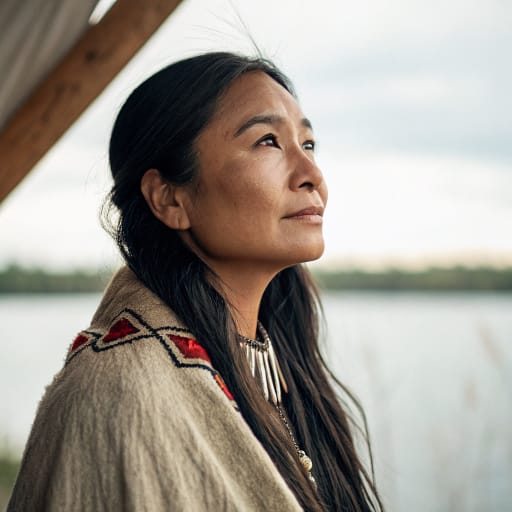
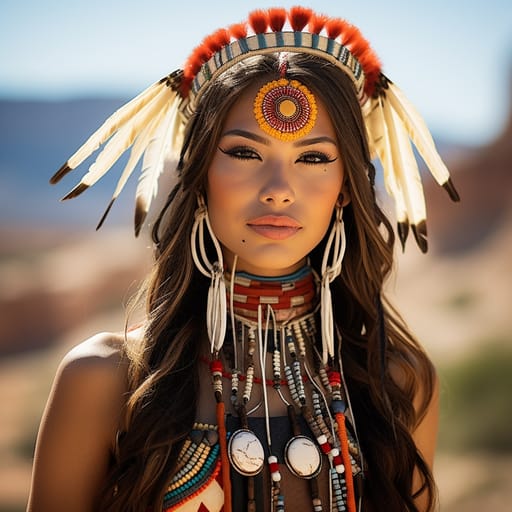
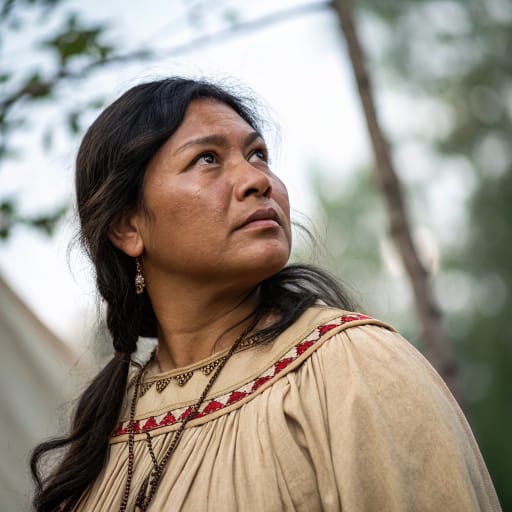
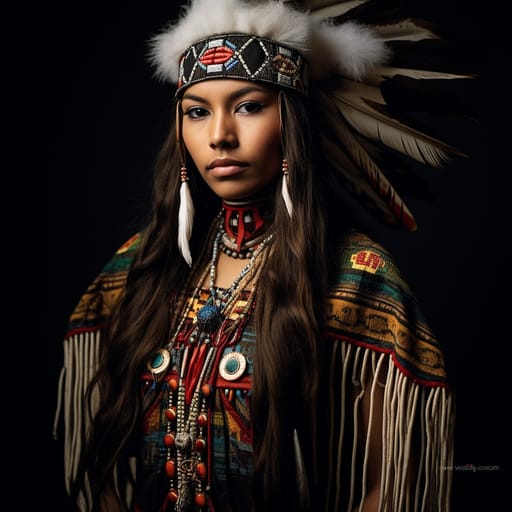

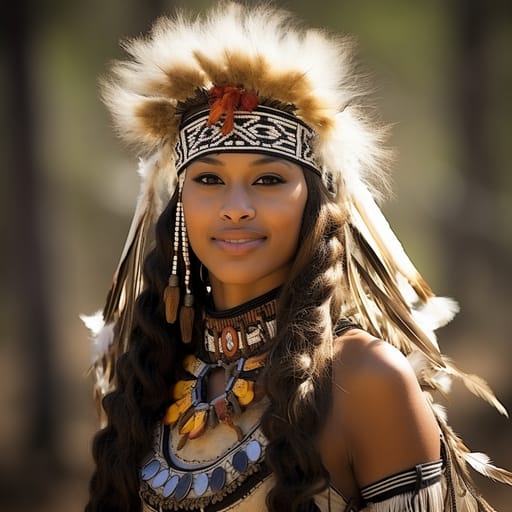
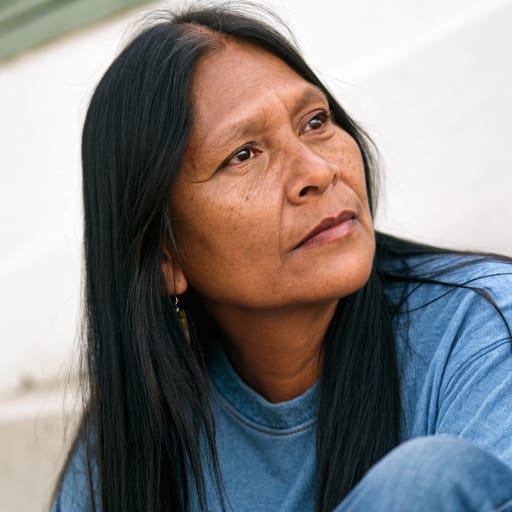
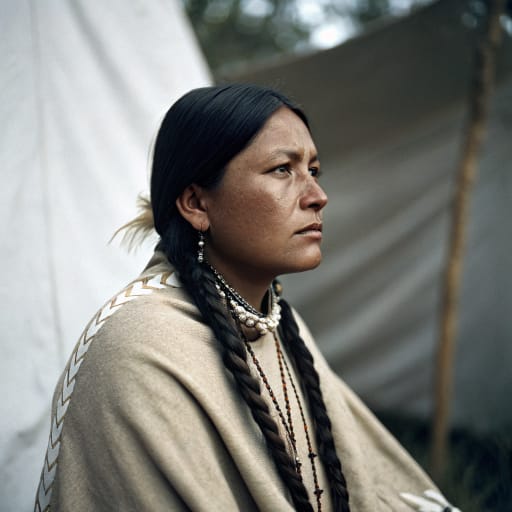
Typical Kʼómoks Phenotypes
Reference for AI generation: hair, eyes, skin, facial structure, build
Kʼómoks Body & Anatomy Reference
Anatomy by feature, Indigenous Northern American / Algonquian-Iroquoian phenotype
Kʼómoks Boobs & Breasts
Kʼómoks boobs follow the Indigenous Northern American / Algonquian-Iroquoian profile: medium cup, moderate projection. Areolar diameter is usually 30-44mm, and the coloring is medium-brown areolar pigmentation against the copper-to-medium-brown skin tone. Breast shape tracks body composition (mesomorph, broader frame in northern Indigenous populations, mean adult female BMI 25-28), so Kʼómoks breasts tend to be full and moderate projection. Expect a forward-set shape, not the smaller East Asian bust.
Kʼómoks Ass & Hips
Kʼómoks ass and hip morphology presents as medium, moderate-to-full projection, distinctly different from the slim East Asian narrow-hip profile. The Kʼómoks pelvic profile shows medium iliac crests, anchored in the Indigenous Northern American / Algonquian-Iroquoian skeletal pattern. Kʼómoks butt shots in adult AI imagery should render the medium, moderate-to-full projection silhouette with the overall build (mesomorph, broader frame in northern Indigenous populations) and the fat distribution typical of the Indigenous Northern American / Algonquian-Iroquoian phenotype.
Kʼómoks Vagina & Pussy
Kʼómoks pussy anatomy typically shows medium-brown labial pigmentation. Pubic hair is usually straight medium-coarse texture. In AI-generated Kʼómoks nudes, labial color should blend into the copper to medium-brown skin with a gradual transition, and the hair should keep its straight medium-coarse texture.
Kʼómoks Dicks & Penis
Penis reference for Kʼómoks men: regional mean ~13cm erect, moderate girth. Coloring: medium-brown shaft pigmentation. An accurate Kʼómoks cock in AI imagery matches the surrounding copper to medium-brown skin rather than a generic porn default. Circumcision depends on religion and custom, not ancestry.
Kʼómoks Body, Curves & Build
The Kʼómoks figure is generally mesomorph, broader frame in northern Indigenous populations, with mean adult female BMI 25-28, characteristic of Indigenous Northern American / Algonquian-Iroquoian ancestry. AI image tools tend to flatten regional body types into a few stock shapes; here the Kʼómoks build is kept as its own reference.
Kʼómoks Skin Tone & Hair Texture
Skin: copper to medium-brown (Fitzpatrick III-V). Hair: straight 1A, dark-brown to black, often thick and dense. Both are typical of Indigenous Northern American / Algonquian-Iroquoian ancestry. The most common mistake in AI nudes of Kʼómoks women is a body rendered lighter than the face.
Explore phenotype categories
Structured taxonomy with peer-reviewed scales · 22 anatomical categories
Erotic Poses & Sex Positions
From the pose catalog: 219 named positions with reference skeletons
Frequently asked questions about Kʼómoks people
Where is the Kʼómoks homeland?
The Kʼómoks homeland is Comox Harbour and the Comox Valley on the east coast of Vancouver Island, British Columbia, Canada; historically extending north toward Campbell River in North America.
What language do Kʼómoks people speak?
Kʼómoks people primarily speak English; Kwakʼwala (Wakashan) as heritage language; historically Island Comox and Pentlatch (both Coast Salish, Salishan).
What religion do Kʼómoks people practice?
The predominant religion among Kʼómoks people is Christianity, alongside potlatch and Big House ceremonial practice.






Make your own Kʼómoks images
Five a day, free, no credits to buy. The studio starts from this group's phenotype data, so you can set body type, pose and style and keep the traits accurate.
Start with Kʼómoks