Help us get this right
Does this portrait look right for Kho (Khowar)?
One tap. It takes a second and it is recorded.
0 say it looks right, 1 says it looks off.
Kho (Khowar) Erotic
Chitral, Khyber Pakhtunkhwa, Pakistan; Gilgit-Baltistan
Islam (Sunni and Ismaili)
Chitrali
About Kho (Khowar) People
Kho are the principal people of Chitral in the Hindu Kush of northwestern Pakistan, with related communities in Gilgit-Baltistan. They speak Khowar, an Indo-European language of the Dardic group, and are Muslims, divided between Sunni and Ismaili communities. Chitral's mountain culture, from music to the high-altitude game of polo, is strongly identified with the Kho.
Society and subsistence
Kho livelihoods rest on irrigated terrace agriculture (wheat, maize, barley, fruit and nuts) and the herding of goats, sheep and cattle taken to summer pastures. Society was long organized under local rulers and a landed aristocracy, with a refined tradition of Persianate courtesy, hospitality and poetry. The famous polo matches at the high Shandur pass, played without formal rules, are a celebrated expression of Kho identity.
Music and heritage
Khowar song, a sitar-like instrument and dance are central to festivals and weddings, and the language carries a substantial body of oral and written poetry. The Kho are noted for literacy and a strong cultural pride.
Appearance and adornment
Kho people are of medium to tall build with fair to medium-brown skin, dark hair and eyes and refined angular features. Men are especially associated with the flat woolen Chitrali pakol cap and embroidered woolen chogha robes over shalwar kameez; women wear long pleated dresses, embroidered pillbox caps under a shawl, silver ornaments and nose studs. Beards are neatly kept and complexions mountain-weathered.
Related ethnic groups
Groups that share Kho (Khowar)'s homeland, region, language, or religious tradition. These are likely candidates for comparative phenotype reference.
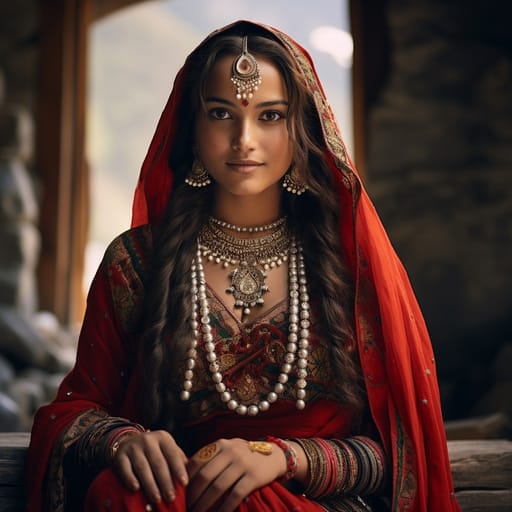
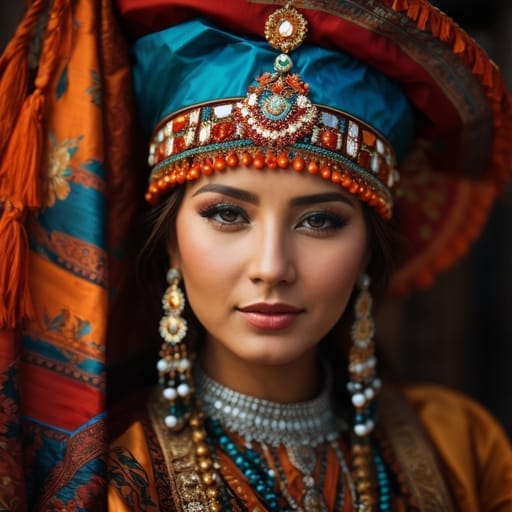
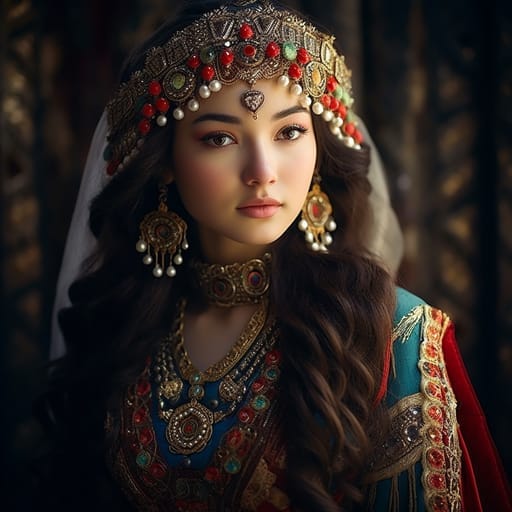
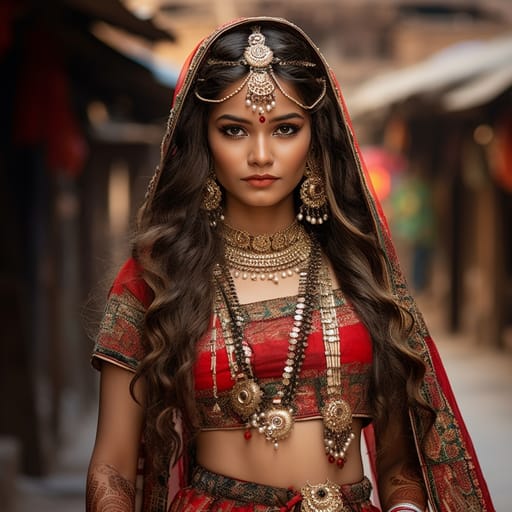
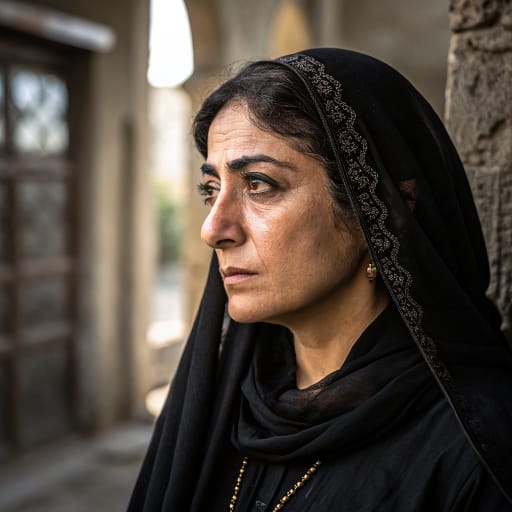
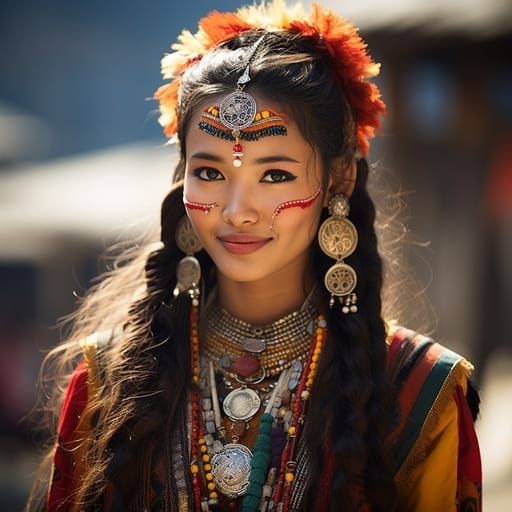
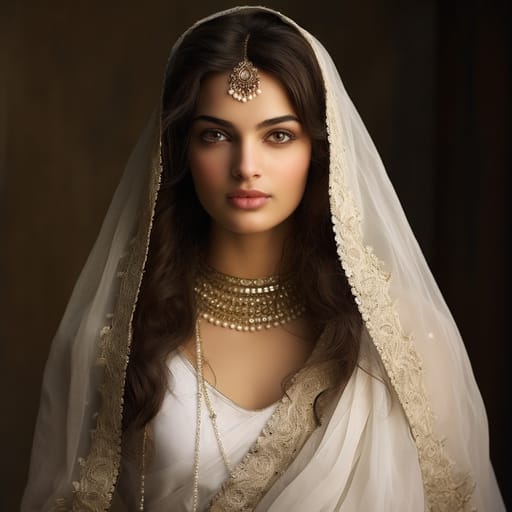
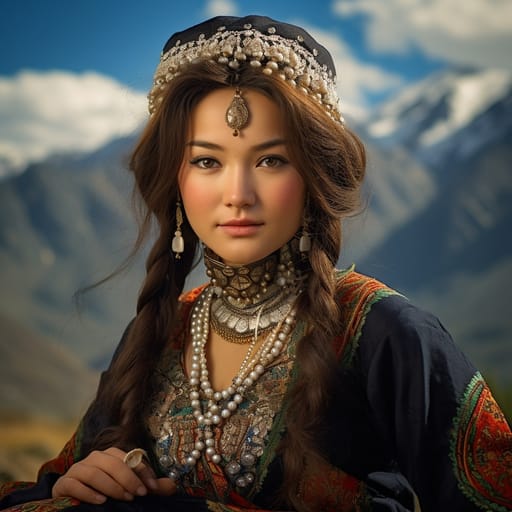
Typical Kho (Khowar) Phenotypes
Reference for AI generation: hair, eyes, skin, facial structure, build
Kho (Khowar) Body & Anatomy Reference
Indo-Aryan / Dravidian South Asian phenotype: anatomy reference for AI nude generation
Kho (Khowar) Boobs & Breasts
Bust reference for Kho (Khowar) women: medium-to-large cup, moderate-to-full projection, which is typical of Indo-Aryan / Dravidian South Asian ancestry. Areolas measure about 32-46mm across, with medium-brown to dark-brown pigmentation. Body type (endomorph-to-mesomorph with fuller hip deposition) shapes the bust as well, so Kho (Khowar) tits are usually full and soft, generally fuller than the East Asian norm. In AI imagery, keep the forward-set shape rather than drifting toward the smaller East Asian bust profile.
Kho (Khowar) Ass & Hips
The Kho (Khowar) ass is typically medium-to-full, moderate-to-high projection, classic curvy hip profile, which sets it apart from the slim hip profile of East Asian women. Underneath, the pelvis shows medium-to-wide iliac crests, full gluteal-femoral fat distribution, part of the Indo-Aryan / Dravidian South Asian skeletal pattern. For Kho (Khowar) butt pics and AI renders, match that silhouette and the overall build (endomorph-to-mesomorph with fuller hip deposition).
Kho (Khowar) Vagina & Pussy
Kho (Khowar) pussy and vulvar anatomy presents medium-brown to dark-brown labial pigmentation, fuller labia minora projection, consistent with the Indo-Aryan / Dravidian South Asian phenotype's pigmentation pattern. Kho (Khowar) pubic hair is typically straight-to-wavy coarse texture, dense distribution, in the inverted-triangle pattern. For anatomically accurate Kho (Khowar) pussy renders the labial coloration should match the surrounding wheatish to brown skin tone with a continuous gradient, and the hair should keep its straight-to-wavy coarse texture.
Kho (Khowar) Dicks & Penis
Kho (Khowar) dicks follow the Indo-Aryan / Dravidian South Asian reference data: regional mean ~13cm erect; moderate girth; medium-brown shaft pigmentation. Shaft color should track the wheatish to brown skin tone with a smooth change toward the glans, and Kho (Khowar) pubic hair keeps its straight-to-wavy coarse texture.
Kho (Khowar) Body, Curves & Build
Kho (Khowar) body type and overall build presents as endomorph-to-mesomorph with fuller hip deposition, with mean adult female BMI 22-25: the characteristic Indo-Aryan / Dravidian South Asian habitus. Kho (Khowar) curves and proportions should keep the regional skeletal frame (height, shoulder-to-hip ratio, limb proportions) rather than a generic mesomorph default.
Kho (Khowar) Skin Tone & Hair Texture
Kho (Khowar) skin sits in the wheatish to brown (Fitzpatrick III-V) band. Hair is typically straight-to-wavy 1A-2B, dense, dark-brown to black, in keeping with the Indo-Aryan / Dravidian South Asian phenotype. In nude renders the skin should stay one even tone from face to body, and body, pubic and head hair should match.
Explore phenotype categories
Structured taxonomy with peer-reviewed scales · 22 anatomical categories
Notable Kho (Khowar) People
25 reference figures, sourced from Wikipedia
- Masood ul-Mulk, Pakistani humanitarian and development practitioner
- Muhammad Ghufran, 1857 to 1926), scholar, historiographer and poet
- Muhammad Siyar, 1770 to 1840), Khowar-language poet and court chronicler
- Rahima Naz, poet of Urdu and the Khowar languages.
- Burhan-ud-Din, 1914 to 1996), a veteran of the Indian National Army
- Mata ul-Mulk, 1918 to 2002), known for his role in the First Kashmir War
- Sana Yousaf, 2008 to 2025), Pakistani social media influencer.
- Zainul Abideen, member of the Khyber Pakhtunkhwa Assembly
- Abdul Akbar Chitrali, member of the National Assembly of Pakistan
- Bibi Fozia, member of the Khyber Pakhtunkhwa Assembly
- Saleem Khan, member of the Khyber Pakhtunkhwa Assembly
- Shahzada Mohiuddin, provincial minister and member of the National Assembly of Pakistan
- Falak Naz, member of the Senate of Pakistan
- Jafar Ali Shah, member of the National Assembly of Pakistan
- Shahzada Iftikhar Uddin, member of the National Assembly of Pakistan
- Fateh-ul-Mulk Ali Nasir, member of the Khyber Pakhtunkhwa Assembly
- Gohar Aman, 1809 to 1860), ruler of Yasin, Ghizer and Gilgit
- Aman ul-Mulk, 1821 to 1892), the 15th mehtar of Chitral
- Afzal ul-Mulk, 1867 to 1892), the 16th mehtar of Chitral
- Sher Afzal, 1841 to 1923), the 17th mehtar of Chitral
- Nizam ul-Mulk, 1861 to 1895), the 18th mehtar of Chitral
- Amir ul-Mulk, 1877 to 1923), the 19th mehtar of Chitral
- Shuja ul-Mulk, 1881 to 1936), the 20th mehtar of Chitral
- Nasir ul-Mulk, 1887 to 1943), the 21st mehtar of Chitral
- Muzaffar ul-Mulk, 1901 to 1949), Mehtar of Chitral who acceeded to Pakistan
Erotic Poses & Sex Positions
From the pose catalog: 219 named positions with reference skeletons
Frequently asked questions about Kho (Khowar) people
Where is the Kho (Khowar) homeland?
The Kho (Khowar) homeland is Chitral, Khyber Pakhtunkhwa, Pakistan; Gilgit-Baltistan in Southern Asia.
What language do Kho (Khowar) people speak?
Kho (Khowar) people primarily speak Khowar (Indo-European, Dardic).
What religion do Kho (Khowar) people practice?
The predominant religion among Kho (Khowar) people is Islam (Sunni and Ismaili).






Make your own Kho (Khowar) images
Five a day, free, no credits to buy. The studio starts from this group's phenotype data, so you can set body type, pose and style and keep the traits accurate.
Start with Kho (Khowar)