No portrait yet
Karelians Erotic
Karelia, split between the Republic of Karelia in northwestern Russia and eastern Finland, with a Tver Karelian enclave northwest of Moscow
Karelian (Uralic, Finnic), in Karelian Proper, Livvi and Ludic varieties; also Russian and Finnish
Eastern Orthodox Christianity with surviving folk practice; Finnish Karelians mostly Lutheran
Baltic Finns; White Sea (Viena) Karelians, Olonets (Livvi) Karelians, Ludians, Tver Karelians, Tikhvin Karelians, and Finnish Karelians
About Karelians People
Karelians are the people whose songs became Finland's national epic and whose faith kept them apart from Finns. They are Baltic Finns, native to Karelia, a country of lakes, granite and spruce that runs from the Karelian Isthmus north of St. Petersburg up to the White Sea, and that has been split between east and west since Sweden and Novgorod drew a line through it in 1323. The border moved often afterward, but the split stuck: Karelians on the Swedish side became Lutheran and, in time, Finnish. Those on the Novgorod side stayed Orthodox, and they are the people this entry describes. Most live today in the Republic of Karelia in northwestern Russia, where they are now a small minority. A separate pocket of Tver Karelians descends from families who fled south after the 1617 Treaty of Stolbovo handed their home parishes to Sweden.
Karelian is a Finnic language of the Uralic family, close enough to Finnish that speakers manage across the border, but distinct in its sounds and its heavy layer of Russian loans. It has three main forms: Karelian Proper, spoken from the White Sea down through the middle of the republic and in the Tver villages; Livvi, or Olonets Karelian, on the northeast shore of Lake Ladoga; and Ludic, toward Lake Onega, which some linguists count as a language of its own. The oldest known text in any Finnic tongue, a thirteenth-century birch-bark charm against lightning found in Novgorod, is usually read as early Karelian. The language is written in Latin script, which is why it remains the only titular language of a Russian republic with no official status there: federal law requires Cyrillic. Finland recognized it as a minority language in 2009, and small immersion nests and language camps run on both sides of the border.
Orthodoxy is the seam that holds Karelian identity together. Village chapels called tsasounas, saint's-day festivals called praasniekkas, and forest burial grounds with small wooden grave houses are Karelian in form even where the rite is Russian. Under this runs an older layer: laments sung by women at weddings and funerals, and the runo verse that Elias Lönnrot collected in White Sea villages like Vuokkiniemi from singers such as Arhippa Perttunen and shaped into the Kalevala. Finnish painters and composers went east in the 1890s chasing the same source, in what is now called Karelianism. The twentieth century was harsher. Stalin's purges of 1937 and 1938 gutted the Karelian and Finnish intelligentsia, and the Winter and Continuation Wars drove more than 400,000 Finnish Karelians west as evacuees. What survives best is domestic: the big log house with family and livestock under one roof, the sauna, and the rye-crusted kalitka, known abroad as the Karelian pasty.
Related ethnic groups
Groups that share Karelians's homeland, region, language, or religious tradition. These are likely candidates for comparative phenotype reference.
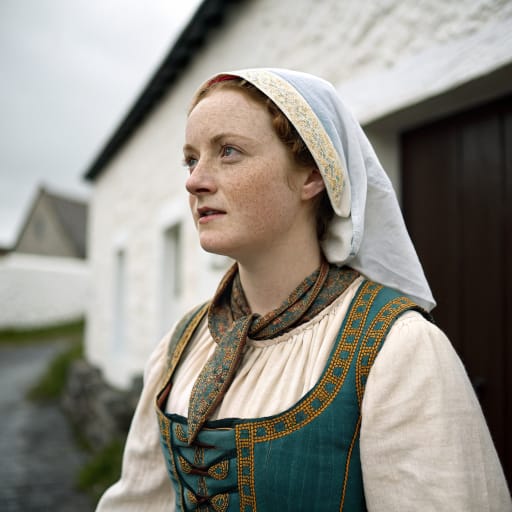
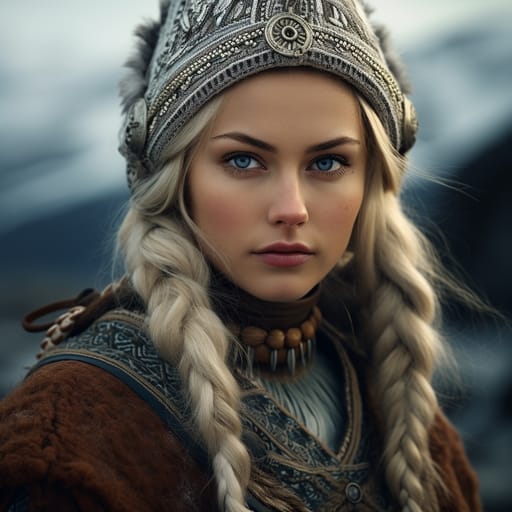
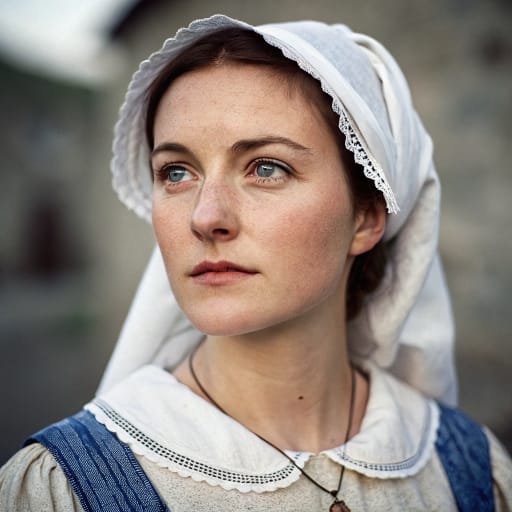
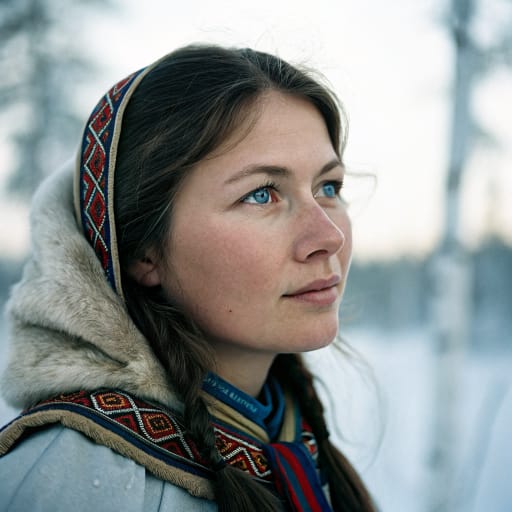
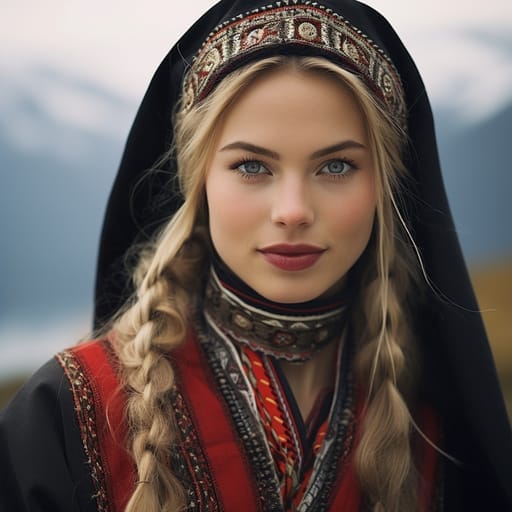
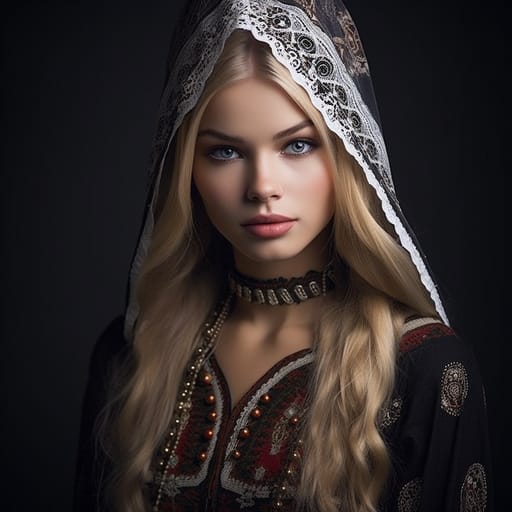
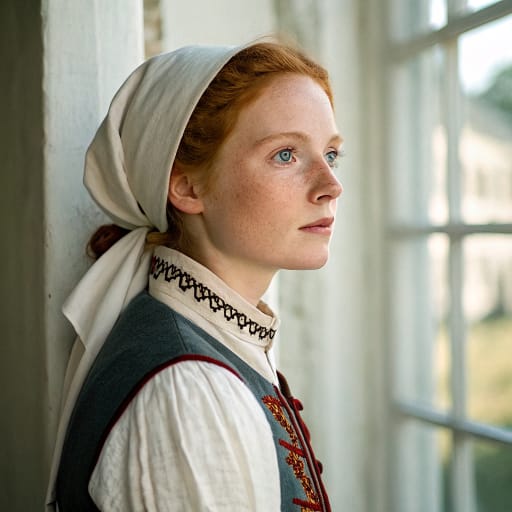
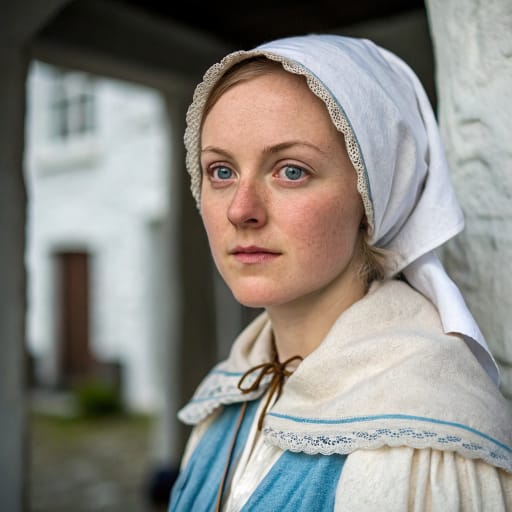
Typical Karelians Phenotypes
Reference for AI generation: hair, eyes, skin, facial structure, build
Karelians Body & Anatomy Reference
Per-feature anatomical profile for AI nude generation: Northern European / Germanic-Scandinavian phenotype
Karelians Boobs & Breasts
Karelians boobs follow the Northern European / Germanic-Scandinavian profile: medium-to-large cup, full, high projection. Areolar diameter is usually 32-48mm, and the coloring is light-pink to medium-pink areolar pigmentation against the fair skin tone. Breast shape tracks body composition (mesomorph with taller stature; ectomorph-to-mesomorph split, mean adult female BMI 24-27), so Karelians breasts tend to be full and projecting, often the largest cup-size band in regional comparisons. Expect a forward-set shape, not the smaller East Asian bust.
Karelians Ass & Hips
Karelians ass and hip morphology presents as medium-to-full, moderate-to-high projection, distinctly different from the slim East Asian narrow-hip profile. The Karelians pelvic profile shows medium-to-wide iliac crests, anchored in the Northern European / Germanic-Scandinavian skeletal pattern. Karelians butt shots in adult AI imagery should render the medium-to-full, moderate-to-high projection silhouette with the overall build (mesomorph with taller stature; ectomorph-to-mesomorph split) and the fat distribution typical of the Northern European / Germanic-Scandinavian phenotype.
Karelians Vagina & Pussy
Karelians pussy anatomy typically shows light-pink to medium-pink labial pigmentation, varied labia minora projection. Pubic hair is usually fine-to-medium wavy texture, often lighter-pigmented (blond to dark-brown). In AI-generated Karelians nudes, labial color should blend into the fair skin with a gradual transition, and the hair should keep its fine-to-medium wavy texture.
Karelians Dicks & Penis
Penis reference for Karelians men: regional mean ~13-14cm erect, moderate-to-above-average girth. Coloring: light-pink to light-brown shaft pigmentation. An accurate Karelians cock in AI imagery matches the surrounding fair skin rather than a generic porn default. Circumcision depends on religion and custom, not ancestry.
Karelians Body, Curves & Build
The Karelians figure is generally mesomorph with taller stature; ectomorph-to-mesomorph split, with mean adult female BMI 24-27, characteristic of Northern European / Germanic-Scandinavian ancestry. AI image tools tend to flatten regional body types into a few stock shapes; here the Karelians build is kept as its own reference.
Karelians Skin Tone & Hair Texture
Skin: fair (Fitzpatrick I-III). Hair: straight-to-wavy 1A-2B, blond to medium-brown common. Both are typical of Northern European / Germanic-Scandinavian ancestry. The most common mistake in AI nudes of Karelians women is a body rendered lighter than the face.
Explore phenotype categories
Structured taxonomy with peer-reviewed scales · 22 anatomical categories
Erotic Poses & Sex Positions
From the pose catalog: 219 named positions with reference skeletons
Frequently asked questions about Karelians people
Where is the Karelians homeland?
The Karelians homeland is Karelia, split between the Republic of Karelia in northwestern Russia and eastern Finland, with a Tver Karelian enclave northwest of Moscow in Northern Europe.
What language do Karelians people speak?
Karelians people primarily speak Karelian (Uralic, Finnic), in Karelian Proper, Livvi and Ludic varieties; also Russian and Finnish.
What religion do Karelians people practice?
The predominant religion among Karelians people is Eastern Orthodox Christianity with surviving folk practice; Finnish Karelians mostly Lutheran.






Make your own Karelians images
Five a day, free, no credits to buy. The studio starts from this group's phenotype data, so you can set body type, pose and style and keep the traits accurate.
Start with Karelians