Help us get this right
Does this portrait look right for Ulster Scots?
Nobody has judged this one yet. You would be the first.
Ulster Scots Erotic
Northern Ireland, especially Counties Antrim, Down and Londonderry, and east Donegal in the Republic of Ireland; large descendant populations in the United States and Canada
English and Ulster Scots, a variety of Scots (Indo-European, West Germanic, Anglic)
Predominantly Protestant, chiefly Presbyterian, with Church of Ireland, Methodist and smaller Reformed congregations
Descended mainly from Lowland Scots settlers, with some settlers from northern England; part of the wider Ulster Protestant community; ancestors of the Scotch-Irish of North America
About Ulster Scots People
The Ulster Scots are descended from the Lowland Scots who crossed the North Channel into the north of Ireland, mostly in the seventeenth century. They never quite stopped looking back across that water. At its narrowest the channel is barely a dozen miles wide, and on a clear day the Antrim coast can see Scotland. That closeness shaped the accent, the church, the farms and the politics. It also left a people who feel neither simply Irish nor simply Scottish.
The settlers came in waves. Private ventures in Antrim and Down began in 1606, the official Plantation of Ulster followed from 1609, and famine in Scotland during the 1690s pushed thousands more over. The heartlands are still north and east Antrim, the Ards Peninsula in Down, parts of County Londonderry and the Laggan district of east Donegal, which now lies across the border in the Republic. The speech they brought, Ulster Scots, is a form of Scots. That makes it a close relative of English and something quite apart from the Irish Gaelic of the older population. Most people speak English day to day, with Scots words and grammar coming through in rural talk. The language gained official recognition under the 1998 Belfast Agreement.
Presbyterianism is the backbone of the identity. The kirk was organized, argumentative and literate, and it put Bible reading, elected elders and the long sermon at the center of village life. It also made its members outsiders. The Test Act of 1704 shut Presbyterians out of public office, and rising rents and failed harvests drove a huge eighteenth-century exodus to colonial America. There they became the Scotch-Irish of the Pennsylvania backcountry and the Appalachian frontier.
Their politics have not stood still. In 1798 many Presbyterians in Antrim and Down took up arms with the United Irishmen against the Crown. A century later their descendants led the opposition to Home Rule, and today most identify as British and unionist. A less known part of their story is the rhyming weavers, handloom workers in rural Antrim and Down who published poetry in broad Scots in the decades around 1800. That writing now feeds efforts to teach and print the language again. Today the Scottish inheritance is easiest to hear in Burns Night suppers, pipe bands, and the Lambeg drums and flute bands of the summer parades.
Related ethnic groups
Groups that share Ulster Scots's homeland, region, language, or religious tradition. These are likely candidates for comparative phenotype reference.
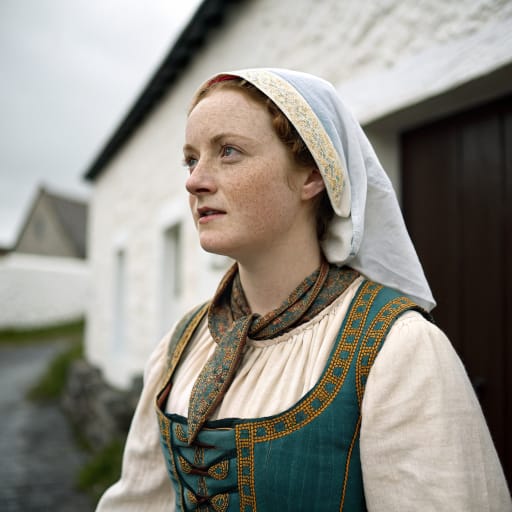
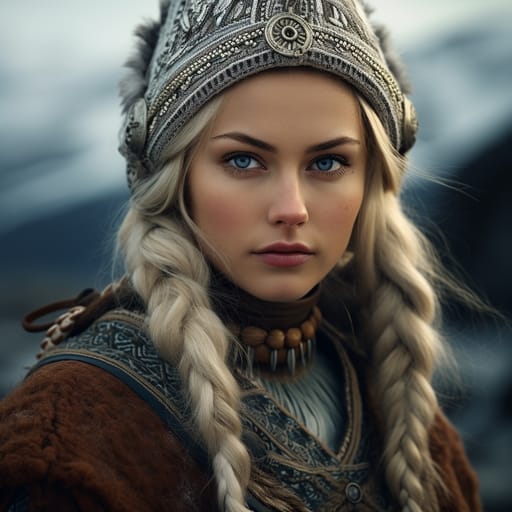
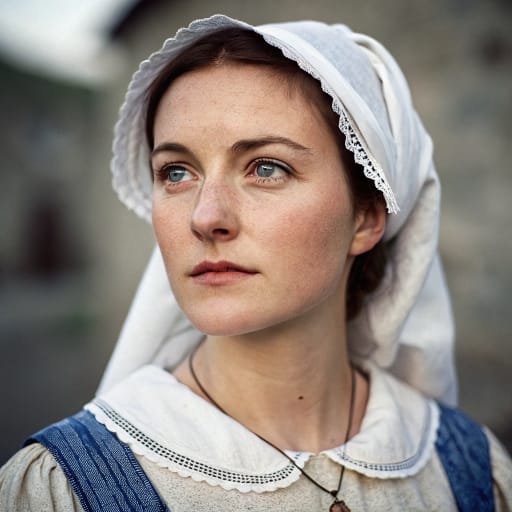
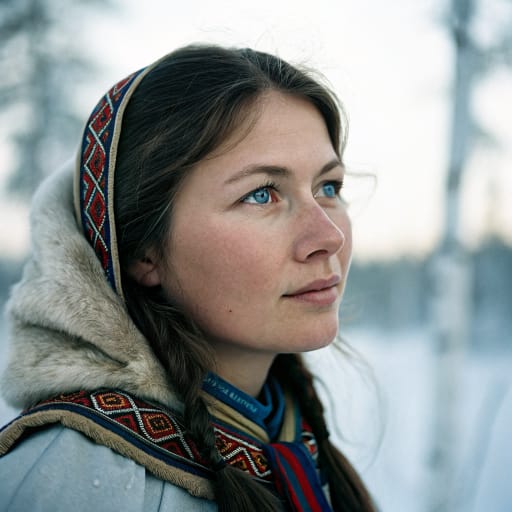
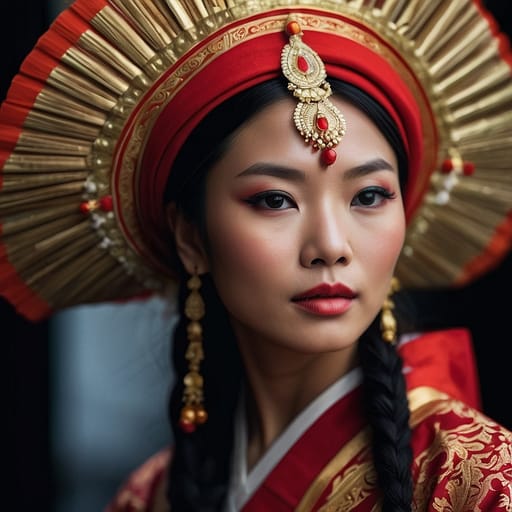
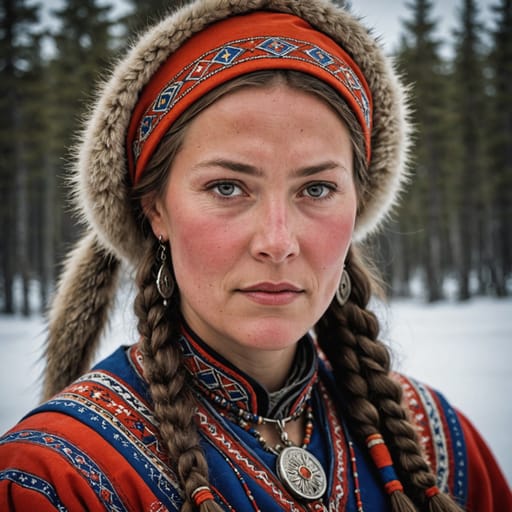
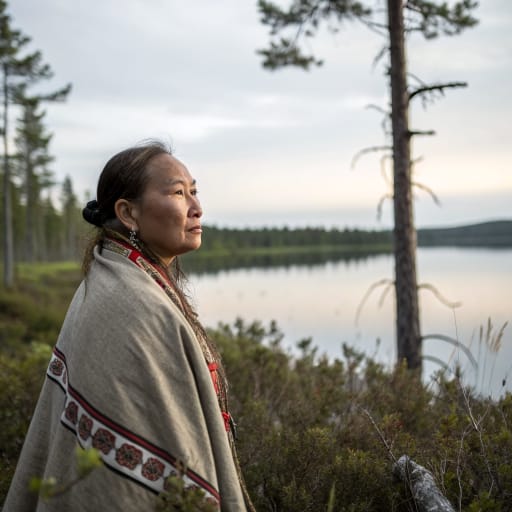
Typical Ulster Scots Phenotypes
Reference for AI generation: hair, eyes, skin, facial structure, build
Ulster Scots Body & Anatomy Reference
Anatomy by feature, Northern European / Germanic-Scandinavian phenotype
Ulster Scots Boobs & Breasts
The typical Ulster Scots bust is medium-to-large cup, full, high projection, in line with the wider Northern European / Germanic-Scandinavian pattern. Areolas usually fall in the 32-48mm range, with light-pink to medium-pink areolar pigmentation against the fair skin tone. Compared with the smaller East Asian bust, Ulster Scots breasts sit forward and are generally full and projecting, often the largest cup-size band in regional comparisons. A faithful AI render of Ulster Scots tits keeps that shape and areola size.
Ulster Scots Ass & Hips
Butt shape among Ulster Scots women: medium-to-full, moderate-to-high projection, over medium-to-wide iliac crests. This follows Northern European / Germanic-Scandinavian ancestry and looks quite unlike the slim East Asian narrow-hip profile. An accurate Ulster Scots ass in adult AI imagery keeps both the silhouette and the overall build (mesomorph with taller stature; ectomorph-to-mesomorph split) instead of a generic average.
Ulster Scots Vagina & Pussy
Vulvar anatomy among Ulster Scots women: light-pink to medium-pink labial pigmentation, varied labia minora projection. Pubic hair tends to be fine-to-medium wavy texture, often lighter-pigmented (blond to dark-brown), in the usual inverted-triangle pattern. Both follow Northern European / Germanic-Scandinavian pigmentation, which is why Ulster Scots pussy renders should not fall back on a pale, sparse Western template.
Ulster Scots Dicks & Penis
The Ulster Scots cock profile, from Northern European / Germanic-Scandinavian anthropometric data: regional mean ~13-14cm erect; moderate-to-above-average girth; light-pink to light-brown shaft pigmentation. Pubic hair has a fine-to-medium wavy texture and forms the usual inverted-V pattern. Whether Ulster Scots men are circumcised follows religious and cultural practice rather than phenotype.
Ulster Scots Body, Curves & Build
Build and curves among Ulster Scots women follow the Northern European / Germanic-Scandinavian pattern: mesomorph with taller stature; ectomorph-to-mesomorph split, mean adult female BMI 24-27. Proportions matter as much as skin tone, so Ulster Scots figures should keep their regional height and limb ratios.
Ulster Scots Skin Tone & Hair Texture
The Ulster Scots skin range is fair (Fitzpatrick I-III), and hair tends to be straight-to-wavy 1A-2B, blond to medium-brown common. That combination marks the Northern European / Germanic-Scandinavian phenotype, and skin tone is the trait AI generators most often get wrong for Ulster Scots women.
Explore phenotype categories
Structured taxonomy with peer-reviewed scales · 22 anatomical categories
Erotic Poses & Sex Positions
From the pose catalog: 219 named positions with reference skeletons
Frequently asked questions about Ulster Scots people
Where is the Ulster Scots homeland?
The Ulster Scots homeland is Northern Ireland, especially Counties Antrim, Down and Londonderry, and east Donegal in the Republic of Ireland; large descendant populations in the United States and Canada in Northern Europe.
What language do Ulster Scots people speak?
Ulster Scots people primarily speak English and Ulster Scots, a variety of Scots (Indo-European, West Germanic, Anglic).
What religion do Ulster Scots people practice?
The predominant religion among Ulster Scots people is Predominantly Protestant, chiefly Presbyterian, with Church of Ireland, Methodist and smaller Reformed congregations.






Make your own Ulster Scots images
Five a day, free, no credits to buy. The studio starts from this group's phenotype data, so you can set body type, pose and style and keep the traits accurate.
Start with Ulster Scots