Help us get this right
Does this portrait look right for Ivatan?
One tap. It takes a second and it is recorded.
1 says it looks right, 0 say it looks off.
Ivatan Erotic
Batanes Islands, Philippines
Roman Catholicism (with strong local custom)
Itbayaten (Itbayat island subgroup)
About Ivatan People
Ivatan are an Austronesian people of the Batanes Islands, the northernmost province of the Philippines, lying in the storm-swept channel between Luzon and Taiwan. They speak Ivatan, a Batanic or Bashiic language closely related to the tongues of the Tao of Orchid Island, and number in the tens of thousands. Centuries of Spanish contact made the Ivatan predominantly Roman Catholic, blended with strong local custom shaped by an exposed maritime environment, and the province capital of Basco anchors island life.
Society and subsistence
Ivatan life is defined by adaptation to frequent typhoons and heavy seas. Their celebrated stone houses have thick lime and rubble walls and steep, deep thatched roofs able to withstand fierce winds, clustered in tight villages. Subsistence combines farming of root crops, garlic, and grains on windy slopes with fishing, above all the seasonal pursuit of dorado, known locally as arayu, governed by ritual and communal rules. Cooperative labour, careful storage against lean seasons, and strong parish and community organisation mark Ivatan society. Batanes is also famed for a culture of honesty, with unattended roadside stalls where buyers leave payment on trust, and with neighbours pooling effort for building and harvest.
Appearance and adornment
The Ivatan share the Filipino Austronesian physical type, with brown skin, straight black hair, and a sturdy build hardened by outdoor labour. Their signature traditional item is the vakul, a thick protective headdress and cape stripped from the fibres of the vuyavuy palm, worn chiefly by women to shed rain and sun while working the fields, giving a shaggy, pale golden covering. Men wore the kanayi, a coarse fibre vest. Rope, headgear, and matting woven from vuyavuy and other palm fibre remain part of the working kit. Everyday clothing today is ordinary and modern, with the vakul preserved as a living emblem of Ivatan identity.
Related ethnic groups
Groups that share Ivatan's homeland, region, language, or religious tradition. These are likely candidates for comparative phenotype reference.
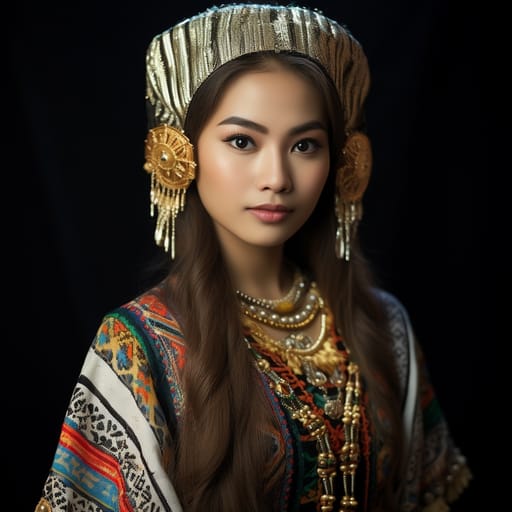
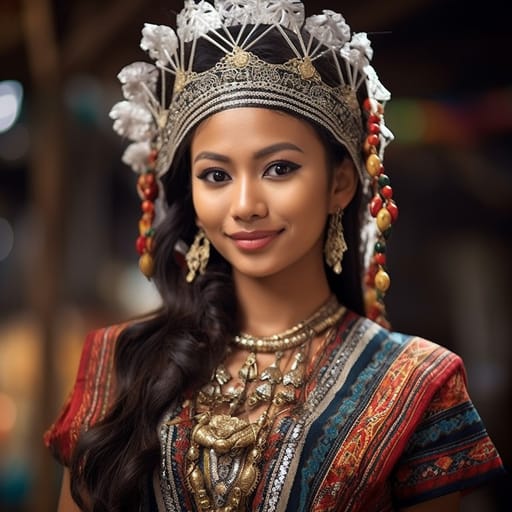
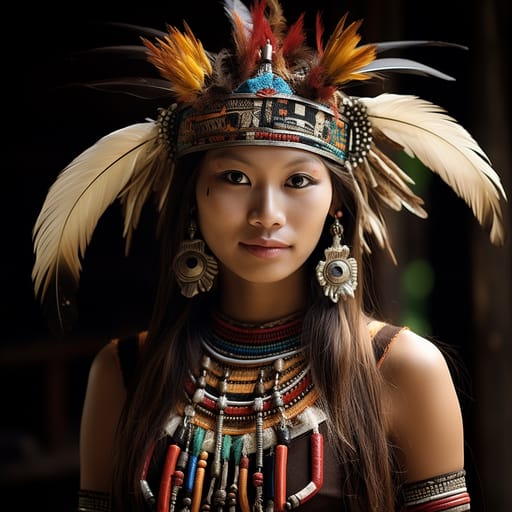
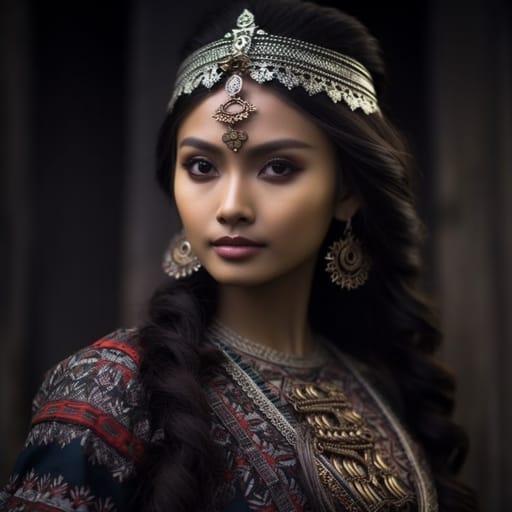
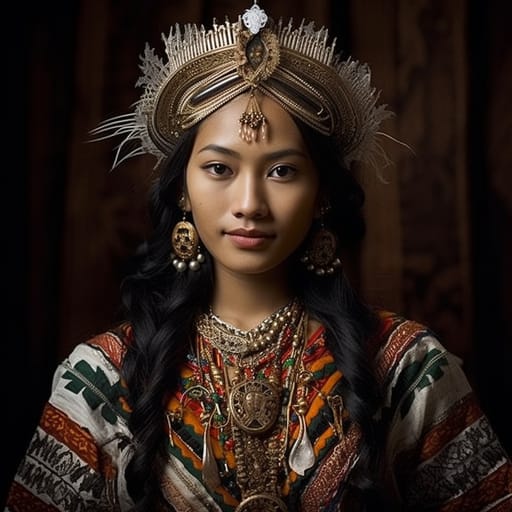
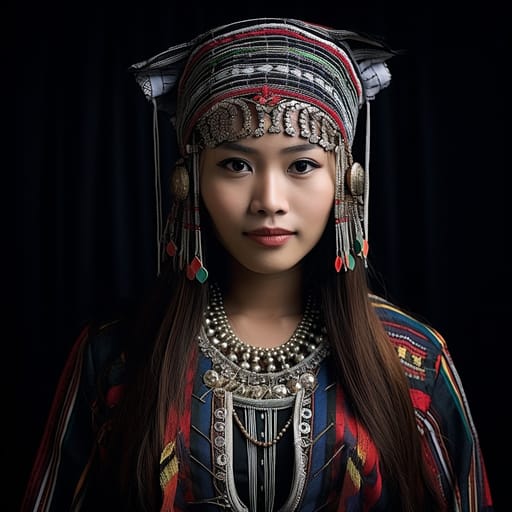
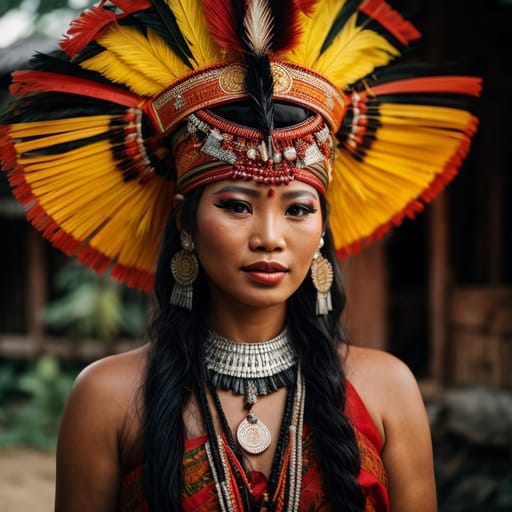
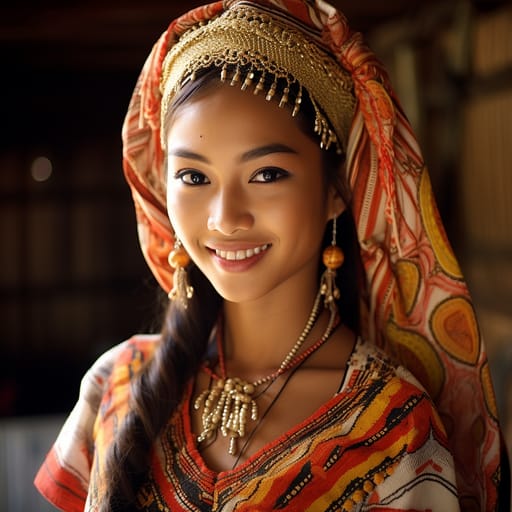
Typical Ivatan Phenotypes
Reference for AI generation: hair, eyes, skin, facial structure, build
Ivatan Body & Anatomy Reference
Southeast Asian Austronesian / Austroasiatic phenotype: anatomy reference for AI nude generation
Ivatan Boobs & Breasts
Bust reference for Ivatan women: small-to-medium cup, modest projection, which is typical of Southeast Asian Austronesian / Austroasiatic ancestry. Areolas measure about 26-38mm across, with medium-brown to dark-brown pigmentation. Body type (ectomorph, petite frame) shapes the bust as well, so Ivatan tits are usually firm, modest projection. In AI imagery, keep the forward-set shape rather than drifting toward the fuller South Asian or Polynesian bust.
Ivatan Ass & Hips
The Ivatan ass is typically small-to-medium, modest projection, narrower hip profile, which sets it apart from the fuller glutes of the Pacific Islander phenotype. Underneath, the pelvis shows narrow-to-medium iliac crests, part of the Southeast Asian Austronesian / Austroasiatic skeletal pattern. For Ivatan butt pics and AI renders, match that silhouette and the overall build (ectomorph, petite frame).
Ivatan Vagina & Pussy
Ivatan pussy and vulvar anatomy presents medium-brown to dark-brown labial pigmentation, consistent with the Southeast Asian Austronesian / Austroasiatic phenotype's pigmentation pattern. Ivatan pubic hair is typically straight-to-wavy fine-to-medium texture, in the inverted-triangle pattern. For anatomically accurate Ivatan pussy renders the labial coloration should match the surrounding tan to medium-brown skin tone with a continuous gradient, and the hair should keep its straight-to-wavy fine-to-medium texture.
Ivatan Dicks & Penis
Ivatan dicks follow the Southeast Asian Austronesian / Austroasiatic reference data: regional mean ~11cm erect; moderate girth; medium-brown shaft pigmentation. Shaft color should track the tan to medium-brown skin tone with a smooth change toward the glans, and Ivatan pubic hair keeps its straight-to-wavy fine-to-medium texture.
Ivatan Body, Curves & Build
Ivatan body type and overall build presents as ectomorph, petite frame, with mean adult female BMI 20-23: the characteristic Southeast Asian Austronesian / Austroasiatic habitus. Ivatan curves and proportions should keep the regional skeletal frame (height, shoulder-to-hip ratio, limb proportions) rather than a generic mesomorph default.
Ivatan Skin Tone & Hair Texture
Ivatan skin sits in the tan to medium-brown (Fitzpatrick III-V) band. Hair is typically straight-to-wavy 1A-2A, dark-brown to black, in keeping with the Southeast Asian Austronesian / Austroasiatic phenotype. In nude renders the skin should stay one even tone from face to body, and body, pubic and head hair should match.
Explore phenotype categories
Structured taxonomy with peer-reviewed scales · 22 anatomical categories
Notable Ivatan People
1 reference figure, sourced from Wikipedia
- Vicente Barsana, member of the Philippine Assembly from 1912 to 1916 and governor of Batanes f…
Erotic Poses & Sex Positions
From the pose catalog: 219 named positions with reference skeletons
Frequently asked questions about Ivatan people
Where is the Ivatan homeland?
The Ivatan homeland is Batanes Islands, Philippines in Southeast Asia.
What language do Ivatan people speak?
Ivatan people primarily speak Ivatan (Austronesian, Batanic/Bashiic).
What religion do Ivatan people practice?
The predominant religion among Ivatan people is Roman Catholicism (with strong local custom).






Make your own Ivatan images
Five a day, free, no credits to buy. The studio starts from this group's phenotype data, so you can set body type, pose and style and keep the traits accurate.
Start with Ivatan