Help us get this right
Does this portrait look right for Moluccans?
Nobody has judged this one yet. You would be the first.
Moluccans Erotic
The Maluku Islands of eastern Indonesia, from Halmahera, Ternate and Tidore in the north through Seram, Ambon and Buru to the Kei, Aru and Tanimbar groups in the southeast, with a long-established community in the Netherlands.
Ambonese Malay as the regional lingua franca, over dozens of local languages, most in the Central Malayo-Polynesian branch of Austronesian, with Ternate and Tidore in the non-Austronesian North Halmaheran family; Indonesian generally, and Dutch in the dia
Sunni Islam in North Maluku and along much of the coast, Protestant Christianity in Ambon and central Maluku, with adat custom active alongside both.
Ambonese, Bandanese, Ternatans and Tidorese, the Alfur of Seram and Halmahera, Nuaulu, and the Kei, Aru and Tanimbarese of the southeast; part of the wider Austronesian and Melanesian populations of eastern Indonesia.
About Moluccans People
Moluccans are the people of a scatter of islands in eastern Indonesia that the rest of the world once rearranged its economy around. Nutmeg and mace grew nowhere on earth but the tiny Banda group, and cloves came from Ternate, Tidore and the Halmahera coast. That accident of botany brought the Portuguese and then the Dutch, and in 1621 the VOC under Jan Pieterszoon Coen killed, enslaved or deported almost the whole Bandanese population to hold the monopoly. The homeland runs from Halmahera in the north down through Seram, Ambon and Buru to the Kei, Aru and Tanimbar groups in the southeast: steep, forested, volcanic, and far more sea than land. Most Moluccan languages belong to the Central Malayo-Polynesian branch of Austronesian, but the north is the exception that matters. Ternate and Tidore, the two sultanates that ran the clove trade for centuries, speak North Halmaheran languages that are not Austronesian at all. Between islands people use Ambonese Malay, a creole carrying enough Portuguese and Dutch to be audible.
Religion has divided the region for four centuries, and mostly along geography. Ambon and central Maluku hold one of the oldest Protestant populations in Asia; the north and much of the coast is Sunni. That line turned catastrophic between 1999 and 2002, when sectarian fighting killed thousands and emptied whole districts before the Malino talks brought it to a halt. What held in places was pela gandong, a system of sworn alliance between villages, often pairing a Christian village with a Muslim one, obliging each to help build the other's church or mosque and treating the partner village's people as kin, which makes marriage between them incest. It is binding, not decorative. Sasi is the other institution outsiders miss: a closed season on a reef, a sago grove or a stand of fruit trees, declared and lifted by adat authority rather than by the state. Sago, not rice, is the staple, cooked down into the near-translucent papeda. And a large Moluccan community lives in the Netherlands, descended from the roughly twelve thousand KNIL soldiers and their families shipped there in 1951 after the South Moluccan republic was suppressed. They were told the arrangement was temporary and housed in camps. It was not temporary, and the anger of the second generation broke into the open in the train and building sieges of the 1970s.
Related ethnic groups
Groups that share Moluccans's homeland, region, language, or religious tradition. These are likely candidates for comparative phenotype reference.
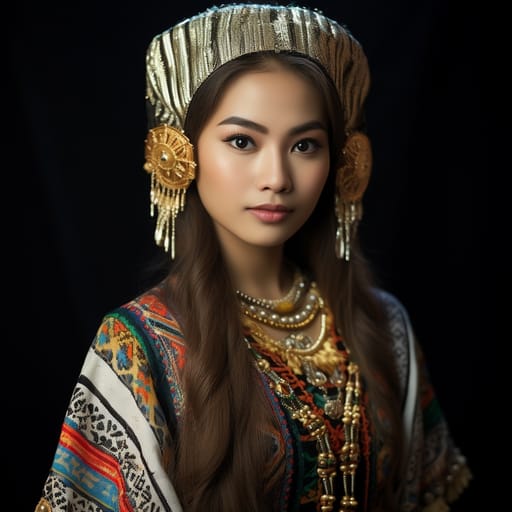
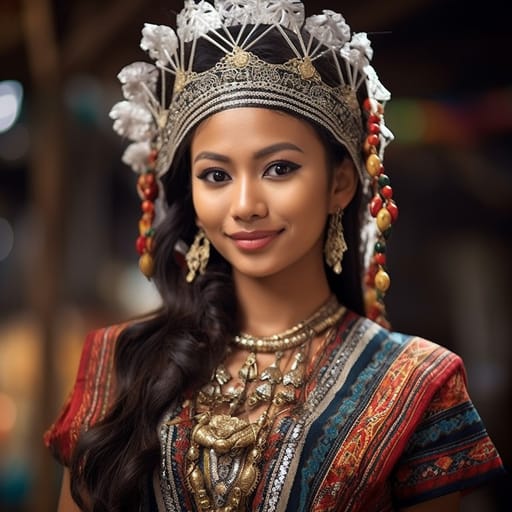
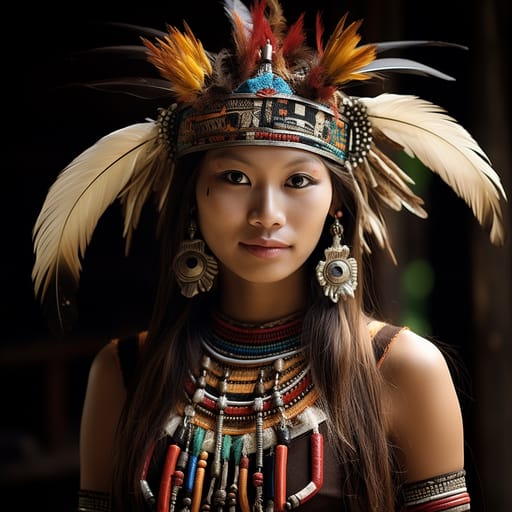
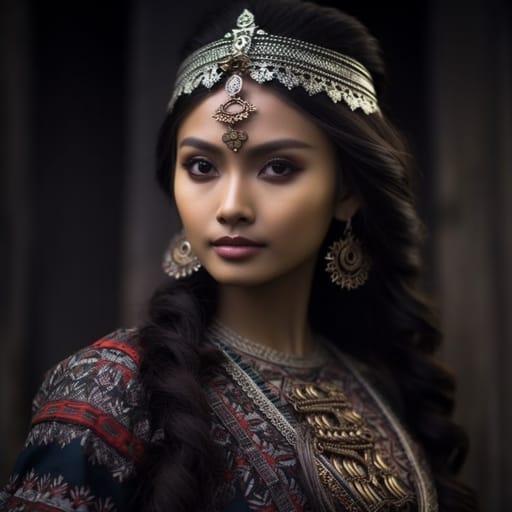
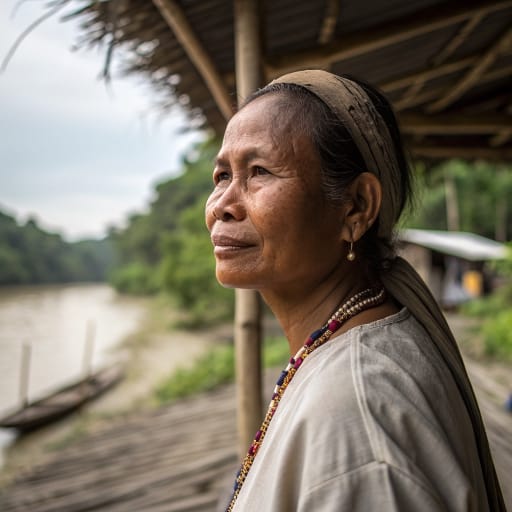
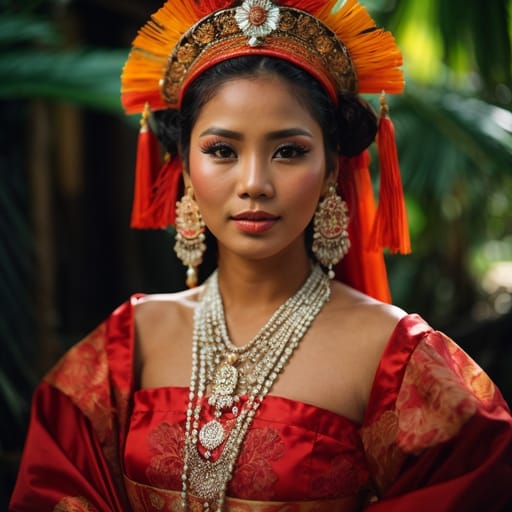
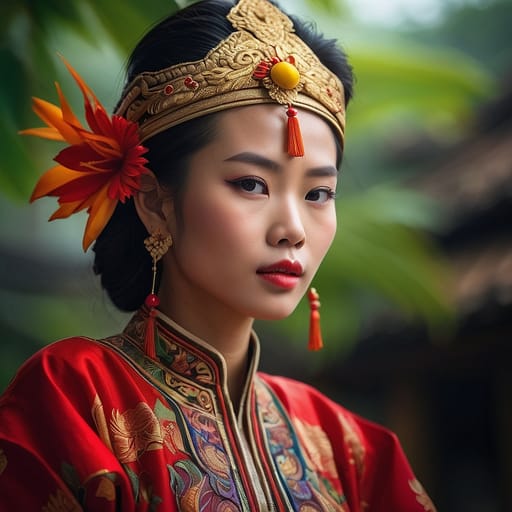
Typical Moluccans Phenotypes
Reference for AI generation: hair, eyes, skin, facial structure, build
Moluccans Body & Anatomy Reference
Anatomy by feature, Southeast Asian Austronesian / Austroasiatic phenotype
Moluccans Boobs & Breasts
Bust reference for Moluccans women: small-to-medium cup, modest projection, which is typical of Southeast Asian Austronesian / Austroasiatic ancestry. Areolas measure about 26-38mm across, with medium-brown to dark-brown pigmentation. Body type (ectomorph, petite frame) shapes the bust as well, so Moluccans tits are usually firm, modest projection. In AI imagery, keep the forward-set shape rather than drifting toward the fuller South Asian or Polynesian bust.
Moluccans Ass & Hips
The Moluccans ass is typically small-to-medium, modest projection, narrower hip profile, which sets it apart from the fuller glutes of the Pacific Islander phenotype. Underneath, the pelvis shows narrow-to-medium iliac crests, part of the Southeast Asian Austronesian / Austroasiatic skeletal pattern. For Moluccans butt pics and AI renders, match that silhouette and the overall build (ectomorph, petite frame).
Moluccans Vagina & Pussy
Moluccans pussy and vulvar anatomy presents medium-brown to dark-brown labial pigmentation, consistent with the Southeast Asian Austronesian / Austroasiatic phenotype's pigmentation pattern. Moluccans pubic hair is typically straight-to-wavy fine-to-medium texture, in the inverted-triangle pattern. For anatomically accurate Moluccans pussy renders the labial coloration should match the surrounding tan to medium-brown skin tone with a continuous gradient, and the hair should keep its straight-to-wavy fine-to-medium texture.
Moluccans Dicks & Penis
Moluccans dicks follow the Southeast Asian Austronesian / Austroasiatic reference data: regional mean ~11cm erect; moderate girth; medium-brown shaft pigmentation. Shaft color should track the tan to medium-brown skin tone with a smooth change toward the glans, and Moluccans pubic hair keeps its straight-to-wavy fine-to-medium texture.
Moluccans Body, Curves & Build
Moluccans body type and overall build presents as ectomorph, petite frame, with mean adult female BMI 20-23: the characteristic Southeast Asian Austronesian / Austroasiatic habitus. Moluccans curves and proportions should keep the regional skeletal frame (height, shoulder-to-hip ratio, limb proportions) rather than a generic mesomorph default.
Moluccans Skin Tone & Hair Texture
Moluccans skin sits in the tan to medium-brown (Fitzpatrick III-V) band. Hair is typically straight-to-wavy 1A-2A, dark-brown to black, in keeping with the Southeast Asian Austronesian / Austroasiatic phenotype. In nude renders the skin should stay one even tone from face to body, and body, pubic and head hair should match.
Explore phenotype categories
Structured taxonomy with peer-reviewed scales · 22 anatomical categories
Erotic Poses & Sex Positions
From the pose catalog: 219 named positions with reference skeletons
Frequently asked questions about Moluccans people
Where is the Moluccans homeland?
The Moluccans homeland is The Maluku Islands of eastern Indonesia, from Halmahera, Ternate and Tidore in the north through Seram, Ambon and Buru to the Kei, Aru and Tanimbar groups in the southeast, with a long-established community in the Netherlands. in Southeast Asia.
What language do Moluccans people speak?
Moluccans people primarily speak Ambonese Malay as the regional lingua franca, over dozens of local languages, most in the Central Malayo-Polynesian branch of Austronesian, with Ternate and Tidore in the non-Austronesian North Halmaheran family; Indonesian generally, and Dutch in the dia.
What religion do Moluccans people practice?
The predominant religion among Moluccans people is Sunni Islam in North Maluku and along much of the coast, Protestant Christianity in Ambon and central Maluku, with adat custom active alongside both..






Make your own Moluccans images
Five a day, free, no credits to buy. The studio starts from this group's phenotype data, so you can set body type, pose and style and keep the traits accurate.
Start with Moluccans