No image yet

Hmar Erotic

Homeland

Hill country of Northeast India: southern Manipur (Churachandpur, Pherzawl, Jiribam), northern Mizoram, and Cachar and Dima Hasao in Assam, with smaller communities in Meghalaya

Language

Hmar (Sino-Tibetan, Kuki-Chin branch), closely related to Mizo; many also speak Mizo, English and regional languages

Part of the Sino-Tibetan language family

Religion

Mostly Protestant Christian since the early 20th century; before that, a traditional religion of spirit offerings led by village priests

Subgroups

Many clans including Thiek, Faihriem, Lungtau, Leiri and Khawbung; part of the wider Mizo, Zo and Kuki-Chin family of peoples

About Hmar People

The Hmar are a hill people of Northeast India, and their homeland crosses state lines. Their villages run through the southern hills of Manipur around Churachandpur and Tipaimukh, across northern Mizoram, and into the Cachar and Dima Hasao districts of Assam, with smaller communities in Meghalaya. They are held together by a shared language, a dense network of clans and an origin story that traces the people back to Sinlung, an ancestral homeland. Sinlung is also the name of the Sinlung Hills Council in north Mizoram, which came out of peace accords with Hmar armed groups.

Hmar is a Kuki-Chin language of the Sino-Tibetan family. It is very close to Mizo, so close that the relationship between the two peoples is as much a political question as a language question. The name is often explained as the Mizo word for north, pointing to where Hmar clans lived compared with their Lushai neighbors. In 2023 the Hmar Inpui, the community's top body, reaffirmed that the Hmar are Mizo. That statement carries real weight in a region where the labels Kuki, Zo and Mizo shape alliances and land claims. The ethnic violence that broke out in Manipur that year also reached Hmar communities in Churachandpur and Jiribam.

Hmar society is built on clans such as Thiek, Faihriem, Lungtau, Leiri and Khawbung, and many Hmar use a clan name, or simply Hmar, as a surname. Christianity came early. In 1910 the Welsh missionary Watkin Roberts traveled to Senvon, a Hmar village in Manipur, after its chief asked him to come. Within a few generations nearly the whole community had moved from the old religion of spirit offerings and village priests to Protestant churches. Church life now sets much of the social calendar, from choirs and youth fellowships to weddings and funerals. Rochunga Pudaite, a Hmar from Manipur, translated the New Testament into Hmar and went on to build an international Bible distribution ministry.

The older ways have not disappeared. Sikpui Ruoi, a winter festival from before Christianity, has been revived as a cultural celebration. Its song has lines about a sea parting and a people led by cloud by day and fire by night, which has fed a long debate over whether Hmar tradition holds an echo of the Exodus story. The patterned Hmar-am wrap and other handwoven cloths still come out for festivals, weddings and church occasions.

Typical Hmar Phenotypes

Reference for AI generation — hair, eyes, skin, facial structure, build

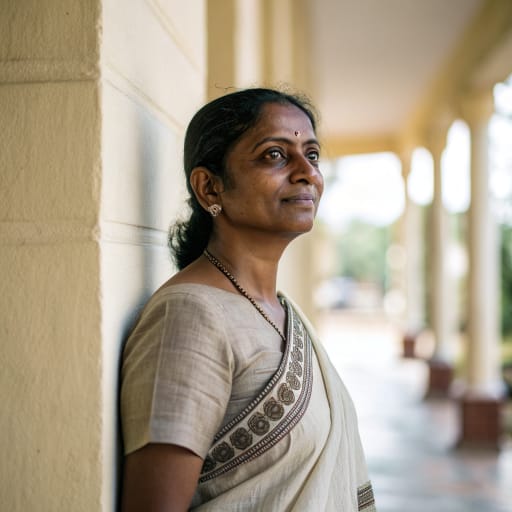
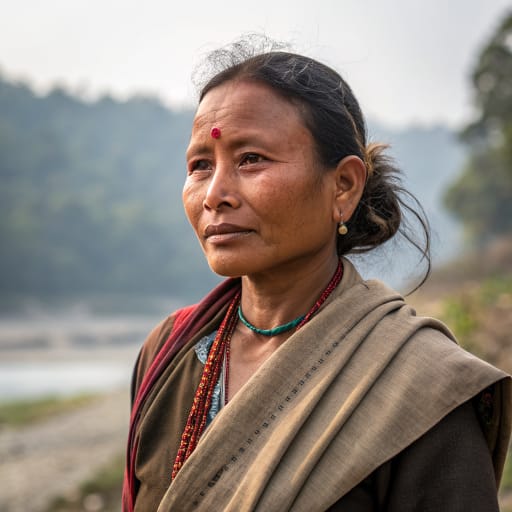
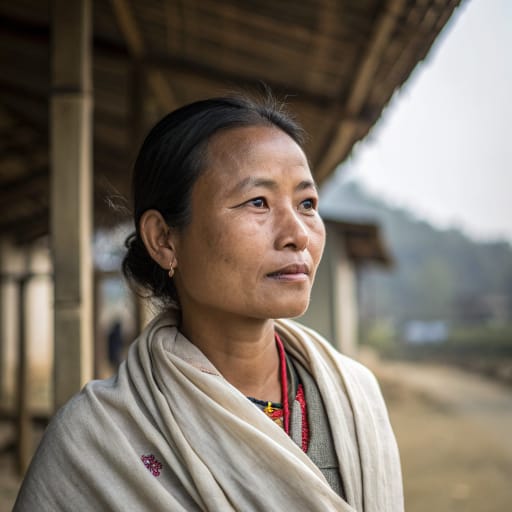
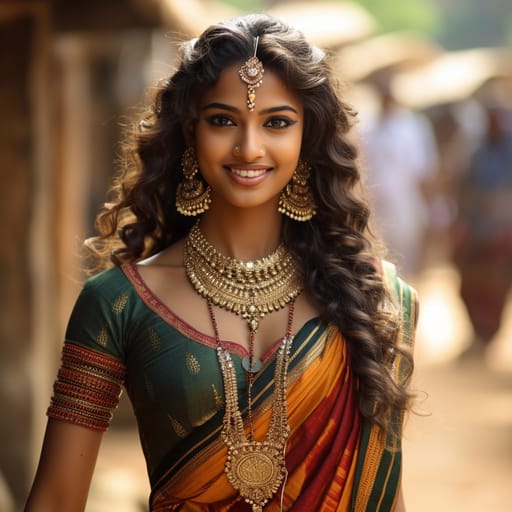
Hmar people generally have light to medium brown skin, straight black hair and the East Asian facial features common among Kuki-Chin peoples, with short to medium height. Everyday clothing is mostly modern and Western in style, though many women wear a handwoven wraparound puan skirt with a blouse. At festivals, weddings and cultural events, men and women wear traditional handwoven cloths such as the patterned Hmar-am.

Hmar Body & Anatomy Reference

Per-feature anatomical profile for AI nude generation — Indo-Aryan / Dravidian South Asian phenotype

Hmar Boobs & Breasts

Hmar tits and boobs run medium-to-large cup, moderate-to-full projection — the classic Indo-Aryan / Dravidian South Asian bust profile. Hmar nipples and areolas show medium-brown to dark-brown areolar pigmentation against the wheatish-to-brown skin tone, with areolar diameter typically in the 32-46mm range and forward-set positioning rather than the the smaller East Asian bust profile. Hmar breasts trend full and soft, generally fuller than the East Asian norm, a function of the endomorph-to-mesomorph with fuller hip deposition body habitus and the mean adult female BMI 22-25. For anatomically-accurate AI-generated Hmar nudes the render preserves: medium-to-large cup, moderate-to-full projection shape, 32-46mm areolas with medium-brown to dark-brown pigmentation, and the torso proportions of the Indo-Aryan / Dravidian South Asian phenotype.

Hmar Ass & Hips

Hmar ass and hip morphology presents as medium-to-full, moderate-to-high projection, classic curvy hip profile — distinctly different from the slim hip profile of East Asian women. The Hmar pelvic profile shows medium-to-wide iliac crests, full gluteal-femoral fat distribution, anchored in the Indo-Aryan / Dravidian South Asian skeletal pattern. Hmar butt shots in adult AI imagery should render the medium-to-full, moderate-to-high projection, classic curvy hip profile silhouette with the endomorph-to-mesomorph with fuller hip deposition build and the gluteal-femoral fat distribution typical of the Indo-Aryan / Dravidian South Asian phenotype rather than defaulting to a globally-averaged "ethnic" butt that generic AI generators produce. The hip-to-waist ratio characteristic of Hmar women is one of the identifying features of the Indo-Aryan / Dravidian South Asian regional phenotype.

Hmar Vagina & Pussy

Hmar pussy and vulvar anatomy presents medium-brown to dark-brown labial pigmentation, fuller labia minora projection — consistent with the Indo-Aryan / Dravidian South Asian phenotype's pigmentation pattern. Hmar pubic hair is typically straight-to-wavy coarse texture, dense distribution, distributed in the inverted-triangle pattern with regional-typical density. AI-generated Hmar nude imagery should preserve the medium-brown to dark-brown labial pigmentation and the straight-to-wavy coarse texture hair texture rather than defaulting to a Western-European pink-and-sparse template. For anatomically-accurate Hmar pussy renders the labial pigmentation and coloration should match the surrounding wheatish to brown skin tone of the Indo-Aryan / Dravidian South Asian phenotype, with continuous gradient rather than an abrupt color transition.

Hmar Dicks & Penis

Hmar dick and penile anatomy in adult AI generation should anchor on the regional reference data: regional mean ~13cm erect, moderate girth, and medium-brown shaft pigmentation. The Hmar cock profile reflects the Indo-Aryan / Dravidian South Asian ancestral population's anthropometric measurements rather than a globally-averaged Western-pornography default. For anatomically-accurate Hmar nude male imagery the shaft pigmentation should track the surrounding wheatish to brown skin tone, the glans-to-shaft pigmentation transition should be continuous, and the pubic hair pattern should match straight-to-wavy coarse texture texture distributed in the typical inverted-V escutcheon. Circumcision status in Hmar populations varies by religious-cultural tradition rather than ancestral phenotype.

Hmar Body, Curves & Build

Hmar body type and overall build presents as endomorph-to-mesomorph with fuller hip deposition, with mean adult female BMI 22-25 — the characteristic Indo-Aryan / Dravidian South Asian habitus. Hmar curves and proportions in adult AI imagery should preserve the regional skeletal frame (height, shoulder-to-hip ratio, limb proportions) rather than scaling to a Western-European mesomorph default. The Hmar nude female form, when rendered with anatomical fidelity, shows the height range, frame width, and adipose distribution pattern typical of the Indo-Aryan / Dravidian South Asian phenotype. Generic AI image generators tend to collapse regional body types into a few default shapes; the EthnicErotic phenotype-anchored approach preserves the Hmar build as its own reference category.

Hmar Skin Tone & Hair Texture

Hmar skin tone falls in the wheatish to brown (Fitzpatrick III-V) band — the surface signal most often miscalibrated by generic AI nude generators trained on Western-photographic datasets. Hmar hair texture is typically straight-to-wavy 1A-2B, dense, dark-brown to black, characteristic of the Indo-Aryan / Dravidian South Asian phenotype. For anatomically-accurate Hmar nude renders the skin should hold the Fitzpatrick band consistently across body surface rather than showing the lighter-than-face body shading that AI generators default to. Hmar hair pigmentation and texture on body, pubic, and head should match across the figure rather than mixing textures (a common AI artefact).

Get notified when there’s a new post about Hmar.

Discussion Board

Have a view on this? Sign in to post — your first one earns 2 generation credits.

No posts on this board yet

Log in to start the conversation.

See what’s active across the community →

Frequently asked questions about Hmar people

Where is the Hmar homeland?

The Hmar homeland is Hill country of Northeast India: southern Manipur (Churachandpur, Pherzawl, Jiribam), northern Mizoram, and Cachar and Dima Hasao in Assam, with smaller communities in Meghalaya in Southern Asia.

What language do Hmar people speak?

Hmar people primarily speak Hmar (Sino-Tibetan, Kuki-Chin branch), closely related to Mizo; many also speak Mizo, English and regional languages.

What religion do Hmar people practice?

The predominant religion among Hmar people is Mostly Protestant Christian since the early 20th century; before that, a traditional religion of spirit offerings led by village priests.


What does a typical Hmar woman look like?

Hmar people generally have light to medium brown skin, straight black hair and the East Asian facial features common among Kuki-Chin peoples, with short to medium height. Everyday clothing is mostly modern and Western in style, though many women wear a handwoven wraparound puan skirt with a blouse.