No image yet

Gnawa Erotic

Homeland

Morocco, concentrated in Marrakesh, Essaouira, Meknes, Fez and Tamesloht, with related communities in western Algeria.

Language

Moroccan Arabic (Darija) and Tamazight (both Afro-Asiatic) in daily life; ritual songs preserve words from Bambara (Mande), Hausa (Chadic) and Songhay.

Religion

Sunni Islam of the Maliki school, practiced through a healing and possession brotherhood that venerates Sidi Bilal alongside the saints and the mluk.

Subgroups

A brotherhood rather than a lineage group, organized into zawiyas and maalem houses; kin to the Diwan tradition of western Algeria and to Stambeli in Tunisia.

About Gnawa People

The Gnawa are less an ethnic group in the tidy sense than a people the Sahara assembled. Their ancestors came north out of the Sahel, most of them in chains, sold along the desert routes into Morocco across several centuries, and what they built after arriving was not a homeland but a practice. A Gnawi is someone who belongs to a house, a lineage of musicians, and a ceremony. The core of that world descends from Bambara, Hausa, Songhay and Fulani captives, but membership opened long ago to Moroccans with no West African ancestry at all. They speak Moroccan Arabic, and Tamazight in the south. The old languages are gone from conversation but not from the songs: much of the ritual repertoire is sung in words the singers themselves can no longer translate, held in place by melody alone. Two events shaped the community more than any others: the Saadian conquest of the Songhai Empire in 1591, which pushed captives north in numbers, and the reign of Moulay Ismail, who assembled the Abid al-Bukhari, a standing army of Black soldiers drawn from enslaved and free men alike. For most of the time since, Gnawa music sat at the bottom of the country's social order, tolerated for its cures and dismissed as the noise of slaves.

The ceremony is the lila, which runs from dusk until the light returns. A maalem leads it on the guembri, a three-stringed bass lute strung over a camel-skin body, with qraqeb, heavy iron castanets, hammering underneath. It opens outdoors with a procession, passes through a loose and comic stretch, then turns serious: a sequence of suites, each keyed to a color and to the spirits that answer to it, white for Sidi Musa and for water, yellow for Lalla Mira. A moqaddema, always a woman, runs the room. She handles the incense, drapes the right cloth over anyone who has gone under, and brings them back. Islam is not incidental to any of this. The patron is Sidi Bilal, the Abyssinian companion of the Prophet and the first to call the prayer, which is the community's own answer to anyone who says the practice stands outside the faith. Since the 1990s the music has traveled: Randy Weston and Pharoah Sanders recorded with Gnawa masters, Essaouira has run a festival since 1998, UNESCO listed the tradition in 2019, and maalems who once played for the sick now play for ticketed crowds. Whether an hour on a stage is the same thing as a night in a room is an argument the Gnawa are still having among themselves.

Typical Gnawa Phenotypes

Reference for AI generation — hair, eyes, skin, facial structure, build

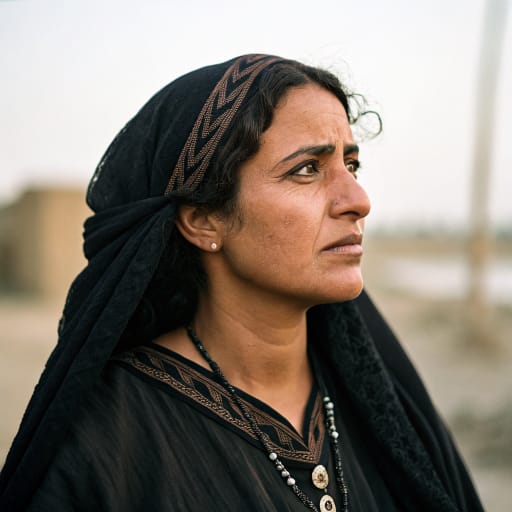
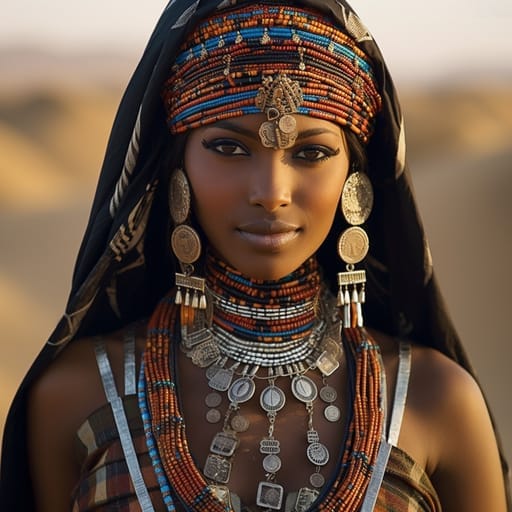
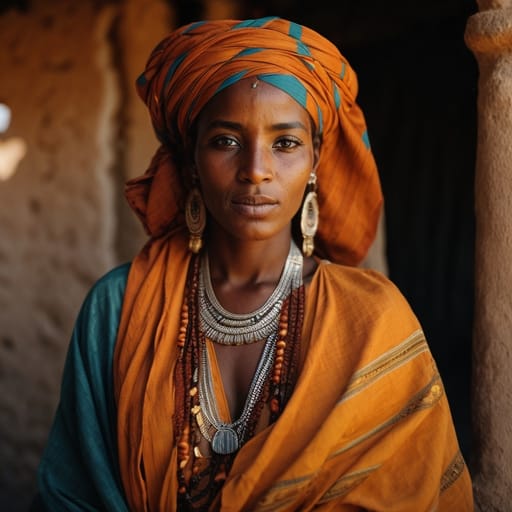
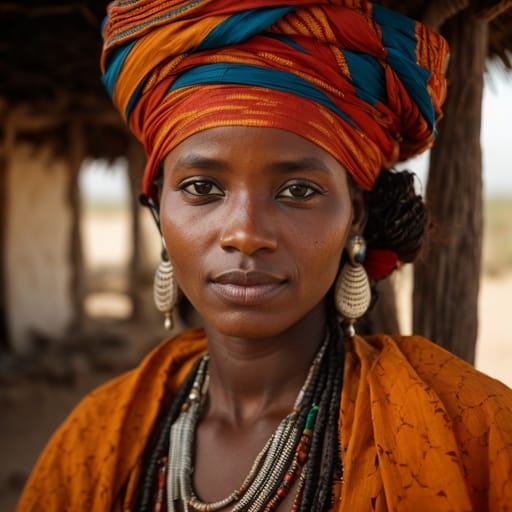
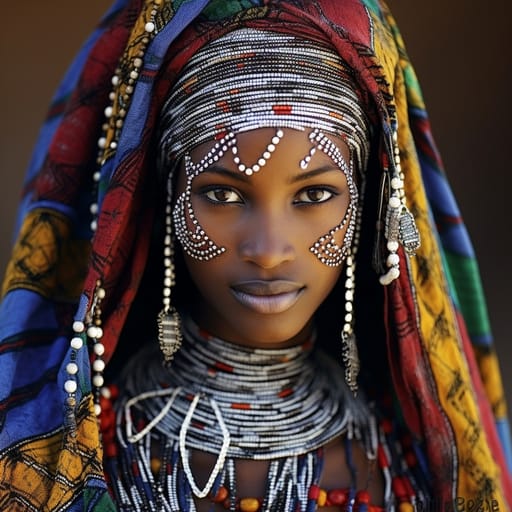
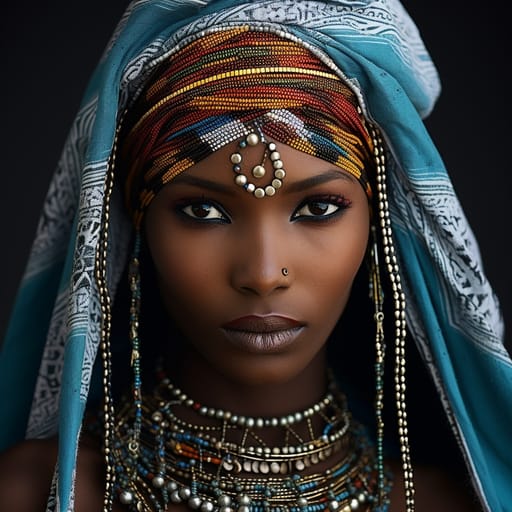
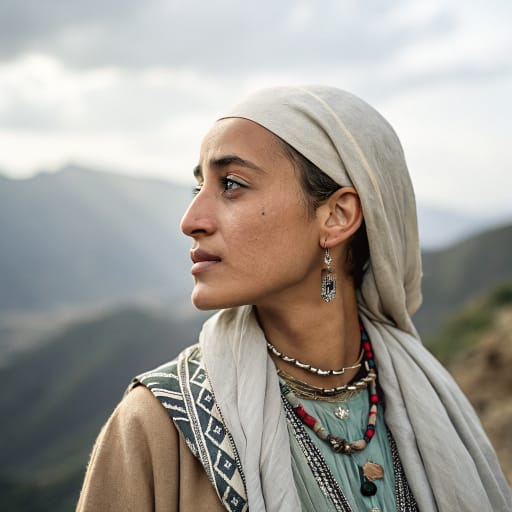
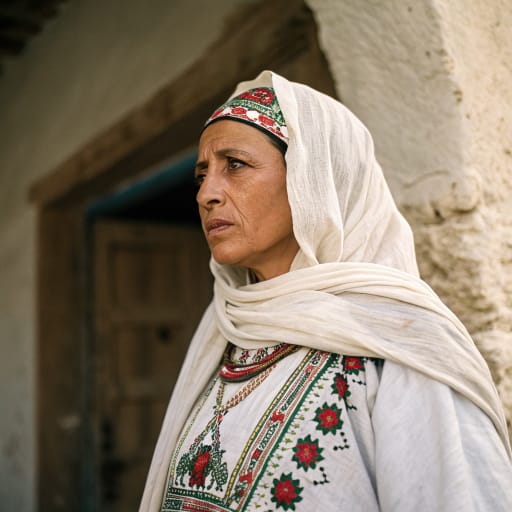
Appearance ranges widely, from dark brown skin among those closest to West African descent to the full range of complexions found across Morocco, since the brotherhood has absorbed outsiders for centuries. Ceremonial dress is the identifying mark: a long gown in the color of the suite being played, cross-belts over the chest, and a cap heavy with cowrie shells fitted with a long tassel the dancer whirls in a circle from the crown of the head. Cowries, carried north along the same routes as the ancestors, recur as ornament on caps, belts and bags. Outside the lila, everyday dress is ordinary Moroccan: djellaba or street clothes.

Gnawa Body & Anatomy Reference

Per-feature anatomical profile for AI nude generation — Berber / Mediterranean-Saharan phenotype

Gnawa Boobs & Breasts

Gnawa tits and boobs run medium-to-large cup, full, moderate projection — the classic Berber / Mediterranean-Saharan bust profile. Gnawa nipples and areolas show medium-brown to dark-brown areolar pigmentation against the olive-to-light-brown skin tone, with areolar diameter typically in the 30-44mm range and forward-set positioning rather than the the smaller East Asian bust profile. Gnawa breasts trend fuller and softer than the Cushitic East African norm, a function of the mesomorph with fuller hip-and-bust deposition body habitus and the mean adult female BMI 24-28. For anatomically-accurate AI-generated Gnawa nudes the render preserves: medium-to-large cup, full, moderate projection shape, 30-44mm areolas with medium-brown to dark-brown pigmentation, and the torso proportions of the Berber / Mediterranean-Saharan phenotype.

Gnawa Ass & Hips

Gnawa ass and hip morphology presents as medium-to-full, moderate projection, broader hip profile — distinctly different from the slim narrow-hip Cushitic East African profile. The Gnawa pelvic profile shows medium-to-wide iliac crests, fuller gluteal-femoral fat distribution, anchored in the Berber / Mediterranean-Saharan skeletal pattern. Gnawa butt shots in adult AI imagery should render the medium-to-full, moderate projection, broader hip profile silhouette with the mesomorph with fuller hip-and-bust deposition build and the gluteal-femoral fat distribution typical of the Berber / Mediterranean-Saharan phenotype rather than defaulting to a globally-averaged "ethnic" butt that generic AI generators produce. The hip-to-waist ratio characteristic of Gnawa women is one of the identifying features of the Berber / Mediterranean-Saharan regional phenotype.

Gnawa Vagina & Pussy

Gnawa pussy and vulvar anatomy presents medium-brown to dark-brown labial pigmentation, fuller labia minora — consistent with the Berber / Mediterranean-Saharan phenotype's pigmentation pattern. Gnawa pubic hair is typically wavy-to-coiled medium-coarse texture, dense distribution, distributed in the inverted-triangle pattern with regional-typical density. AI-generated Gnawa nude imagery should preserve the medium-brown to dark-brown labial pigmentation and the wavy-to-coiled medium-coarse texture hair texture rather than defaulting to a Western-European pink-and-sparse template. For anatomically-accurate Gnawa pussy renders the labial pigmentation and coloration should match the surrounding olive to medium-brown skin tone of the Berber / Mediterranean-Saharan phenotype, with continuous gradient rather than an abrupt color transition.

Gnawa Dicks & Penis

Gnawa dick and penile anatomy in adult AI generation should anchor on the regional reference data: regional mean ~13-14cm erect, moderate girth, and medium-brown shaft pigmentation. The Gnawa cock profile reflects the Berber / Mediterranean-Saharan ancestral population's anthropometric measurements rather than a globally-averaged Western-pornography default. For anatomically-accurate Gnawa nude male imagery the shaft pigmentation should track the surrounding olive to medium-brown skin tone, the glans-to-shaft pigmentation transition should be continuous, and the pubic hair pattern should match wavy-to-coiled medium-coarse texture texture distributed in the typical inverted-V escutcheon. Circumcision status in Gnawa populations varies by religious-cultural tradition rather than ancestral phenotype.

Gnawa Body, Curves & Build

Gnawa body type and overall build presents as mesomorph with fuller hip-and-bust deposition, with mean adult female BMI 24-28 — the characteristic Berber / Mediterranean-Saharan habitus. Gnawa curves and proportions in adult AI imagery should preserve the regional skeletal frame (height, shoulder-to-hip ratio, limb proportions) rather than scaling to a Western-European mesomorph default. The Gnawa nude female form, when rendered with anatomical fidelity, shows the height range, frame width, and adipose distribution pattern typical of the Berber / Mediterranean-Saharan phenotype. Generic AI image generators tend to collapse regional body types into a few default shapes; the EthnicErotic phenotype-anchored approach preserves the Gnawa build as its own reference category.

Gnawa Skin Tone & Hair Texture

Gnawa skin tone falls in the olive to medium-brown (Fitzpatrick III-V) band — the surface signal most often miscalibrated by generic AI nude generators trained on Western-photographic datasets. Gnawa hair texture is typically wavy-to-curly 2B-3C, often dark-brown to black, characteristic of the Berber / Mediterranean-Saharan phenotype. For anatomically-accurate Gnawa nude renders the skin should hold the Fitzpatrick band consistently across body surface rather than showing the lighter-than-face body shading that AI generators default to. Gnawa hair pigmentation and texture on body, pubic, and head should match across the figure rather than mixing textures (a common AI artefact).

Get notified when there’s a new post about Gnawa.

Discussion Board

Have a view on this? Sign in to post — your first one earns 2 generation credits.

No posts on this board yet

Log in to start the conversation.

See what’s active across the community →

Erotic Poses & Sex Positions

From the pose catalog — 219 named positions with reference skeletons

Frequently asked questions about Gnawa people

Where is the Gnawa homeland?

The Gnawa homeland is Morocco, concentrated in Marrakesh, Essaouira, Meknes, Fez and Tamesloht, with related communities in western Algeria. in Northern Africa.

What language do Gnawa people speak?

Gnawa people primarily speak Moroccan Arabic (Darija) and Tamazight (both Afro-Asiatic) in daily life; ritual songs preserve words from Bambara (Mande), Hausa (Chadic) and Songhay..

What religion do Gnawa people practice?

The predominant religion among Gnawa people is Sunni Islam of the Maliki school, practiced through a healing and possession brotherhood that venerates Sidi Bilal alongside the saints and the mluk..


What does a typical Gnawa woman look like?

Appearance ranges widely, from dark brown skin among those closest to West African descent to the full range of complexions found across Morocco, since the brotherhood has absorbed outsiders for centuries. Ceremonial dress is the identifying mark: a long gown in the color of the suite being played, cross-belts over the chest, and a cap heavy with cowrie shells fitted with a long tassel the dancer whirls in a circle from the crown of the head.