No portrait yet
Quinquegentiani Erotic
Mountains of Greater Kabylia around Mons Ferratus (the Djurdjura), in Roman Mauretania Caesariensis, present-day northern Algeria
Ancient Berber (Afroasiatic), never written down
Indigenous pre-Christian Berber religion; the details were not recorded
A Roman-named confederation of five Berber (Mauri) tribes whose separate names are not securely known; part of the wider Berber peoples of ancient North Africa
About Quinquegentiani People
The Quinquegentiani were a confederation of Berber mountain tribes in Roman Mauretania Caesariensis, in what is now northern Algeria, who fought Rome in the later third century AD and faded from the record after an emperor campaigned against them in person. The Kabyles who live in the same highlands today are their most plausible heirs, though no direct line can be traced. The name was Roman, not theirs. It means roughly the five peoples, a label for an alliance of tribes that outsiders found easier to count than to know. What the five groups called themselves, and what exactly held them together, went unrecorded.
Their country is usually placed in the steep coastal ranges of Greater Kabylia, around the massif the Romans called Mons Ferratus, today's Djurdjura. Roman Africa was a world of plains, roads and walled towns. Highlands like these could sit inside a province on paper while answering mostly to their own chiefs. The Quinquegentiani almost certainly spoke an early form of Berber, a branch of the Afroasiatic family and a distant forerunner of the Kabyle heard in those valleys now, but nothing in their own words survives. The record is just as silent on their religion. Local, pre-Christian and Berber is about as far as the evidence goes.
They are known almost entirely through their wars. By the 290s their raids on the province's farms and towns had become more than the provincial command could settle. Maximian, Diocletian's co-emperor in the West, crossed into Africa with a field army. Through 297 he forced the confederation out of its mountain strongholds and reportedly chased them beyond the mountains toward the edge of the desert. On March 10, 298, he rode into Carthage in triumph, and that entry marked the end of the African war.
Little is heard of the confederation after that. What lasts is the landscape and a pattern that goes with it. The Djurdjura has a long reputation as ground that rulers based on the coast struggled to hold, from Ottoman Algiers to the French army, and its villages keep a strong tradition of governing themselves. The Quinquegentiani are an early and barely visible chapter of that history. Today they are seen only through a handful of Roman sources, with no account of their own.
Related ethnic groups
Groups that share Quinquegentiani's homeland, region, language, or religious tradition. These are likely candidates for comparative phenotype reference.
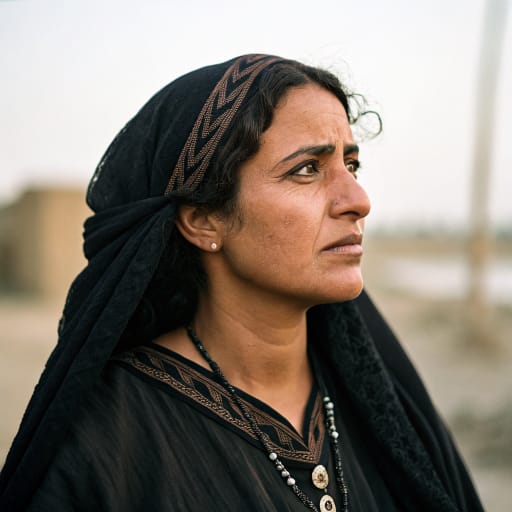
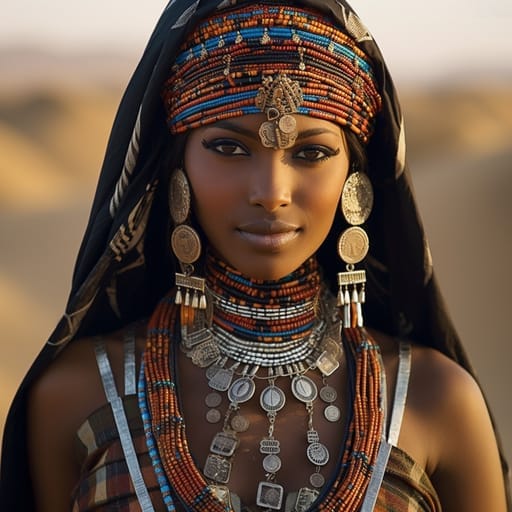
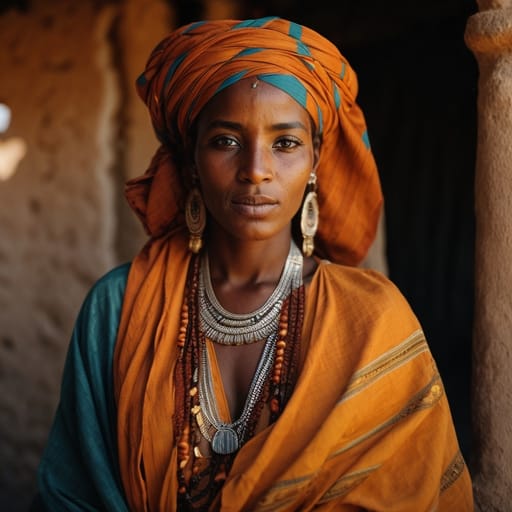
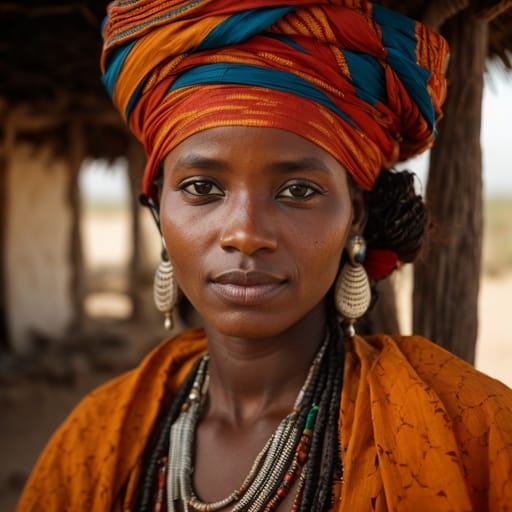
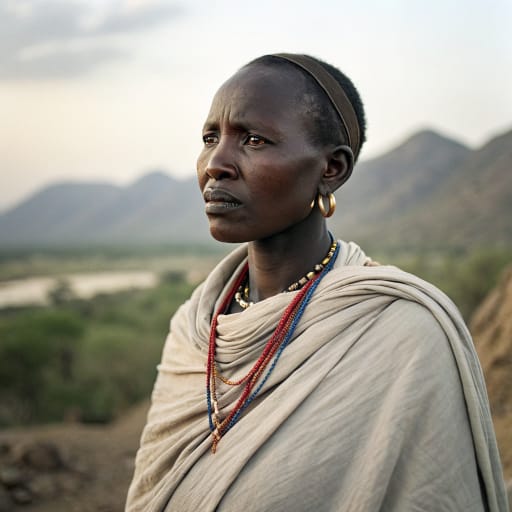
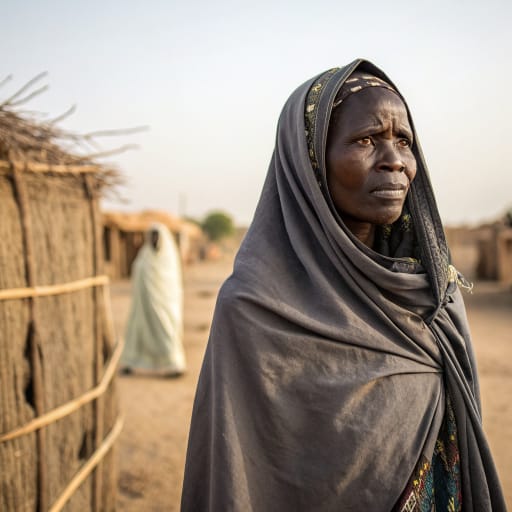
Typical Quinquegentiani Phenotypes
Reference for AI generation: hair, eyes, skin, facial structure, build
Quinquegentiani Body & Anatomy Reference
Per-feature anatomical profile for AI nude generation: Berber / Mediterranean-Saharan phenotype
Quinquegentiani Boobs & Breasts
Bust reference for Quinquegentiani women: medium-to-large cup, full, moderate projection, which is typical of Berber / Mediterranean-Saharan ancestry. Areolas measure about 30-44mm across, with medium-brown to dark-brown pigmentation. Body type (mesomorph with fuller hip-and-bust deposition) shapes the bust as well, so Quinquegentiani tits are usually fuller and softer than the Cushitic East African norm. In AI imagery, keep the forward-set shape rather than drifting toward the smaller East Asian bust profile.
Quinquegentiani Ass & Hips
The Quinquegentiani ass is typically medium-to-full, moderate projection, broader hip profile, which sets it apart from the slim narrow-hip Cushitic East African profile. Underneath, the pelvis shows medium-to-wide iliac crests, fuller gluteal-femoral fat distribution, part of the Berber / Mediterranean-Saharan skeletal pattern. For Quinquegentiani butt pics and AI renders, match that silhouette and the overall build (mesomorph with fuller hip-and-bust deposition).
Quinquegentiani Vagina & Pussy
Quinquegentiani pussy and vulvar anatomy presents medium-brown to dark-brown labial pigmentation, fuller labia minora, consistent with the Berber / Mediterranean-Saharan phenotype's pigmentation pattern. Quinquegentiani pubic hair is typically wavy-to-coiled medium-coarse texture, dense distribution, in the inverted-triangle pattern. For anatomically accurate Quinquegentiani pussy renders the labial coloration should match the surrounding olive to medium-brown skin tone with a continuous gradient, and the hair should keep its wavy-to-coiled medium-coarse texture.
Quinquegentiani Dicks & Penis
Quinquegentiani dicks follow the Berber / Mediterranean-Saharan reference data: regional mean ~13-14cm erect; moderate girth; medium-brown shaft pigmentation. Shaft color should track the olive to medium-brown skin tone with a smooth change toward the glans, and Quinquegentiani pubic hair keeps its wavy-to-coiled medium-coarse texture.
Quinquegentiani Body, Curves & Build
Quinquegentiani body type and overall build presents as mesomorph with fuller hip-and-bust deposition, with mean adult female BMI 24-28: the characteristic Berber / Mediterranean-Saharan habitus. Quinquegentiani curves and proportions should keep the regional skeletal frame (height, shoulder-to-hip ratio, limb proportions) rather than a generic mesomorph default.
Quinquegentiani Skin Tone & Hair Texture
Quinquegentiani skin sits in the olive to medium-brown (Fitzpatrick III-V) band. Hair is typically wavy-to-curly 2B-3C, often dark-brown to black, in keeping with the Berber / Mediterranean-Saharan phenotype. In nude renders the skin should stay one even tone from face to body, and body, pubic and head hair should match.
Explore phenotype categories
Structured taxonomy with peer-reviewed scales · 22 anatomical categories
Erotic Poses & Sex Positions
From the pose catalog: 219 named positions with reference skeletons
Frequently asked questions about Quinquegentiani people
Where is the Quinquegentiani homeland?
The Quinquegentiani homeland is Mountains of Greater Kabylia around Mons Ferratus (the Djurdjura), in Roman Mauretania Caesariensis, present-day northern Algeria in Northern Africa.
What language do Quinquegentiani people speak?
Quinquegentiani people primarily speak Ancient Berber (Afroasiatic), never written down.
What religion do Quinquegentiani people practice?
The predominant religion among Quinquegentiani people is Indigenous pre-Christian Berber religion; the details were not recorded.






Make your own Quinquegentiani images
Five a day, free, no credits to buy. The studio starts from this group's phenotype data, so you can set body type, pose and style and keep the traits accurate.
Start with Quinquegentiani