Help us get this right
Does this portrait look right for Ghomara?
Nobody has judged this one yet. You would be the first.
Ghomara Erotic
The western Rif of northern Morocco, the Mediterranean coast and mountains east of Tetouan through Chefchaouen province, around Oued Laou, Targha and Bou Ahmed.
Ghomara Berber (Afro-Asiatic, Northern Berber), now spoken in only a few villages; most speak Jebli Moroccan Arabic (Afro-Asiatic, Semitic).
Sunni Islam, Maliki school, with strong saint veneration and Sufi zawiya traditions.
Amazigh (Berber); grouped with the Masmuda by Ibn Khaldun; a confederation of tribes including Beni Bouzra, Beni Mansour, Beni Ziat and Beni Selman; culturally part of the Jbala.
About Ghomara People
The Ghomara are the mountain people of Morocco's western Rif, the belt of coast and steep interior running east from Tetouan, where limestone ridges drop hard into the Mediterranean and the rain comes in off the water in a way it does almost nowhere else in the country. The wet changes everything: oak and cork forest instead of scrub, terraced hillsides worked by hand, and village houses with pitched roofs of tile and thatch, a silhouette that looks foreign to anyone who arrives expecting the flat mud roofs of the south. Ghomara identity is tribal before it is anything else. The name covers a cluster of tribes, among them Beni Bouzra, Beni Mansour, Beni Ziat and Beni Selman, who have shared this coast long enough that medieval Arab writers treated them as a single bloc, and who today sit inside the wider Jbala world of the northwest without quite dissolving into it.
Language is the clearest line. Most Ghomara now speak Jebli Arabic, the mountain dialect that carries an audible Berber substrate underneath it. But in a handful of villages in Beni Bouzra and Beni Mansour, a few thousand people still speak Ghomara Berber, one of the most thoroughly Arabic-saturated Berber languages anywhere: it has taken in not just vocabulary but working pieces of Arabic verb morphology, and linguists have spent decades arguing about what that borrowing means. Religion is Sunni Islam of the Maliki school, held in the local way, which is to say the year runs on saints' festivals and the landscape is marked with white-domed tombs and zawiyas as much as with mosques. It has not always been orthodox. In the 920s a Ghomara man named Ha-Mim declared himself a prophet, produced a scripture in Berber, and preached a pared-down law with a lighter fast and fewer obligations, while his aunt and his sister were consulted as diviners; the movement died with him in battle, but the story stayed. Later centuries put the Ghomara on the receiving end of larger forces: Idrisid loyalties, Andalusi refugees settling nearby Chefchaouen after 1492, Spanish protectorate rule, the Rif war and the long official neglect that followed it. Today the pressure is economic. Emigration to Tetouan, Tangier and Europe has thinned the villages, remittances hold up what remains, and cannabis has been the region's dependable cash crop for generations, with everything that follows from a harvest that is illegal.
Related ethnic groups
Groups that share Ghomara's homeland, region, language, or religious tradition. These are likely candidates for comparative phenotype reference.
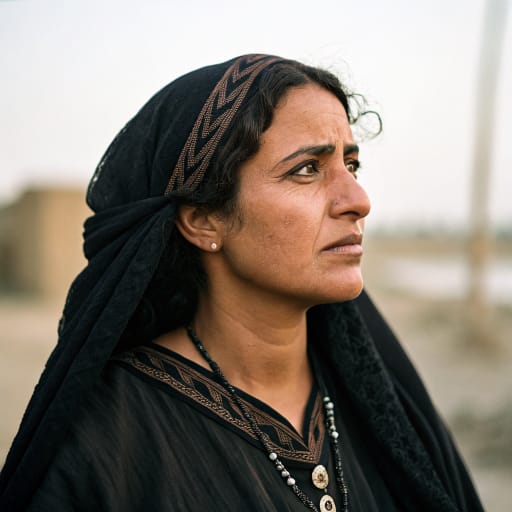
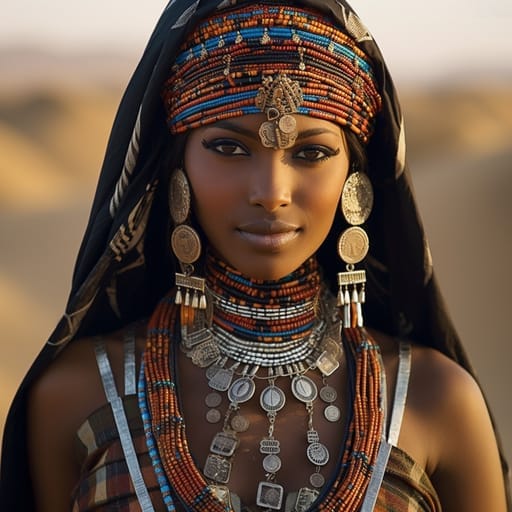
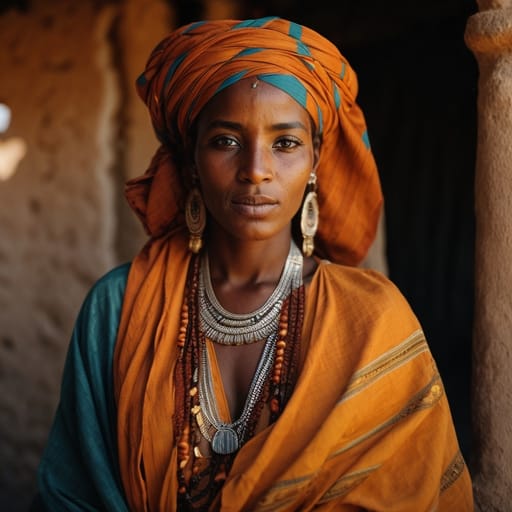
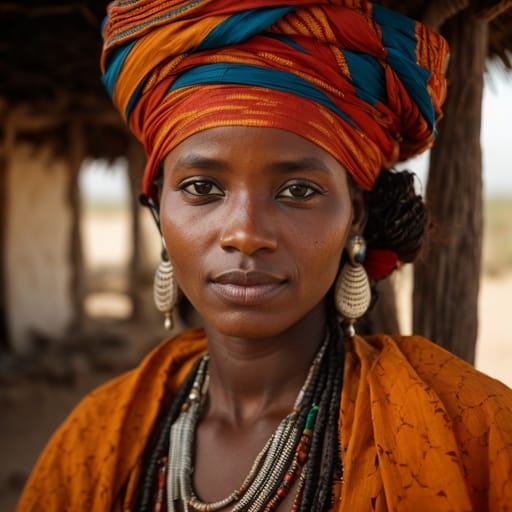
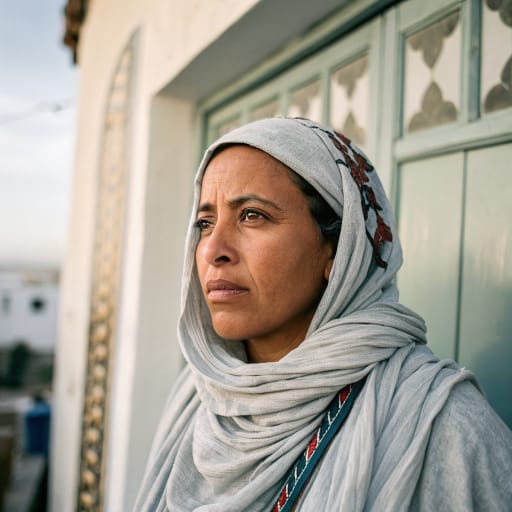
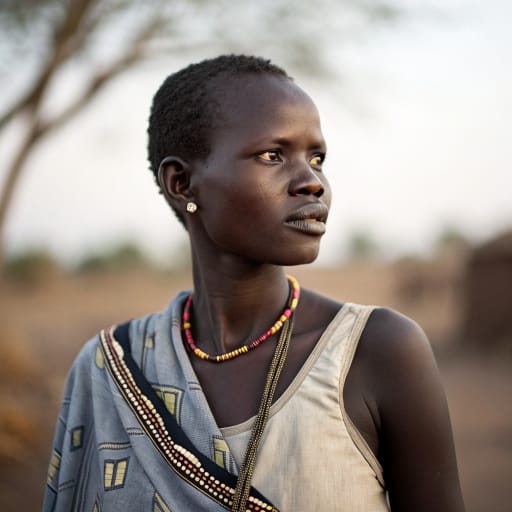
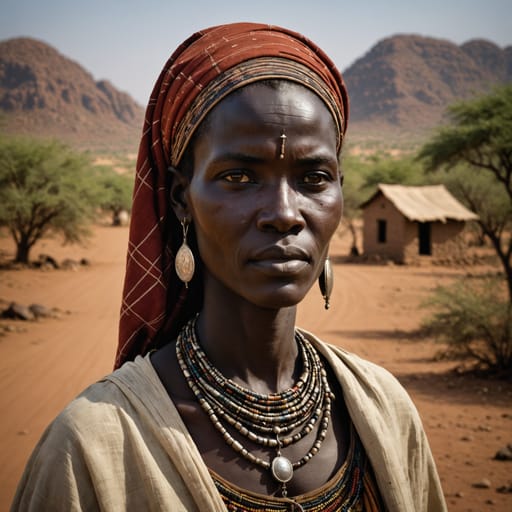
Typical Ghomara Phenotypes
Reference for AI generation: hair, eyes, skin, facial structure, build
Ghomara Body & Anatomy Reference
Anatomy by feature, Berber / Mediterranean-Saharan phenotype
Ghomara Boobs & Breasts
Bust reference for Ghomara women: medium-to-large cup, full, moderate projection, which is typical of Berber / Mediterranean-Saharan ancestry. Areolas measure about 30-44mm across, with medium-brown to dark-brown pigmentation. Body type (mesomorph with fuller hip-and-bust deposition) shapes the bust as well, so Ghomara tits are usually fuller and softer than the Cushitic East African norm. In AI imagery, keep the forward-set shape rather than drifting toward the smaller East Asian bust profile.
Ghomara Ass & Hips
The Ghomara ass is typically medium-to-full, moderate projection, broader hip profile, which sets it apart from the slim narrow-hip Cushitic East African profile. Underneath, the pelvis shows medium-to-wide iliac crests, fuller gluteal-femoral fat distribution, part of the Berber / Mediterranean-Saharan skeletal pattern. For Ghomara butt pics and AI renders, match that silhouette and the overall build (mesomorph with fuller hip-and-bust deposition).
Ghomara Vagina & Pussy
Ghomara pussy and vulvar anatomy presents medium-brown to dark-brown labial pigmentation, fuller labia minora, consistent with the Berber / Mediterranean-Saharan phenotype's pigmentation pattern. Ghomara pubic hair is typically wavy-to-coiled medium-coarse texture, dense distribution, in the inverted-triangle pattern. For anatomically accurate Ghomara pussy renders the labial coloration should match the surrounding olive to medium-brown skin tone with a continuous gradient, and the hair should keep its wavy-to-coiled medium-coarse texture.
Ghomara Dicks & Penis
Ghomara dicks follow the Berber / Mediterranean-Saharan reference data: regional mean ~13-14cm erect; moderate girth; medium-brown shaft pigmentation. Shaft color should track the olive to medium-brown skin tone with a smooth change toward the glans, and Ghomara pubic hair keeps its wavy-to-coiled medium-coarse texture.
Ghomara Body, Curves & Build
Ghomara body type and overall build presents as mesomorph with fuller hip-and-bust deposition, with mean adult female BMI 24-28: the characteristic Berber / Mediterranean-Saharan habitus. Ghomara curves and proportions should keep the regional skeletal frame (height, shoulder-to-hip ratio, limb proportions) rather than a generic mesomorph default.
Ghomara Skin Tone & Hair Texture
Ghomara skin sits in the olive to medium-brown (Fitzpatrick III-V) band. Hair is typically wavy-to-curly 2B-3C, often dark-brown to black, in keeping with the Berber / Mediterranean-Saharan phenotype. In nude renders the skin should stay one even tone from face to body, and body, pubic and head hair should match.
Explore phenotype categories
Structured taxonomy with peer-reviewed scales · 22 anatomical categories
Erotic Poses & Sex Positions
From the pose catalog: 219 named positions with reference skeletons
Frequently asked questions about Ghomara people
Where is the Ghomara homeland?
The Ghomara homeland is The western Rif of northern Morocco, the Mediterranean coast and mountains east of Tetouan through Chefchaouen province, around Oued Laou, Targha and Bou Ahmed. in Northern Africa.
What language do Ghomara people speak?
Ghomara people primarily speak Ghomara Berber (Afro-Asiatic, Northern Berber), now spoken in only a few villages; most speak Jebli Moroccan Arabic (Afro-Asiatic, Semitic)..
What religion do Ghomara people practice?
The predominant religion among Ghomara people is Sunni Islam, Maliki school, with strong saint veneration and Sufi zawiya traditions..






Make your own Ghomara images
Five a day, free, no credits to buy. The studio starts from this group's phenotype data, so you can set body type, pose and style and keep the traits accurate.
Start with Ghomara