Help us get this right
Does this portrait look right for Forest Finns?
Nobody has judged this one yet. You would be the first.
Forest Finns Erotic
Forested uplands of central Sweden (Värmland, Dalarna, Hälsingland and neighboring provinces) and eastern Norway (Finnskogen, Innlandet); ancestral origin in Savo, eastern Finland
Historically a Savonian dialect of Finnish (Uralic, Finnic); today Swedish and Norwegian (Indo-European, North Germanic)
Lutheran Christianity, historically alongside Finnish folk magic, charm singing and healing traditions
Värmland Finns, Norwegian Forest Finns of Finnskogen and Solør, Finnmark settlers of Dalarna and Hälsingland; an offshoot of the Savonians and part of the wider Finnish people
About Forest Finns People
The Forest Finns are the descendants of Finnish farmers who walked west into the spruce wilderness of central Sweden and eastern Norway around 1600 and stayed. What set them apart was not only their language but their way of turning forest into farmland. They cut down the spruce, left it to dry for a year, burned it, and sowed rye straight into the warm ash. That method, called huuhta in Finnish, could return many times the seed on ground that Swedish plow farmers had written off as worthless.
Most came from Savo in eastern Finland, at a time when Finland was simply the eastern half of the Swedish realm. The crown wanted its empty backcountry cleared and taxed, and it offered years free of taxes to anyone willing to do the work. Families spread through Värmland, Dalarna, Hälsingland and neighboring provinces, and from there across the border into Norway, where the forest along the frontier is still called Finnskogen, the Finn Forest. They settled in scattered homesteads in the high woods between the established parishes. They built smoke cabins with no chimneys, barns for drying grain, and saunas.
The welcome did not last. Burning forest put the Finns in direct conflict with the mining industry, which needed the same timber for charcoal. Through the seventeenth century the authorities issued ordinances restricting the practice and at times ordered Finns who broke them out of the woods. Some ended up aboard ships bound for the New Sweden colony on the Delaware River, and some historians credit them with bringing log building and backwoods farming habits to early America.
Cut off from Finland, the settlers kept speaking a Savonian dialect of Finnish for roughly three centuries. Among their Swedish and Norwegian neighbors they had a reputation for charms, spells and healing magic, even though they belonged to the same Lutheran church as everyone around them. The Finnish folklorist Carl Axel Gottlund toured the Värmland settlements in the early nineteenth century, recording songs and pressing for the settlers' rights. Over the following century the dialect faded from household use as families shifted to Swedish and Norwegian.
Today the identity lives on in family and farm names, Finnish place names scattered across the map, restored smoke cabins, and heritage gatherings on both sides of the border. Norway formally recognizes the Forest Finns as one of its national minorities, and descendants in both countries still trace their families back to those first burned clearings.
Related ethnic groups
Groups that share Forest Finns's homeland, region, language, or religious tradition. These are likely candidates for comparative phenotype reference.
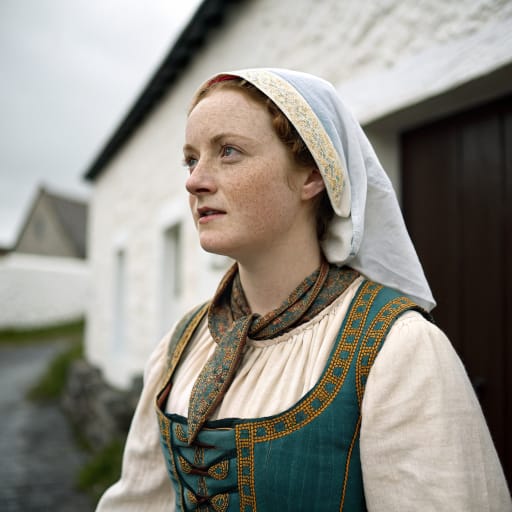
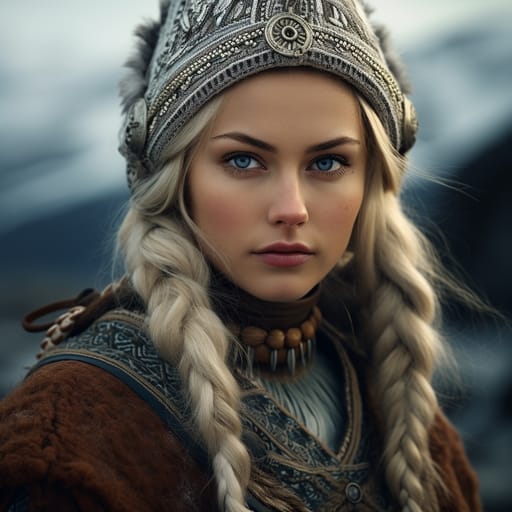
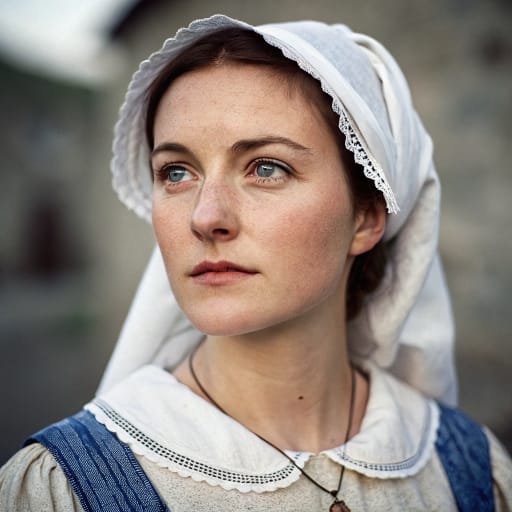
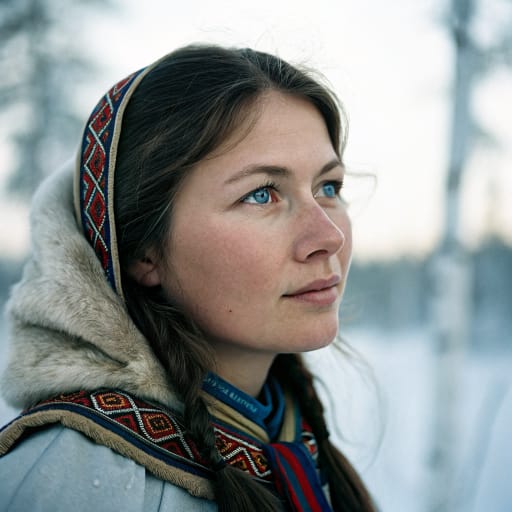
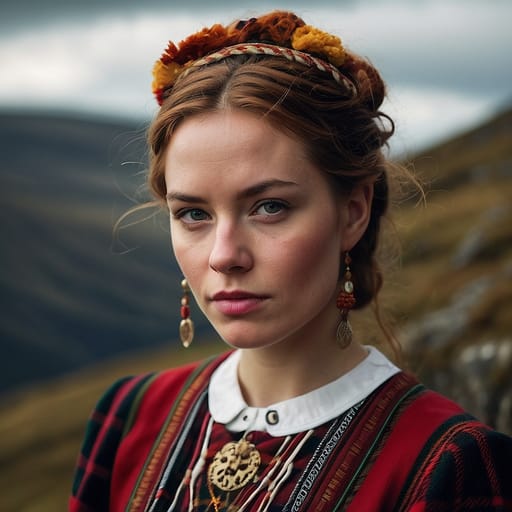
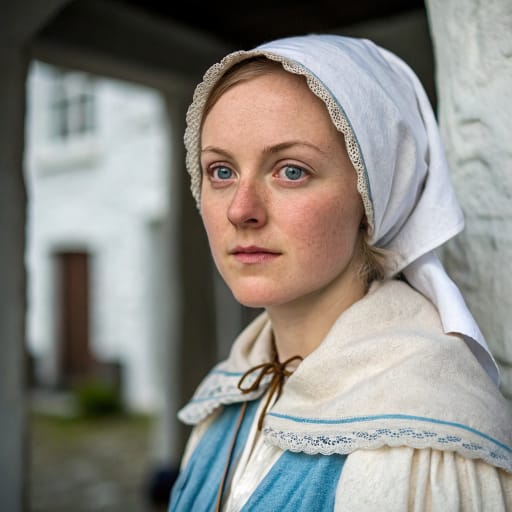
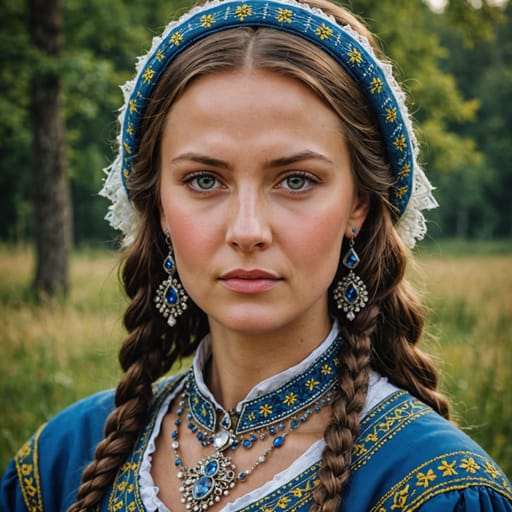
Typical Forest Finns Phenotypes
Reference for AI generation: hair, eyes, skin, facial structure, build
Forest Finns Body & Anatomy Reference
Northern European / Germanic-Scandinavian phenotype: anatomy reference for AI nude generation
Forest Finns Boobs & Breasts
The typical Forest Finns bust is medium-to-large cup, full, high projection, in line with the wider Northern European / Germanic-Scandinavian pattern. Areolas usually fall in the 32-48mm range, with light-pink to medium-pink areolar pigmentation against the fair skin tone. Compared with the smaller East Asian bust, Forest Finns breasts sit forward and are generally full and projecting, often the largest cup-size band in regional comparisons. A faithful AI render of Forest Finns tits keeps that shape and areola size.
Forest Finns Ass & Hips
Butt shape among Forest Finns women: medium-to-full, moderate-to-high projection, over medium-to-wide iliac crests. This follows Northern European / Germanic-Scandinavian ancestry and looks quite unlike the slim East Asian narrow-hip profile. An accurate Forest Finns ass in adult AI imagery keeps both the silhouette and the overall build (mesomorph with taller stature; ectomorph-to-mesomorph split) instead of a generic average.
Forest Finns Vagina & Pussy
Vulvar anatomy among Forest Finns women: light-pink to medium-pink labial pigmentation, varied labia minora projection. Pubic hair tends to be fine-to-medium wavy texture, often lighter-pigmented (blond to dark-brown), in the usual inverted-triangle pattern. Both follow Northern European / Germanic-Scandinavian pigmentation, which is why Forest Finns pussy renders should not fall back on a pale, sparse Western template.
Forest Finns Dicks & Penis
The Forest Finns cock profile, from Northern European / Germanic-Scandinavian anthropometric data: regional mean ~13-14cm erect; moderate-to-above-average girth; light-pink to light-brown shaft pigmentation. Pubic hair has a fine-to-medium wavy texture and forms the usual inverted-V pattern. Whether Forest Finns men are circumcised follows religious and cultural practice rather than phenotype.
Forest Finns Body, Curves & Build
Build and curves among Forest Finns women follow the Northern European / Germanic-Scandinavian pattern: mesomorph with taller stature; ectomorph-to-mesomorph split, mean adult female BMI 24-27. Proportions matter as much as skin tone, so Forest Finns figures should keep their regional height and limb ratios.
Forest Finns Skin Tone & Hair Texture
The Forest Finns skin range is fair (Fitzpatrick I-III), and hair tends to be straight-to-wavy 1A-2B, blond to medium-brown common. That combination marks the Northern European / Germanic-Scandinavian phenotype, and skin tone is the trait AI generators most often get wrong for Forest Finns women.
Explore phenotype categories
Structured taxonomy with peer-reviewed scales · 22 anatomical categories
Erotic Poses & Sex Positions
From the pose catalog: 219 named positions with reference skeletons
Frequently asked questions about Forest Finns people
Where is the Forest Finns homeland?
The Forest Finns homeland is Forested uplands of central Sweden (Värmland, Dalarna, Hälsingland and neighboring provinces) and eastern Norway (Finnskogen, Innlandet); ancestral origin in Savo, eastern Finland in Northern Europe.
What language do Forest Finns people speak?
Forest Finns people primarily speak Historically a Savonian dialect of Finnish (Uralic, Finnic); today Swedish and Norwegian (Indo-European, North Germanic).
What religion do Forest Finns people practice?
The predominant religion among Forest Finns people is Lutheran Christianity, historically alongside Finnish folk magic, charm singing and healing traditions.






Make your own Forest Finns images
Five a day, free, no credits to buy. The studio starts from this group's phenotype data, so you can set body type, pose and style and keep the traits accurate.
Start with Forest Finns