Help us get this right
Does this portrait look right for Embu?
Nobody has judged this one yet. You would be the first.
Embu Erotic
Southeastern slopes of Mount Kenya, in Embu County, central Kenya
Kiembu (Niger-Congo, Bantu, Mount Kenya cluster); Swahili and English widely used
Mostly Christian, Catholic and Protestant; traditional belief centered on Ngai and Mount Kenya
Mount Kenya Bantu peoples with the Kikuyu, Meru, Chuka, Tharaka and Mbeere; closest kin to the Mbeere, often grouped together
About Embu People
The Embu are the people of Mount Kenya's southeastern flank. Their farms climb the ridges above Embu town and Runyenjes, where streams run down from the forest through volcanic soil that is among the most productive in Kenya. Outsiders tend to lump them in with the Kikuyu next door, and national politics often does the same by counting them in a Mount Kenya bloc. The Embu see themselves as a separate people, with their own language, their own clans and their own founding ancestor, Mwenendega. Their language, Kiembu, is a Bantu language from the cluster spoken around the mountain. It is close enough to Kikuyu and Meru that speakers of either can follow a good part of it. The Mbeere, who live on the drier, lower ground to the south and east, speak something closer still, and the two peoples share Embu County today. Swahili and English are used for school, trade and government. Most Embu are Christian, mainly Catholic or Protestant, and Sunday service anchors the week. The older faith looked to Ngai, whose seat was the mountain itself, and the respect for elders and clan that came with it still counts in family life.
Before colonial rule, clans, age sets and councils of elders ran Embu society, and initiation marked the move into adulthood. British forces entered the area with a punitive expedition in 1906. Over the following decades the hillsides were turned over to cash crops, with coffee on the middle slopes and tea higher up. The Emergency of the 1950s hit hard here. The forests above the farms sheltered Mau Mau fighters, and Embu families went through curfews, detention and forced villagization, as their Kikuyu and Meru neighbors did. Many households still remember that time firsthand. Today the Embu are mostly farmers working small, intensively farmed plots of tea, coffee, macadamia, bananas and dairy cattle. Many have moved to Nairobi and other towns for work, but weddings, burials and clan business still happen on the land back home.
Related ethnic groups
Groups that share Embu's homeland, region, language, or religious tradition. These are likely candidates for comparative phenotype reference.
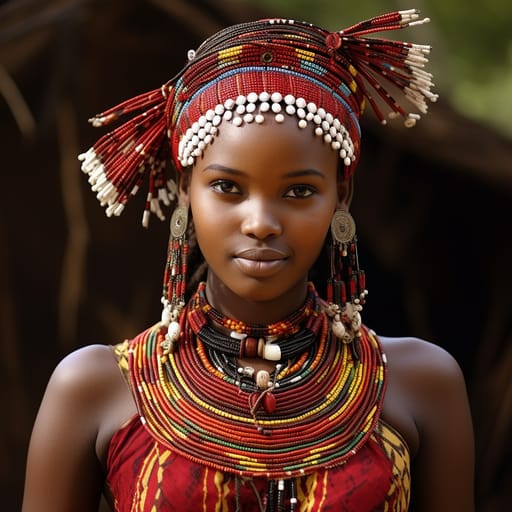
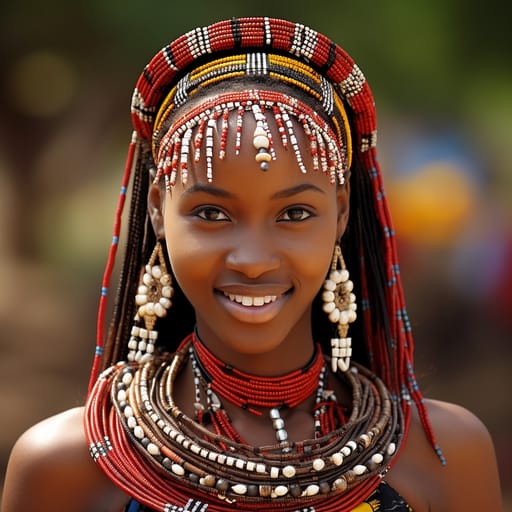
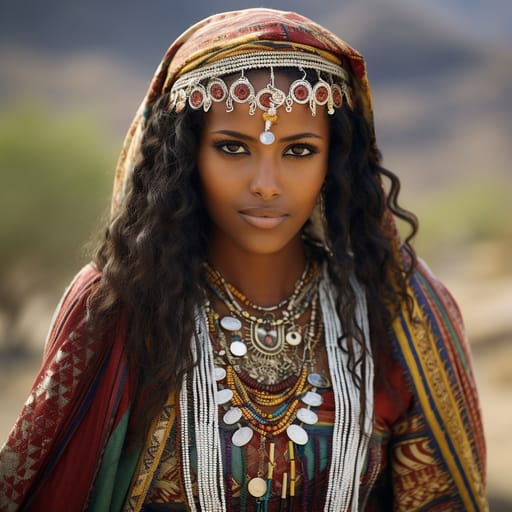
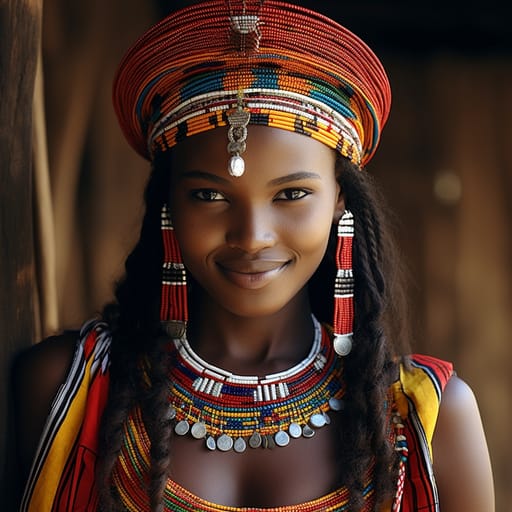
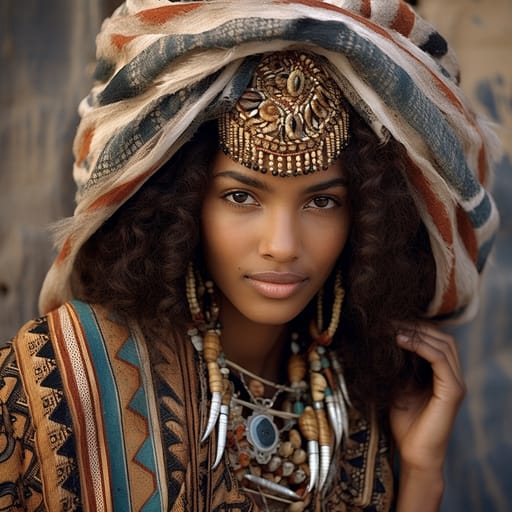
Typical Embu Phenotypes
Reference for AI generation: hair, eyes, skin, facial structure, build
Embu Body & Anatomy Reference
Per-feature anatomical profile for AI nude generation: Cushitic / Nilo-Cushitic East African phenotype
Embu Boobs & Breasts
The typical Embu bust is small-to-medium-cup, high-set, conical, in line with the wider Cushitic / Nilo-Cushitic East African pattern. Areolas usually fall in the 28-38mm range, with moderate-to-high areolar pigmentation against the brown-to-deep-brown skin tone. Compared with the lateral spread of the West African phenotype, Embu breasts sit forward and are generally firmer and less projecting than the African-American or West African norm. A faithful AI render of Embu tits keeps that shape and areola size.
Embu Ass & Hips
Butt shape among Embu women: small-to-medium, high-set, rounded, over narrow-to-medium iliac crests, longer torso-to-leg ratio. This follows Cushitic / Nilo-Cushitic East African ancestry and looks quite unlike the wide-set heavy-projection West African or African-American norm. An accurate Embu ass in adult AI imagery keeps both the silhouette and the overall build (lean ectomorph-to-mesomorph) instead of a generic average.
Embu Vagina & Pussy
Vulvar anatomy among Embu women: brown-to-deep-brown labial pigmentation, narrow-to-medium labia minora projection. Pubic hair tends to be tightly-coiled coarse texture, densely distributed, in the usual inverted-triangle pattern. Both follow Cushitic / Nilo-Cushitic East African pigmentation, which is why Embu pussy renders should not fall back on a pale, sparse Western template.
Embu Dicks & Penis
The Embu cock profile, from Cushitic / Nilo-Cushitic East African anthropometric data: regional mean ~13.5cm erect; moderate girth, ~12cm circumference; deeper-pigmented than the West African norm. Pubic hair has a tightly-coiled coarse texture and forms the usual inverted-V pattern. Whether Embu men are circumcised follows religious and cultural practice rather than phenotype.
Embu Body, Curves & Build
Build and curves among Embu women follow the Cushitic / Nilo-Cushitic East African pattern: lean ectomorph-to-mesomorph, mean adult female BMI 19-22. Proportions matter as much as skin tone, so Embu figures should keep their regional height and limb ratios.
Embu Skin Tone & Hair Texture
The Embu skin range is brown to deep brown (Fitzpatrick V-VI), and hair tends to be tight 4A-4C coil, often worn natural or in braided/twisted protective styles. That combination marks the Cushitic / Nilo-Cushitic East African phenotype, and skin tone is the trait AI generators most often get wrong for Embu women.
Explore phenotype categories
Structured taxonomy with peer-reviewed scales · 22 anatomical categories
Erotic Poses & Sex Positions
From the pose catalog: 219 named positions with reference skeletons
Frequently asked questions about Embu people
Where is the Embu homeland?
The Embu homeland is Southeastern slopes of Mount Kenya, in Embu County, central Kenya in Eastern Africa.
What language do Embu people speak?
Embu people primarily speak Kiembu (Niger-Congo, Bantu, Mount Kenya cluster); Swahili and English widely used.
What religion do Embu people practice?
The predominant religion among Embu people is Mostly Christian, Catholic and Protestant; traditional belief centered on Ngai and Mount Kenya.






Make your own Embu images
Five a day, free, no credits to buy. The studio starts from this group's phenotype data, so you can set body type, pose and style and keep the traits accurate.
Start with Embu