Dena'ina Erotic
South-central Alaska, United States: the Cook Inlet basin, Kenai Peninsula, Susitna and Matanuska valleys, and the Lake Clark, Iliamna Lake and Stony River country west of the Alaska Range.
Dena'ina, also called Dena'ina Qenaga (Northern Athabaskan, Na-Dene), in Upper Inlet, Outer Inlet, Iliamna and Inland dialects. English is now the first language of most.
Russian Orthodox Christianity, widespread since the early 1800s, alongside other Christian denominations and surviving traditional beliefs.
Northern Athabaskan (Dene). Regional divisions of Upper Inlet, Outer Inlet (Kenai), Iliamna and Inland (Lake Clark and Stony River) Dena'ina, organized in matrilineal clans.
About Dena'ina People
The Dena'ina are the Athabaskan people of Cook Inlet, and they are the only Athabaskans in Alaska who settled on saltwater. Every other Dene nation in the state lives inland along rivers and lakes. The Dena'ina came down out of the interior somewhere between a thousand and fifteen hundred years ago, reached the tidewater of south-central Alaska, and stayed. Their country runs from the Kenai Peninsula and the shores of the inlet north to Talkeetna, east to Chickaloon in the Matanuska valley, and west across the Alaska Range to Lake Clark, Iliamna Lake and the Stony River. Anchorage sits on Dena'ina land. The mouth of Ship Creek was Dgheyay Kaq', the mouth of stickleback creek, before the 1915 railroad camp turned it into a townsite.
Living on the coast changed them. They fished the inlet's five salmon runs with weirs and dip nets, took moose, caribou and Dall sheep in the mountains, and hunted beluga whales in the silty tides, something no other northern Athabaskan group did. From Alutiiq and Yup'ik neighbors they borrowed skin boats and ground squirrel parkas. From their Dene roots they kept the matrilineal clan system: a child belongs to the mother's clan, and clans owed one another marriage partners and funeral duties. Leadership rested with the qeshqa, a rich man who kept a large household, redistributed food in lean seasons, and hosted the potlatches that honored the dead. Strings of dentalium shell, traded up from the Northwest Coast, were the visible badge of that standing. Winters were spent in nichił, semi-subterranean log houses shared by several families, and summers at fish camps.
Russians arrived in the 1780s, built a fort at Kenai in 1791, and were attacked there in 1797. Smallpox in 1838 killed something like half the population. What outlasted the Russian era was the Orthodox Church, which the Dena'ina made their own. The cemetery at Eklutna, north of Anchorage, is the best known result: rows of small, brightly painted spirit houses set over the graves beneath Orthodox crosses, the colors marking family and clan. The language, Dena'ina Qenaga, survives in four dialects with very few fluent speakers, though the writings of Peter Kalifornsky and the mapped place-name knowledge of Shem Pete have given it a documentary record most endangered languages lack. Tyonek, flush with oil lease money after 1965, put up funds that helped launch the Alaska Federation of Natives, the coalition that pushed the 1971 land claims settlement through Congress. Dena'ina today are organized through tribal governments from Kenai and Ninilchik to Nondalton and Lime Village, and through Cook Inlet Region, Inc., the regional corporation. Many live in Anchorage, on ground their ancestors named.
Related ethnic groups
Groups that share Dena'ina's homeland, region, language, or religious tradition. These are likely candidates for comparative phenotype reference.
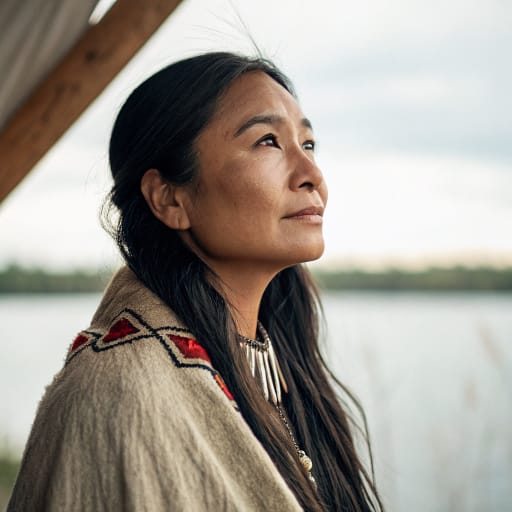
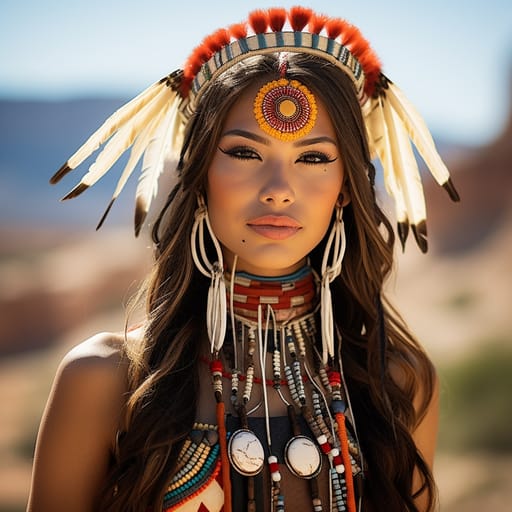
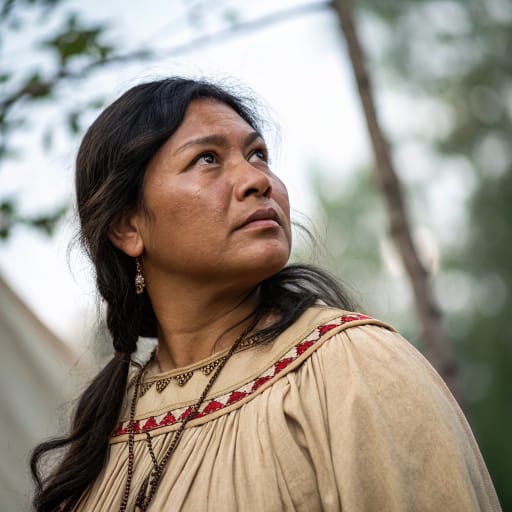
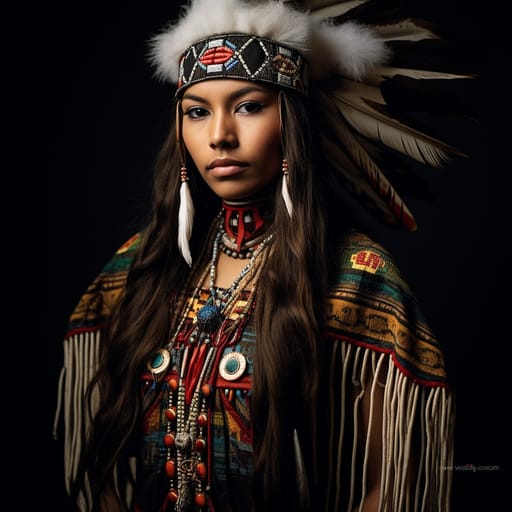

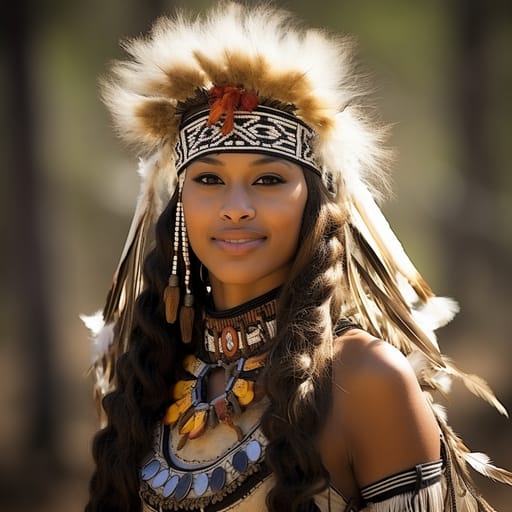
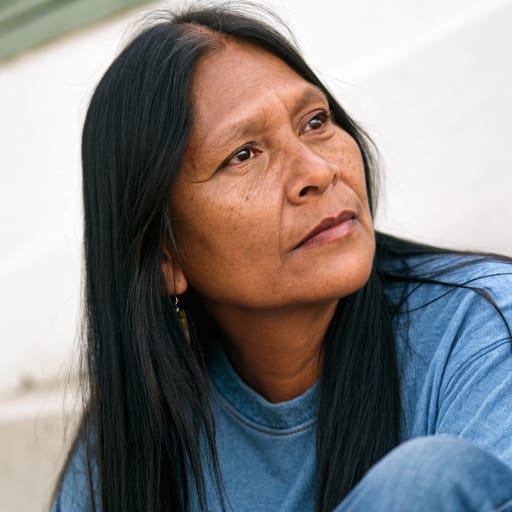
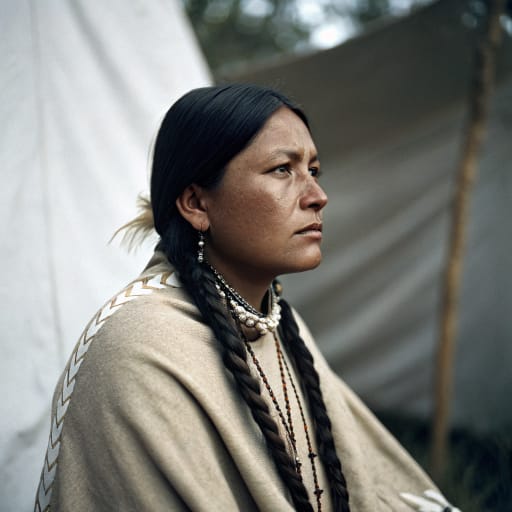
Typical Dena'ina Phenotypes
Reference for AI generation: hair, eyes, skin, facial structure, build
Dena'ina Body & Anatomy Reference
Indigenous Northern American / Algonquian-Iroquoian phenotype: anatomy reference for AI nude generation
Dena'ina Boobs & Breasts
The typical Dena'ina bust is medium cup, moderate projection, in line with the wider Indigenous Northern American / Algonquian-Iroquoian pattern. Areolas usually fall in the 30-44mm range, with medium-brown areolar pigmentation against the copper-to-medium-brown skin tone. Compared with the smaller East Asian bust, Dena'ina breasts sit forward and are generally full and moderate projection. A faithful AI render of Dena'ina tits keeps that shape and areola size.
Dena'ina Ass & Hips
Butt shape among Dena'ina women: medium, moderate-to-full projection, over medium iliac crests. This follows Indigenous Northern American / Algonquian-Iroquoian ancestry and looks quite unlike the slim East Asian narrow-hip profile. An accurate Dena'ina ass in adult AI imagery keeps both the silhouette and the overall build (mesomorph, broader frame in northern Indigenous populations) instead of a generic average.
Dena'ina Vagina & Pussy
Vulvar anatomy among Dena'ina women: medium-brown labial pigmentation. Pubic hair tends to be straight medium-coarse texture, in the usual inverted-triangle pattern. Both follow Indigenous Northern American / Algonquian-Iroquoian pigmentation, which is why Dena'ina pussy renders should not fall back on a pale, sparse Western template.
Dena'ina Dicks & Penis
The Dena'ina cock profile, from Indigenous Northern American / Algonquian-Iroquoian anthropometric data: regional mean ~13cm erect; moderate girth; medium-brown shaft pigmentation. Pubic hair has a straight medium-coarse texture and forms the usual inverted-V pattern. Whether Dena'ina men are circumcised follows religious and cultural practice rather than phenotype.
Dena'ina Body, Curves & Build
Build and curves among Dena'ina women follow the Indigenous Northern American / Algonquian-Iroquoian pattern: mesomorph, broader frame in northern Indigenous populations, mean adult female BMI 25-28. Proportions matter as much as skin tone, so Dena'ina figures should keep their regional height and limb ratios.
Dena'ina Skin Tone & Hair Texture
The Dena'ina skin range is copper to medium-brown (Fitzpatrick III-V), and hair tends to be straight 1A, dark-brown to black, often thick and dense. That combination marks the Indigenous Northern American / Algonquian-Iroquoian phenotype, and skin tone is the trait AI generators most often get wrong for Dena'ina women.
Explore phenotype categories
Structured taxonomy with peer-reviewed scales · 22 anatomical categories
Erotic Poses & Sex Positions
From the pose catalog: 219 named positions with reference skeletons
Frequently asked questions about Dena'ina people
Where is the Dena'ina homeland?
The Dena'ina homeland is South-central Alaska, United States: the Cook Inlet basin, Kenai Peninsula, Susitna and Matanuska valleys, and the Lake Clark, Iliamna Lake and Stony River country west of the Alaska Range. in North America.
What language do Dena'ina people speak?
Dena'ina people primarily speak Dena'ina, also called Dena'ina Qenaga (Northern Athabaskan, Na-Dene), in Upper Inlet, Outer Inlet, Iliamna and Inland dialects. English is now the first language of most..
What religion do Dena'ina people practice?
The predominant religion among Dena'ina people is Russian Orthodox Christianity, widespread since the early 1800s, alongside other Christian denominations and surviving traditional beliefs..






Make your own Dena'ina images
Five a day, free, no credits to buy. The studio starts from this group's phenotype data, so you can set body type, pose and style and keep the traits accurate.
Start with Dena'ina