Help us get this right
Does this portrait look right for Daylamites?
One tap. It takes a second and it is recorded.
1 says it looks right, 0 say it looks off.
Daylamites Erotic
Daylam, the mountain country of the western Alborz above the southwestern Caspian coast, in present-day Gilan and Qazvin provinces, northern Iran
Daylami, now extinct (Indo-European, Northwestern Iranian)
Zoroastrianism and local traditions before Islam; from the 9th and 10th centuries mainly Zaydi Shia Islam, later also Twelver and Nizari Ismaili Shia
Caspian Iranian peoples, closely linked with the lowland Gilites; dynasties of Daylamite origin include the Buyids, Musafirids, Kakuyids and Justanids
About Daylamites People
The Daylamites were an Iranian highland people of Daylam, the mountain country of the western Alborz above Iran's southwestern Caspian coast. They flourished from late antiquity into the eleventh century and then slowly merged into the population of Gilan and the uplands around it. They stood out as a people because of the country they held and the way they fought. Daylam was forested, wet and hard to reach, and its men made a trade of that toughness. Sasanian kings recruited them as infantry, Byzantine chroniclers recorded them in Persian service, and later rulers across the Islamic world hired them in large numbers. A Daylamite soldier was easy to pick out: on foot, behind a tall shield, carrying short two-pronged spears and a battle axe.
When Arab armies took the Iranian plateau in the seventh century, Daylam held out. For more than two centuries its people beat back the caliphs' campaigns and kept their older faiths, Zoroastrianism alongside local practice. Islam reached them through refugees rather than conquest. Descendants of the Prophet fleeing Abbasid persecution found shelter in the Caspian highlands. Zaydi Shia preachers followed, above all al-Hasan al-Utrush in the early tenth century, and converted Daylamites and their lowland neighbors, the Gilites, in large numbers. Shia Islam in its several forms became part of the region's character: Alamut, the fortress Hasan-i Sabbah seized in 1090 and made the center of the Nizari Ismailis, stood in Daylamite country.
Their moment came in the tenth century, during what historians call the Iranian Intermezzo. Daylamite commanders founded states across Iran: the Musafirids in Azerbaijan, the Kakuyids around Isfahan and, most important, the Buyids. Three sons of a Daylamite named Buya rose through mercenary service. In 945 one of them, Ahmad, marched into Baghdad and reduced the Abbasid caliph to a figurehead. The Buyids held Iraq and much of Iran for about a century. They revived the old Persian royal title shahanshah and backed public Shia observances in Baghdad, including Ashura mourning for Husayn. Their armies paired Daylamite foot soldiers with Turkish cavalry, an uneasy partnership that often broke into open feuding.
Seljuk Turks entered Baghdad in 1055, and the last Buyid realm fell within a decade. After that the Daylamites gradually drop out of the sources as a distinct people. Their speech, which medieval geographers set apart from Persian, did not survive as a separate language, though the Caspian languages still spoken in Gilan and Mazandaran belong to the same Northwestern Iranian branch. What remains is the Deylaman district in the Gilan highlands, the family name Deylami, and the memory of a mountain people who for a century had the caliphs of Baghdad answering to them.
Related ethnic groups
Groups that share Daylamites's homeland, region, language, or religious tradition. These are likely candidates for comparative phenotype reference.
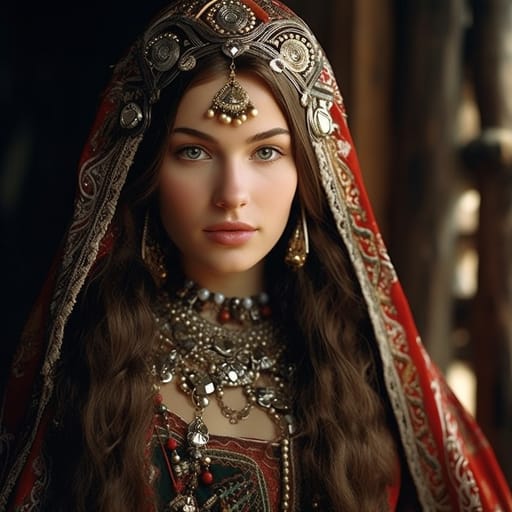
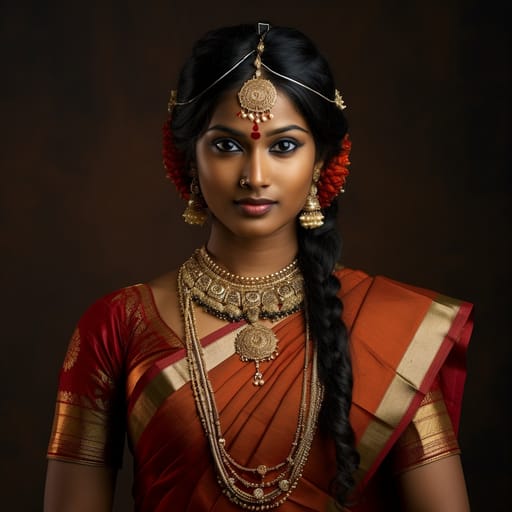
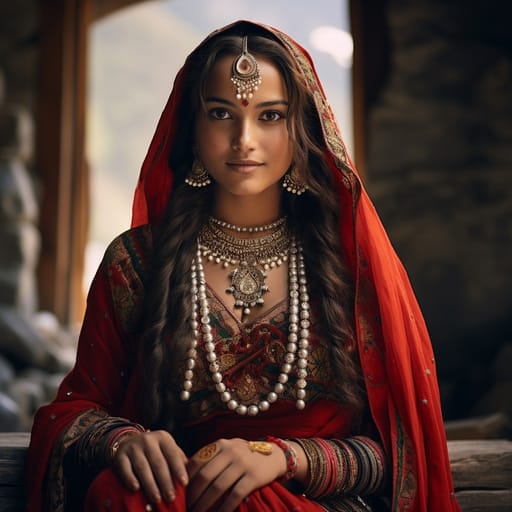
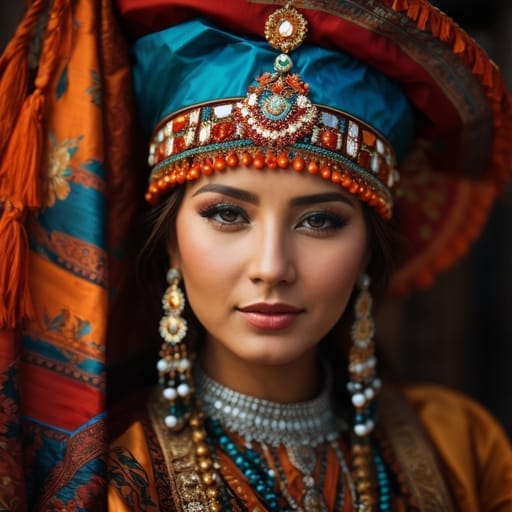
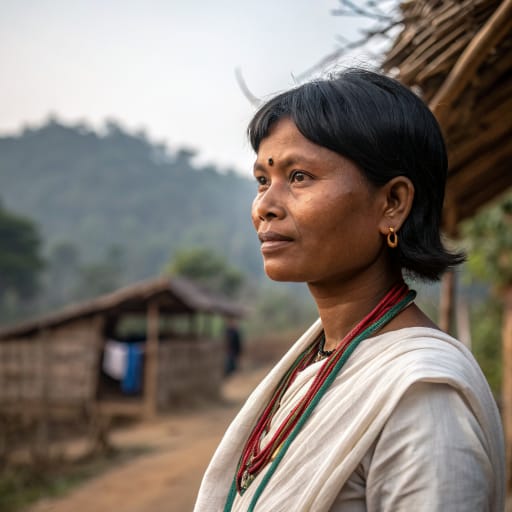
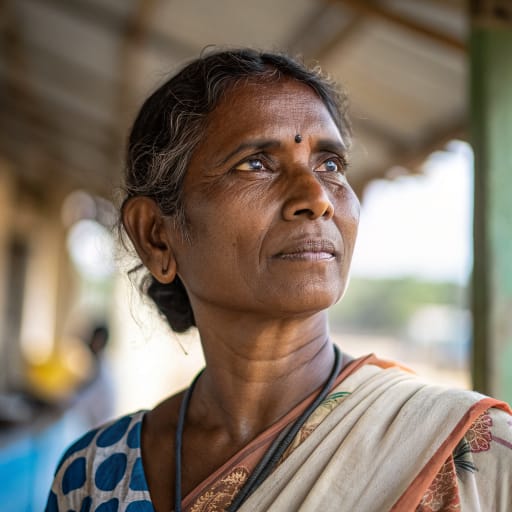
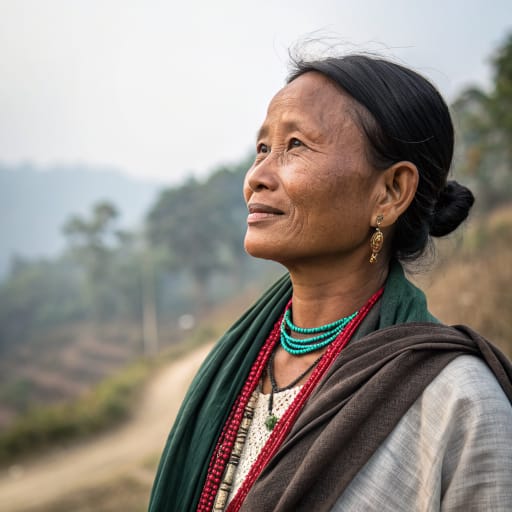
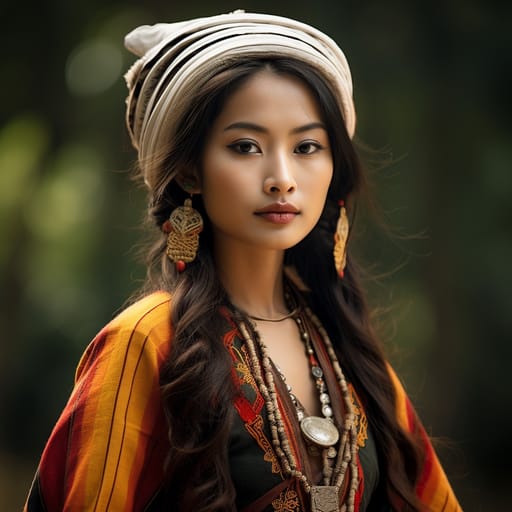
Typical Daylamites Phenotypes
Reference for AI generation: hair, eyes, skin, facial structure, build
Daylamites Body & Anatomy Reference
Anatomy by feature, Indo-Aryan / Dravidian South Asian phenotype
Daylamites Boobs & Breasts
Bust reference for Daylamites women: medium-to-large cup, moderate-to-full projection, which is typical of Indo-Aryan / Dravidian South Asian ancestry. Areolas measure about 32-46mm across, with medium-brown to dark-brown pigmentation. Body type (endomorph-to-mesomorph with fuller hip deposition) shapes the bust as well, so Daylamites tits are usually full and soft, generally fuller than the East Asian norm. In AI imagery, keep the forward-set shape rather than drifting toward the smaller East Asian bust profile.
Daylamites Ass & Hips
The Daylamites ass is typically medium-to-full, moderate-to-high projection, classic curvy hip profile, which sets it apart from the slim hip profile of East Asian women. Underneath, the pelvis shows medium-to-wide iliac crests, full gluteal-femoral fat distribution, part of the Indo-Aryan / Dravidian South Asian skeletal pattern. For Daylamites butt pics and AI renders, match that silhouette and the overall build (endomorph-to-mesomorph with fuller hip deposition).
Daylamites Vagina & Pussy
Daylamites pussy and vulvar anatomy presents medium-brown to dark-brown labial pigmentation, fuller labia minora projection, consistent with the Indo-Aryan / Dravidian South Asian phenotype's pigmentation pattern. Daylamites pubic hair is typically straight-to-wavy coarse texture, dense distribution, in the inverted-triangle pattern. For anatomically accurate Daylamites pussy renders the labial coloration should match the surrounding wheatish to brown skin tone with a continuous gradient, and the hair should keep its straight-to-wavy coarse texture.
Daylamites Dicks & Penis
Daylamites dicks follow the Indo-Aryan / Dravidian South Asian reference data: regional mean ~13cm erect; moderate girth; medium-brown shaft pigmentation. Shaft color should track the wheatish to brown skin tone with a smooth change toward the glans, and Daylamites pubic hair keeps its straight-to-wavy coarse texture.
Daylamites Body, Curves & Build
Daylamites body type and overall build presents as endomorph-to-mesomorph with fuller hip deposition, with mean adult female BMI 22-25: the characteristic Indo-Aryan / Dravidian South Asian habitus. Daylamites curves and proportions should keep the regional skeletal frame (height, shoulder-to-hip ratio, limb proportions) rather than a generic mesomorph default.
Daylamites Skin Tone & Hair Texture
Daylamites skin sits in the wheatish to brown (Fitzpatrick III-V) band. Hair is typically straight-to-wavy 1A-2B, dense, dark-brown to black, in keeping with the Indo-Aryan / Dravidian South Asian phenotype. In nude renders the skin should stay one even tone from face to body, and body, pubic and head hair should match.
Explore phenotype categories
Structured taxonomy with peer-reviewed scales · 22 anatomical categories
Erotic Poses & Sex Positions
From the pose catalog: 219 named positions with reference skeletons
Frequently asked questions about Daylamites people
Where is the Daylamites homeland?
The Daylamites homeland is Daylam, the mountain country of the western Alborz above the southwestern Caspian coast, in present-day Gilan and Qazvin provinces, northern Iran in Southern Asia.
What language do Daylamites people speak?
Daylamites people primarily speak Daylami, now extinct (Indo-European, Northwestern Iranian).
What religion do Daylamites people practice?
The predominant religion among Daylamites people is Zoroastrianism and local traditions before Islam; from the 9th and 10th centuries mainly Zaydi Shia Islam, later also Twelver and Nizari Ismaili Shia.






Make your own Daylamites images
Five a day, free, no credits to buy. The studio starts from this group's phenotype data, so you can set body type, pose and style and keep the traits accurate.
Start with Daylamites