Help us get this right
Does this portrait look right for Chorote?
Nobody has judged this one yet. You would be the first.
Chorote Erotic
The middle Pilcomayo River, straddling Salta province in northern Argentina and the Boquerón department of western Paraguay, with a small presence in southeastern Bolivia.
Chorote, in two varieties, Iyojwa'ja and Iyo'wujwa (Matacoan); Spanish widely, and some Guaraní in Paraguay
Anglican and evangelical Protestant Christianity, some Catholicism, alongside enduring shamanic practice
Two divisions, Iyojwa'ja (known in Paraguay as Manjui) and Iyo'wujwa; part of the Matacoan-speaking peoples of the Gran Chaco with the Wichí, Nivaclé and Maká
About Chorote People
The Chorote are a river people of the middle Pilcomayo, in the border country where Argentina's Salta province meets western Paraguay, with a few communities over the line in Bolivia. They number only a few thousand and have kept a distinct footing on a river shared with larger neighbors. They call themselves Iyojwa'ja and Iyo'wujwa, two divisions with their own speech habits and settlement histories. "Chorote" is an outsiders' word of uncertain origin, and in Paraguay the older label is Manjui, which came from neighbors rather than from them. Their language belongs to the Matacoan family, which puts them in company with the Wichí, the Nivaclé and the Maká: a tight cluster of tongues that are related but not mutually intelligible, so daily life across the Chaco has always involved a fair amount of multilingualism. Most people now also speak Spanish, and on the Paraguayan side some Guaraní.
The land is thorn forest and dry plain, punishing in summer, and the river does most of the deciding. Winter brings the sábalo run, when men work the shallows with hand nets and the whole schedule of a settlement bends toward fish. The rest of the year turns on algarrobo pods, honey and wild fruit, and on the fermented drink made from those pods, which is social business as much as it is a beverage. Women process chaguar, a bromeliad, into fiber, roll it into cord against the thigh and knot it into carrying bags that are still made and still sold. Shamanic knowledge arrives in dreams and is held as songs. Christianity came through Anglican missions on the Argentine side and Mennonite colonies in Paraguay's Boquerón, and it took hold without entirely displacing what was already there. Two twentieth century shocks matter most: the Chaco War of 1932 to 1935, fought straight across their territory, and the long recruitment of Chaco labor into the sugar mills of Salta and Jujuy, which pulled families away for months at a time. A third is still unfolding. The Pilcomayo silts up and shifts its course, and the fishing water keeps retreating from communities that were built around it.
Related ethnic groups
Groups that share Chorote's homeland, region, language, or religious tradition. These are likely candidates for comparative phenotype reference.
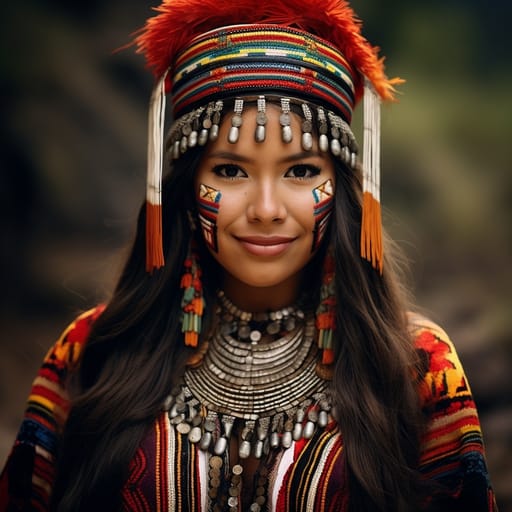
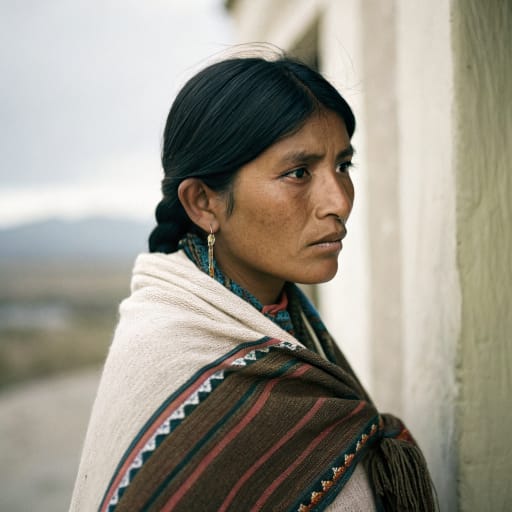
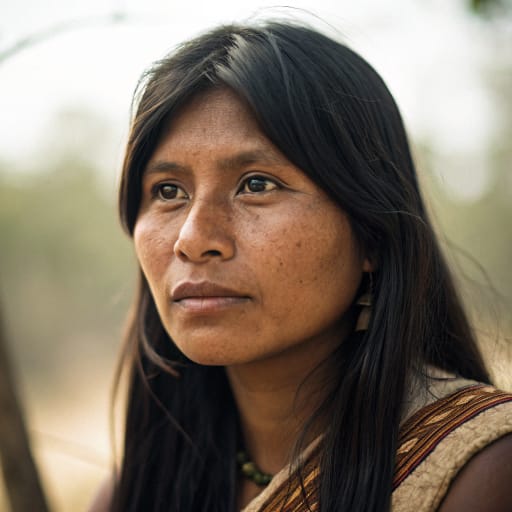
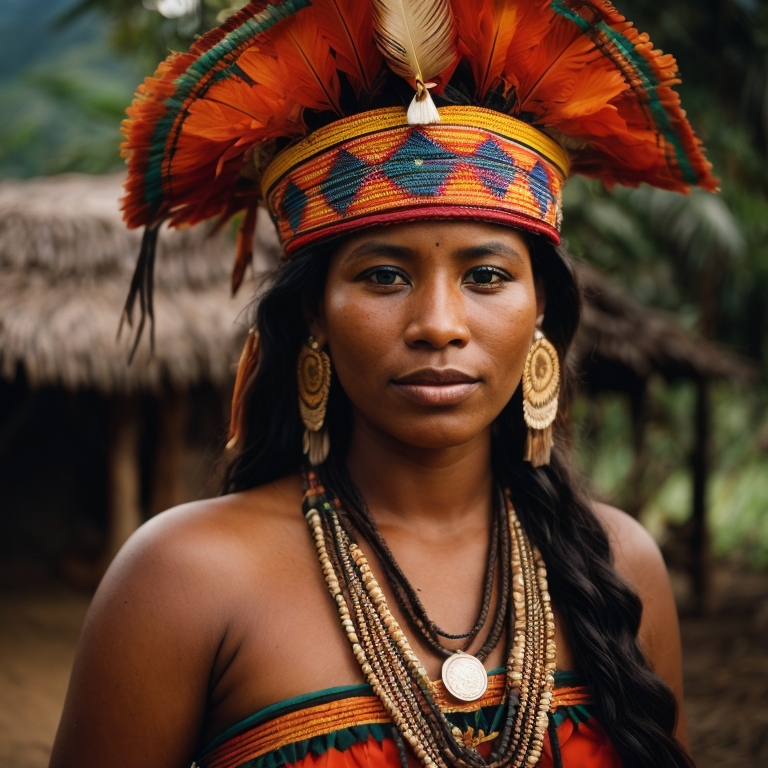
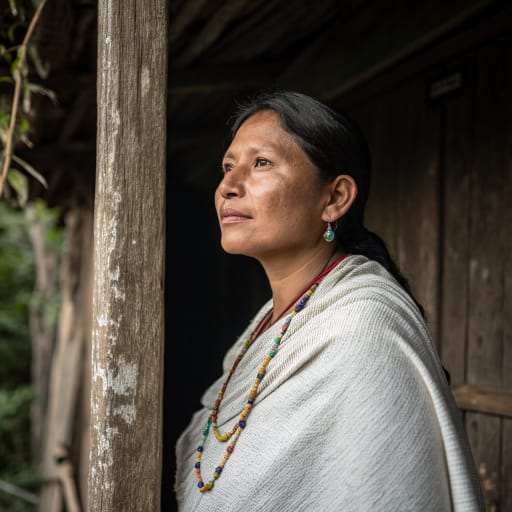
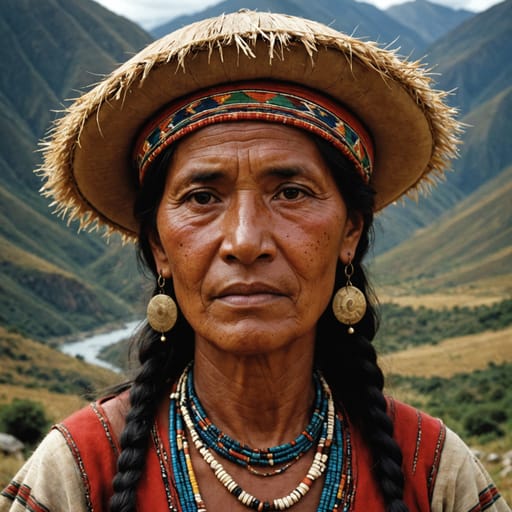
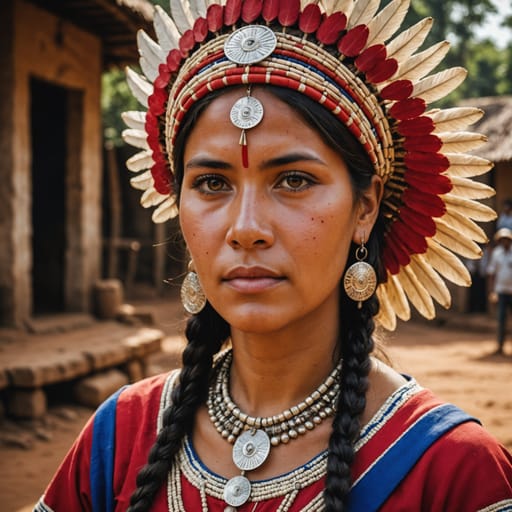
Typical Chorote Phenotypes
Reference for AI generation: hair, eyes, skin, facial structure, build
Chorote Body & Anatomy Reference
Anatomy by feature, South American Indigenous / European-Mestizo / Afro-Latino mix phenotype
Chorote Boobs & Breasts
Chorote tits and boobs run medium-to-large cup, full, high projection, the classic South American Indigenous / European-Mestizo / Afro-Latino mix bust profile. Chorote nipples and areolas show medium-brown to dark-brown areolar pigmentation against the tan-to-deep-brown skin tone, with areolar diameter typically in the 32-46mm range and forward-set positioning rather than the smaller bust profile of Andean Indigenous sub-populations. Chorote breasts trend the classic Brazilian / Latina curvy bust profile in lowland populations; smaller and shorter-set in Andean Indigenous populations, a function of the endomorph-to-mesomorph with high gluteal-femoral deposition body habitus and the mean adult female BMI 25-28. For anatomically accurate AI-generated Chorote nudes the render preserves the medium-to-large cup, full, high projection shape, 32-46mm areolas with medium-brown to dark-brown pigmentation, and the torso proportions of the South American Indigenous / European-Mestizo / Afro-Latino mix phenotype.
Chorote Ass & Hips
Chorote hips and butt usually read as full, high projection, the famous Brazilian / Latina bunda profile. The skeletal base is wide iliac crests, very full gluteal-femoral fat deposition (the hallmark Brazilian / Latina hip-to-waist ratio), the South American Indigenous / European-Mestizo / Afro-Latino mix pattern. Set against the slim narrow-hip East Asian profile, the difference is easy to see, and the hip-to-waist ratio is often what identifies Chorote women in photos.
Chorote Vagina & Pussy
Expect medium-brown to dark-brown labial pigmentation, fuller labia minora on Chorote women, in keeping with South American Indigenous / European-Mestizo / Afro-Latino mix ancestry. The pubic hair is wavy-to-curly coarse dark texture, dense distribution. Coloring should run evenly from the tan to deep-brown skin of the thighs to the labia, and Chorote nude imagery should keep the hair's wavy-to-curly coarse dark texture.
Chorote Dicks & Penis
Chorote dick and penile anatomy in adult AI generation should anchor on the regional reference data: regional mean ~13cm erect, moderate-to-above-average girth, and medium-brown shaft pigmentation. The Chorote cock profile reflects the South American Indigenous / European-Mestizo / Afro-Latino mix population's anthropometric measurements. The shaft pigmentation should track the surrounding tan to deep-brown skin tone, and the pubic hair should keep its wavy-to-curly coarse dark texture in the typical inverted-V escutcheon.
Chorote Body, Curves & Build
Chorote body type: endomorph-to-mesomorph with high gluteal-femoral deposition, with mean adult female BMI 25-28. This is the typical South American Indigenous / European-Mestizo / Afro-Latino mix build. Height range, shoulder-to-hip ratio and fat distribution all follow from it, which is what an accurate Chorote nude body should show.
Chorote Skin Tone & Hair Texture
Chorote skin tone falls in the tan to deep-brown (Fitzpatrick III-VI) band, the surface signal most often miscalibrated by generic AI nude generators. Chorote hair texture is typically straight-to-curly 1A-3C, varies widely by ancestral composition, characteristic of the South American Indigenous / European-Mestizo / Afro-Latino mix phenotype. In Chorote nude renders the skin should hold that band consistently across the body.
Explore phenotype categories
Structured taxonomy with peer-reviewed scales · 22 anatomical categories
Erotic Poses & Sex Positions
From the pose catalog: 219 named positions with reference skeletons
Frequently asked questions about Chorote people
Where is the Chorote homeland?
The Chorote homeland is The middle Pilcomayo River, straddling Salta province in northern Argentina and the Boquerón department of western Paraguay, with a small presence in southeastern Bolivia. in South America.
What language do Chorote people speak?
Chorote people primarily speak Chorote, in two varieties, Iyojwa'ja and Iyo'wujwa (Matacoan); Spanish widely, and some Guaraní in Paraguay.
What religion do Chorote people practice?
The predominant religion among Chorote people is Anglican and evangelical Protestant Christianity, some Catholicism, alongside enduring shamanic practice.






Make your own Chorote images
Five a day, free, no credits to buy. The studio starts from this group's phenotype data, so you can set body type, pose and style and keep the traits accurate.
Start with Chorote