No portrait yet
Nomatsiguenga Erotic
Pangoa valley along the Sonomoro, Anapati and upper Pangoa rivers, Satipo province, Junín region, central Peru
Nomatsiguenga (Arawakan, Kampan branch), with Spanish and often Asháninka as second languages
Christianity (Evangelical and Catholic) alongside traditional beliefs in forest spirits and shamanic healing
One of the Kampan Arawak peoples, with the Asháninka, Ashéninka, Matsigenka, Caquinte and Nanti; historically lumped under the label Campa
About Nomatsiguenga People
The Nomatsiguenga are one of the smaller Arawak peoples of Peru's central jungle, and for most of their recorded history outsiders refused to see them as a separate people at all. Missionaries, officials and census takers filed them under "Campa" along with their far more numerous Asháninka neighbors. Their own name is built on the word for people, the same root that names the Matsigenka to the southeast, with a first-person prefix that makes it something close to "my people." That insistence on being counted on their own terms still shapes their politics.
Home is the Pangoa valley in Satipo province, Junín, where the eastern Andes fall away into the Amazon basin. Their communities sit along the Sonomoro, Anapati and upper Pangoa rivers, in steep foothill forest now heavily cut into coffee and cacao plots. The language belongs to the Kampan branch of Arawak, alongside Asháninka, Ashéninka, Matsigenka, Caquinte and Nanti. It is close enough to its neighbors that the kinship is obvious, and different enough that a Nomatsiguenga speaker and an Asháninka speaker cannot simply fall into conversation. Several thousand people speak it, many of them also fluent in Spanish and, in mixed communities, Asháninka. It has an official alphabet and a place in bilingual schools.
Franciscans reached the valley in the 1670s and founded a mission at Sonomoro. The uprising led by Juan Santos Atahualpa in 1742 swept missions and soldiers out of the central jungle, and the area stayed largely closed to outsiders for more than a century. The real invasion came later, with the twentieth-century road and the Andean settlers who followed it looking for coffee land. Then, in the late 1980s and early 1990s, Shining Path moved into Satipo. Nomatsiguenga and Asháninka families were killed, forced into the insurgents' camps or driven from their villages, and the survivors organized armed self-defense committees to push them out. Much of community life today, from land titles to the federation they share with the Asháninka of Pangoa, was rebuilt after that war.
Daily life runs on manioc gardens, fishing, some hunting, and cash from coffee and cacao. Manioc beer, masato, is what gets served when people visit, work together or celebrate. Evangelical and Catholic churches are both well established, layered over older ideas about the spirit owners of the forest and healers who work with tobacco and ayahuasca.
Related ethnic groups
Groups that share Nomatsiguenga's homeland, region, language, or religious tradition. These are likely candidates for comparative phenotype reference.
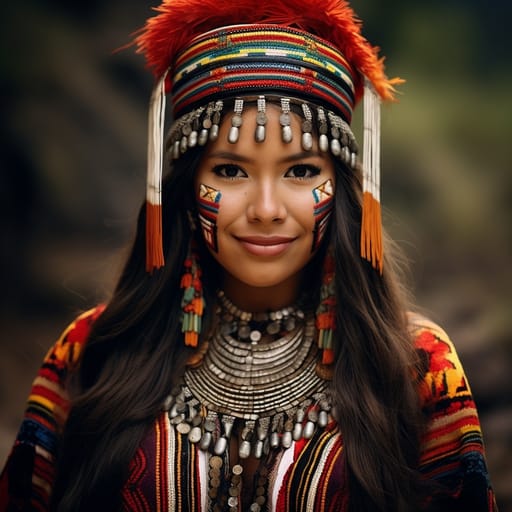
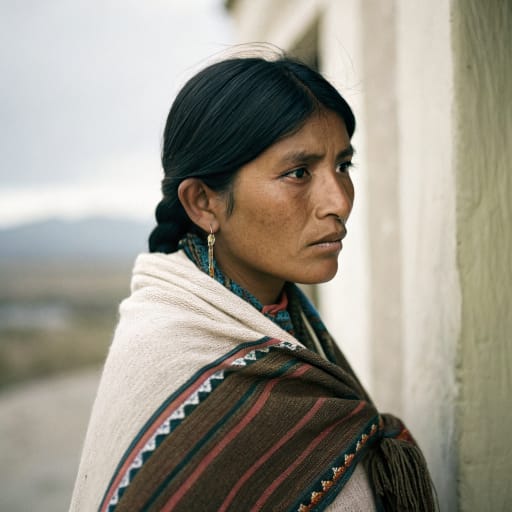
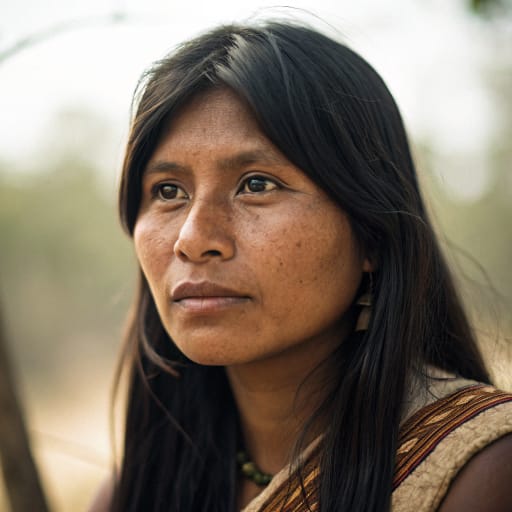
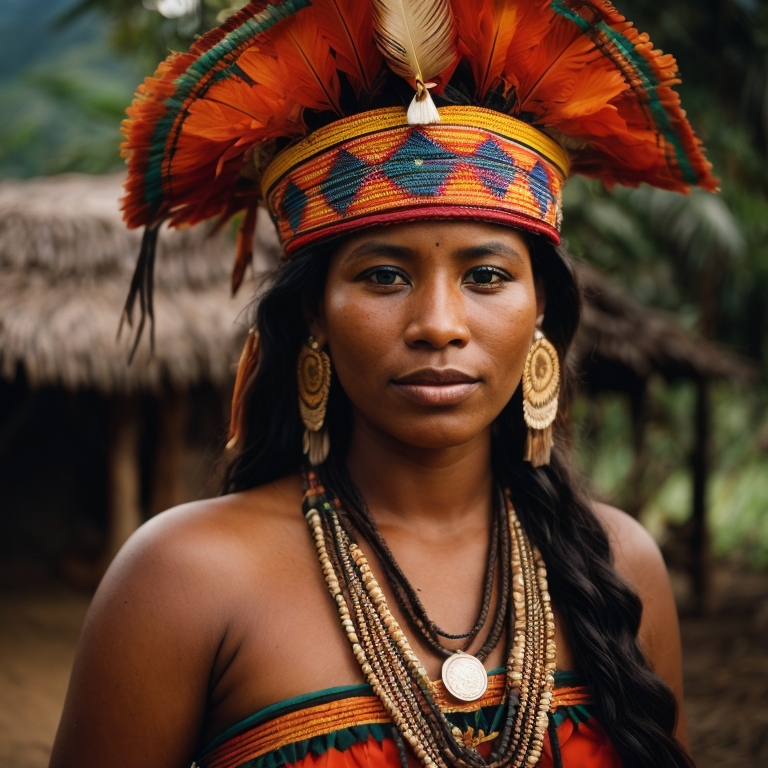
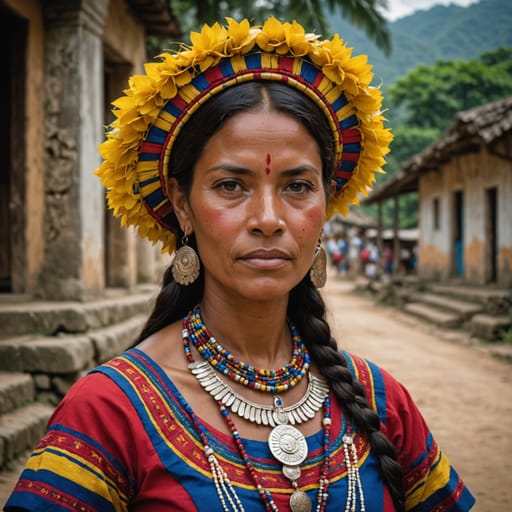
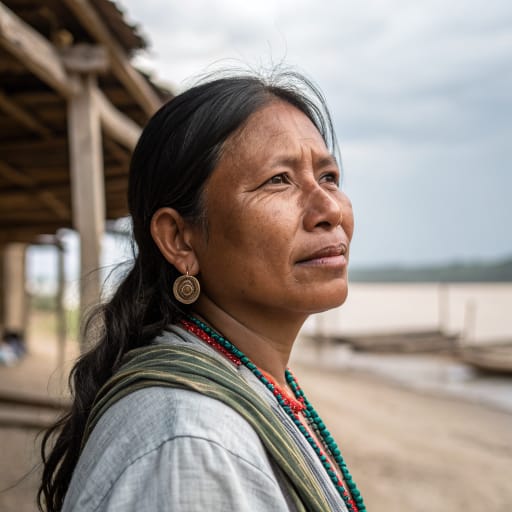
Typical Nomatsiguenga Phenotypes
Reference for AI generation: hair, eyes, skin, facial structure, build
Nomatsiguenga Body & Anatomy Reference
Anatomy by feature, South American Indigenous / European-Mestizo / Afro-Latino mix phenotype
Nomatsiguenga Boobs & Breasts
Nomatsiguenga tits and boobs run medium-to-large cup, full, high projection, the classic South American Indigenous / European-Mestizo / Afro-Latino mix bust profile. Nomatsiguenga nipples and areolas show medium-brown to dark-brown areolar pigmentation against the tan-to-deep-brown skin tone, with areolar diameter typically in the 32-46mm range and forward-set positioning rather than the smaller bust profile of Andean Indigenous sub-populations. Nomatsiguenga breasts trend the classic Brazilian / Latina curvy bust profile in lowland populations; smaller and shorter-set in Andean Indigenous populations, a function of the endomorph-to-mesomorph with high gluteal-femoral deposition body habitus and the mean adult female BMI 25-28. For anatomically accurate AI-generated Nomatsiguenga nudes the render preserves the medium-to-large cup, full, high projection shape, 32-46mm areolas with medium-brown to dark-brown pigmentation, and the torso proportions of the South American Indigenous / European-Mestizo / Afro-Latino mix phenotype.
Nomatsiguenga Ass & Hips
Nomatsiguenga hips and butt usually read as full, high projection, the famous Brazilian / Latina bunda profile. The skeletal base is wide iliac crests, very full gluteal-femoral fat deposition (the hallmark Brazilian / Latina hip-to-waist ratio), the South American Indigenous / European-Mestizo / Afro-Latino mix pattern. Set against the slim narrow-hip East Asian profile, the difference is easy to see, and the hip-to-waist ratio is often what identifies Nomatsiguenga women in photos.
Nomatsiguenga Vagina & Pussy
Expect medium-brown to dark-brown labial pigmentation, fuller labia minora on Nomatsiguenga women, in keeping with South American Indigenous / European-Mestizo / Afro-Latino mix ancestry. The pubic hair is wavy-to-curly coarse dark texture, dense distribution. Coloring should run evenly from the tan to deep-brown skin of the thighs to the labia, and Nomatsiguenga nude imagery should keep the hair's wavy-to-curly coarse dark texture.
Nomatsiguenga Dicks & Penis
Nomatsiguenga dick and penile anatomy in adult AI generation should anchor on the regional reference data: regional mean ~13cm erect, moderate-to-above-average girth, and medium-brown shaft pigmentation. The Nomatsiguenga cock profile reflects the South American Indigenous / European-Mestizo / Afro-Latino mix population's anthropometric measurements. The shaft pigmentation should track the surrounding tan to deep-brown skin tone, and the pubic hair should keep its wavy-to-curly coarse dark texture in the typical inverted-V escutcheon.
Nomatsiguenga Body, Curves & Build
Nomatsiguenga body type: endomorph-to-mesomorph with high gluteal-femoral deposition, with mean adult female BMI 25-28. This is the typical South American Indigenous / European-Mestizo / Afro-Latino mix build. Height range, shoulder-to-hip ratio and fat distribution all follow from it, which is what an accurate Nomatsiguenga nude body should show.
Nomatsiguenga Skin Tone & Hair Texture
Nomatsiguenga skin tone falls in the tan to deep-brown (Fitzpatrick III-VI) band, the surface signal most often miscalibrated by generic AI nude generators. Nomatsiguenga hair texture is typically straight-to-curly 1A-3C, varies widely by ancestral composition, characteristic of the South American Indigenous / European-Mestizo / Afro-Latino mix phenotype. In Nomatsiguenga nude renders the skin should hold that band consistently across the body.
Explore phenotype categories
Structured taxonomy with peer-reviewed scales · 22 anatomical categories
Erotic Poses & Sex Positions
From the pose catalog: 219 named positions with reference skeletons
Frequently asked questions about Nomatsiguenga people
Where is the Nomatsiguenga homeland?
The Nomatsiguenga homeland is Pangoa valley along the Sonomoro, Anapati and upper Pangoa rivers, Satipo province, Junín region, central Peru in South America.
What language do Nomatsiguenga people speak?
Nomatsiguenga people primarily speak Nomatsiguenga (Arawakan, Kampan branch), with Spanish and often Asháninka as second languages.
What religion do Nomatsiguenga people practice?
The predominant religion among Nomatsiguenga people is Christianity (Evangelical and Catholic) alongside traditional beliefs in forest spirits and shamanic healing.






Make your own Nomatsiguenga images
Five a day, free, no credits to buy. The studio starts from this group's phenotype data, so you can set body type, pose and style and keep the traits accurate.
Start with Nomatsiguenga