Help us get this right
Does this portrait look right for Mosetén?
Nobody has judged this one yet. You would be the first.
Mosetén Erotic
Andean foothills and adjoining Amazonian lowlands of Bolivia, along the Alto Beni and Quiquibey rivers in the departments of La Paz, Cochabamba and Beni
Mosetén (Mosetenan, a small isolate family that also includes Tsimané); most speakers are also fluent in Spanish
Predominantly Roman Catholic, shaped by Franciscan missions, with older oral traditions still told
Communities centered on Covendo and Santa Ana; closely related linguistically to the Tsimané within the Mosetenan family
About Mosetén People
The Mosetén are a small Amazonian people who live where the Andes drop into lowland forest. Their villages sit along the Alto Beni and nearby rivers in Bolivia, in steep, humid foothills that cross the departments of La Paz, Cochabamba and Beni. Their language sets them apart most clearly. Mosetén belongs to a tiny family with no proven link to any other language in South America. Its only close relative is the speech of the neighboring Tsimané, who live farther out toward the Beni plains. Linguists often treat the two as a single continuum, Mosetén-Chimane, with separate Mosetén varieties around Covendo and Santa Ana. Bolivia's 2009 constitution lists Mosetén among the country's official languages. That matters for a language that is used less and less day to day, as many younger Mosetén now grow up speaking Spanish first.
Much of Mosetén history runs through the Catholic missions. Franciscan missionaries gathered scattered forest households into settled villages, and Covendo and Santa Ana grew out of that work. Most Mosetén today are Catholic, and church feasts mark the village year. Older stories about the forest, its animals and the people who came before still get told alongside the saints' days.
The twentieth century brought a harder change. Starting in the 1960s, Bolivian colonization programs moved Aymara and Quechua settlers from the highlands into the Alto Beni, where they cleared land for cacao, rice and fruit. The Mosetén became a minority in valleys they had long considered their own. Their answer has been largely political: forming their own organizations, pushing for collectively titled land, and working with the Tsimané to help manage the Pilón Lajas reserve and its communal lands. Oil and gas exploration in northern La Paz has kept those land questions open.
Daily life is rural and practical. Families grow plantains, cassava, rice and maize on forest plots, fish the rivers, hunt when game allows and sell cacao and other crops in regional markets. Covendo is still the largest Mosetén community. Organizing, farming and holding on to the language are all part of the same effort to stay on their land.
Related ethnic groups
Groups that share Mosetén's homeland, region, language, or religious tradition. These are likely candidates for comparative phenotype reference.
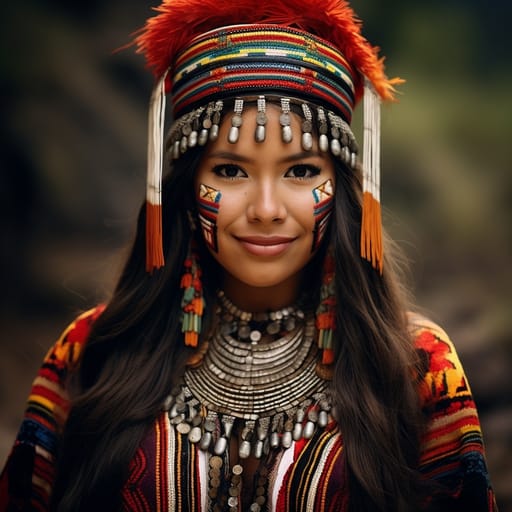
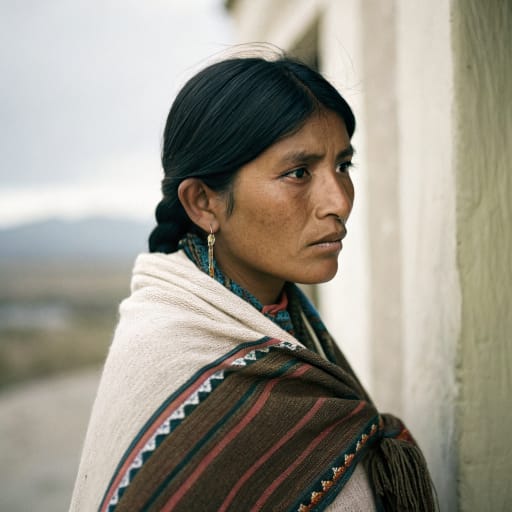
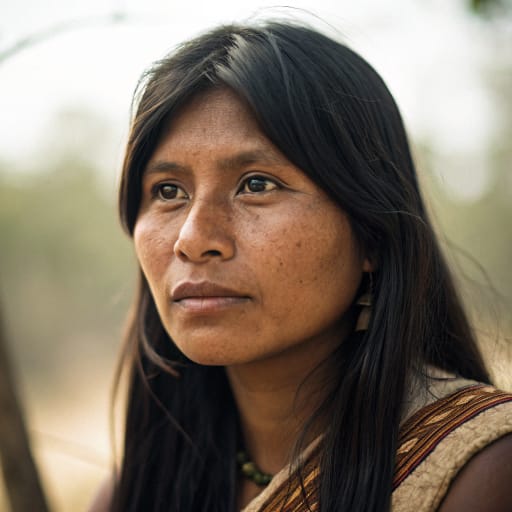
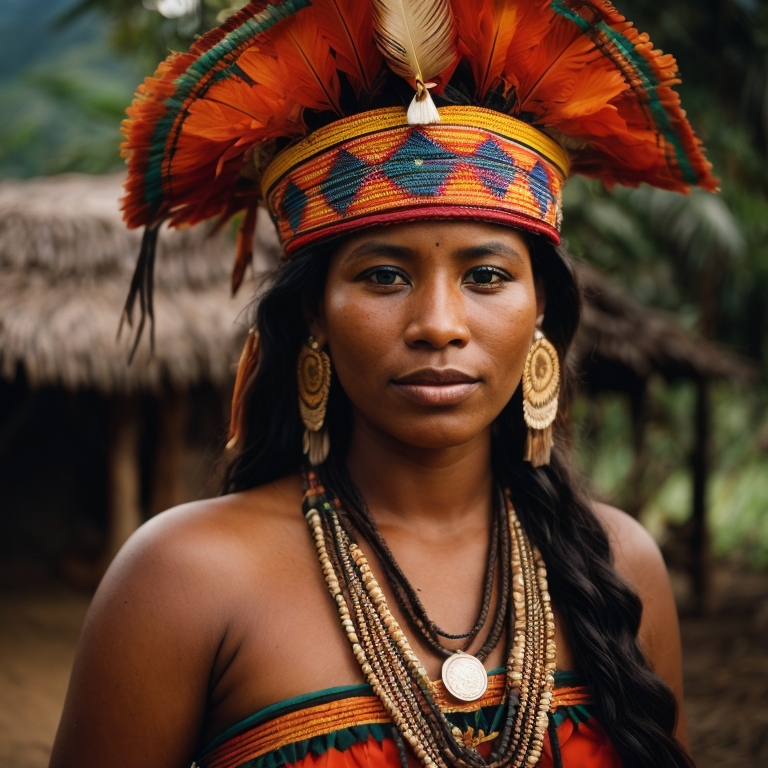
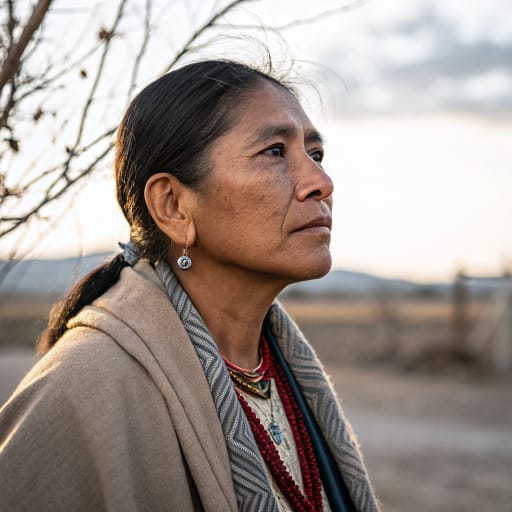
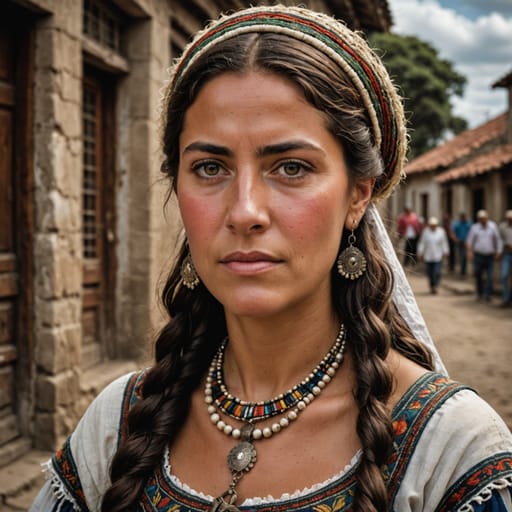
Typical Mosetén Phenotypes
Reference for AI generation: hair, eyes, skin, facial structure, build
Mosetén Body & Anatomy Reference
South American Indigenous / European-Mestizo / Afro-Latino mix phenotype: anatomy reference for AI nude generation
Mosetén Boobs & Breasts
Bust reference for Mosetén women: medium-to-large cup, full, high projection, which is typical of South American Indigenous / European-Mestizo / Afro-Latino mix ancestry. Areolas measure about 32-46mm across, with medium-brown to dark-brown pigmentation. Body type (endomorph-to-mesomorph with high gluteal-femoral deposition) shapes the bust as well, so Mosetén tits are usually the classic Brazilian / Latina curvy bust profile in lowland populations; smaller and shorter-set in Andean Indigenous populations. In AI imagery, keep the forward-set shape rather than drifting toward the smaller bust profile of Andean Indigenous sub-populations.
Mosetén Ass & Hips
The Mosetén ass is typically full, high projection, the famous Brazilian / Latina bunda profile, which sets it apart from the slim narrow-hip East Asian profile. Underneath, the pelvis shows wide iliac crests, very full gluteal-femoral fat deposition (the hallmark Brazilian / Latina hip-to-waist ratio), part of the South American Indigenous / European-Mestizo / Afro-Latino mix skeletal pattern. For Mosetén butt pics and AI renders, match that silhouette and the overall build (endomorph-to-mesomorph with high gluteal-femoral deposition).
Mosetén Vagina & Pussy
Mosetén pussy and vulvar anatomy presents medium-brown to dark-brown labial pigmentation, fuller labia minora, consistent with the South American Indigenous / European-Mestizo / Afro-Latino mix phenotype's pigmentation pattern. Mosetén pubic hair is typically wavy-to-curly coarse dark texture, dense distribution, in the inverted-triangle pattern. For anatomically accurate Mosetén pussy renders the labial coloration should match the surrounding tan to deep-brown skin tone with a continuous gradient, and the hair should keep its wavy-to-curly coarse dark texture.
Mosetén Dicks & Penis
Mosetén dicks follow the South American Indigenous / European-Mestizo / Afro-Latino mix reference data: regional mean ~13cm erect; moderate-to-above-average girth; medium-brown shaft pigmentation. Shaft color should track the tan to deep-brown skin tone with a smooth change toward the glans, and Mosetén pubic hair keeps its wavy-to-curly coarse dark texture.
Mosetén Body, Curves & Build
Mosetén body type and overall build presents as endomorph-to-mesomorph with high gluteal-femoral deposition, with mean adult female BMI 25-28: the characteristic South American Indigenous / European-Mestizo / Afro-Latino mix habitus. Mosetén curves and proportions should keep the regional skeletal frame (height, shoulder-to-hip ratio, limb proportions) rather than a generic mesomorph default.
Mosetén Skin Tone & Hair Texture
Mosetén skin sits in the tan to deep-brown (Fitzpatrick III-VI) band. Hair is typically straight-to-curly 1A-3C, varies widely by ancestral composition, in keeping with the South American Indigenous / European-Mestizo / Afro-Latino mix phenotype. In nude renders the skin should stay one even tone from face to body, and body, pubic and head hair should match.
Explore phenotype categories
Structured taxonomy with peer-reviewed scales · 22 anatomical categories
Erotic Poses & Sex Positions
From the pose catalog: 219 named positions with reference skeletons
Frequently asked questions about Mosetén people
Where is the Mosetén homeland?
The Mosetén homeland is Andean foothills and adjoining Amazonian lowlands of Bolivia, along the Alto Beni and Quiquibey rivers in the departments of La Paz, Cochabamba and Beni in South America.
What language do Mosetén people speak?
Mosetén people primarily speak Mosetén (Mosetenan, a small isolate family that also includes Tsimané); most speakers are also fluent in Spanish.
What religion do Mosetén people practice?
The predominant religion among Mosetén people is Predominantly Roman Catholic, shaped by Franciscan missions, with older oral traditions still told.






Make your own Mosetén images
Five a day, free, no credits to buy. The studio starts from this group's phenotype data, so you can set body type, pose and style and keep the traits accurate.
Start with Mosetén