Help us get this right
Does this portrait look right for Kamëntsá?
Nobody has judged this one yet. You would be the first.
Kamëntsá Erotic
Sibundoy Valley, in the Andes of Putumayo department, southwestern Colombia
Kamëntsá (language isolate); Spanish widely spoken
Roman Catholic, shaped by Capuchin missions, alongside traditional healing with yagé and medicinal plants
No recognized branches; a distinct people of the Sibundoy Valley, closely tied to the neighboring Inga
About Kamëntsá People
A valley and a language define the Kamëntsá. They live in the Sibundoy Valley, a high, cool basin in Colombia's Putumayo department where the Andes begin their descent toward the Amazon. They speak Kamëntsá, a language isolate with no demonstrated relatives. Their own name, Kamëntsá Biya, is usually rendered as something close to "people from here, with our own thought and language," and that is a fair summary of how they see themselves. They share the valley with the Inga, whose language is Quechuan, and the two peoples have lived side by side for centuries. The town of Sibundoy is the Kamëntsá center, while the Inga cluster around Santiago. Kamëntsá has taken in a good deal of Quechua and Spanish vocabulary without giving up its own grammar. Nearly everyone also speaks Spanish, and passing the language on to children is a live worry, not a settled matter.
Catholicism reached the valley in the colonial era. The encounter that shaped modern life came later, with Capuchin missionaries who dominated the valley for much of the twentieth century, founding towns, running schools and taking control of large tracts of Indigenous land. Kamëntsá land claims still rest on an older document, the 1700 will of Carlos Tamabioy, a native leader who left the valley's lands to its Indigenous people. Daily religious life is Catholic, yet the taitas, the traditional healers, remain central. They work with yagé and with the unusually wide range of medicinal and visionary plants grown in the family garden, the jajañ. The year turns on Bëtscnaté, the Great Day, held on the Monday before Ash Wednesday and known in Spanish as the Carnival of Forgiveness. People come into Sibundoy in traditional dress behind the masked matachín. They greet their elders, ask pardon for the year's grievances and share corn chicha, so the day is both a thanksgiving and a settling of accounts between neighbors. The same continuity shows in handwork: the woven chumbe sash, whose designs carry meaning, heavy beaded necklaces, and carved wooden masks.
Related ethnic groups
Groups that share Kamëntsá's homeland, region, language, or religious tradition. These are likely candidates for comparative phenotype reference.
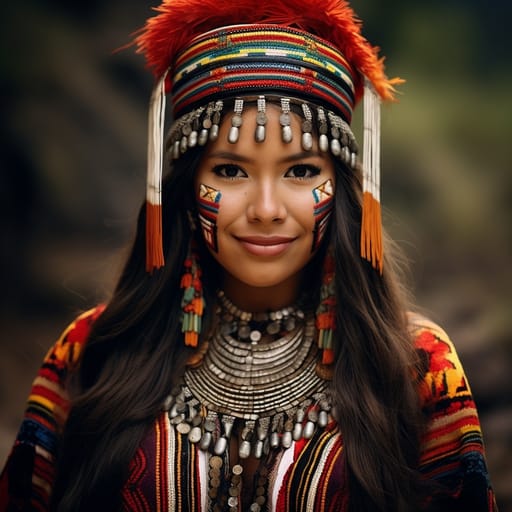
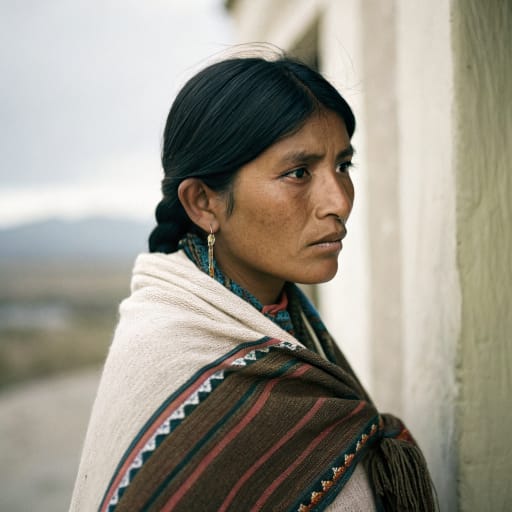
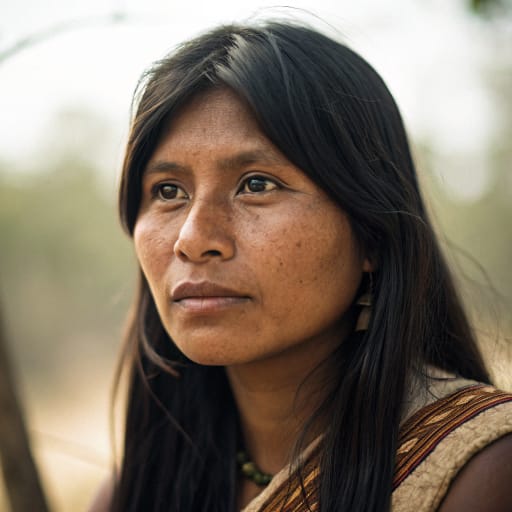
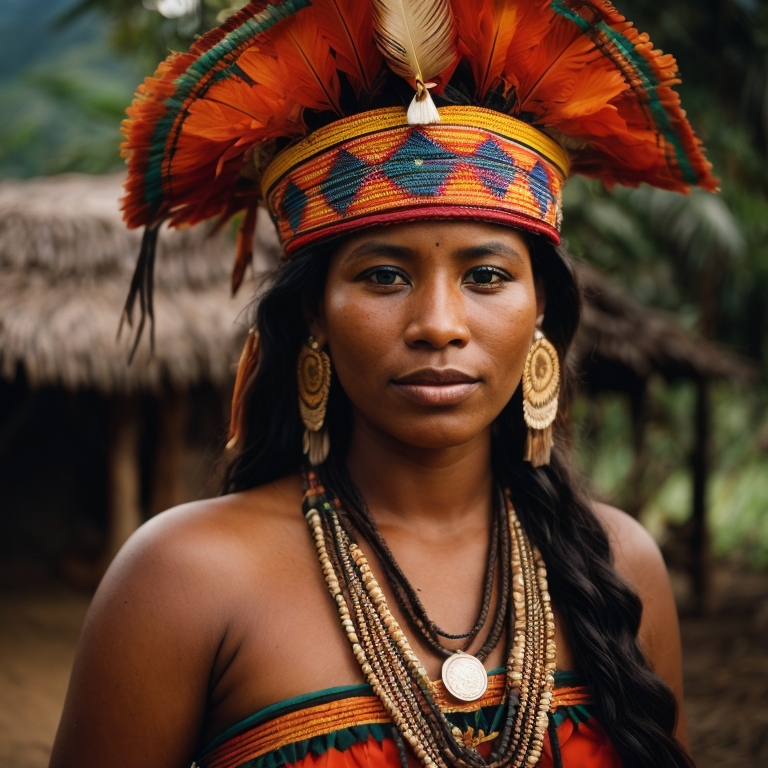
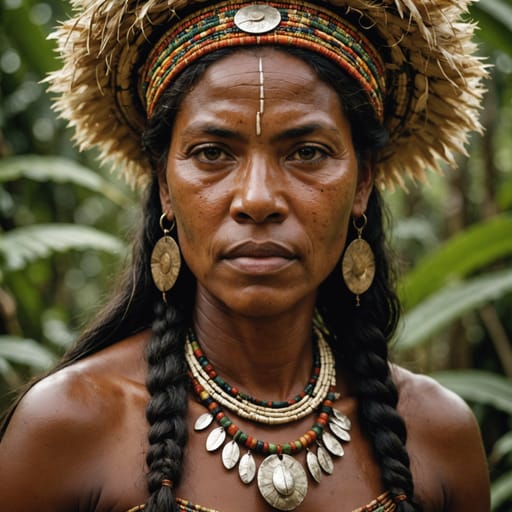
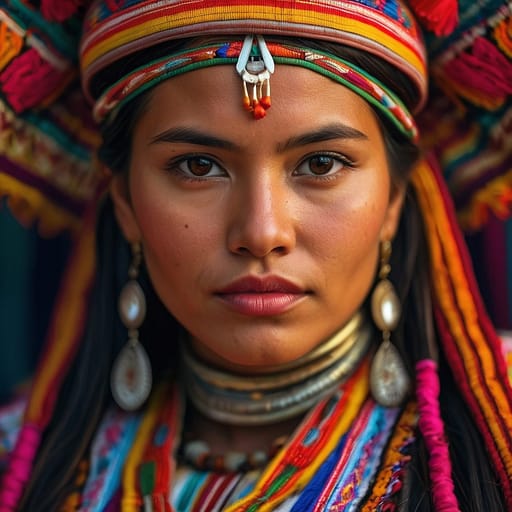
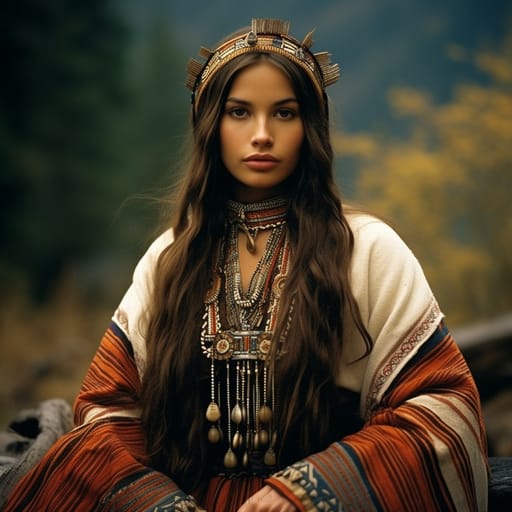
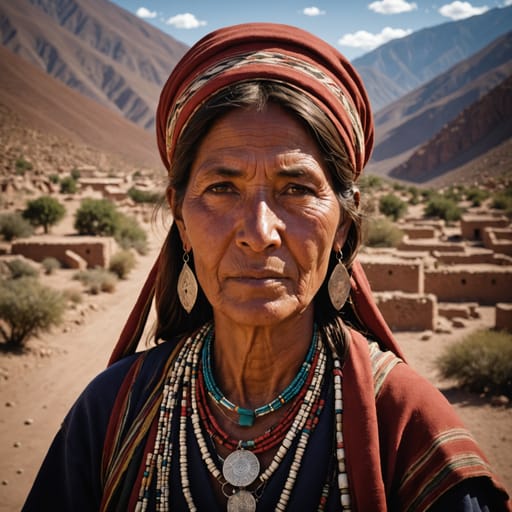
Typical Kamëntsá Phenotypes
Reference for AI generation: hair, eyes, skin, facial structure, build
Kamëntsá Body & Anatomy Reference
South American Indigenous / European-Mestizo / Afro-Latino mix phenotype: anatomy reference for AI nude generation
Kamëntsá Boobs & Breasts
Kamëntsá tits and boobs run medium-to-large cup, full, high projection, the classic South American Indigenous / European-Mestizo / Afro-Latino mix bust profile. Kamëntsá nipples and areolas show medium-brown to dark-brown areolar pigmentation against the tan-to-deep-brown skin tone, with areolar diameter typically in the 32-46mm range and forward-set positioning rather than the smaller bust profile of Andean Indigenous sub-populations. Kamëntsá breasts trend the classic Brazilian / Latina curvy bust profile in lowland populations; smaller and shorter-set in Andean Indigenous populations, a function of the endomorph-to-mesomorph with high gluteal-femoral deposition body habitus and the mean adult female BMI 25-28. For anatomically accurate AI-generated Kamëntsá nudes the render preserves the medium-to-large cup, full, high projection shape, 32-46mm areolas with medium-brown to dark-brown pigmentation, and the torso proportions of the South American Indigenous / European-Mestizo / Afro-Latino mix phenotype.
Kamëntsá Ass & Hips
Kamëntsá hips and butt usually read as full, high projection, the famous Brazilian / Latina bunda profile. The skeletal base is wide iliac crests, very full gluteal-femoral fat deposition (the hallmark Brazilian / Latina hip-to-waist ratio), the South American Indigenous / European-Mestizo / Afro-Latino mix pattern. Set against the slim narrow-hip East Asian profile, the difference is easy to see, and the hip-to-waist ratio is often what identifies Kamëntsá women in photos.
Kamëntsá Vagina & Pussy
Expect medium-brown to dark-brown labial pigmentation, fuller labia minora on Kamëntsá women, in keeping with South American Indigenous / European-Mestizo / Afro-Latino mix ancestry. The pubic hair is wavy-to-curly coarse dark texture, dense distribution. Coloring should run evenly from the tan to deep-brown skin of the thighs to the labia, and Kamëntsá nude imagery should keep the hair's wavy-to-curly coarse dark texture.
Kamëntsá Dicks & Penis
Kamëntsá dick and penile anatomy in adult AI generation should anchor on the regional reference data: regional mean ~13cm erect, moderate-to-above-average girth, and medium-brown shaft pigmentation. The Kamëntsá cock profile reflects the South American Indigenous / European-Mestizo / Afro-Latino mix population's anthropometric measurements. The shaft pigmentation should track the surrounding tan to deep-brown skin tone, and the pubic hair should keep its wavy-to-curly coarse dark texture in the typical inverted-V escutcheon.
Kamëntsá Body, Curves & Build
Kamëntsá body type: endomorph-to-mesomorph with high gluteal-femoral deposition, with mean adult female BMI 25-28. This is the typical South American Indigenous / European-Mestizo / Afro-Latino mix build. Height range, shoulder-to-hip ratio and fat distribution all follow from it, which is what an accurate Kamëntsá nude body should show.
Kamëntsá Skin Tone & Hair Texture
Kamëntsá skin tone falls in the tan to deep-brown (Fitzpatrick III-VI) band, the surface signal most often miscalibrated by generic AI nude generators. Kamëntsá hair texture is typically straight-to-curly 1A-3C, varies widely by ancestral composition, characteristic of the South American Indigenous / European-Mestizo / Afro-Latino mix phenotype. In Kamëntsá nude renders the skin should hold that band consistently across the body.
Explore phenotype categories
Structured taxonomy with peer-reviewed scales · 22 anatomical categories
Erotic Poses & Sex Positions
From the pose catalog: 219 named positions with reference skeletons
Frequently asked questions about Kamëntsá people
Where is the Kamëntsá homeland?
The Kamëntsá homeland is Sibundoy Valley, in the Andes of Putumayo department, southwestern Colombia in South America.
What language do Kamëntsá people speak?
Kamëntsá people primarily speak Kamëntsá (language isolate); Spanish widely spoken.
What religion do Kamëntsá people practice?
The predominant religion among Kamëntsá people is Roman Catholic, shaped by Capuchin missions, alongside traditional healing with yagé and medicinal plants.






Make your own Kamëntsá images
Five a day, free, no credits to buy. The studio starts from this group's phenotype data, so you can set body type, pose and style and keep the traits accurate.
Start with Kamëntsá