Ch'ol Erotic
Northern Chiapas, Mexico, around Tila, Tumbalá, Sabanilla, Salto de Agua and Palenque; migrant communities in the Lacandon forest, Campeche and Tabasco
Ch'ol (Mayan, Cholan branch), with Tila and Tumbalá as the best-known varieties; Spanish widely spoken as a second language
Roman Catholic and Protestant, notably Presbyterian and other evangelical churches; pilgrimage to the Black Christ of Tila; older Maya beliefs about mountains and caves persist
Maya peoples; local communities centered on Tila, Tumbalá and Sabanilla; linguistically closest to the Chontal Maya of Tabasco and the Ch'orti' of Guatemala and Honduras
About Ch'ol People
The Ch'ol are a Maya people whose heartland is northern Chiapas, a green, rain-soaked country of steep coffee slopes that falls away toward the Tabasco lowlands. Towns like Tila, Tumbalá, Sabanilla and Salto de Agua anchor the core territory, and the ruins of Palenque sit at its edge. What holds the Ch'ol together is first the language, spoken at home by more than two hundred thousand people. The second is the milpa, the plot of maize, beans and squash that still sets the rhythm of the year, even for families who also grow coffee for sale or work for wages in town. The name itself is often glossed as a reference to that cornfield.
Ch'ol belongs to the Cholan branch of the Mayan family, alongside Chontal of Tabasco and Ch'orti' of Guatemala and Honduras. Tzeltal, a close cousin, is spoken just to the south. The Cholan branch carries unusual weight. Epigraphers read the hieroglyphic texts of Classic Maya cities, Palenque among them, as written in a prestige language closely related to the Cholan tongues. So the everyday speech of Palenque's present-day neighbors is a real relative of the language its scribes carved in stone. Ch'ol itself has distinct local varieties, and those of Tila and Tumbalá are the best known.
Religious life runs on more than one track. Dominican friars gathered the Ch'ol into mission towns in the sixteenth century, and Catholicism took deep root: the Black Christ of Tila, known as the Señor de Tila, draws pilgrims from across southeastern Mexico. Over the twentieth century, Presbyterian and other evangelical churches won large followings, sometimes dividing villages along religious lines. Underneath both, older ideas persist, including the sense that mountains and caves have owners who must be respected.
The last century pushed the Ch'ol outward. After generations of labor on coffee estates, many families left the crowded highlands to clear new land in the Lacandon forest, Campeche and Tabasco. The 1994 Zapatista uprising and the years after it hit the northern zone hard, bringing paramilitary violence and displacement to Ch'ol municipalities. The ejido of Tila has since spent years fighting to have its communal land and its right to govern itself recognized.
Related ethnic groups
Groups that share Ch'ol's homeland, region, language, or religious tradition. These are likely candidates for comparative phenotype reference.
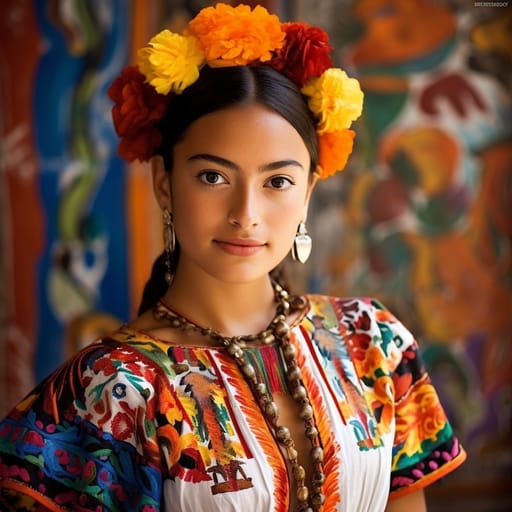
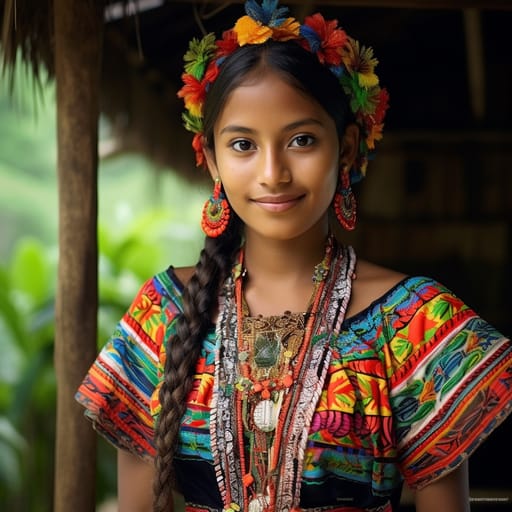
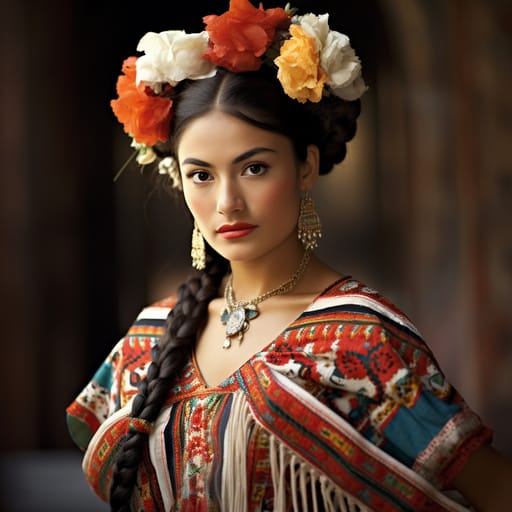
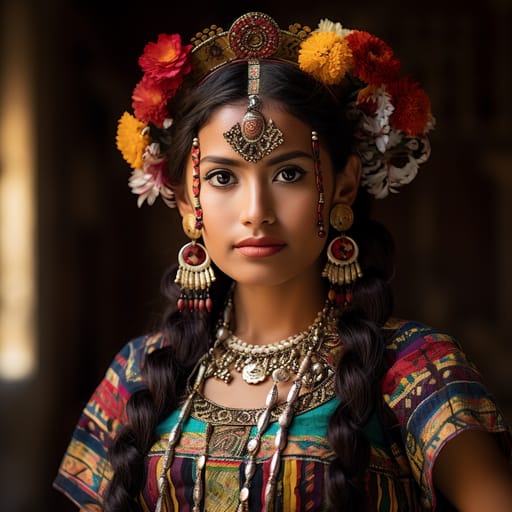
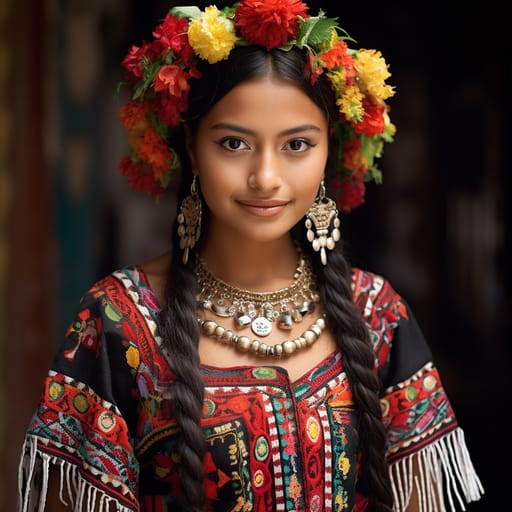
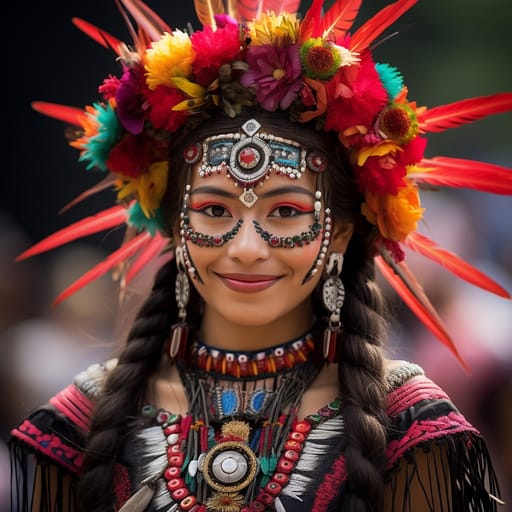
Typical Ch'ol Phenotypes
Reference for AI generation: hair, eyes, skin, facial structure, build
Ch'ol Body & Anatomy Reference
Anatomy by feature, Mesoamerican Indigenous / Mestizo phenotype
Ch'ol Boobs & Breasts
Bust reference for Ch'ol women: medium-to-large cup, full, moderate-to-high projection, which is typical of Mesoamerican Indigenous / Mestizo ancestry. Areolas measure about 32-46mm across, with medium-brown to dark-brown pigmentation. Body type (endomorph-to-mesomorph with strong hip-and-bust deposition) shapes the bust as well, so Ch'ol tits are usually full and projecting, classic Latina curvy bust profile. In AI imagery, keep the forward-set shape rather than drifting toward the smaller East Asian bust.
Ch'ol Ass & Hips
The Ch'ol ass is typically medium-to-full, high projection, classic Latina curvy hip profile, which sets it apart from the slim narrow-hip East Asian profile. Underneath, the pelvis shows wide iliac crests, full gluteal-femoral fat deposition, part of the Mesoamerican Indigenous / Mestizo skeletal pattern. For Ch'ol butt pics and AI renders, match that silhouette and the overall build (endomorph-to-mesomorph with strong hip-and-bust deposition).
Ch'ol Vagina & Pussy
Ch'ol pussy and vulvar anatomy presents medium-brown to dark-brown labial pigmentation, fuller labia minora, consistent with the Mesoamerican Indigenous / Mestizo phenotype's pigmentation pattern. Ch'ol pubic hair is typically straight-to-wavy coarse dark texture, dense distribution, in the inverted-triangle pattern. For anatomically accurate Ch'ol pussy renders the labial coloration should match the surrounding tan to medium-brown skin tone with a continuous gradient, and the hair should keep its straight-to-wavy coarse dark texture.
Ch'ol Dicks & Penis
Ch'ol dicks follow the Mesoamerican Indigenous / Mestizo reference data: regional mean ~13cm erect; moderate girth; medium-brown shaft pigmentation. Shaft color should track the tan to medium-brown skin tone with a smooth change toward the glans, and Ch'ol pubic hair keeps its straight-to-wavy coarse dark texture.
Ch'ol Body, Curves & Build
Ch'ol body type and overall build presents as endomorph-to-mesomorph with strong hip-and-bust deposition, with mean adult female BMI 26-29: the characteristic Mesoamerican Indigenous / Mestizo habitus. Ch'ol curves and proportions should keep the regional skeletal frame (height, shoulder-to-hip ratio, limb proportions) rather than a generic mesomorph default.
Ch'ol Skin Tone & Hair Texture
Ch'ol skin sits in the tan to medium-brown (Fitzpatrick III-V) band. Hair is typically straight-to-wavy 1A-2B, dense dark-brown to black, in keeping with the Mesoamerican Indigenous / Mestizo phenotype. In nude renders the skin should stay one even tone from face to body, and body, pubic and head hair should match.
Explore phenotype categories
Structured taxonomy with peer-reviewed scales · 22 anatomical categories
Erotic Poses & Sex Positions
From the pose catalog: 219 named positions with reference skeletons
Frequently asked questions about Ch'ol people
Where is the Ch'ol homeland?
The Ch'ol homeland is Northern Chiapas, Mexico, around Tila, Tumbalá, Sabanilla, Salto de Agua and Palenque; migrant communities in the Lacandon forest, Campeche and Tabasco in Central America.
What language do Ch'ol people speak?
Ch'ol people primarily speak Ch'ol (Mayan, Cholan branch), with Tila and Tumbalá as the best-known varieties; Spanish widely spoken as a second language.
What religion do Ch'ol people practice?
The predominant religion among Ch'ol people is Roman Catholic and Protestant, notably Presbyterian and other evangelical churches; pilgrimage to the Black Christ of Tila; older Maya beliefs about mountains and caves persist.






Make your own Ch'ol images
Five a day, free, no credits to buy. The studio starts from this group's phenotype data, so you can set body type, pose and style and keep the traits accurate.
Start with Ch'ol