No portrait yet
Capenates Erotic
The ager Capenas on the right bank of the Tiber around ancient Capena, north of Rome in present-day Lazio, Italy.
Capenate (Indo-European, Italic), close to Faliscan with Sabellic features; later replaced by Latin.
Ancient Italic polytheism, centered on the goddess Feronia at the sanctuary of Lucus Feroniae.
One of the Italic peoples of central Italy; closely tied to the Faliscans, with Sabine influence and political ties to Etruscan Veii.
About Capenates People
The Capenates were an Italic people who held a pocket of hill country on the right bank of the Tiber, about 30 kilometers north of Rome, from the early Iron Age until Rome absorbed them in the fourth century BC. No later community traces its line back to them as a separate people. They became Romans, gave up their own language for Latin, and today their name belongs to the modern town of Capena, which took the ancient name back.
Their location explains a lot about them. Their capital sat on a ridge between three stronger neighbors: Etruscan Veii to the southwest, the Faliscans to the north and the Sabines just across the river. Their culture took something from each. Their language survives only in a small set of inscriptions. It was an Italic language with a great deal in common with Faliscan, but some of its features point toward the Sabellic speech of the Sabine side, and specialists still argue over which way it leans. In politics they looked to Veii. Roman tradition, passed down through Cato, held that Capena was founded by young settlers sent out by a king of Veii. Virgil later gave the groves of Capena a place in the Aeneid's roll call of old Italian peoples who went to war.
The center of their religious life was Lucus Feroniae, a sacred grove and sanctuary of Feronia. She was an old Italic goddess of fertile ground, and the Romans also linked her with freed slaves. The sanctuary doubled as a market fair where Sabines, Latins and other neighbors met to trade, and the Capenates brought their first fruits there. Generations of gold and silver offerings built up until 211 BC, when Hannibal's army stripped the shrine as it pulled back from its march on Rome. The site later became a Roman colony, and you can walk through its excavated ruins today.
Their independence ended with Veii's. When Rome laid siege to that city at the close of the fifth century BC, the Capenates and Faliscans marched out to break the siege lines and failed. After Veii fell in 396 BC, Roman armies ravaged Capenate farmland, and Capena asked for peace the next year. Within a decade Rome had organized the conquered land north of the Tiber into new citizen tribes. Most of what remains of the Capenates is in the ground: cemeteries around Capena full of impasto pottery and bronze work, the belongings of a small people who borrowed freely from every direction.
Related ethnic groups
Groups that share Capenates's homeland, region, language, or religious tradition. These are likely candidates for comparative phenotype reference.
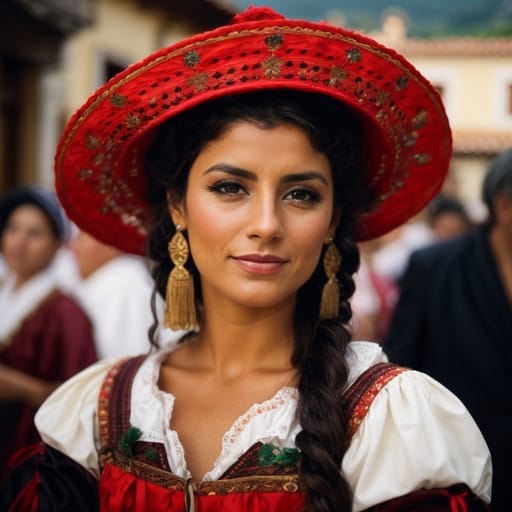
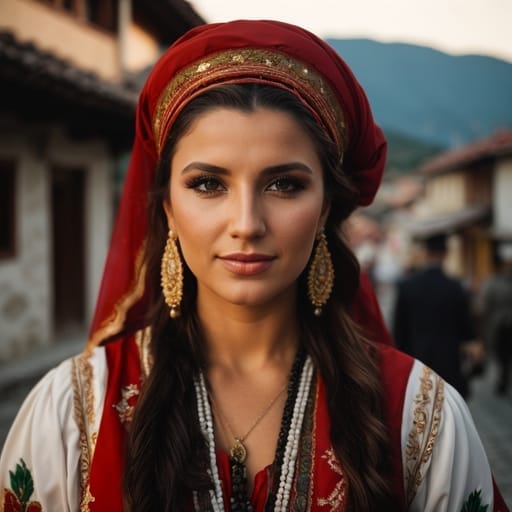
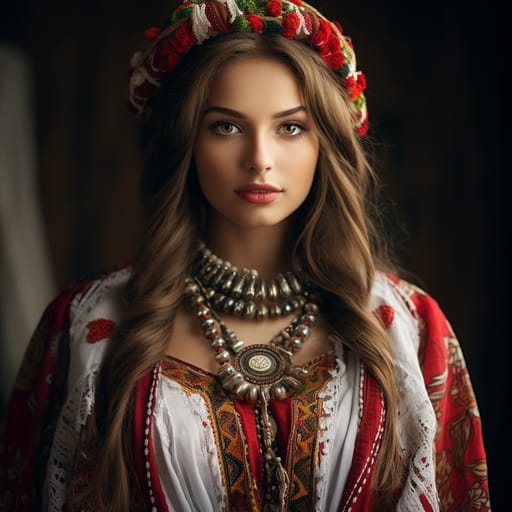
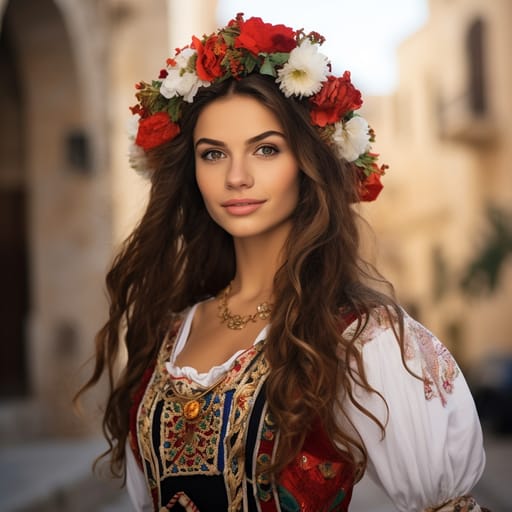
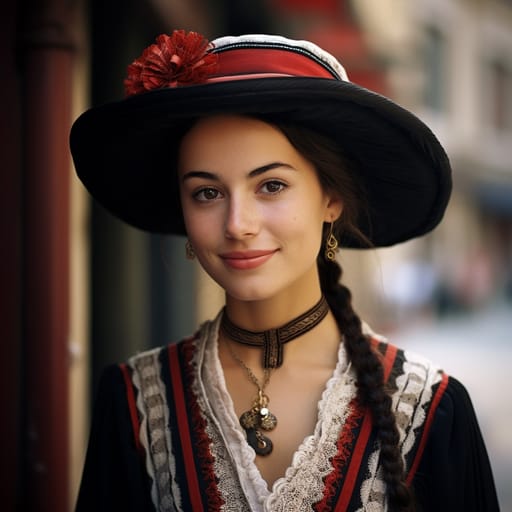

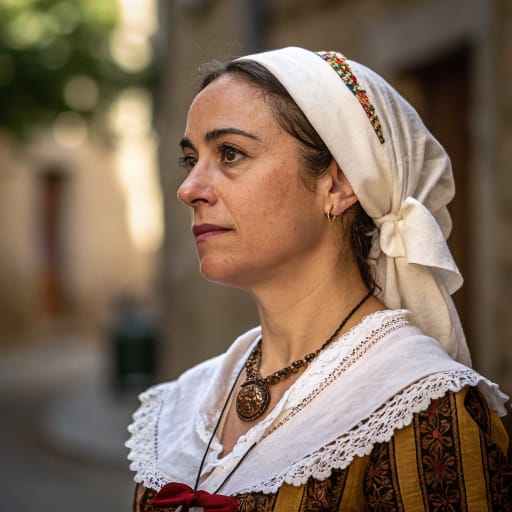
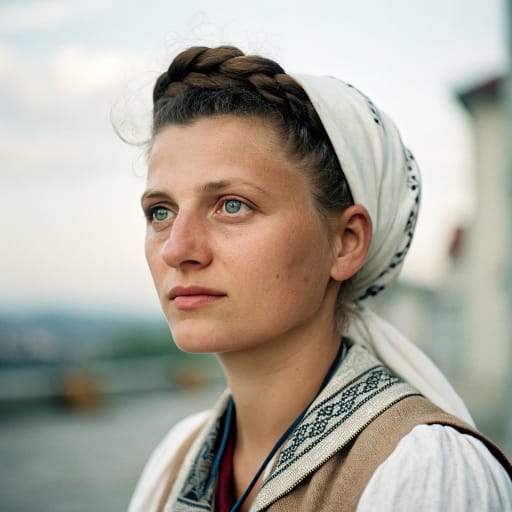
Typical Capenates Phenotypes
Reference for AI generation: hair, eyes, skin, facial structure, build
Capenates Body & Anatomy Reference
Per-feature anatomical profile for AI nude generation: Southern European / Mediterranean phenotype
Capenates Boobs & Breasts
Capenates boobs follow the Southern European / Mediterranean profile: medium-to-large cup, full, moderate-to-high projection. Areolar diameter is usually 32-46mm, and the coloring is medium-brown to dark-brown areolar pigmentation against the olive-to-light-brown skin tone. Breast shape tracks body composition (mesomorph with full hip-and-bust deposition, mean adult female BMI 24-28), so Capenates breasts tend to be full and projecting, generally the classic Mediterranean curvy bust profile. Expect a forward-set shape, not the lighter pigmentation of the Northern European bust.
Capenates Ass & Hips
Capenates ass and hip morphology presents as medium-to-full, moderate-to-high projection, broader hip profile, distinctly different from the slim Northern European narrow-hip pattern. The Capenates pelvic profile shows medium-to-wide iliac crests, full gluteal-femoral fat distribution, anchored in the Southern European / Mediterranean skeletal pattern. Capenates butt shots in adult AI imagery should render the medium-to-full, moderate-to-high projection, broader hip profile silhouette with the overall build (mesomorph with full hip-and-bust deposition) and the fat distribution typical of the Southern European / Mediterranean phenotype.
Capenates Vagina & Pussy
Capenates pussy anatomy typically shows medium-brown to dark-brown labial pigmentation, fuller labia minora. Pubic hair is usually wavy-to-curly medium-coarse dark texture, dense distribution. In AI-generated Capenates nudes, labial color should blend into the olive to medium skin with a gradual transition, and the hair should keep its wavy-to-curly medium-coarse dark texture.
Capenates Dicks & Penis
Penis reference for Capenates men: regional mean ~13-14cm erect, moderate girth. Coloring: medium-brown shaft pigmentation. An accurate Capenates cock in AI imagery matches the surrounding olive to medium skin rather than a generic porn default. Circumcision depends on religion and custom, not ancestry.
Capenates Body, Curves & Build
The Capenates figure is generally mesomorph with full hip-and-bust deposition, with mean adult female BMI 24-28, characteristic of Southern European / Mediterranean ancestry. AI image tools tend to flatten regional body types into a few stock shapes; here the Capenates build is kept as its own reference.
Capenates Skin Tone & Hair Texture
Skin: olive to medium (Fitzpatrick III-IV). Hair: wavy-to-curly 2B-3B, dark-brown to black. Both are typical of Southern European / Mediterranean ancestry. The most common mistake in AI nudes of Capenates women is a body rendered lighter than the face.
Explore phenotype categories
Structured taxonomy with peer-reviewed scales · 22 anatomical categories
Erotic Poses & Sex Positions
From the pose catalog: 219 named positions with reference skeletons
Frequently asked questions about Capenates people
Where is the Capenates homeland?
The Capenates homeland is The ager Capenas on the right bank of the Tiber around ancient Capena, north of Rome in present-day Lazio, Italy. in Southern Europe.
What language do Capenates people speak?
Capenates people primarily speak Capenate (Indo-European, Italic), close to Faliscan with Sabellic features; later replaced by Latin..
What religion do Capenates people practice?
The predominant religion among Capenates people is Ancient Italic polytheism, centered on the goddess Feronia at the sanctuary of Lucus Feroniae..






Make your own Capenates images
Five a day, free, no credits to buy. The studio starts from this group's phenotype data, so you can set body type, pose and style and keep the traits accurate.
Start with Capenates