Help us get this right
Does this portrait look right for Lucuidonenses?
Nobody has judged this one yet. You would be the first.
Lucuidonenses Erotic
Interior of northern Sardinia, Italy, around ancient Luguido (Nostra Signora di Castro, near Oschiri, province of Sassari)
Paleo-Sardinian, also called Nuragic (unclassified); replaced under Rome by Latin (Indo-European, Italic), the ancestor of modern Sardinian
Indigenous Nuragic Sardinian religion, centered on sacred wells and springs; later Roman cults, then Christianity
One of the tribes of Roman Sardinia listed by Ptolemy; possibly associated with the Balares. Neighbors included the Carenses, Cunusitani and Aesaronenses.
About Lucuidonenses People
The Lucuidonenses were an ancient people of northern Sardinia, named by the geographer Ptolemy in the second century AD and long since absorbed into the Romanized population of the island. Their descendants, as far as anyone can tell, are the modern Sardinians of the Monte Acuto and Logudoro country. Almost everything known about them hangs on a single place. Ptolemy sets them south of the Carenses and Cunusitani and north of the Aesaronenses. Their name matches Luguido, written Luguidunec in the Antonine Itinerary, a station on the Roman road that ran down the interior of the island toward Caralis, today's Cagliari. That station is identified with the site of Nostra Signora di Castro near Oschiri, above what is now Lake Coghinas in the province of Sassari.
That tells you what kind of people they were: inland Sardinians, living in the hill country behind the coast, in a zone Rome found worth garrisoning. A fort stood at Luguido under the early empire, held by auxiliary cohorts whose job was to police the road and watch the highland communities that had resisted first Carthage and then Rome for centuries. The Lucuidonenses were probably one of the smaller communities within or alongside the Balares, the larger people ancient writers place in this part of the north, though no source says so outright. Their language would have been a form of Paleo-Sardinian, the unclassified pre-Latin speech of the island, which survives only in place names and a scatter of words in modern Sardinian. Their ancestors built the nuraghi, the stone towers that still crowd the surrounding countryside, and practiced a religion centered on sacred wells and springs, of which they left no written account. The resemblance between Luguidunec and the Celtic Lugdunum names of the continent has tempted some scholars, but nothing else connects these people to Celts, and it may be coincidence.
What became of them is the ordinary story of provincial Sardinia. Latin replaced the old language and the fort became a settlement. By the Middle Ages the same spot was the seat of the bishops of Castro in the Giudicato of Torres, and the Romanesque church still stands there. One of several proposed origins for the regional name Logudoro traces it back to Luguido. If that is right, this obscure tribe is the namesake of the Sardinian heartland and of Logudorese, the variety often treated as the most conservative form of the Sardinian language. Either way, the Lucuidonenses are a reminder that Ptolemy's bare list of names stood for real communities with territory, roads and neighbors.
Related ethnic groups
Groups that share Lucuidonenses's homeland, region, language, or religious tradition. These are likely candidates for comparative phenotype reference.
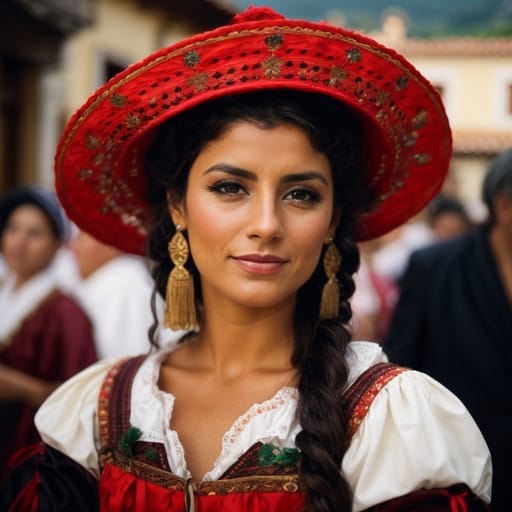
Basques
same region (Southern Europe)
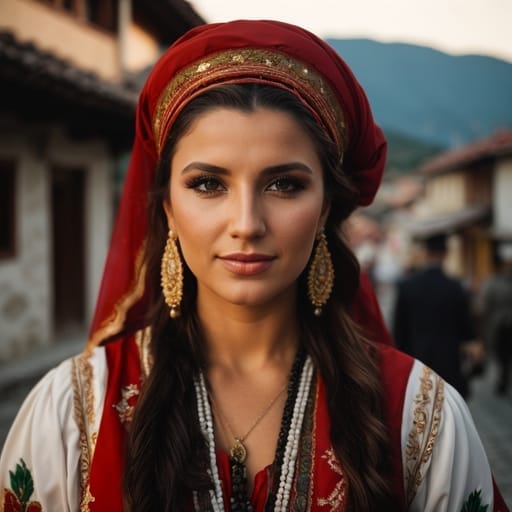
Bosniaks
same region (Southern Europe)
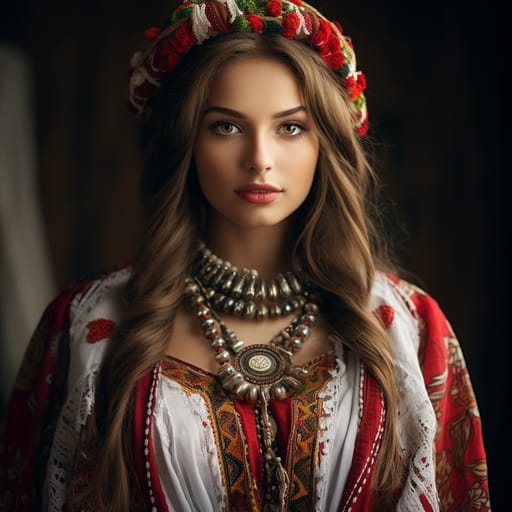
Moldovans
same region (Southern Europe)
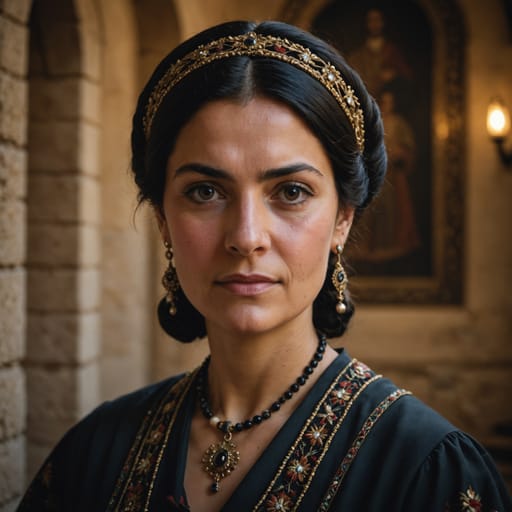
Maltese
same region (Southern Europe)
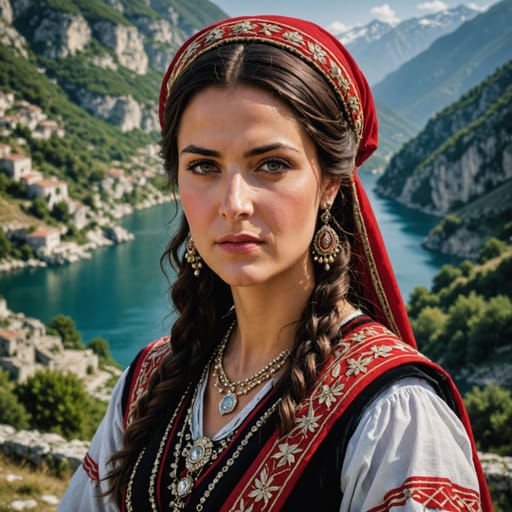
Albanian Greek
same region (Southern Europe)
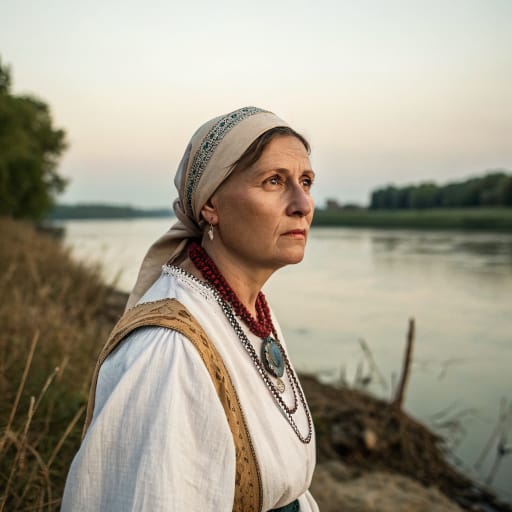
Cornacates
same region (Southern Europe)
Salcitani
same region (Southern Europe)
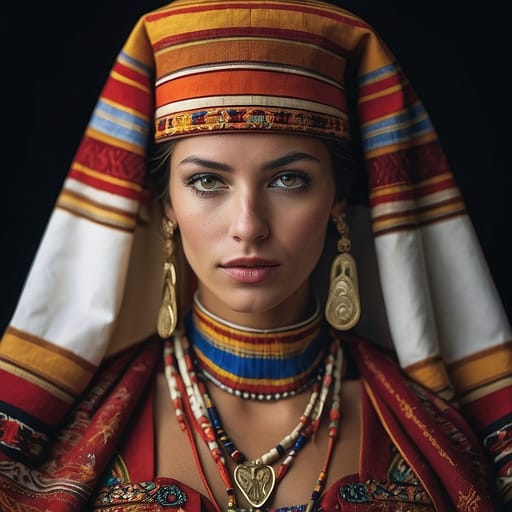
Andorra Other
same region (Southern Europe)
Typical Lucuidonenses Phenotypes
Reference for AI generation: hair, eyes, skin, facial structure, build
Lucuidonenses Body & Anatomy Reference
Anatomy by feature, Southern European / Mediterranean phenotype
Lucuidonenses Boobs & Breasts
The typical Lucuidonenses bust is medium-to-large cup, full, moderate-to-high projection, in line with the wider Southern European / Mediterranean pattern. Areolas usually fall in the 32-46mm range, with medium-brown to dark-brown areolar pigmentation against the olive-to-light-brown skin tone. Compared with the lighter pigmentation of the Northern European bust, Lucuidonenses breasts sit forward and are generally full and projecting, generally the classic Mediterranean curvy bust profile. A faithful AI render of Lucuidonenses tits keeps that shape and areola size.
Lucuidonenses Ass & Hips
Butt shape among Lucuidonenses women: medium-to-full, moderate-to-high projection, broader hip profile, over medium-to-wide iliac crests, full gluteal-femoral fat distribution. This follows Southern European / Mediterranean ancestry and looks quite unlike the slim Northern European narrow-hip pattern. An accurate Lucuidonenses ass in adult AI imagery keeps both the silhouette and the overall build (mesomorph with full hip-and-bust deposition) instead of a generic average.
Lucuidonenses Vagina & Pussy
Vulvar anatomy among Lucuidonenses women: medium-brown to dark-brown labial pigmentation, fuller labia minora. Pubic hair tends to be wavy-to-curly medium-coarse dark texture, dense distribution, in the usual inverted-triangle pattern. Both follow Southern European / Mediterranean pigmentation, which is why Lucuidonenses pussy renders should not fall back on a pale, sparse Western template.
Lucuidonenses Dicks & Penis
The Lucuidonenses cock profile, from Southern European / Mediterranean anthropometric data: regional mean ~13-14cm erect; moderate girth; medium-brown shaft pigmentation. Pubic hair has a wavy-to-curly medium-coarse dark texture and forms the usual inverted-V pattern. Whether Lucuidonenses men are circumcised follows religious and cultural practice rather than phenotype.
Lucuidonenses Body, Curves & Build
Build and curves among Lucuidonenses women follow the Southern European / Mediterranean pattern: mesomorph with full hip-and-bust deposition, mean adult female BMI 24-28. Proportions matter as much as skin tone, so Lucuidonenses figures should keep their regional height and limb ratios.
Lucuidonenses Skin Tone & Hair Texture
The Lucuidonenses skin range is olive to medium (Fitzpatrick III-IV), and hair tends to be wavy-to-curly 2B-3B, dark-brown to black. That combination marks the Southern European / Mediterranean phenotype, and skin tone is the trait AI generators most often get wrong for Lucuidonenses women.
Explore phenotype categories
Structured taxonomy with peer-reviewed scales · 22 anatomical categories
Erotic Poses & Sex Positions
From the pose catalog: 219 named positions with reference skeletons
Frequently asked questions about Lucuidonenses people
Where is the Lucuidonenses homeland?
The Lucuidonenses homeland is Interior of northern Sardinia, Italy, around ancient Luguido (Nostra Signora di Castro, near Oschiri, province of Sassari) in Southern Europe.
What language do Lucuidonenses people speak?
Lucuidonenses people primarily speak Paleo-Sardinian, also called Nuragic (unclassified); replaced under Rome by Latin (Indo-European, Italic), the ancestor of modern Sardinian.
What religion do Lucuidonenses people practice?
The predominant religion among Lucuidonenses people is Indigenous Nuragic Sardinian religion, centered on sacred wells and springs; later Roman cults, then Christianity.






Make your own Lucuidonenses images
Five a day, free, no credits to buy. The studio starts from this group's phenotype data, so you can set body type, pose and style and keep the traits accurate.
Start with Lucuidonenses