Help us get this right
Does this portrait look right for Cornacates?
Nobody has judged this one yet. You would be the first.
Cornacates Erotic
Right bank of the Danube around Cornacum (modern Sotin, near Vukovar) in eastern Slavonia and western Syrmia, Croatia; Roman province of Pannonia, later Pannonia Inferior.
Pannonian, a scantily attested language usually grouped with Illyrian (Indo-European), known mostly from personal names; Latin under Roman rule.
Indigenous Pannonian polytheism, almost undocumented; Roman cults and later Christianity under the Empire.
One of the Pannonian peoples listed by Pliny the Elder, alongside the Breuci, Amantini and Andizetes; often classed within the wider Illyrian world.
About Cornacates People
The Cornacates were a Pannonian people of the first centuries BC and AD who lived on the right bank of the Danube around Cornacum, today the village of Sotin near Vukovar in eastern Croatia. They did not end in a single catastrophe. They were absorbed into the provincial population of Roman Pannonia, and no one today claims descent from them by name, though the people of that stretch of the Danube live on the ground they farmed.
What marks them as a group is, in large part, a Roman filing decision. Pliny the Elder lists them among the peoples of Pannonia, alongside the Breuci, the Amantini and the Andizetes, and their name is tied to a place rather than to an ancestor or a war band: the Cornacates are simply the people of Cornacum. That has led some historians to suspect that the civitas Cornacatium was less an ancient tribe than an administrative district drawn by Rome after it crushed the great Pannonian and Dalmatian revolt of AD 6 to 9, when larger and more dangerous groupings were broken into manageable pieces. Whether there was a Cornacate identity before there was a Cornacate tax roll is an open question.
They spoke Pannonian, a language that survives almost entirely in personal names and is usually grouped with Illyrian, distinct from the speech of the Celtic Scordisci downriver. One of the few Cornacates known by name was a soldier. A bronze discharge diploma issued under Claudius records Dasens, son of Dasmenus, a Cornacate infantryman who served out his years in a Roman auxiliary cohort and earned citizenship for himself and his children, along with legal standing for his marriage. That document is the pattern in miniature. The Danube became a fortified frontier, Cornacum became a fort on it, and military service was the main road out of tribal status and into Roman law.
Of their own religion and customs almost nothing was written down. Cassius Dio, who governed part of Pannonia two centuries later, described Pannonians in general as poor, tough people living on barley and millet in a hard climate, and that is as close as the sources come. After AD 212 every free Cornacate was a Roman citizen, and the name slipped out of use. Goths, Huns, Gepids, Avars and Slavs later passed through or settled the same riverbank. What remains is a line in Pliny, a handful of inscriptions, and the Roman layers still being dug out of the bluff at Sotin.
Related ethnic groups
Groups that share Cornacates's homeland, region, language, or religious tradition. These are likely candidates for comparative phenotype reference.
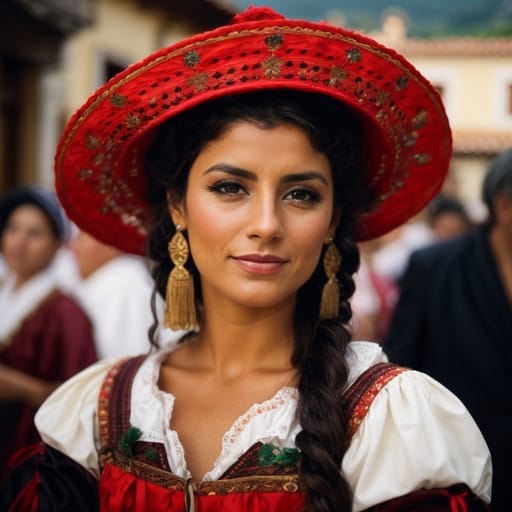
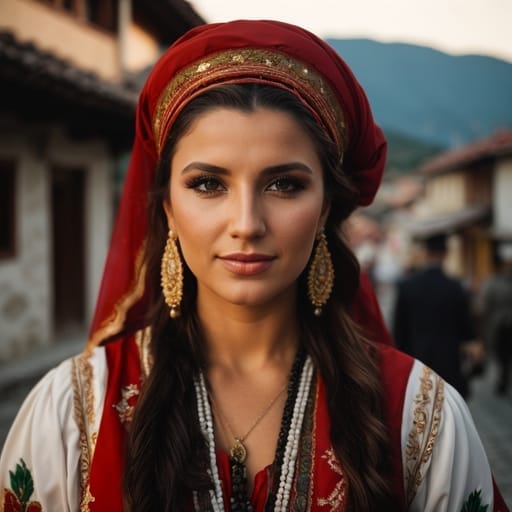
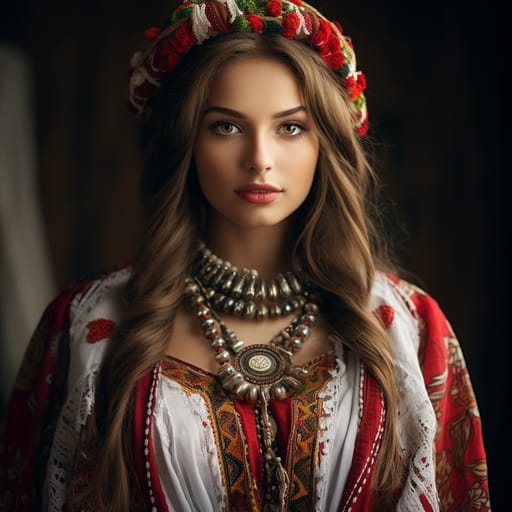
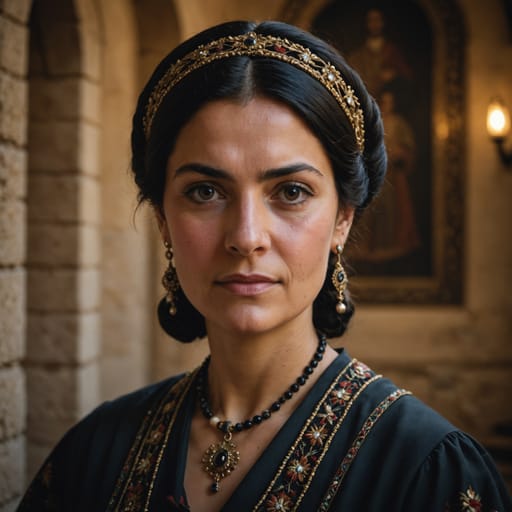
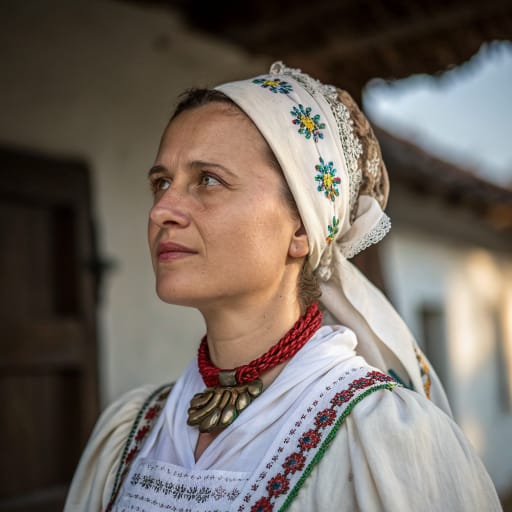
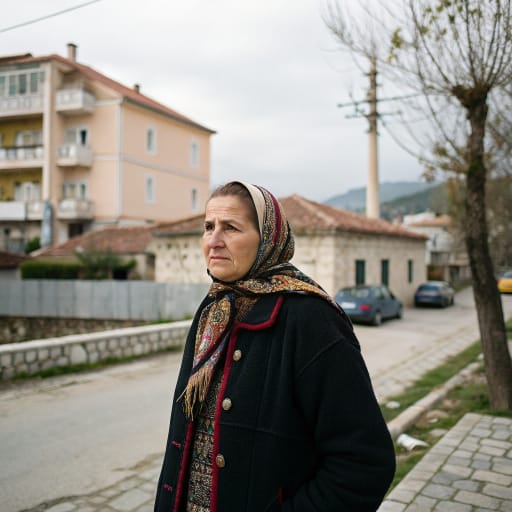
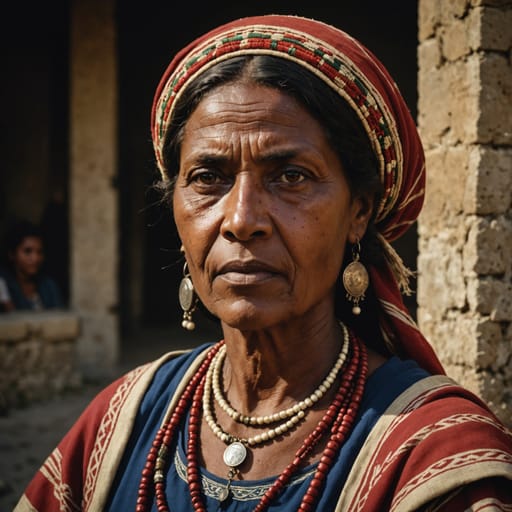
Typical Cornacates Phenotypes
Reference for AI generation: hair, eyes, skin, facial structure, build
Cornacates Body & Anatomy Reference
Anatomy by feature, Southern European / Mediterranean phenotype
Cornacates Boobs & Breasts
The typical Cornacates bust is medium-to-large cup, full, moderate-to-high projection, in line with the wider Southern European / Mediterranean pattern. Areolas usually fall in the 32-46mm range, with medium-brown to dark-brown areolar pigmentation against the olive-to-light-brown skin tone. Compared with the lighter pigmentation of the Northern European bust, Cornacates breasts sit forward and are generally full and projecting, generally the classic Mediterranean curvy bust profile. A faithful AI render of Cornacates tits keeps that shape and areola size.
Cornacates Ass & Hips
Butt shape among Cornacates women: medium-to-full, moderate-to-high projection, broader hip profile, over medium-to-wide iliac crests, full gluteal-femoral fat distribution. This follows Southern European / Mediterranean ancestry and looks quite unlike the slim Northern European narrow-hip pattern. An accurate Cornacates ass in adult AI imagery keeps both the silhouette and the overall build (mesomorph with full hip-and-bust deposition) instead of a generic average.
Cornacates Vagina & Pussy
Vulvar anatomy among Cornacates women: medium-brown to dark-brown labial pigmentation, fuller labia minora. Pubic hair tends to be wavy-to-curly medium-coarse dark texture, dense distribution, in the usual inverted-triangle pattern. Both follow Southern European / Mediterranean pigmentation, which is why Cornacates pussy renders should not fall back on a pale, sparse Western template.
Cornacates Dicks & Penis
The Cornacates cock profile, from Southern European / Mediterranean anthropometric data: regional mean ~13-14cm erect; moderate girth; medium-brown shaft pigmentation. Pubic hair has a wavy-to-curly medium-coarse dark texture and forms the usual inverted-V pattern. Whether Cornacates men are circumcised follows religious and cultural practice rather than phenotype.
Cornacates Body, Curves & Build
Build and curves among Cornacates women follow the Southern European / Mediterranean pattern: mesomorph with full hip-and-bust deposition, mean adult female BMI 24-28. Proportions matter as much as skin tone, so Cornacates figures should keep their regional height and limb ratios.
Cornacates Skin Tone & Hair Texture
The Cornacates skin range is olive to medium (Fitzpatrick III-IV), and hair tends to be wavy-to-curly 2B-3B, dark-brown to black. That combination marks the Southern European / Mediterranean phenotype, and skin tone is the trait AI generators most often get wrong for Cornacates women.
Explore phenotype categories
Structured taxonomy with peer-reviewed scales · 22 anatomical categories
Erotic Poses & Sex Positions
From the pose catalog: 219 named positions with reference skeletons
Frequently asked questions about Cornacates people
Where is the Cornacates homeland?
The Cornacates homeland is Right bank of the Danube around Cornacum (modern Sotin, near Vukovar) in eastern Slavonia and western Syrmia, Croatia; Roman province of Pannonia, later Pannonia Inferior. in Southern Europe.
What language do Cornacates people speak?
Cornacates people primarily speak Pannonian, a scantily attested language usually grouped with Illyrian (Indo-European), known mostly from personal names; Latin under Roman rule..
What religion do Cornacates people practice?
The predominant religion among Cornacates people is Indigenous Pannonian polytheism, almost undocumented; Roman cults and later Christianity under the Empire..






Make your own Cornacates images
Five a day, free, no credits to buy. The studio starts from this group's phenotype data, so you can set body type, pose and style and keep the traits accurate.
Start with Cornacates