Help us get this right
Does this portrait look right for Rutuli?
Nobody has judged this one yet. You would be the first.
Rutuli Erotic
The Tyrrhenian coast of Latium around Ardea, south of Rome, in modern Lazio, Italy.
Latin or a closely related Italic dialect (Indo-European, Italic); no distinctly Rutulian text survives.
Italic polytheism; Ardea held a major cult of Juno Regina.
One of the Italic peoples of Latium Vetus, close kin to the Latins and neighbors of the Volsci, centered on the town of Ardea.
About Rutuli People
The Rutuli were an Italic people of the Latian coast who stopped being counted as a nation of their own once Rome absorbed Latium in the fourth century BC. Their descendants ended up Roman citizens, and their capital, Ardea, still stands about twenty miles south of Rome under the same name. They were small. Their territory ran from the Tyrrhenian dunes inland across a few miles of plain, wedged between Latin towns to the north and the Volsci to the south, and the whole of it could be walked in a day. What made them identifiable was not size but position: they sat on the seam where Latium met its rivals, and both Roman legend and Roman politics kept coming back to them.
Most readers meet them through Virgil. In the Aeneid the Rutulian king Turnus is the man Aeneas has to kill: betrothed to Lavinia, backed by the local nobility, and handed the best lines in the poem's second half. The Romans told themselves their ancestors had to beat the Rutuli before Rome could exist, which is a way of saying the Rutuli were remembered as formidable and as very close by. Legend also gave Ardea a Greek founder, Danae, mother of Perseus, washed ashore from Argos. That origin story says more about how Latin towns wanted to be read than about who actually built the place.
The documented history is thinner and stranger. Ardea was worth besieging: Livy has the last Roman king, Tarquin the Proud, camped outside its walls when the scandal broke at home that ended the monarchy in 509 BC. A border dispute with neighboring Aricia went to Rome for arbitration, and Rome awarded the land to itself. A Roman colony followed in 442 BC. In 390 BC, with the Gauls holding Rome, the exiled Camillus was living at Ardea and led its people out against them. By 209 BC Ardea was one of twelve Latin colonies too drained to send Rome more men.
Religion anchored the place. The temple of Juno Regina at Ardea drew worshippers from well beyond Rutulian ground, and Pliny admired paintings in the town's temples that he believed were older than Rome itself. Language is the real gap: nothing distinctly Rutulian survives in writing, and they were probably speaking Latin, or something very near it, long before they were formally Roman. Malaria and the pull of trade toward Rome emptied the coast. The people did not so much end as stop being listed separately.
Related ethnic groups
Groups that share Rutuli's homeland, region, language, or religious tradition. These are likely candidates for comparative phenotype reference.
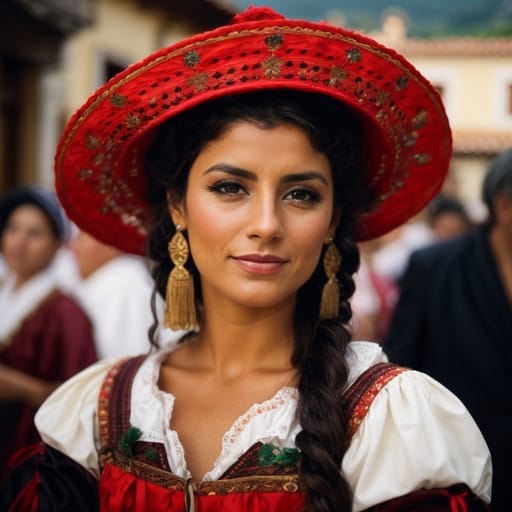
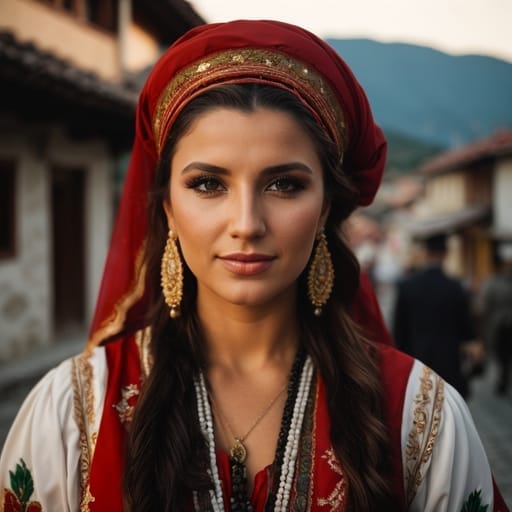
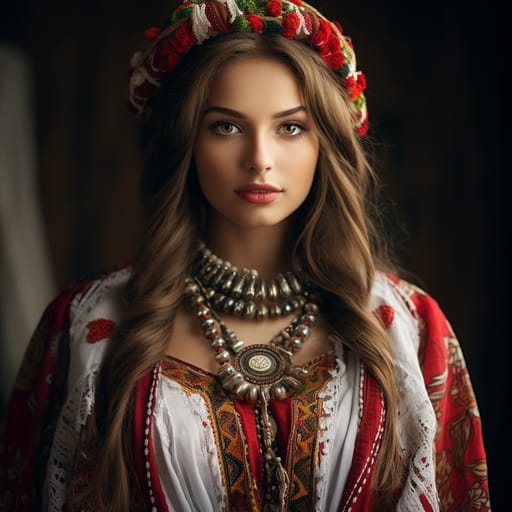
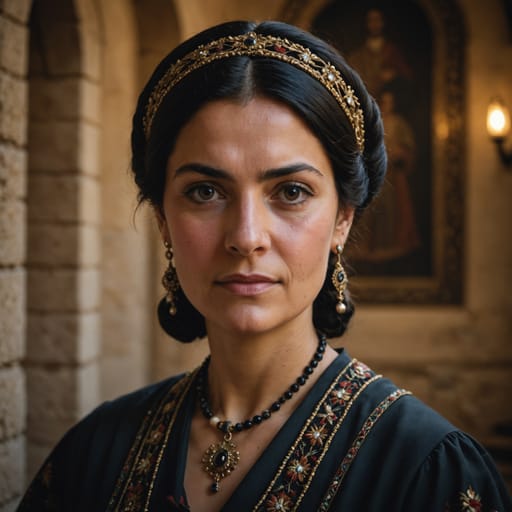
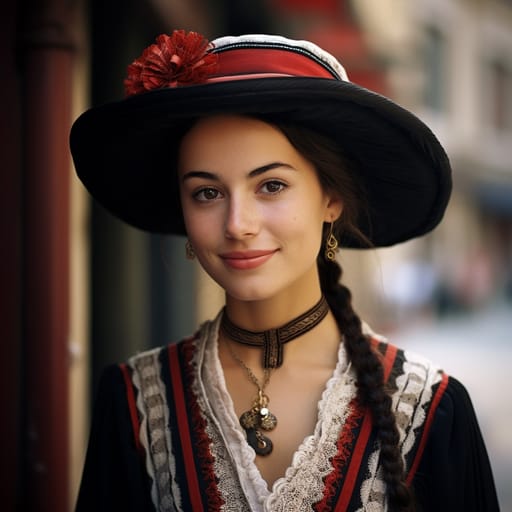

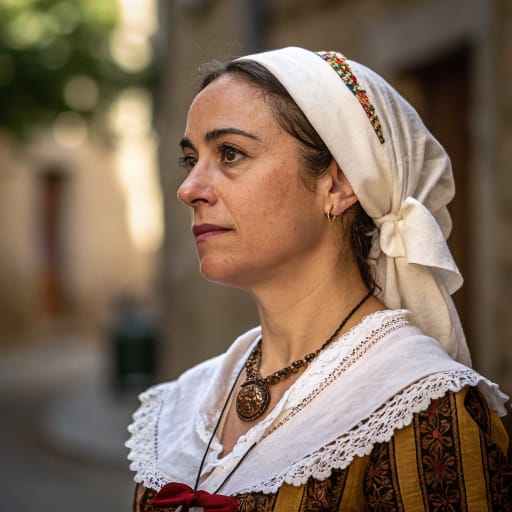
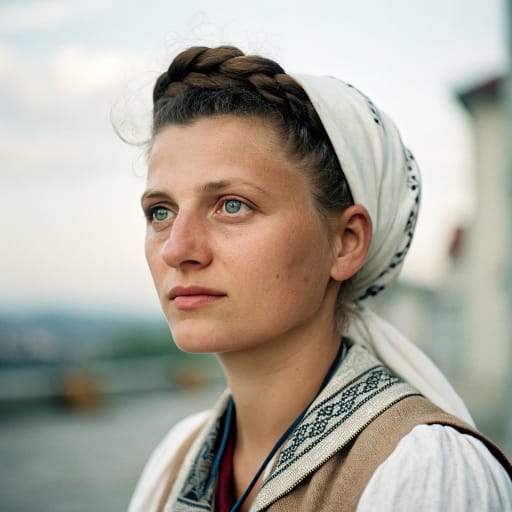
Typical Rutuli Phenotypes
Reference for AI generation: hair, eyes, skin, facial structure, build
Rutuli Body & Anatomy Reference
Anatomy by feature, Southern European / Mediterranean phenotype
Rutuli Boobs & Breasts
Bust reference for Rutuli women: medium-to-large cup, full, moderate-to-high projection, which is typical of Southern European / Mediterranean ancestry. Areolas measure about 32-46mm across, with medium-brown to dark-brown pigmentation. Body type (mesomorph with full hip-and-bust deposition) shapes the bust as well, so Rutuli tits are usually full and projecting, generally the classic Mediterranean curvy bust profile. In AI imagery, keep the forward-set shape rather than drifting toward the lighter pigmentation of the Northern European bust.
Rutuli Ass & Hips
The Rutuli ass is typically medium-to-full, moderate-to-high projection, broader hip profile, which sets it apart from the slim Northern European narrow-hip pattern. Underneath, the pelvis shows medium-to-wide iliac crests, full gluteal-femoral fat distribution, part of the Southern European / Mediterranean skeletal pattern. For Rutuli butt pics and AI renders, match that silhouette and the overall build (mesomorph with full hip-and-bust deposition).
Rutuli Vagina & Pussy
Rutuli pussy and vulvar anatomy presents medium-brown to dark-brown labial pigmentation, fuller labia minora, consistent with the Southern European / Mediterranean phenotype's pigmentation pattern. Rutuli pubic hair is typically wavy-to-curly medium-coarse dark texture, dense distribution, in the inverted-triangle pattern. For anatomically accurate Rutuli pussy renders the labial coloration should match the surrounding olive to medium skin tone with a continuous gradient, and the hair should keep its wavy-to-curly medium-coarse dark texture.
Rutuli Dicks & Penis
Rutuli dicks follow the Southern European / Mediterranean reference data: regional mean ~13-14cm erect; moderate girth; medium-brown shaft pigmentation. Shaft color should track the olive to medium skin tone with a smooth change toward the glans, and Rutuli pubic hair keeps its wavy-to-curly medium-coarse dark texture.
Rutuli Body, Curves & Build
Rutuli body type and overall build presents as mesomorph with full hip-and-bust deposition, with mean adult female BMI 24-28: the characteristic Southern European / Mediterranean habitus. Rutuli curves and proportions should keep the regional skeletal frame (height, shoulder-to-hip ratio, limb proportions) rather than a generic mesomorph default.
Rutuli Skin Tone & Hair Texture
Rutuli skin sits in the olive to medium (Fitzpatrick III-IV) band. Hair is typically wavy-to-curly 2B-3B, dark-brown to black, in keeping with the Southern European / Mediterranean phenotype. In nude renders the skin should stay one even tone from face to body, and body, pubic and head hair should match.
Explore phenotype categories
Structured taxonomy with peer-reviewed scales · 22 anatomical categories
Erotic Poses & Sex Positions
From the pose catalog: 219 named positions with reference skeletons
Frequently asked questions about Rutuli people
Where is the Rutuli homeland?
The Rutuli homeland is The Tyrrhenian coast of Latium around Ardea, south of Rome, in modern Lazio, Italy. in Southern Europe.
What language do Rutuli people speak?
Rutuli people primarily speak Latin or a closely related Italic dialect (Indo-European, Italic); no distinctly Rutulian text survives..
What religion do Rutuli people practice?
The predominant religion among Rutuli people is Italic polytheism; Ardea held a major cult of Juno Regina..






Make your own Rutuli images
Five a day, free, no credits to buy. The studio starts from this group's phenotype data, so you can set body type, pose and style and keep the traits accurate.
Start with Rutuli