No portrait yet
Turduli Erotic
The lower Guadalquivir valley and Atlantic coast of what is now western Andalusia, Spain, with recorded offshoots in central and northern Portugal
Turdetanian, the language of the southwestern Paleohispanic inscriptions (unclassified and disputed, often grouped with Tartessian), replaced by Latin (Indo-European, Italic) under Rome
Indigenous Iberian cults overlaid with Phoenician and Punic worship of Melqart and Astarte, later absorbed into Roman state religion
Part of the wider Iberian population of Turdetania and frequently identified with the Turdetani; northern offshoots recorded as the Turduli Veteres and the Turduli Oppidani in Lusitania
About Turduli People
The Turduli were a people of the far south of Iberia, known to us through Greek and Roman writers of the last two centuries BCE and the first century CE, and gone as a distinct group within a few generations of the Roman conquest, absorbed into the province of Baetica. Their homeland was the lower valley of the Baetis, the river now called the Guadalquivir, in what is today western Andalusia and the lands just over the modern Portuguese border. Nobody carries the name now. Their descendants are simply among the people of southern Spain and southern Portugal, and what is left of the Turduli themselves is archaeological: hill settlements, coins, and inscriptions in a script that can be sounded out but not understood.
Ancient writers could not agree whether the Turduli were a separate people or another name for their neighbors the Turdetani. Strabo says as much and declines to settle it, and modern scholarship has not done much better. What the sources do agree on is the character of the region: rich, settled, urban by the standards of the peninsula, and old. The Turduli lived on ground that had been Tartessos, the half-legendary kingdom that traded silver to the Phoenicians and then vanished from the record. The silver was the point. The Sierra Morena and the Rio Tinto country produced metal in quantities that drew Phoenician traders to found Gades, drew Carthage after them, and eventually drew Rome. Strabo credits the Turdetani with written laws in verse and records they claimed were thousands of years old, a claim worth treating skeptically but not dismissing outright: the southwestern script on their stelae is among the oldest writing in western Europe.
Their religion, by the time it becomes visible, is already layered. Local cults sit alongside Phoenician ones, with Melqart at Gades and Astarte in the sanctuaries, and the Romans later filed Melqart under Hercules and kept the shrine busy. Not all Turduli stayed south. Roman geographers place groups called the Turduli Veteres and Turduli Oppidani far up the Atlantic coast in central and northern Portugal, near the mouth of the Douro, apparently the residue of migrations north made alongside Celtic-speaking neighbors. The southern Turduli went a different way. Strabo, writing under Augustus, reports that the people of the Baetis valley had taken up Roman dress, Roman law and Latin, and had all but forgotten their own language. He wrote it as an observation. It reads now like an obituary.
Related ethnic groups
Groups that share Turduli's homeland, region, language, or religious tradition. These are likely candidates for comparative phenotype reference.
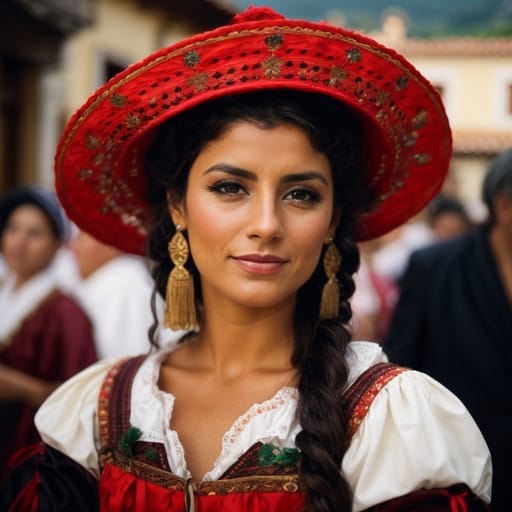
Basques
same region (Southern Europe)
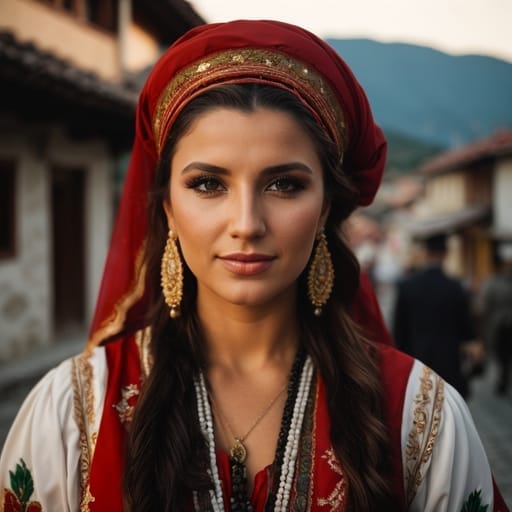
Bosniaks
same region (Southern Europe)
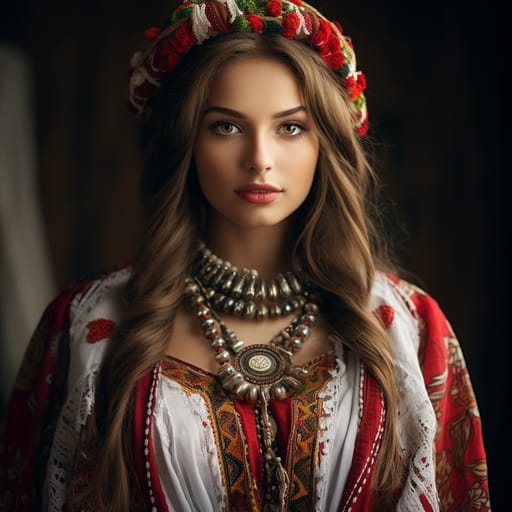
Moldovans
same region (Southern Europe)
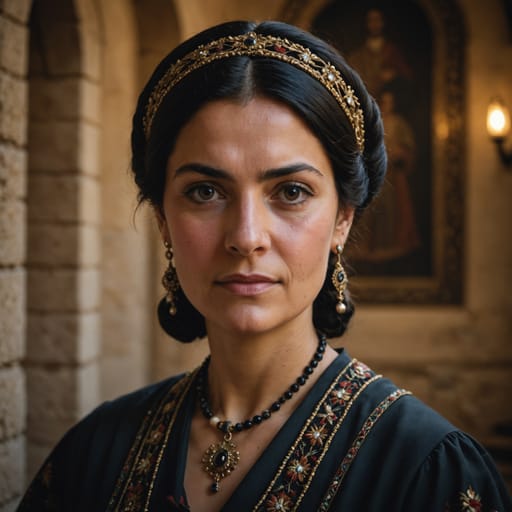
Maltese
same region (Southern Europe)
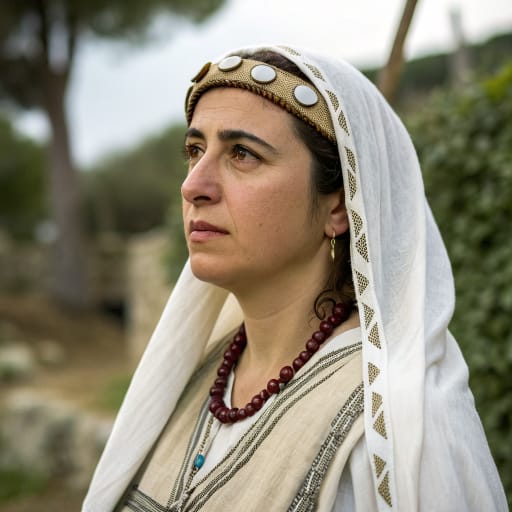
Aeolians
same region (Southern Europe)
Osci
same region (Southern Europe)
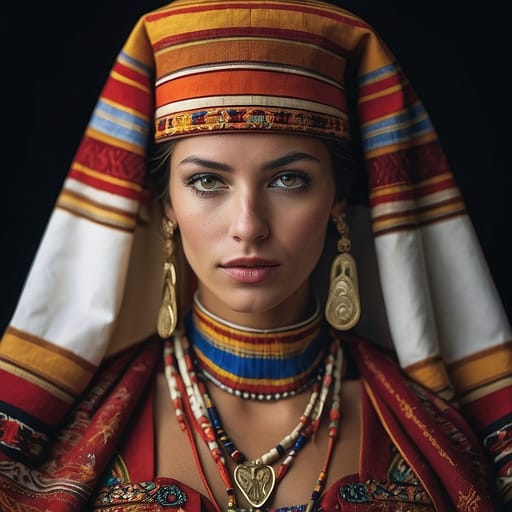
Andorra Other
same region (Southern Europe)
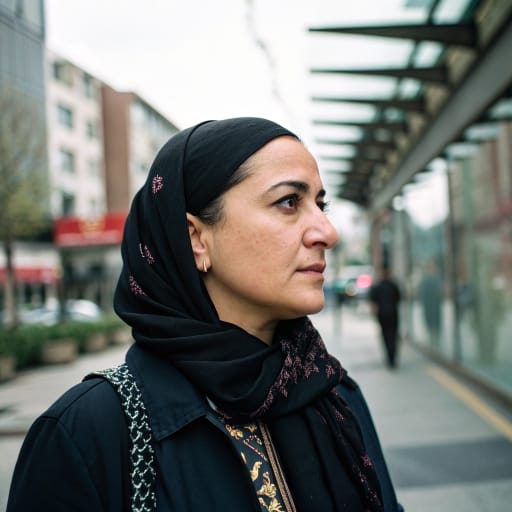
Ashkali and Balkan Egyptians
same region (Southern Europe)
Typical Turduli Phenotypes
Reference for AI generation: hair, eyes, skin, facial structure, build
Turduli Body & Anatomy Reference
Per-feature anatomical profile for AI nude generation: Southern European / Mediterranean phenotype
Turduli Boobs & Breasts
Bust reference for Turduli women: medium-to-large cup, full, moderate-to-high projection, which is typical of Southern European / Mediterranean ancestry. Areolas measure about 32-46mm across, with medium-brown to dark-brown pigmentation. Body type (mesomorph with full hip-and-bust deposition) shapes the bust as well, so Turduli tits are usually full and projecting, generally the classic Mediterranean curvy bust profile. In AI imagery, keep the forward-set shape rather than drifting toward the lighter pigmentation of the Northern European bust.
Turduli Ass & Hips
The Turduli ass is typically medium-to-full, moderate-to-high projection, broader hip profile, which sets it apart from the slim Northern European narrow-hip pattern. Underneath, the pelvis shows medium-to-wide iliac crests, full gluteal-femoral fat distribution, part of the Southern European / Mediterranean skeletal pattern. For Turduli butt pics and AI renders, match that silhouette and the overall build (mesomorph with full hip-and-bust deposition).
Turduli Vagina & Pussy
Turduli pussy and vulvar anatomy presents medium-brown to dark-brown labial pigmentation, fuller labia minora, consistent with the Southern European / Mediterranean phenotype's pigmentation pattern. Turduli pubic hair is typically wavy-to-curly medium-coarse dark texture, dense distribution, in the inverted-triangle pattern. For anatomically accurate Turduli pussy renders the labial coloration should match the surrounding olive to medium skin tone with a continuous gradient, and the hair should keep its wavy-to-curly medium-coarse dark texture.
Turduli Dicks & Penis
Turduli dicks follow the Southern European / Mediterranean reference data: regional mean ~13-14cm erect; moderate girth; medium-brown shaft pigmentation. Shaft color should track the olive to medium skin tone with a smooth change toward the glans, and Turduli pubic hair keeps its wavy-to-curly medium-coarse dark texture.
Turduli Body, Curves & Build
Turduli body type and overall build presents as mesomorph with full hip-and-bust deposition, with mean adult female BMI 24-28: the characteristic Southern European / Mediterranean habitus. Turduli curves and proportions should keep the regional skeletal frame (height, shoulder-to-hip ratio, limb proportions) rather than a generic mesomorph default.
Turduli Skin Tone & Hair Texture
Turduli skin sits in the olive to medium (Fitzpatrick III-IV) band. Hair is typically wavy-to-curly 2B-3B, dark-brown to black, in keeping with the Southern European / Mediterranean phenotype. In nude renders the skin should stay one even tone from face to body, and body, pubic and head hair should match.
Explore phenotype categories
Structured taxonomy with peer-reviewed scales · 22 anatomical categories
Erotic Poses & Sex Positions
From the pose catalog: 219 named positions with reference skeletons
Frequently asked questions about Turduli people
Where is the Turduli homeland?
The Turduli homeland is The lower Guadalquivir valley and Atlantic coast of what is now western Andalusia, Spain, with recorded offshoots in central and northern Portugal in Southern Europe.
What language do Turduli people speak?
Turduli people primarily speak Turdetanian, the language of the southwestern Paleohispanic inscriptions (unclassified and disputed, often grouped with Tartessian), replaced by Latin (Indo-European, Italic) under Rome.
What religion do Turduli people practice?
The predominant religion among Turduli people is Indigenous Iberian cults overlaid with Phoenician and Punic worship of Melqart and Astarte, later absorbed into Roman state religion.






Make your own Turduli images
Five a day, free, no credits to buy. The studio starts from this group's phenotype data, so you can set body type, pose and style and keep the traits accurate.
Start with Turduli