No portrait yet
Sarakatsani Erotic
Mainland Greece, historically moving between mountain summer pastures and lowland winter grazing in Epirus, Thessaly, Macedonia, Thrace and Central Greece, with smaller communities in Bulgaria, southern Albania and North Macedonia.
Greek, Sarakatsan dialect (Indo-European, Hellenic); Bulgarian also spoken by Karakachani in Bulgaria (Indo-European, Slavic).
Eastern Orthodox Christianity.
A subgroup of the Greeks, known as Karakachani in Bulgaria. Traditionally organized into tselingata, herding bands of related families under a head shepherd.
About Sarakatsani People
For most of their recorded history the Sarakatsani were defined by a single rhythm: up the mountains in spring, down to the plains before the snow. They spoke Greek, they were Orthodox, and they owned little or no land. Shepherd families drove sheep and goats between summer grazing in the Pindus, Agrafa and Rhodope ranges and winter pasture on the lowlands of Thessaly, Epirus, Macedonia and Thrace. That movement, more than any single custom, set them apart from the settled farmers whose fields they crossed. In Bulgaria the same people are called Karakachani, a name also given to a livestock guardian dog and a hardy breed of sheep tied to their herds.
Their speech is a dialect of Greek. That point matters because outsiders long confused them with the Aromanians, the other major herders who moved flocks with the seasons in the southern Balkans and who speak a Romance language. The Danish scholar Carsten Høeg recorded their dialect and songs in the 1920s, and scholars still argue about where the Sarakatsani came from. Some see an ancient Greek herding people that never left the high country. Others see lowland Greeks who took to the mountains in later centuries.
Social life ran through the tselingato, a band of related households that pooled their flocks under a head shepherd, the tselingas, who bargained with landowners and officials for grazing. Families lived in domed huts of branches and thatch, rebuilt each season. John Campbell studied the Sarakatsani of the Zagori district of Epirus, and his 1964 book became a founding text on honor, shame and kinship in Mediterranean anthropology. It describes a world where a family guarded its reputation as closely as its sheep. The Orthodox calendar gave the year its shape, with the feasts of Saint George in spring and Saint Demetrius in autumn traditionally marking the moves between pastures.
The twentieth century broke the cycle. New borders after the Balkan Wars cut old migration routes, war and civil war emptied the mountains, and schools, roads and town jobs drew families down for good. In communist Bulgaria, collectivization in the 1950s forced the Karakachani to settle and give up their flocks. Most Sarakatsani now live in Greek towns and cities, with smaller communities in Bulgaria, Albania and North Macedonia. Cultural associations keep the identity alive, and at their summer gatherings in the mountains the dark wool costumes and old songs come out again.
Related ethnic groups
Groups that share Sarakatsani's homeland, region, language, or religious tradition. These are likely candidates for comparative phenotype reference.
Basques
same region (Southern Europe)
Bosniaks
same region (Southern Europe)
Moldovans
same region (Southern Europe)
Maltese
same region (Southern Europe)
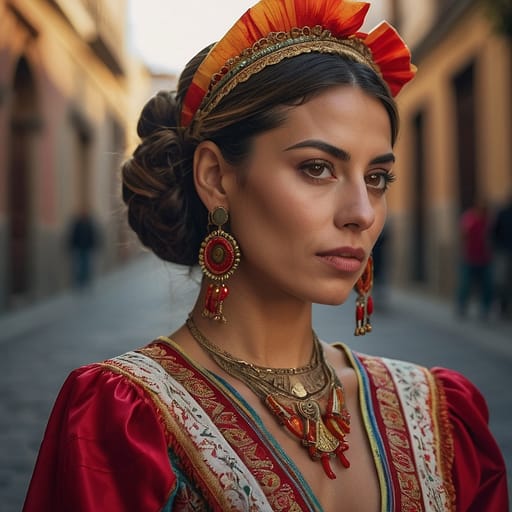
Spanish
same region (Southern Europe)
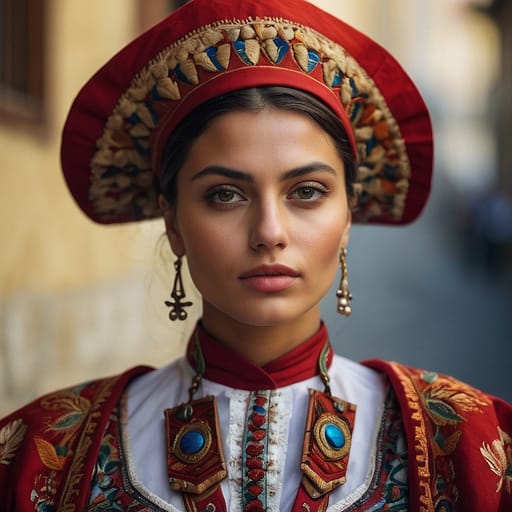
Sammarinese
same region (Southern Europe)
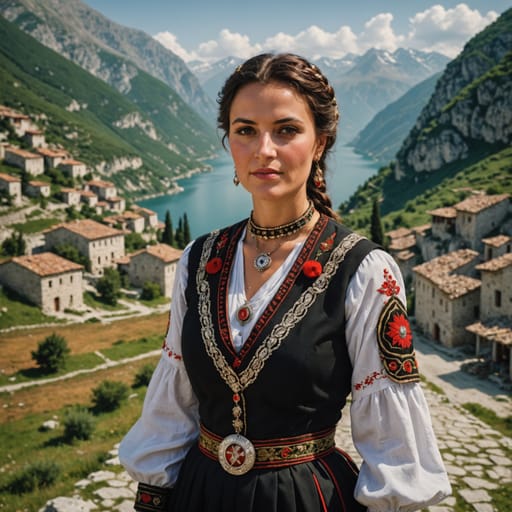
Albania Other
same region (Southern Europe)
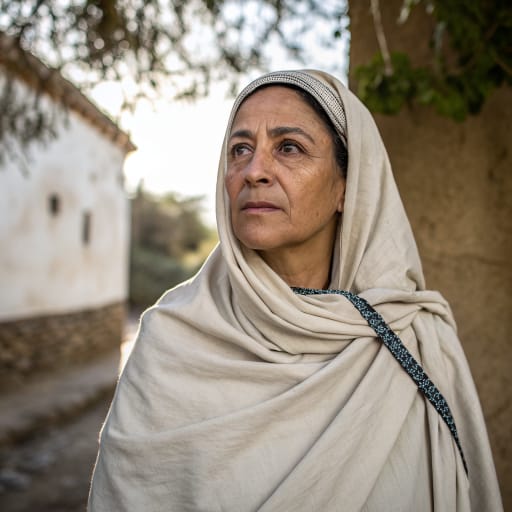
Moriscos
same region (Southern Europe)
Typical Sarakatsani Phenotypes
Reference for AI generation: hair, eyes, skin, facial structure, build
Sarakatsani Body & Anatomy Reference
Southern European / Mediterranean phenotype: anatomy reference for AI nude generation
Sarakatsani Boobs & Breasts
Sarakatsani boobs follow the Southern European / Mediterranean profile: medium-to-large cup, full, moderate-to-high projection. Areolar diameter is usually 32-46mm, and the coloring is medium-brown to dark-brown areolar pigmentation against the olive-to-light-brown skin tone. Breast shape tracks body composition (mesomorph with full hip-and-bust deposition, mean adult female BMI 24-28), so Sarakatsani breasts tend to be full and projecting, generally the classic Mediterranean curvy bust profile. Expect a forward-set shape, not the lighter pigmentation of the Northern European bust.
Sarakatsani Ass & Hips
Sarakatsani ass and hip morphology presents as medium-to-full, moderate-to-high projection, broader hip profile, distinctly different from the slim Northern European narrow-hip pattern. The Sarakatsani pelvic profile shows medium-to-wide iliac crests, full gluteal-femoral fat distribution, anchored in the Southern European / Mediterranean skeletal pattern. Sarakatsani butt shots in adult AI imagery should render the medium-to-full, moderate-to-high projection, broader hip profile silhouette with the overall build (mesomorph with full hip-and-bust deposition) and the fat distribution typical of the Southern European / Mediterranean phenotype.
Sarakatsani Vagina & Pussy
Sarakatsani pussy anatomy typically shows medium-brown to dark-brown labial pigmentation, fuller labia minora. Pubic hair is usually wavy-to-curly medium-coarse dark texture, dense distribution. In AI-generated Sarakatsani nudes, labial color should blend into the olive to medium skin with a gradual transition, and the hair should keep its wavy-to-curly medium-coarse dark texture.
Sarakatsani Dicks & Penis
Penis reference for Sarakatsani men: regional mean ~13-14cm erect, moderate girth. Coloring: medium-brown shaft pigmentation. An accurate Sarakatsani cock in AI imagery matches the surrounding olive to medium skin rather than a generic porn default. Circumcision depends on religion and custom, not ancestry.
Sarakatsani Body, Curves & Build
The Sarakatsani figure is generally mesomorph with full hip-and-bust deposition, with mean adult female BMI 24-28, characteristic of Southern European / Mediterranean ancestry. AI image tools tend to flatten regional body types into a few stock shapes; here the Sarakatsani build is kept as its own reference.
Sarakatsani Skin Tone & Hair Texture
Skin: olive to medium (Fitzpatrick III-IV). Hair: wavy-to-curly 2B-3B, dark-brown to black. Both are typical of Southern European / Mediterranean ancestry. The most common mistake in AI nudes of Sarakatsani women is a body rendered lighter than the face.
Explore phenotype categories
Structured taxonomy with peer-reviewed scales · 22 anatomical categories
Erotic Poses & Sex Positions
From the pose catalog: 219 named positions with reference skeletons
Frequently asked questions about Sarakatsani people
Where is the Sarakatsani homeland?
The Sarakatsani homeland is Mainland Greece, historically moving between mountain summer pastures and lowland winter grazing in Epirus, Thessaly, Macedonia, Thrace and Central Greece, with smaller communities in Bulgaria, southern Albania and North Macedonia. in Southern Europe.
What language do Sarakatsani people speak?
Sarakatsani people primarily speak Greek, Sarakatsan dialect (Indo-European, Hellenic); Bulgarian also spoken by Karakachani in Bulgaria (Indo-European, Slavic)..
What religion do Sarakatsani people practice?
The predominant religion among Sarakatsani people is Eastern Orthodox Christianity..






Make your own Sarakatsani images
Five a day, free, no credits to buy. The studio starts from this group's phenotype data, so you can set body type, pose and style and keep the traits accurate.
Start with Sarakatsani