No portrait yet
Rucensi Erotic
Central Sardinia (Italy), south of the Cornenses and north of the Celsitani and Corpicenses in Ptolemy's list; exact territory unknown.
Unrecorded; presumably Paleo-Sardinian (unclassified, pre-Roman), replaced by Latin (Indo-European, Italic) under Roman rule.
Not recorded; presumably the indigenous Sardinian cults of the Nuragic tradition (sacred wells, Sardus Pater), with Punic and Roman influence.
One of the indigenous tribes of Roman-era Sardinia listed by Ptolemy; neighbors were the Cornenses (Aechilenenses), Celsitani and Corpicenses. Part of the wider ancient Sardinian population descended from the Nuragic culture.
About Rucensi People
The Rucensi were one of the native peoples of ancient Sardinia, recorded in the second century AD by the geographer Ptolemy and by nobody else, and their descendants are to be looked for among today's Sardinians. That one mention is the whole written record. Ptolemy, compiling in Alexandria from older reports, ran down the island's tribes from north to south and set the Rucensi below the Aechilenenses, whom he also calls the Cornenses, and above the Celsitani and the Corpicenses. That puts them somewhere in the middle of the island. The Cornenses give the only real anchor: their name is generally tied to Cornus, the west coast town that served as the stronghold of the Sardinian revolt against Rome in 215 BC. Beyond that, anyone drawing a firm border for Rucensi country is guessing.
The name itself says something. It carries the Latin ending used for the people of a particular place or district, so it probably reached Ptolemy as a Roman administrative label, not necessarily what these people called themselves. Rome dealt with inland Sardinia community by community, and a few of those dealings survive on stone and bronze. The tablet of Esterzili, dated AD 69, records a governor ordering one such people, the Galillenses, off land belonging to another, the Patulcenses. The Rucensi most likely lived in that same world of fixed boundaries, taxes and periodic friction with the authorities.
By Ptolemy's day Sardinia had been Roman for close to four hundred years, and Carthage had held the coasts and plains before that. The people of the interior were the heirs of the Nuragic culture, the Bronze Age society that raised the stone towers called nuraghi, thousands of which still stand. They spoke a language, usually called Paleo-Sardinian, that has no demonstrated relatives and left no texts. It survives in place names and in a layer of vocabulary inside modern Sardinian, the Romance language that Latin left behind. The island's old cults gathered at sacred wells and springs, and honored a father god the Romans knew as Sardus Pater. Nothing ties the Rucensi to any specific sanctuary, but this was the religious setting they were born into.
What became of them is absorption, not disappearance. Studies of ancient DNA show striking continuity on the island from the Neolithic through the Nuragic age, and present-day Sardinians, above all in the highland interior, still carry an unusually large share of that old ancestry. The Rucensi stopped being counted under that name. The people went on.
Related ethnic groups
Groups that share Rucensi's homeland, region, language, or religious tradition. These are likely candidates for comparative phenotype reference.
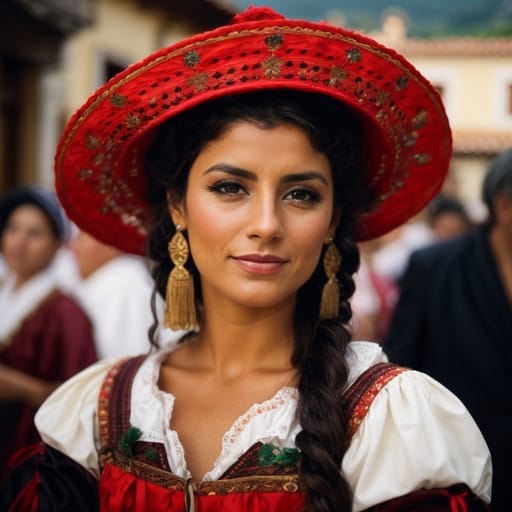
Basques
same region (Southern Europe)
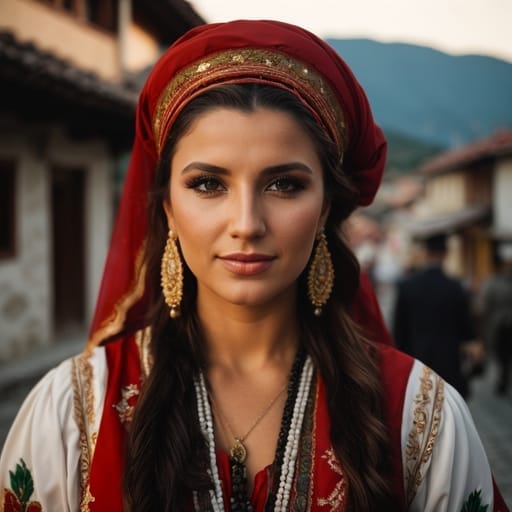
Bosniaks
same region (Southern Europe)
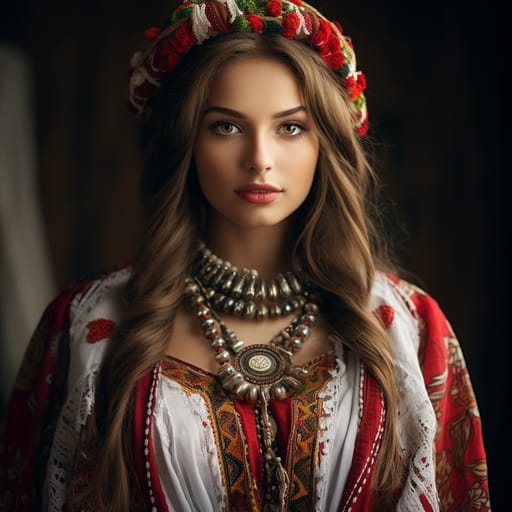
Moldovans
same region (Southern Europe)
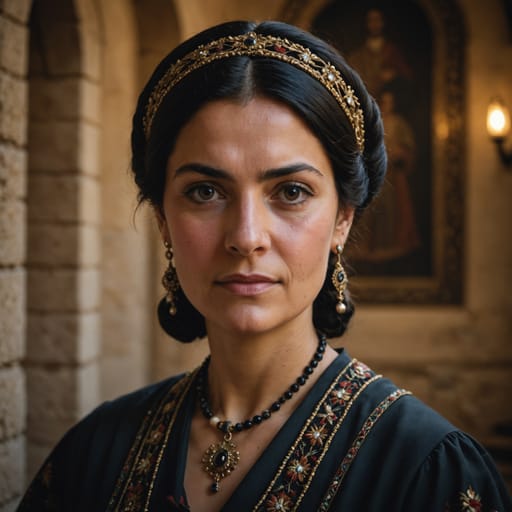
Maltese
same region (Southern Europe)
Valentini
same region (Southern Europe)
Sephardi Jews
same region (Southern Europe)
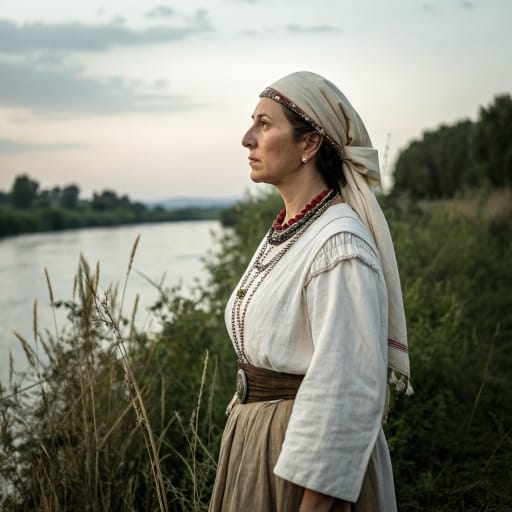
Libicii
same region (Southern Europe)
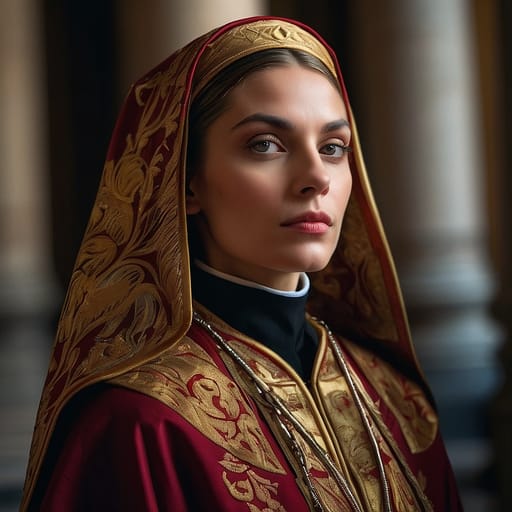
Vatican Clergy
same region (Southern Europe)
Typical Rucensi Phenotypes
Reference for AI generation: hair, eyes, skin, facial structure, build
Rucensi Body & Anatomy Reference
Southern European / Mediterranean phenotype: anatomy reference for AI nude generation
Rucensi Boobs & Breasts
The typical Rucensi bust is medium-to-large cup, full, moderate-to-high projection, in line with the wider Southern European / Mediterranean pattern. Areolas usually fall in the 32-46mm range, with medium-brown to dark-brown areolar pigmentation against the olive-to-light-brown skin tone. Compared with the lighter pigmentation of the Northern European bust, Rucensi breasts sit forward and are generally full and projecting, generally the classic Mediterranean curvy bust profile. A faithful AI render of Rucensi tits keeps that shape and areola size.
Rucensi Ass & Hips
Butt shape among Rucensi women: medium-to-full, moderate-to-high projection, broader hip profile, over medium-to-wide iliac crests, full gluteal-femoral fat distribution. This follows Southern European / Mediterranean ancestry and looks quite unlike the slim Northern European narrow-hip pattern. An accurate Rucensi ass in adult AI imagery keeps both the silhouette and the overall build (mesomorph with full hip-and-bust deposition) instead of a generic average.
Rucensi Vagina & Pussy
Vulvar anatomy among Rucensi women: medium-brown to dark-brown labial pigmentation, fuller labia minora. Pubic hair tends to be wavy-to-curly medium-coarse dark texture, dense distribution, in the usual inverted-triangle pattern. Both follow Southern European / Mediterranean pigmentation, which is why Rucensi pussy renders should not fall back on a pale, sparse Western template.
Rucensi Dicks & Penis
The Rucensi cock profile, from Southern European / Mediterranean anthropometric data: regional mean ~13-14cm erect; moderate girth; medium-brown shaft pigmentation. Pubic hair has a wavy-to-curly medium-coarse dark texture and forms the usual inverted-V pattern. Whether Rucensi men are circumcised follows religious and cultural practice rather than phenotype.
Rucensi Body, Curves & Build
Build and curves among Rucensi women follow the Southern European / Mediterranean pattern: mesomorph with full hip-and-bust deposition, mean adult female BMI 24-28. Proportions matter as much as skin tone, so Rucensi figures should keep their regional height and limb ratios.
Rucensi Skin Tone & Hair Texture
The Rucensi skin range is olive to medium (Fitzpatrick III-IV), and hair tends to be wavy-to-curly 2B-3B, dark-brown to black. That combination marks the Southern European / Mediterranean phenotype, and skin tone is the trait AI generators most often get wrong for Rucensi women.
Explore phenotype categories
Structured taxonomy with peer-reviewed scales · 22 anatomical categories
Erotic Poses & Sex Positions
From the pose catalog: 219 named positions with reference skeletons
Frequently asked questions about Rucensi people
Where is the Rucensi homeland?
The Rucensi homeland is Central Sardinia (Italy), south of the Cornenses and north of the Celsitani and Corpicenses in Ptolemy's list; exact territory unknown. in Southern Europe.
What language do Rucensi people speak?
Rucensi people primarily speak Unrecorded; presumably Paleo-Sardinian (unclassified, pre-Roman), replaced by Latin (Indo-European, Italic) under Roman rule..
What religion do Rucensi people practice?
The predominant religion among Rucensi people is Not recorded; presumably the indigenous Sardinian cults of the Nuragic tradition (sacred wells, Sardus Pater), with Punic and Roman influence..






Make your own Rucensi images
Five a day, free, no credits to buy. The studio starts from this group's phenotype data, so you can set body type, pose and style and keep the traits accurate.
Start with Rucensi