No portrait yet
Valentini Erotic
South-central Sardinia, Italy: the Sarcidano uplands around the ancient town of Valentia, near modern Nuragus.
Paleo-Sardinian (unclassified pre-Latin language of the island), later Latin (Indo-European, Italic), the ancestor of modern Sardinian
Indigenous Sardinian cults with Nuragic roots, then Roman provincial religion; Christian by late antiquity.
One of the communities of Roman Sardinia listed by Pliny and Ptolemy, alongside the Sulcitani, Neapolitani, Caralitani and Norenses; among the ancestors of modern Sardinians.
About Valentini People
The Valentini were a people of ancient Sardinia, recorded in the Roman period as the community of the town of Valentia in the island's south-central interior, near the modern village of Nuragus. They were absorbed into the Romanized population of the island well before the end of antiquity, and their descendants are among today's Sardinians. Nearly everything known about them comes from two lists. Pliny the Elder counts the Valentini among the eighteen towns of Sardinia he thought worth naming, and Ptolemy, writing in the second century AD, places them inland, north of the peoples of Sulci and Nora on the southern coast.
The name is the giveaway. Valentia is plain Latin, a word for strength that Rome liked to hand out to new settlements, and it points to a community founded or refounded under Roman rule, probably in the Republican period, not to an old tribal name that survived conquest. That sets the Valentini apart from highland peoples such as the Ilienses and Balari, whom Roman writers cast as unruly mountain raiders. Their country, the Sarcidano, is rolling upland between the grain-growing lowlands and the mountains of the interior, the kind of border ground where a loyal town was useful to Rome.
Whatever the town's origin, most of its people were surely not newcomers. The land around Nuragus is crowded with the stone towers of the Nuragic civilization, the Bronze Age culture whose monuments the village name itself recalls, and a sacred well at Coni belongs to the water cult typical of that world. The ancestors of the Valentini spoke the island's pre-Latin language, now called Paleo-Sardinian and known mostly from place names. Under Rome they shifted to Latin, which here became Sardinian, often described as the most conservative of the Romance languages. Religion followed the same path: local cults, then the gods of the Roman province, then Christianity in late antiquity.
The town faded, but the name held on. In the Middle Ages the district formed the curatoria of Parte Valenza within the Giudicato of Arborea, and the site outside Nuragus is still called Valenza. No Valentini chronicle, king or war is recorded. What survives is a place name some two thousand years old, and a population that never actually left.
Related ethnic groups
Groups that share Valentini's homeland, region, language, or religious tradition. These are likely candidates for comparative phenotype reference.
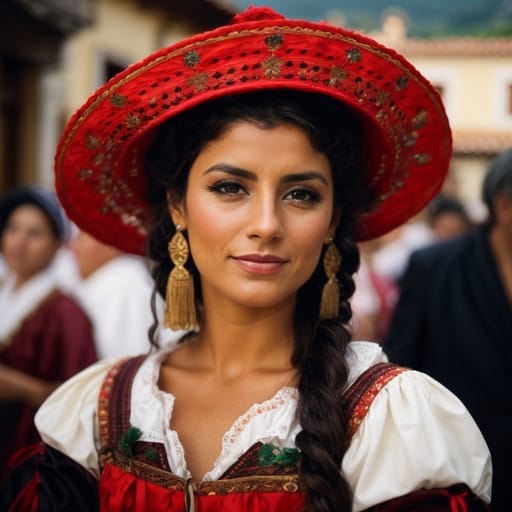
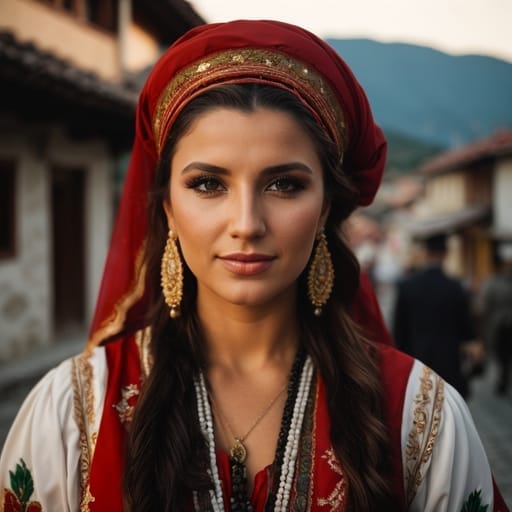
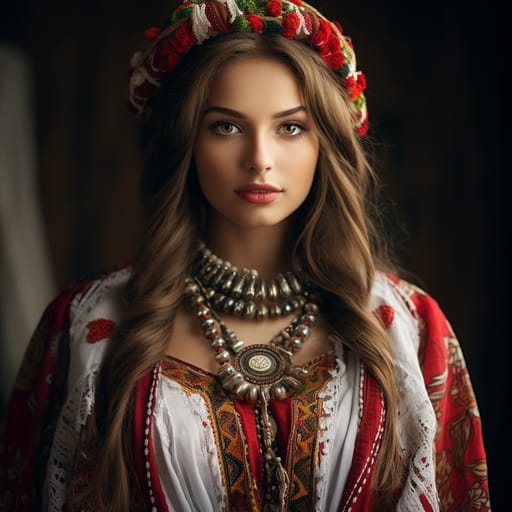
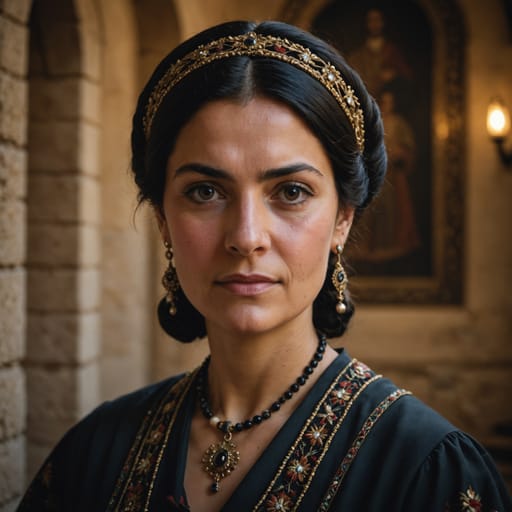
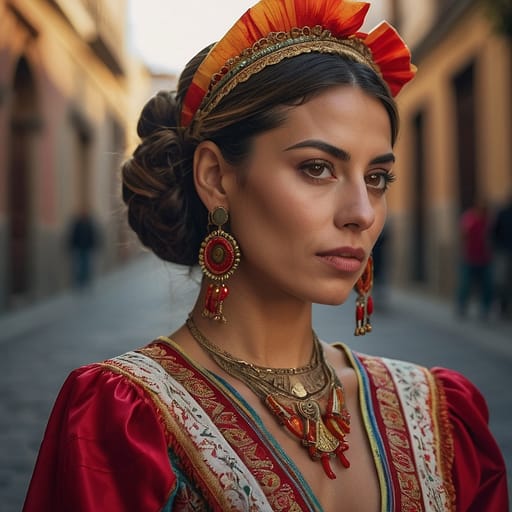
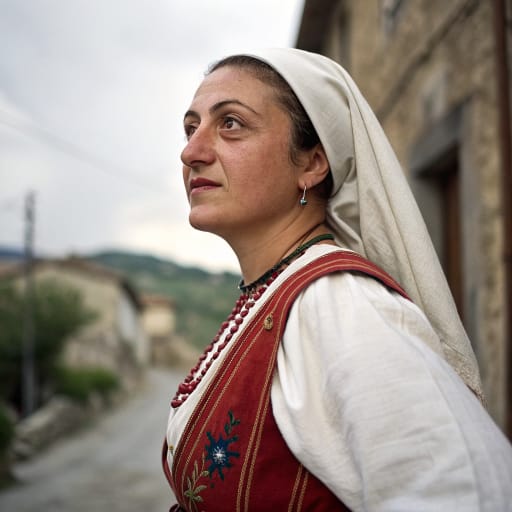
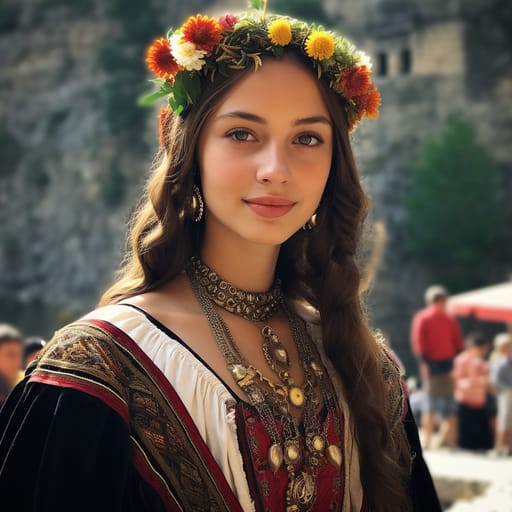
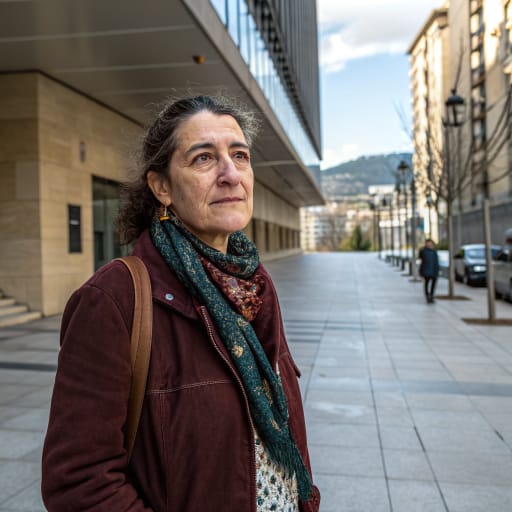
Typical Valentini Phenotypes
Reference for AI generation: hair, eyes, skin, facial structure, build
Valentini Body & Anatomy Reference
Anatomy by feature, Southern European / Mediterranean phenotype
Valentini Boobs & Breasts
Valentini boobs follow the Southern European / Mediterranean profile: medium-to-large cup, full, moderate-to-high projection. Areolar diameter is usually 32-46mm, and the coloring is medium-brown to dark-brown areolar pigmentation against the olive-to-light-brown skin tone. Breast shape tracks body composition (mesomorph with full hip-and-bust deposition, mean adult female BMI 24-28), so Valentini breasts tend to be full and projecting, generally the classic Mediterranean curvy bust profile. Expect a forward-set shape, not the lighter pigmentation of the Northern European bust.
Valentini Ass & Hips
Valentini ass and hip morphology presents as medium-to-full, moderate-to-high projection, broader hip profile, distinctly different from the slim Northern European narrow-hip pattern. The Valentini pelvic profile shows medium-to-wide iliac crests, full gluteal-femoral fat distribution, anchored in the Southern European / Mediterranean skeletal pattern. Valentini butt shots in adult AI imagery should render the medium-to-full, moderate-to-high projection, broader hip profile silhouette with the overall build (mesomorph with full hip-and-bust deposition) and the fat distribution typical of the Southern European / Mediterranean phenotype.
Valentini Vagina & Pussy
Valentini pussy anatomy typically shows medium-brown to dark-brown labial pigmentation, fuller labia minora. Pubic hair is usually wavy-to-curly medium-coarse dark texture, dense distribution. In AI-generated Valentini nudes, labial color should blend into the olive to medium skin with a gradual transition, and the hair should keep its wavy-to-curly medium-coarse dark texture.
Valentini Dicks & Penis
Penis reference for Valentini men: regional mean ~13-14cm erect, moderate girth. Coloring: medium-brown shaft pigmentation. An accurate Valentini cock in AI imagery matches the surrounding olive to medium skin rather than a generic porn default. Circumcision depends on religion and custom, not ancestry.
Valentini Body, Curves & Build
The Valentini figure is generally mesomorph with full hip-and-bust deposition, with mean adult female BMI 24-28, characteristic of Southern European / Mediterranean ancestry. AI image tools tend to flatten regional body types into a few stock shapes; here the Valentini build is kept as its own reference.
Valentini Skin Tone & Hair Texture
Skin: olive to medium (Fitzpatrick III-IV). Hair: wavy-to-curly 2B-3B, dark-brown to black. Both are typical of Southern European / Mediterranean ancestry. The most common mistake in AI nudes of Valentini women is a body rendered lighter than the face.
Explore phenotype categories
Structured taxonomy with peer-reviewed scales · 22 anatomical categories
Erotic Poses & Sex Positions
From the pose catalog: 219 named positions with reference skeletons
Frequently asked questions about Valentini people
Where is the Valentini homeland?
The Valentini homeland is South-central Sardinia, Italy: the Sarcidano uplands around the ancient town of Valentia, near modern Nuragus. in Southern Europe.
What language do Valentini people speak?
Valentini people primarily speak Paleo-Sardinian (unclassified pre-Latin language of the island), later Latin (Indo-European, Italic), the ancestor of modern Sardinian.
What religion do Valentini people practice?
The predominant religion among Valentini people is Indigenous Sardinian cults with Nuragic roots, then Roman provincial religion; Christian by late antiquity..






Make your own Valentini images
Five a day, free, no credits to buy. The studio starts from this group's phenotype data, so you can set body type, pose and style and keep the traits accurate.
Start with Valentini