Help us get this right
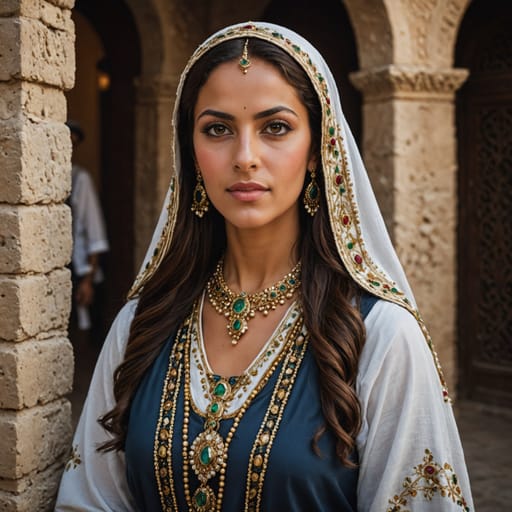
Does this portrait look right for Lucanians?
Nobody has judged this one yet. You would be the first.
Lucanians Erotic
Lucania in southern Italy, roughly modern Basilicata plus the Cilento in southern Campania and the northern edge of Calabria (Italy)
Oscan (Indo-European, Italic, Osco-Umbrian branch), written in Greek and later Latin alphabets; replaced by Latin under Roman rule
Italic polytheism centered on the goddess Mefitis, with Greek influences such as Heracles; later absorbed into Roman religion
Sabellic (Osco-Umbrian) people, counted by ancient writers as an offshoot of the Samnites; the Bruttians split from them in the 4th century BC
About Lucanians People
The Lucanians were an Oscan-speaking Italic people who came to dominate the mountainous south of the Italian peninsula in the late fifth century BC, spent the next three centuries fighting Greek cities and Rome, and were absorbed into Roman Italy after the Social War of the early first century BC; the people of modern Basilicata still carry their name. They were newcomers to the land they ruled. Ancient writers counted them as an offshoot of the Samnites, part of a long southward push by Sabellic hill peoples, and they made their reputation pressing on the Greek colonies along the coasts. Around 400 BC they took Poseidonia, the city better known as Paestum, and the painted tombs they left there, crowded with horsemen, plumed warriors, funeral games and rows of mourning women, are the most vivid picture of them that survives.
Their language was Oscan, close kin to the speech of the Samnites, and in Lucania it was often written in the Greek alphabet, a sign of how tangled the two worlds had become. The bronze Tabula Bantina, found at Banzi, preserves one of the longest Oscan texts, a town law in Latin letters. Most Lucanians lived in fortified hilltop settlements and scattered farmsteads rather than true cities, and Strabo describes a government of elected magistrates that chose a king only in wartime. Their great sanctuary at Rossano di Vaglio, near Potenza, belonged to Mefitis, an Italic goddess of waters and thresholds, though Greek figures such as Heracles also entered local worship. By the middle of the fourth century BC the Bruttians of the far south had thrown off Lucanian control and become a people of their own.
Their dealings with outsiders were a story of shifting sides. In 331 BC they and the Bruttians brought down Alexander of Epirus, uncle of Alexander the Great, who had come to fight for Tarentum. They backed Pyrrhus against Rome, and Romans meeting his war elephants on Lucanian ground called the beast the Luca bos, the Lucanian ox. Rome subdued them in the 270s BC and planted a Latin colony at Paestum, yet many went over to Hannibal, and they rose again in the Social War before winning citizenship. Latin gradually replaced Oscan. The name outlasted the language: Augustus kept it for an administrative region, the Fascist government imposed it on Basilicata from 1932 to 1947, and residents still call themselves Lucani. A sausage carries it too. Varro wrote that Roman soldiers learned to make it from the Lucanians, and its descendants, from Basilicata's lucanica to Portuguese linguiça, still bear the name.
Related ethnic groups
Groups that share Lucanians's homeland, region, language, or religious tradition. These are likely candidates for comparative phenotype reference.
Basques
same region (Southern Europe)
Bosniaks
same region (Southern Europe)
Moldovans
same region (Southern Europe)
Maltese
same region (Southern Europe)
Pannonian Rusyns
same region (Southern Europe)
Olcades
same region (Southern Europe)
Sidicini
same region (Southern Europe)
Italian Maghrebi
same region (Southern Europe)
Typical Lucanians Phenotypes
Reference for AI generation: hair, eyes, skin, facial structure, build
Explore phenotype categories
Structured taxonomy with peer-reviewed scales · 22 anatomical categories
Erotic Poses & Sex Positions
From the pose catalog: 219 named positions with reference skeletons
Frequently asked questions about Lucanians people
Where is the Lucanians homeland?
The Lucanians homeland is Lucania in southern Italy, roughly modern Basilicata plus the Cilento in southern Campania and the northern edge of Calabria (Italy) in Southern Europe.
What language do Lucanians people speak?
Lucanians people primarily speak Oscan (Indo-European, Italic, Osco-Umbrian branch), written in Greek and later Latin alphabets; replaced by Latin under Roman rule.
What religion do Lucanians people practice?
The predominant religion among Lucanians people is Italic polytheism centered on the goddess Mefitis, with Greek influences such as Heracles; later absorbed into Roman religion.






Make your own Lucanians images
Five a day, free, no credits to buy. The studio starts from this group's phenotype data, so you can set body type, pose and style and keep the traits accurate.
Start with Lucanians