Help us get this right
Does this portrait look right for Libicii?
Nobody has judged this one yet. You would be the first.
Libicii Erotic
Western Po plain around Vercellae (Vercelli) and Laumellum (Lomello), along the Sesia river in eastern Piedmont and the Lomellina, northwestern Italy.
Cisalpine Gaulish (Celtic, Indo-European), with probable Ligurian influence; replaced by Latin under Roman rule.
Celtic polytheism, later Roman religion. A bilingual stone from Vercelli records a field dedicated for common use by gods and men.
Cisalpine Gauls of the region north of the Po; said by Pliny to descend from the Celto-Ligurian Salluvii. Often grouped with the neighboring Laevi and Marici.
About Libicii People
The Libicii were a Celtic people, probably with Ligurian roots, who lived on the western Po plain around Vercellae, modern Vercelli in Piedmont, from at least the fourth century BC until Rome absorbed them during the second and first centuries BC. They became the Latin-speaking citizens of Roman Vercellae, and their descendants are folded into the population of today's eastern Piedmont and Lomellina. Ancient writers never settled on a spelling. Polybius calls them Lebecii and lists them, beside the Laevi, among the first Celts to settle near the upper Po. Livy writes Libui. Pliny the Elder uses the form kept here and supplies the key detail: Vercellae belonged to the Libicii and was founded by the Salluvii, a people of mixed Celtic and Ligurian character better known from the hills behind Marseille. Ptolemy later gives them two towns, Vercellae and Laumellum, now Lomello.
That mixed pedigree is the point. Their country lay where the Ligurian uplands met the Celtic lowlands, along the Sesia and down toward the Po, with the Salassi in the Alpine valleys to the northwest, the Taurini to the west and the far stronger Insubres of Milan to the east. They spoke a form of Cisalpine Gaulish, and one stone shows it. A boundary marker found at Vercelli, cut in the first century BC, carries the same text in Latin and in Gaulish, the Gaulish written in the north Italian alphabet borrowed from the Etruscans. In it a man named Acisius Argantocomaterecus, whose second name looks like an office built on the Celtic word for silver, gives a field to be shared by gods and men. The Gaulish text says this in a single compound, joining the word for gods to the word for mortals. It is as close as anyone gets to hearing the Libicii speak, and nearly all that survives of their religion, presumably the polytheism of their Celtic neighbors.
They were never a power. Livy has their farmland plundered during the Gallic wars of the 190s BC, after which the region passed under Roman control. In 101 BC Marius and Catulus destroyed the Cimbri on the Raudine Plain, which ancient tradition places near Vercellae, though the site is disputed. The communities north of the Po received Latin rights in 89 BC and full Roman citizenship in 49 BC, and Vercellae became an ordinary Roman town. Pliny also records a censors' law capping at five thousand the workforce in the gold mines of Victumulae, in Vercellae's territory. The spoil heaps from that mining still cover the Bessa, near Biella. The tribal name itself lives on only in the texts.
Related ethnic groups
Groups that share Libicii's homeland, region, language, or religious tradition. These are likely candidates for comparative phenotype reference.
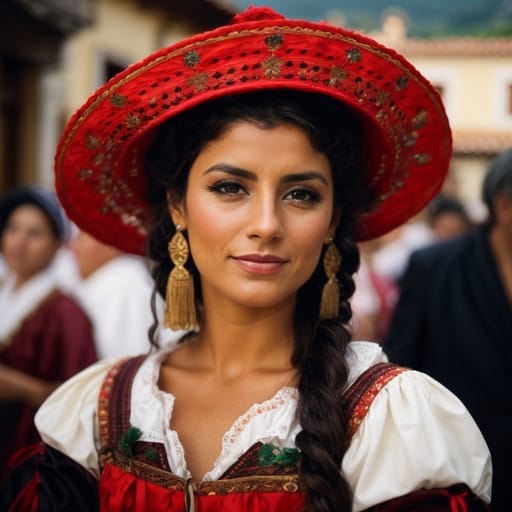
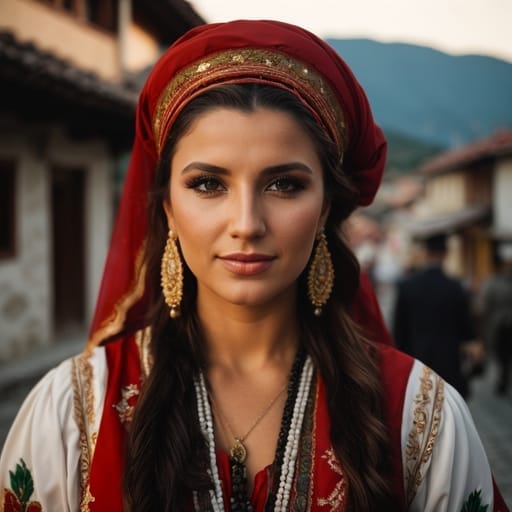
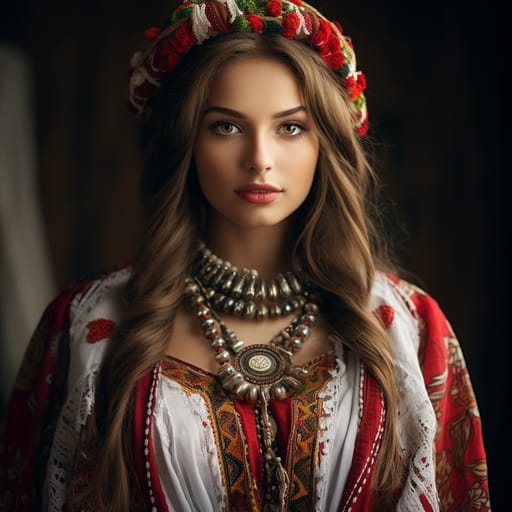
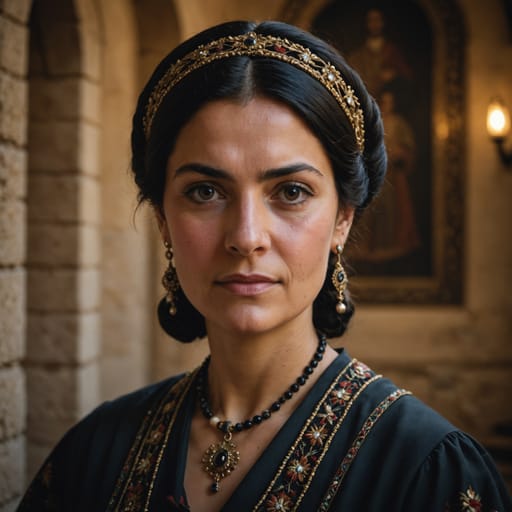
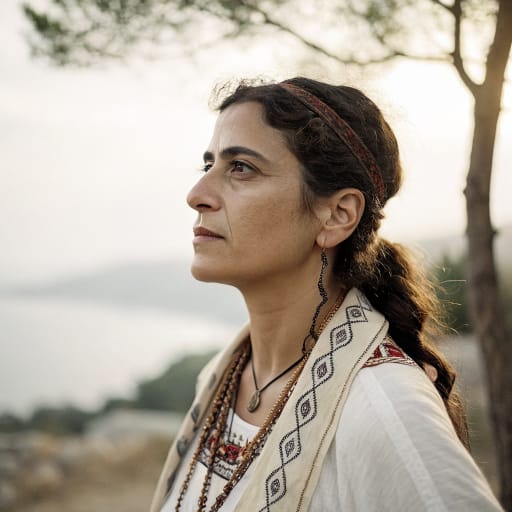
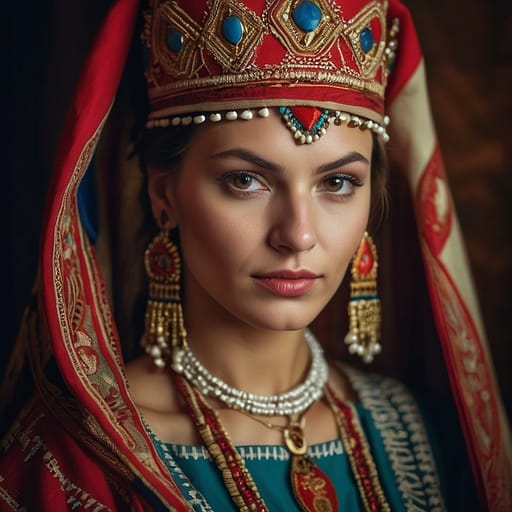
Typical Libicii Phenotypes
Reference for AI generation: hair, eyes, skin, facial structure, build
Libicii Body & Anatomy Reference
Per-feature anatomical profile for AI nude generation: Southern European / Mediterranean phenotype
Libicii Boobs & Breasts
The typical Libicii bust is medium-to-large cup, full, moderate-to-high projection, in line with the wider Southern European / Mediterranean pattern. Areolas usually fall in the 32-46mm range, with medium-brown to dark-brown areolar pigmentation against the olive-to-light-brown skin tone. Compared with the lighter pigmentation of the Northern European bust, Libicii breasts sit forward and are generally full and projecting, generally the classic Mediterranean curvy bust profile. A faithful AI render of Libicii tits keeps that shape and areola size.
Libicii Ass & Hips
Butt shape among Libicii women: medium-to-full, moderate-to-high projection, broader hip profile, over medium-to-wide iliac crests, full gluteal-femoral fat distribution. This follows Southern European / Mediterranean ancestry and looks quite unlike the slim Northern European narrow-hip pattern. An accurate Libicii ass in adult AI imagery keeps both the silhouette and the overall build (mesomorph with full hip-and-bust deposition) instead of a generic average.
Libicii Vagina & Pussy
Vulvar anatomy among Libicii women: medium-brown to dark-brown labial pigmentation, fuller labia minora. Pubic hair tends to be wavy-to-curly medium-coarse dark texture, dense distribution, in the usual inverted-triangle pattern. Both follow Southern European / Mediterranean pigmentation, which is why Libicii pussy renders should not fall back on a pale, sparse Western template.
Libicii Dicks & Penis
The Libicii cock profile, from Southern European / Mediterranean anthropometric data: regional mean ~13-14cm erect; moderate girth; medium-brown shaft pigmentation. Pubic hair has a wavy-to-curly medium-coarse dark texture and forms the usual inverted-V pattern. Whether Libicii men are circumcised follows religious and cultural practice rather than phenotype.
Libicii Body, Curves & Build
Build and curves among Libicii women follow the Southern European / Mediterranean pattern: mesomorph with full hip-and-bust deposition, mean adult female BMI 24-28. Proportions matter as much as skin tone, so Libicii figures should keep their regional height and limb ratios.
Libicii Skin Tone & Hair Texture
The Libicii skin range is olive to medium (Fitzpatrick III-IV), and hair tends to be wavy-to-curly 2B-3B, dark-brown to black. That combination marks the Southern European / Mediterranean phenotype, and skin tone is the trait AI generators most often get wrong for Libicii women.
Explore phenotype categories
Structured taxonomy with peer-reviewed scales · 22 anatomical categories
Erotic Poses & Sex Positions
From the pose catalog: 219 named positions with reference skeletons
Frequently asked questions about Libicii people
Where is the Libicii homeland?
The Libicii homeland is Western Po plain around Vercellae (Vercelli) and Laumellum (Lomello), along the Sesia river in eastern Piedmont and the Lomellina, northwestern Italy. in Southern Europe.
What language do Libicii people speak?
Libicii people primarily speak Cisalpine Gaulish (Celtic, Indo-European), with probable Ligurian influence; replaced by Latin under Roman rule..
What religion do Libicii people practice?
The predominant religion among Libicii people is Celtic polytheism, later Roman religion. A bilingual stone from Vercelli records a field dedicated for common use by gods and men..






Make your own Libicii images
Five a day, free, no credits to buy. The studio starts from this group's phenotype data, so you can set body type, pose and style and keep the traits accurate.
Start with Libicii