No portrait yet
Noritani Erotic
Nora and its hinterland on the Capo di Pula headland, on the southwestern shore of the Gulf of Cagliari, southern Sardinia, Italy.
Punic (Afroasiatic, Semitic) alongside unclassified Paleo-Sardinian, later Latin (Indo-European, Italic), the ancestor of today's Campidanese Sardinian.
Phoenician and Punic cults, including a tophet and a healing sanctuary, then Roman civic religion, then Christianity in late antiquity; tied by tradition to the martyrdom of Saint Ephysius.
One of the civic communities of ancient Sardinia listed by Ptolemy, beside the Solcitani, Neapolitani and Valentini; called Norenses by Pliny. A mixed Nuragic Sardinian, Phoenician and Punic population, later Romanized.
About Noritani People
The Noritani were the people of Nora and its territory on the far southern coast of Sardinia, recorded under that name by the geographer Ptolemy in the second century AD, who places them at the southern end of the island; their town emptied out in the early Middle Ages and their descendants merged into the general population of southern Sardinia. What defined them was not a bloodline but a city. Nora sat on a narrow headland, Capo di Pula, with sheltered water on either side, and that harbor logic drew Phoenician traders there by the eighth century BC. The coast was already in business: the nearby nuraghe of Antigori has yielded Mycenaean pottery, so the Nuragic Sardinians of the district were dealing with eastern sailors long before anyone laid out a town. The Nora Stone, a Phoenician inscription found in 1773 and usually dated to the ninth or eighth century BC, is among the oldest in the western Mediterranean and carries what is widely read as the earliest written form of the name Sardinia. Greek tradition told it differently: Pausanias says Iberians under a leader called Norax founded Nora, and that it was the first city on the island.
The population that grew up there was mixed from the start: Phoenician settlers, local Sardinians, and from the late sixth century BC people arriving under Carthaginian rule. They spoke Punic, a Semitic language with no relative on the island, beside a native Sardinian speech that is lost and unclassified. Rome took Sardinia in 238 BC and Latin slowly replaced both, leaving the Campidanese Sardinian spoken in the area today; Pliny already lists the townspeople in Latin form, as Norenses. Religion followed the same layering. Nora had a tophet, the open-air Punic sanctuary of urns and carved stelae, exposed by a storm in 1889, and a healing shrine on the point of the headland where terracotta figures of sleeping worshippers suggest incubation, the habit of sleeping in the god's precinct to be cured in a dream. Under Rome it was an ordinary provincial town with a forum, baths, mosaic floors and a small theater that still hosts summer performances. Coastal raids, beginning with the Vandals in the fifth century, wore the town down, and part of it now lies under the sea. One thread never broke. Tradition places the martyrdom of Saint Ephysius at Nora in 303, and every May since 1657 a procession has carried his statue from Cagliari to the small Romanesque church by the beach, which makes a long dead city the destination of one of Sardinia's largest religious festivals.
Related ethnic groups
Groups that share Noritani's homeland, region, language, or religious tradition. These are likely candidates for comparative phenotype reference.
Basques
same region (Southern Europe)
Bosniaks
same region (Southern Europe)
Moldovans
same region (Southern Europe)
Maltese
same region (Southern Europe)
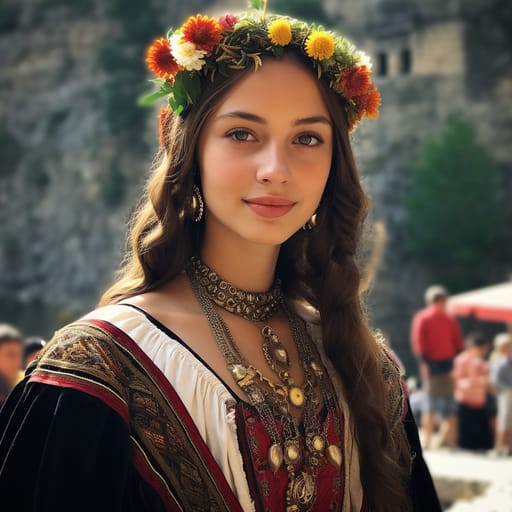
Occitans
same region (Southern Europe)
Sfakians
same region (Southern Europe)
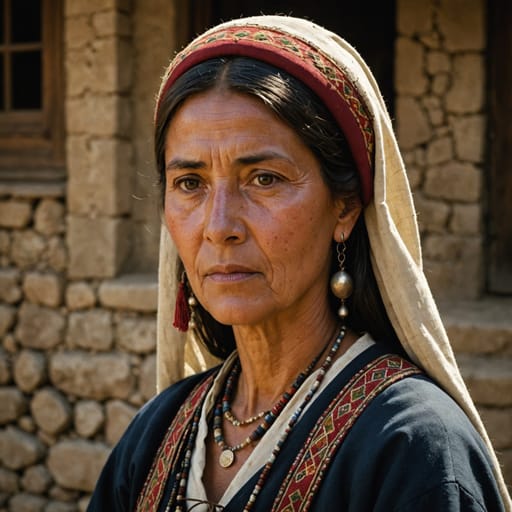
Suessetani
same region (Southern Europe)
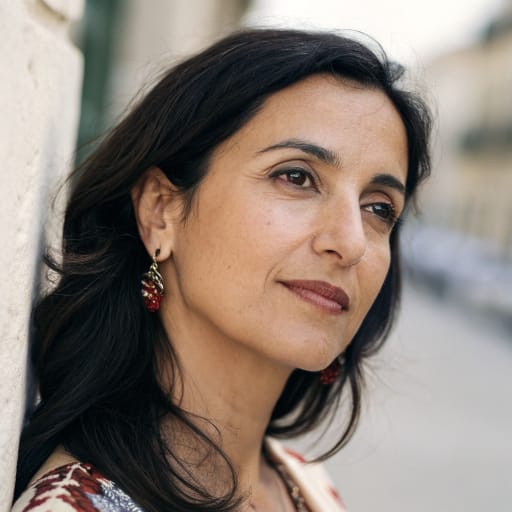
Andalusians
same region (Southern Europe)
Typical Noritani Phenotypes
Reference for AI generation: hair, eyes, skin, facial structure, build
Noritani Body & Anatomy Reference
Southern European / Mediterranean phenotype: anatomy reference for AI nude generation
Noritani Boobs & Breasts
Noritani boobs follow the Southern European / Mediterranean profile: medium-to-large cup, full, moderate-to-high projection. Areolar diameter is usually 32-46mm, and the coloring is medium-brown to dark-brown areolar pigmentation against the olive-to-light-brown skin tone. Breast shape tracks body composition (mesomorph with full hip-and-bust deposition, mean adult female BMI 24-28), so Noritani breasts tend to be full and projecting, generally the classic Mediterranean curvy bust profile. Expect a forward-set shape, not the lighter pigmentation of the Northern European bust.
Noritani Ass & Hips
Noritani ass and hip morphology presents as medium-to-full, moderate-to-high projection, broader hip profile, distinctly different from the slim Northern European narrow-hip pattern. The Noritani pelvic profile shows medium-to-wide iliac crests, full gluteal-femoral fat distribution, anchored in the Southern European / Mediterranean skeletal pattern. Noritani butt shots in adult AI imagery should render the medium-to-full, moderate-to-high projection, broader hip profile silhouette with the overall build (mesomorph with full hip-and-bust deposition) and the fat distribution typical of the Southern European / Mediterranean phenotype.
Noritani Vagina & Pussy
Noritani pussy anatomy typically shows medium-brown to dark-brown labial pigmentation, fuller labia minora. Pubic hair is usually wavy-to-curly medium-coarse dark texture, dense distribution. In AI-generated Noritani nudes, labial color should blend into the olive to medium skin with a gradual transition, and the hair should keep its wavy-to-curly medium-coarse dark texture.
Noritani Dicks & Penis
Penis reference for Noritani men: regional mean ~13-14cm erect, moderate girth. Coloring: medium-brown shaft pigmentation. An accurate Noritani cock in AI imagery matches the surrounding olive to medium skin rather than a generic porn default. Circumcision depends on religion and custom, not ancestry.
Noritani Body, Curves & Build
The Noritani figure is generally mesomorph with full hip-and-bust deposition, with mean adult female BMI 24-28, characteristic of Southern European / Mediterranean ancestry. AI image tools tend to flatten regional body types into a few stock shapes; here the Noritani build is kept as its own reference.
Noritani Skin Tone & Hair Texture
Skin: olive to medium (Fitzpatrick III-IV). Hair: wavy-to-curly 2B-3B, dark-brown to black. Both are typical of Southern European / Mediterranean ancestry. The most common mistake in AI nudes of Noritani women is a body rendered lighter than the face.
Explore phenotype categories
Structured taxonomy with peer-reviewed scales · 22 anatomical categories
Erotic Poses & Sex Positions
From the pose catalog: 219 named positions with reference skeletons
Frequently asked questions about Noritani people
Where is the Noritani homeland?
The Noritani homeland is Nora and its hinterland on the Capo di Pula headland, on the southwestern shore of the Gulf of Cagliari, southern Sardinia, Italy. in Southern Europe.
What language do Noritani people speak?
Noritani people primarily speak Punic (Afroasiatic, Semitic) alongside unclassified Paleo-Sardinian, later Latin (Indo-European, Italic), the ancestor of today's Campidanese Sardinian..
What religion do Noritani people practice?
The predominant religion among Noritani people is Phoenician and Punic cults, including a tophet and a healing sanctuary, then Roman civic religion, then Christianity in late antiquity; tied by tradition to the martyrdom of Saint Ephysius..






Make your own Noritani images
Five a day, free, no credits to buy. The studio starts from this group's phenotype data, so you can set body type, pose and style and keep the traits accurate.
Start with Noritani