Help us get this right
Does this portrait look right for Bhumihar?
One tap. It takes a second and it is recorded.
1 says it looks right, 0 say it looks off.
Bhumihar Erotic
Bihar, eastern Uttar Pradesh (Varanasi, Ghazipur, Ballia) and Jharkhand, India, with migrant communities in Delhi, Kolkata and other Indian cities
Hindi, Maithili, Magahi and Bhojpuri (Indo-Aryan, Indo-European)
Hinduism, following mainstream north Indian practice, with Chhath as a major festival
Hindu landholding caste of the Gangetic plain that claims Brahmin status; divided into exogamous gotras and local clan lineages
About Bhumihar People
Bhumihars are a Hindu landholding caste of the middle Ganges plain, and their identity has long turned on a single claim: that they are Brahmins. Not temple priests, though. Most describe themselves as ayachak Brahmins, people of Brahmin descent who held and managed land instead of living on ritual fees and gifts. Neighbors, rival castes and colonial census officials did not always accept this. Around the turn of the twentieth century, Bhumihar caste associations campaigned to be recorded as Bhumihar Brahmins. The older regional name, Babhan, is usually read as a colloquial form of Brahman, so the argument is built into the vocabulary.
Their heartland is Bihar, especially districts such as Begusarai, Lakhisarai, Patna and Gaya. It extends into eastern Uttar Pradesh around Varanasi, Ghazipur and Ballia, and into parts of Jharkhand. Speech follows the local map: Magahi, Maithili or Bhojpuri at home, and Hindi for school, politics and print. All are Indo-Aryan languages that shade into one another from district to district. Religious life is mainstream north Indian Hinduism. Families that keep up Brahmin rites still give boys the sacred thread. Chhath, the dusk and dawn offering to the sun made while standing in rivers and ponds, is the festival that pulls migrants home from Delhi, Kolkata and farther. Families are organized by exogamous gotras and local clan lineages, and marriages are still commonly arranged within the caste.
History placed them on both sides of the land question. Several of the region's great estates were Bhumihar houses, among them the Maharajas of Banaras and the Rajs of Bettiah, Hathwa and Tekari. The same community produced Swami Sahajanand Saraswati, an ascetic who first wrote in defense of Bhumihar Brahmin status and then became the leading organizer of the Kisan Sabha peasant movement against the zamindars. After independence, Shri Krishna Sinha, Bihar's first chief minister and a Bhumihar, presided over the abolition of zamindari. In the same era the poet Ramdhari Singh Dinkar became one of modern Hindi's most quoted voices. In the 1990s the land question turned bloody in central Bihar. The Ranvir Sena, a landowners' militia drawn largely from Bhumihars, and Maoist guerrillas carried out a cycle of village massacres and reprisals.
Today Bhumihars make up just under three percent of Bihar's population, according to the state's 2023 caste survey. Their weight goes well beyond that number in the civil services, the universities and the major political parties. Many families keep land in the ancestral village while the working generation lives in Patna, Delhi or abroad. The old dispute over ritual rank has largely given way to arguments about reservations, representation and upper-caste politics.
Related ethnic groups
Groups that share Bhumihar's homeland, region, language, or religious tradition. These are likely candidates for comparative phenotype reference.
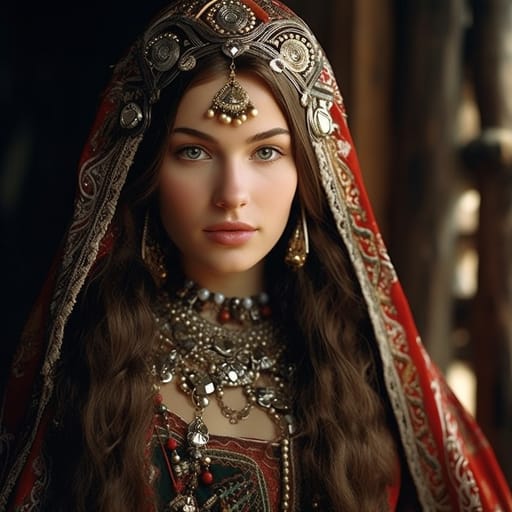
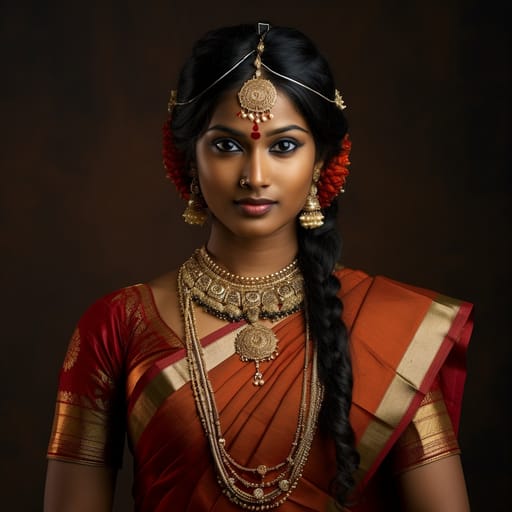
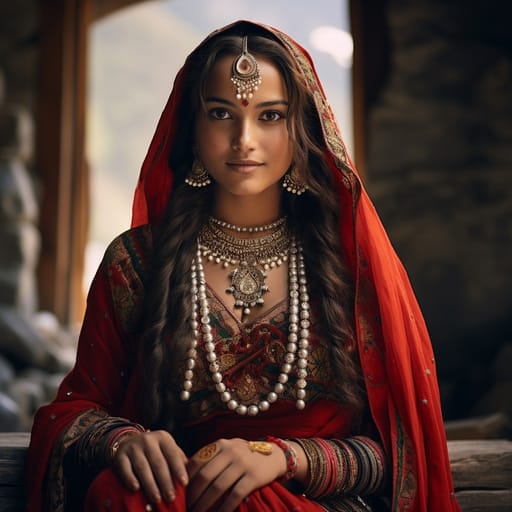
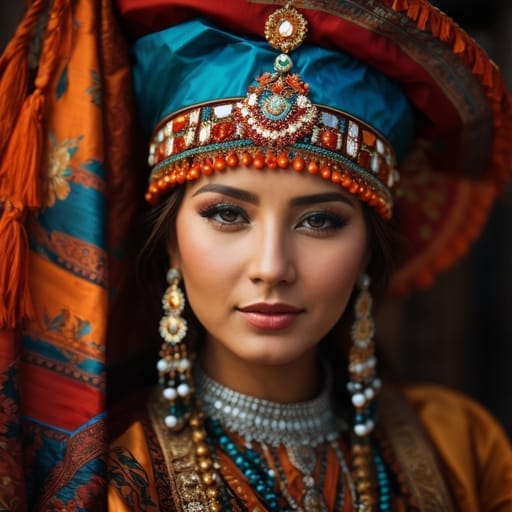
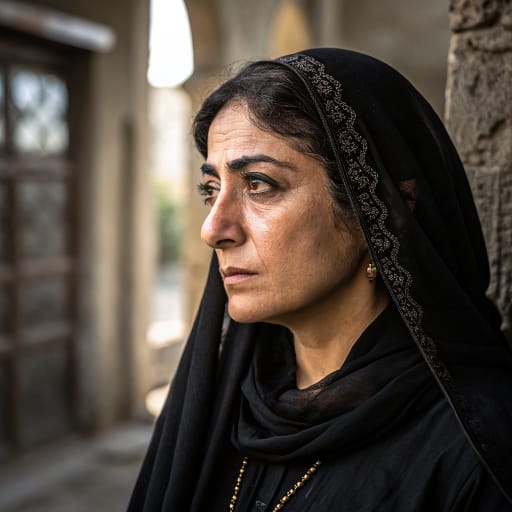
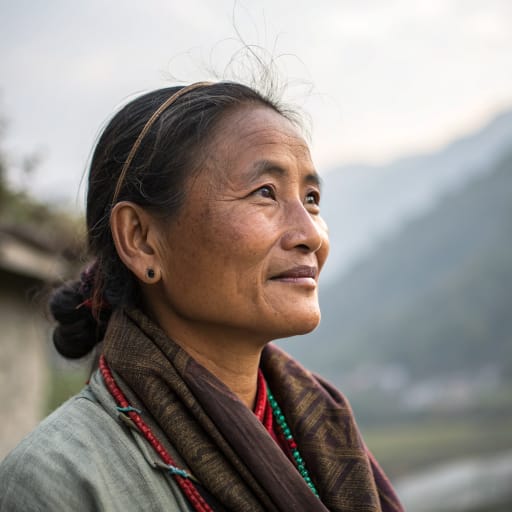
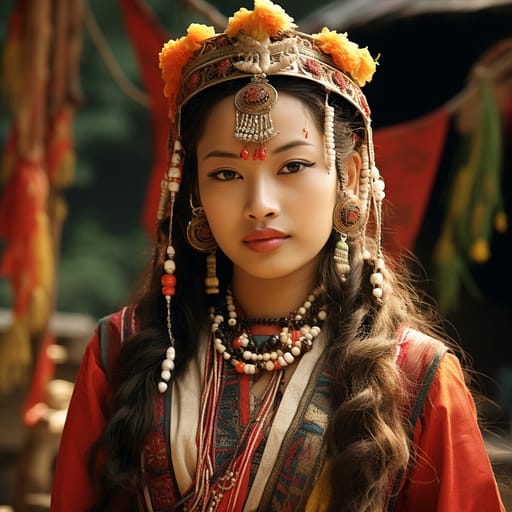
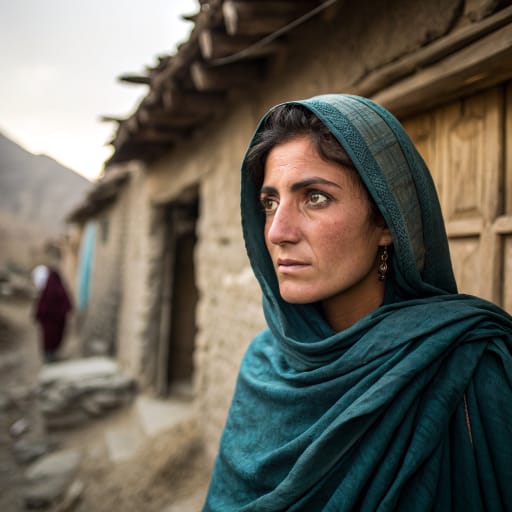
Typical Bhumihar Phenotypes
Reference for AI generation: hair, eyes, skin, facial structure, build
Bhumihar Body & Anatomy Reference
Anatomy by feature, Indo-Aryan / Dravidian South Asian phenotype
Bhumihar Boobs & Breasts
Bhumihar tits and boobs run medium-to-large cup, moderate-to-full projection, the classic Indo-Aryan / Dravidian South Asian bust profile. Bhumihar nipples and areolas show medium-brown to dark-brown areolar pigmentation against the wheatish-to-brown skin tone, with areolar diameter typically in the 32-46mm range and forward-set positioning rather than the smaller East Asian bust profile. Bhumihar breasts trend full and soft, generally fuller than the East Asian norm, a function of the endomorph-to-mesomorph with fuller hip deposition body habitus and the mean adult female BMI 22-25. For anatomically accurate AI-generated Bhumihar nudes the render preserves the medium-to-large cup, moderate-to-full projection shape, 32-46mm areolas with medium-brown to dark-brown pigmentation, and the torso proportions of the Indo-Aryan / Dravidian South Asian phenotype.
Bhumihar Ass & Hips
Bhumihar hips and butt usually read as medium-to-full, moderate-to-high projection, classic curvy hip profile. The skeletal base is medium-to-wide iliac crests, full gluteal-femoral fat distribution, the Indo-Aryan / Dravidian South Asian pattern. Set against the slim hip profile of East Asian women, the difference is easy to see, and the hip-to-waist ratio is often what identifies Bhumihar women in photos.
Bhumihar Vagina & Pussy
Expect medium-brown to dark-brown labial pigmentation, fuller labia minora projection on Bhumihar women, in keeping with Indo-Aryan / Dravidian South Asian ancestry. The pubic hair is straight-to-wavy coarse texture, dense distribution. Coloring should run evenly from the wheatish to brown skin of the thighs to the labia, and Bhumihar nude imagery should keep the hair's straight-to-wavy coarse texture.
Bhumihar Dicks & Penis
Bhumihar dick and penile anatomy in adult AI generation should anchor on the regional reference data: regional mean ~13cm erect, moderate girth, and medium-brown shaft pigmentation. The Bhumihar cock profile reflects the Indo-Aryan / Dravidian South Asian population's anthropometric measurements. The shaft pigmentation should track the surrounding wheatish to brown skin tone, and the pubic hair should keep its straight-to-wavy coarse texture in the typical inverted-V escutcheon.
Bhumihar Body, Curves & Build
Bhumihar body type: endomorph-to-mesomorph with fuller hip deposition, with mean adult female BMI 22-25. This is the typical Indo-Aryan / Dravidian South Asian build. Height range, shoulder-to-hip ratio and fat distribution all follow from it, which is what an accurate Bhumihar nude body should show.
Bhumihar Skin Tone & Hair Texture
Bhumihar skin tone falls in the wheatish to brown (Fitzpatrick III-V) band, the surface signal most often miscalibrated by generic AI nude generators. Bhumihar hair texture is typically straight-to-wavy 1A-2B, dense, dark-brown to black, characteristic of the Indo-Aryan / Dravidian South Asian phenotype. In Bhumihar nude renders the skin should hold that band consistently across the body.
Explore phenotype categories
Structured taxonomy with peer-reviewed scales · 22 anatomical categories
Erotic Poses & Sex Positions
From the pose catalog: 219 named positions with reference skeletons
Frequently asked questions about Bhumihar people
Where is the Bhumihar homeland?
The Bhumihar homeland is Bihar, eastern Uttar Pradesh (Varanasi, Ghazipur, Ballia) and Jharkhand, India, with migrant communities in Delhi, Kolkata and other Indian cities in Southern Asia.
What language do Bhumihar people speak?
Bhumihar people primarily speak Hindi, Maithili, Magahi and Bhojpuri (Indo-Aryan, Indo-European).
What religion do Bhumihar people practice?
The predominant religion among Bhumihar people is Hinduism, following mainstream north Indian practice, with Chhath as a major festival.






Make your own Bhumihar images
Five a day, free, no credits to buy. The studio starts from this group's phenotype data, so you can set body type, pose and style and keep the traits accurate.
Start with Bhumihar