Help us get this right
Does this portrait look right for Bena?
Nobody has judged this one yet. You would be the first.
Bena Erotic
The Southern Highlands of Tanzania, mainly Njombe Region, with communities in the Ulanga and Kilombero valleys of Morogoro Region
Kibena (Bantu, Niger-Congo), alongside Swahili
Predominantly Christian, with a strong Lutheran presence and Catholic parishes, over a persisting substrate of ancestor veneration
Highland Bena of Njombe and Lupembe, and the valley Bena of Ulanga and Kilombero; part of the Bena-Kinga cluster with the Hehe, Pangwa, Kinga and Sangu
About Bena People
The Bena hold the cold, high country of southern Tanzania: the plateaus and ridges around Njombe that fall away toward the Livingstone Mountains and the northern tip of Lake Nyasa. Altitude does much of the defining work here. This is farmland at around six thousand feet, green and soaked for half the year and genuinely cold at night, and the Bena are known inside Tanzania as highlanders, growers of maize, potatoes, wheat, pyrethrum and tea in a country most outsiders picture as uniformly hot. Their language, Kibena, is Bantu, sitting in a tight cluster with Hehe, Pangwa, Kinga and Sangu, close enough that speakers on either side of a district line can usually follow one another. Swahili runs the schools, the courts and the market, so Kibena has settled into the house and the older generation, which is the ordinary fate of Tanzania's regional languages rather than anything peculiar to the Bena.
They are not one block. The highland Bena around Njombe and Lupembe are the core, but in the nineteenth century families pushed down into the Ulanga and Kilombero valleys and built chiefdoms with their own politics. That century was violent. Ngoni war bands moving up from the south raided the highlands, and the Hehe state consolidating under Munyigumba and then Mkwawa pressed hard on Bena territory, absorbing some chiefdoms outright. Bena leaders responded by picking sides: the valley chief Kiwanga backed the Germans against Mkwawa, and died fighting on their side during the Maji Maji war of 1905 to 1907, which the German army answered across the south with burned fields and engineered famine. The Berlin missionaries who arrived in the same period left the deepest mark still visible. Njombe is Lutheran country, densely so, with Catholic parishes alongside it, and the old vocabulary survives inside the new one: Nguluvi, the name for God, was in use before any missionary wrote it down, and graves are still places where the dead are addressed directly. The villagization drive of the 1970s pulled scattered homesteads into planned settlements and reorganized how people live on the land. Njombe became a regional capital in its own right in 2012, and the modern Bena story is largely about that town and the potato lorries, timber yards and tea estates feeding it.
Related ethnic groups
Groups that share Bena's homeland, region, language, or religious tradition. These are likely candidates for comparative phenotype reference.
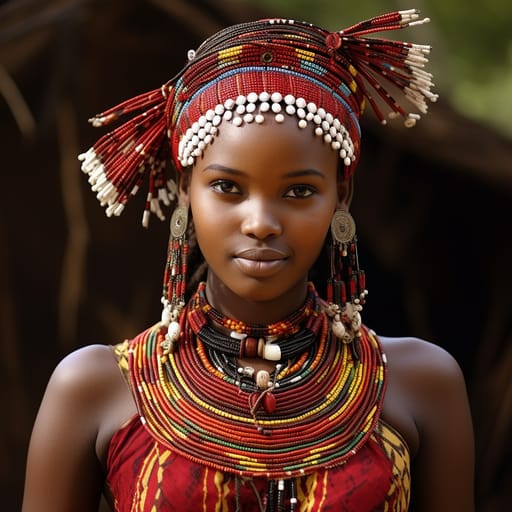
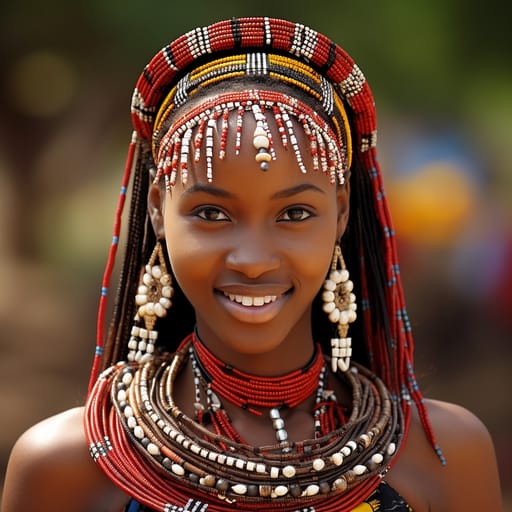
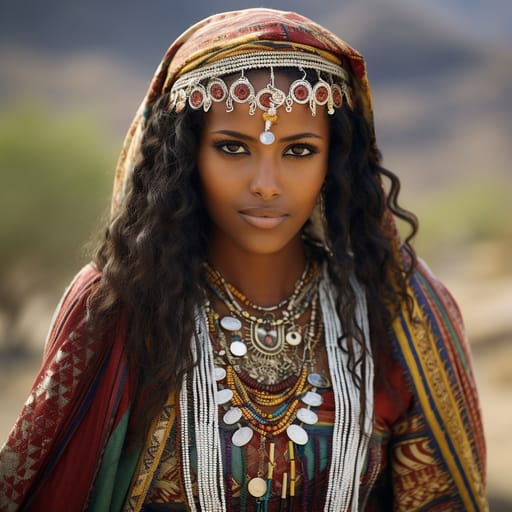
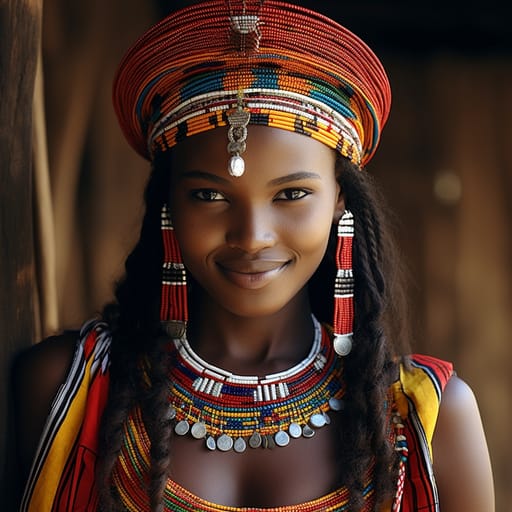
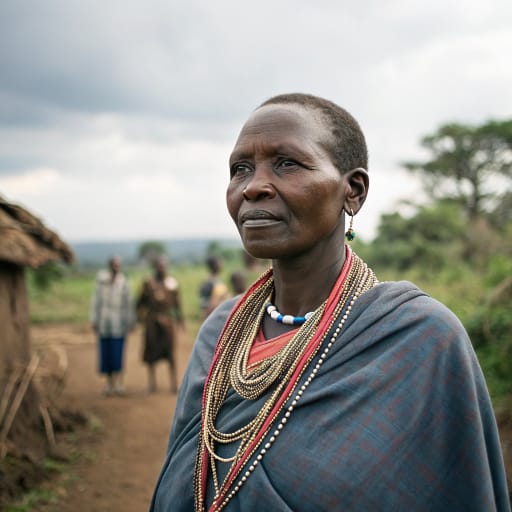
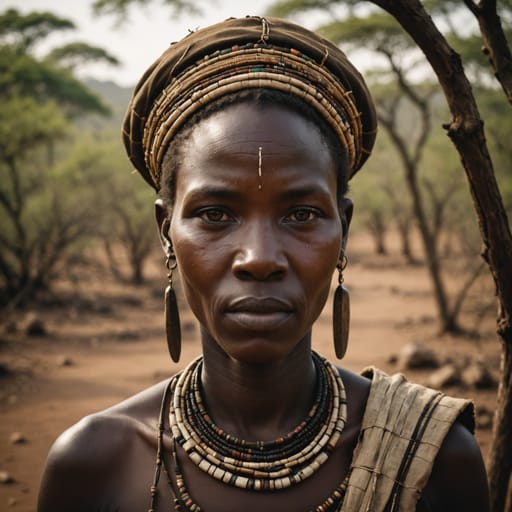
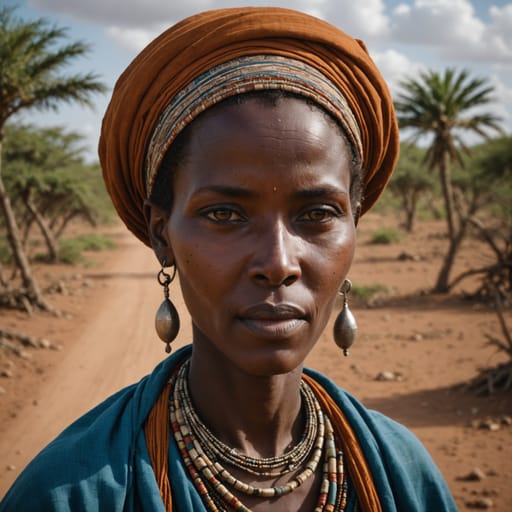
Typical Bena Phenotypes
Reference for AI generation: hair, eyes, skin, facial structure, build
Bena Body & Anatomy Reference
Cushitic / Nilo-Cushitic East African phenotype: anatomy reference for AI nude generation
Bena Boobs & Breasts
Bena boobs follow the Cushitic / Nilo-Cushitic East African profile: small-to-medium-cup, high-set, conical. Areolar diameter is usually 28-38mm, and the coloring is moderate-to-high areolar pigmentation against the brown-to-deep-brown skin tone. Breast shape tracks body composition (lean ectomorph-to-mesomorph, mean adult female BMI 19-22), so Bena breasts tend to be firmer and less projecting than the African-American or West African norm. Expect a forward-set shape, not the lateral spread of the West African phenotype.
Bena Ass & Hips
Bena ass and hip morphology presents as small-to-medium, high-set, rounded, distinctly different from the wide-set heavy-projection West African or African-American norm. The Bena pelvic profile shows narrow-to-medium iliac crests, longer torso-to-leg ratio, anchored in the Cushitic / Nilo-Cushitic East African skeletal pattern. Bena butt shots in adult AI imagery should render the small-to-medium, high-set, rounded silhouette with the overall build (lean ectomorph-to-mesomorph) and the fat distribution typical of the Cushitic / Nilo-Cushitic East African phenotype.
Bena Vagina & Pussy
Bena pussy anatomy typically shows brown-to-deep-brown labial pigmentation, narrow-to-medium labia minora projection. Pubic hair is usually tightly-coiled coarse texture, densely distributed. In AI-generated Bena nudes, labial color should blend into the brown to deep brown skin with a gradual transition, and the hair should keep its tightly-coiled coarse texture.
Bena Dicks & Penis
Penis reference for Bena men: regional mean ~13.5cm erect, moderate girth, ~12cm circumference. Coloring: deeper-pigmented than the West African norm. An accurate Bena cock in AI imagery matches the surrounding brown to deep brown skin rather than a generic porn default. Circumcision depends on religion and custom, not ancestry.
Bena Body, Curves & Build
The Bena figure is generally lean ectomorph-to-mesomorph, with mean adult female BMI 19-22, characteristic of Cushitic / Nilo-Cushitic East African ancestry. AI image tools tend to flatten regional body types into a few stock shapes; here the Bena build is kept as its own reference.
Bena Skin Tone & Hair Texture
Skin: brown to deep brown (Fitzpatrick V-VI). Hair: tight 4A-4C coil, often worn natural or in braided/twisted protective styles. Both are typical of Cushitic / Nilo-Cushitic East African ancestry. The most common mistake in AI nudes of Bena women is a body rendered lighter than the face.
Explore phenotype categories
Structured taxonomy with peer-reviewed scales · 22 anatomical categories
Erotic Poses & Sex Positions
From the pose catalog: 219 named positions with reference skeletons
Frequently asked questions about Bena people
Where is the Bena homeland?
The Bena homeland is The Southern Highlands of Tanzania, mainly Njombe Region, with communities in the Ulanga and Kilombero valleys of Morogoro Region in Eastern Africa.
What language do Bena people speak?
Bena people primarily speak Kibena (Bantu, Niger-Congo), alongside Swahili.
What religion do Bena people practice?
The predominant religion among Bena people is Predominantly Christian, with a strong Lutheran presence and Catholic parishes, over a persisting substrate of ancestor veneration.






Make your own Bena images
Five a day, free, no credits to buy. The studio starts from this group's phenotype data, so you can set body type, pose and style and keep the traits accurate.
Start with Bena