Help us get this right
Does this portrait look right for Bania?
Nobody has judged this one yet. You would be the first.
Bania Erotic
Northern and western India, especially Rajasthan, Gujarat, Haryana, Uttar Pradesh, Delhi, Punjab and Madhya Pradesh, with trading communities across India and abroad in East Africa, the UK and North America.
Regional languages of their home areas, including Hindi, Marwari, Gujarati and Punjabi (Indo-Aryan, Indo-European); historically the Mahajani script for bookkeeping.
Mostly Hindu, often devoted to Vishnu; a large Jain minority, especially among Oswals.
Many castes that marry within their own ranks, including Agrawal, Oswal, Maheshwari, Khandelwal, Porwal, Modh and Shrimali; part of the Vaishya varna. Marwaris are the best-known regional grouping.
About Bania People
Bania is less an ethnic group in the usual sense than a caste identity built around a trade. The name comes from the Sanskrit vanij, merchant. For centuries it has meant the people who kept the shops, lent the money, moved the grain and wrote up the ledgers across northern and western India. Banias are counted in the Vaishya varna, but in practice they are many separate castes that each marry within their own ranks: Agrawal, Oswal, Maheshwari, Khandelwal, Porwal, Modh, Shrimali and more. Each has its own origin stories, clans and marriage rules. What binds them is a shared line of work and a shared reputation, partly respect for business sense and partly old resentment of the village moneylender.
There is no single Bania language. Families speak whatever their region speaks: Hindi, Marwari, Gujarati, Punjabi and others, all Indo-Aryan. The trade did produce its own writing, though. Mahajani, a stripped-down script northern merchants used for bookkeeping, was fast to write and hard for outsiders to read. Religion divides along Hindu and Jain lines. Many Hindu Banias worship Vishnu, and most Oswals follow Jainism. In parts of Gujarat and Rajasthan, Hindu and Jain families within the same caste have long married each other. Vegetarianism runs deep in the community and governs the household kitchen as firmly as the temple.
Business and ritual meet at Diwali. The old year's accounts are closed, and fresh red cloth-bound ledgers, the bahi-khata, are opened with prayers to Lakshmi. In Gujarat the ceremony is called Chopda Pujan. Before modern banking, Bania firms moved money across the subcontinent with the hundi, a bill of exchange honored on the strength of a merchant's name and connections.
The sharpest turn came in the nineteenth century, when Marwari traders from Rajasthan followed British commerce to Calcutta, Bombay and the tea country of Assam. Some of those families grew into the great industrial houses of independent India, the Birlas and Bajajs among them. Gujarati Banias were among the Indian traders who settled in East Africa, and later in Britain and North America. The most famous Bania of all, Mohandas Gandhi, came from a Modh family in Kathiawar. His caste elders declared him an outcaste when he sailed to England to study law. Today Banias run businesses of every size, from the neighborhood kirana shop to listed conglomerates, and India's stock exchanges still mark Diwali with an hour of auspicious trading.
Related ethnic groups
Groups that share Bania's homeland, region, language, or religious tradition. These are likely candidates for comparative phenotype reference.
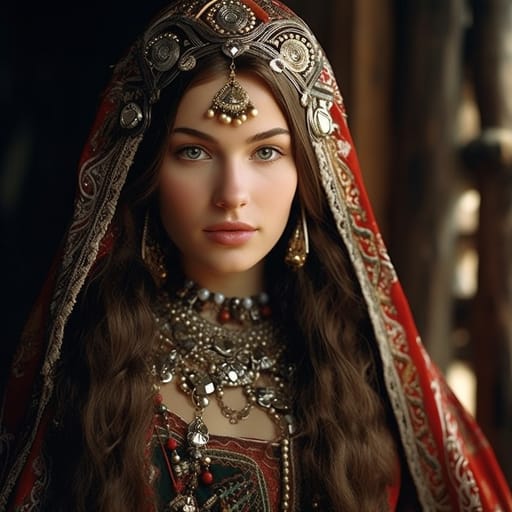
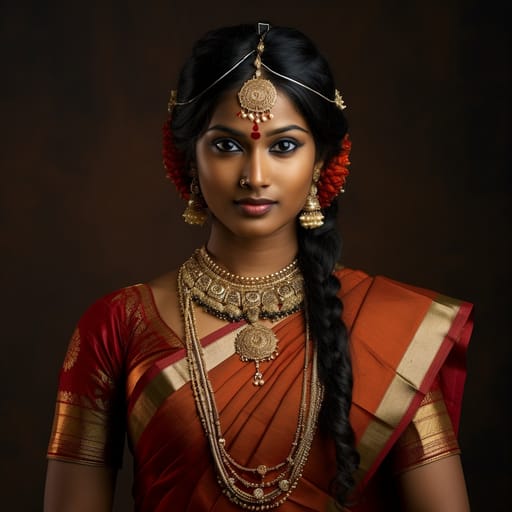
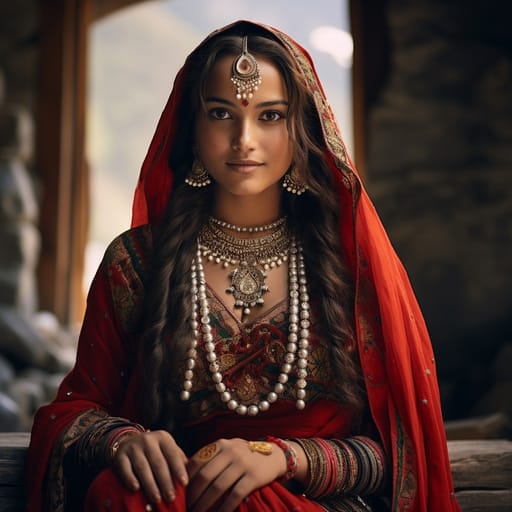
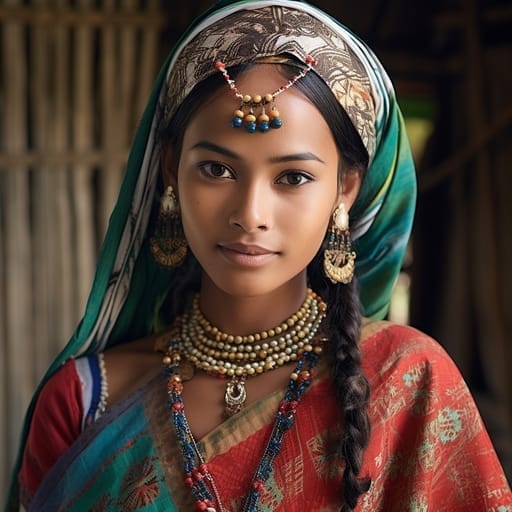
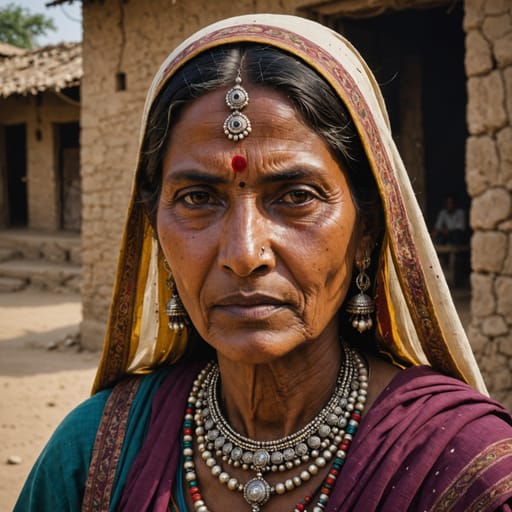
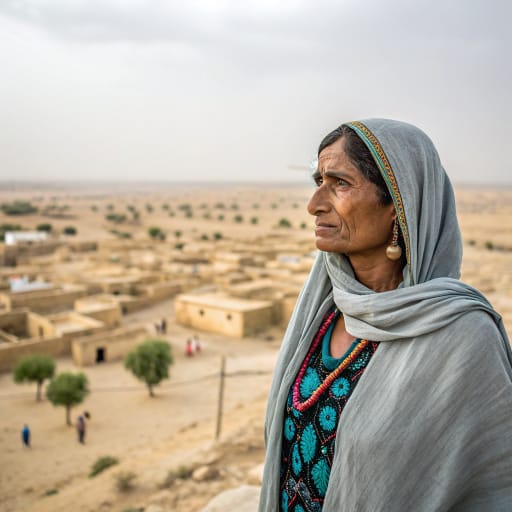
Typical Bania Phenotypes
Reference for AI generation: hair, eyes, skin, facial structure, build
Bania Body & Anatomy Reference
Per-feature anatomical profile for AI nude generation: Indo-Aryan / Dravidian South Asian phenotype
Bania Boobs & Breasts
Bust reference for Bania women: medium-to-large cup, moderate-to-full projection, which is typical of Indo-Aryan / Dravidian South Asian ancestry. Areolas measure about 32-46mm across, with medium-brown to dark-brown pigmentation. Body type (endomorph-to-mesomorph with fuller hip deposition) shapes the bust as well, so Bania tits are usually full and soft, generally fuller than the East Asian norm. In AI imagery, keep the forward-set shape rather than drifting toward the smaller East Asian bust profile.
Bania Ass & Hips
The Bania ass is typically medium-to-full, moderate-to-high projection, classic curvy hip profile, which sets it apart from the slim hip profile of East Asian women. Underneath, the pelvis shows medium-to-wide iliac crests, full gluteal-femoral fat distribution, part of the Indo-Aryan / Dravidian South Asian skeletal pattern. For Bania butt pics and AI renders, match that silhouette and the overall build (endomorph-to-mesomorph with fuller hip deposition).
Bania Vagina & Pussy
Bania pussy and vulvar anatomy presents medium-brown to dark-brown labial pigmentation, fuller labia minora projection, consistent with the Indo-Aryan / Dravidian South Asian phenotype's pigmentation pattern. Bania pubic hair is typically straight-to-wavy coarse texture, dense distribution, in the inverted-triangle pattern. For anatomically accurate Bania pussy renders the labial coloration should match the surrounding wheatish to brown skin tone with a continuous gradient, and the hair should keep its straight-to-wavy coarse texture.
Bania Dicks & Penis
Bania dicks follow the Indo-Aryan / Dravidian South Asian reference data: regional mean ~13cm erect; moderate girth; medium-brown shaft pigmentation. Shaft color should track the wheatish to brown skin tone with a smooth change toward the glans, and Bania pubic hair keeps its straight-to-wavy coarse texture.
Bania Body, Curves & Build
Bania body type and overall build presents as endomorph-to-mesomorph with fuller hip deposition, with mean adult female BMI 22-25: the characteristic Indo-Aryan / Dravidian South Asian habitus. Bania curves and proportions should keep the regional skeletal frame (height, shoulder-to-hip ratio, limb proportions) rather than a generic mesomorph default.
Bania Skin Tone & Hair Texture
Bania skin sits in the wheatish to brown (Fitzpatrick III-V) band. Hair is typically straight-to-wavy 1A-2B, dense, dark-brown to black, in keeping with the Indo-Aryan / Dravidian South Asian phenotype. In nude renders the skin should stay one even tone from face to body, and body, pubic and head hair should match.
Explore phenotype categories
Structured taxonomy with peer-reviewed scales · 22 anatomical categories
Erotic Poses & Sex Positions
From the pose catalog: 219 named positions with reference skeletons
Frequently asked questions about Bania people
Where is the Bania homeland?
The Bania homeland is Northern and western India, especially Rajasthan, Gujarat, Haryana, Uttar Pradesh, Delhi, Punjab and Madhya Pradesh, with trading communities across India and abroad in East Africa, the UK and North America. in Southern Asia.
What language do Bania people speak?
Bania people primarily speak Regional languages of their home areas, including Hindi, Marwari, Gujarati and Punjabi (Indo-Aryan, Indo-European); historically the Mahajani script for bookkeeping..
What religion do Bania people practice?
The predominant religion among Bania people is Mostly Hindu, often devoted to Vishnu; a large Jain minority, especially among Oswals..






Make your own Bania images
Five a day, free, no credits to buy. The studio starts from this group's phenotype data, so you can set body type, pose and style and keep the traits accurate.
Start with Bania