No portrait yet
Apapocuva Erotic
Originally the Iguatemi River area of southern Mato Grosso do Sul, Brazil, near Paraguay; migrations carried groups east to São Paulo state and the Atlantic coast.
Guarani, Nhandeva dialect (Tupi-Guarani, Tupian); Portuguese widely spoken.
Guarani shamanic religion centered on sung prayer and the Land without Evil; evangelical Christianity present in some communities.
Branch of the Nhandeva (Ñandeva) Guarani within the wider Guarani peoples; Nimuendajú described them alongside the related Tañyguá and Oguauíva.
About Apapocuva People
The Apapocuva are known far beyond their numbers because of one idea they carried across southern Brazil: the world is old and worn out and will be destroyed, and somewhere there is a place that hardship and death do not reach. They are a Guarani people, a branch of the group usually called Nhandeva or Ñandeva. Their homeland is the south of what is now Mato Grosso do Sul, around the Iguatemi River near the border with Paraguay. They speak Guarani, a Tupi-Guarani language whose dialects blend into one another across Brazil, Paraguay and Argentina. Apapocuva speech sits close to the Kaiowá and Mbyá varieties but keeps features of its own.
In the early nineteenth century, Apapocuva bands began leaving that homeland and walking east. Shamans who had dreamed of the coming catastrophe led the journeys. They taught that the way out was prayer, song and dance, kept up long enough to make the body light. Some groups reached the Atlantic coast and danced at the edge of the sea, expecting to cross over to yvy marã e'ỹ, the Land without Evil. The crossing never came, and those who remained settled where they could. These migrations are now among the most discussed episodes in the religious history of South America.
Much of what outsiders know comes from Curt Unkel, a German-born ethnographer who lived among the Apapocuva from 1905. They gave him the name Nimuendajú, and he carried it for the rest of his career. His 1914 monograph recorded, in rare depth, their accounts of how the world was made and how it will end, centered on Ñanderuvuçu, Our Great Father. He also helped gather Guarani families at Araribá in the interior of São Paulo state, where an Indigenous territory still exists.
For the Apapocuva, religion is not a separate part of life. Shamans lead long sessions of chanted prayer and dance, marked by gourd rattles and the thud of bamboo stamping tubes. A child's name is not chosen but found. A shaman works out which region of the sky the new soul came from, and the name follows from that. Today the name Apapocuva appears mostly in the ethnographic literature, and descendants generally call themselves Nhandeva or simply Guarani. They live in communities in Mato Grosso do Sul, São Paulo and neighboring states, where the old practices exist alongside Portuguese, wage work and, in some villages, evangelical churches.
Related ethnic groups
Groups that share Apapocuva's homeland, region, language, or religious tradition. These are likely candidates for comparative phenotype reference.
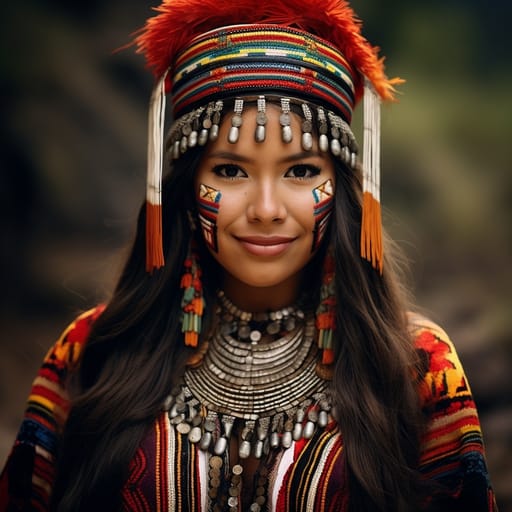
Quechua
same region (South America)
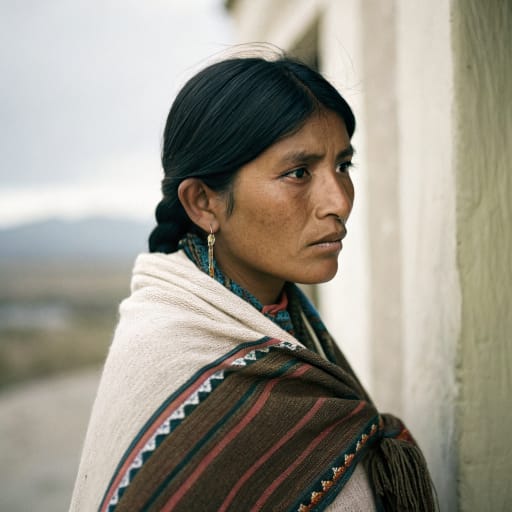
Aymara
same region (South America)
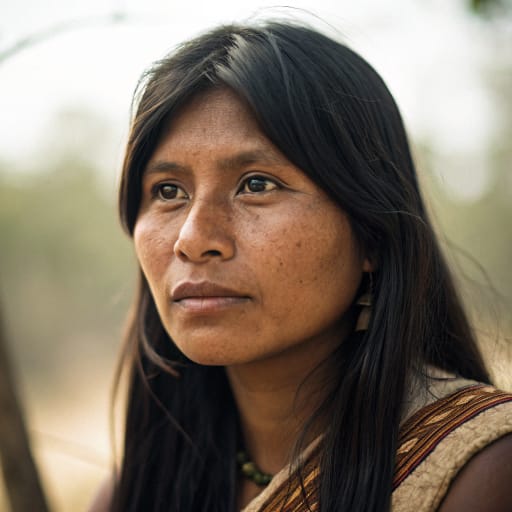
Guaraní
same region (South America)
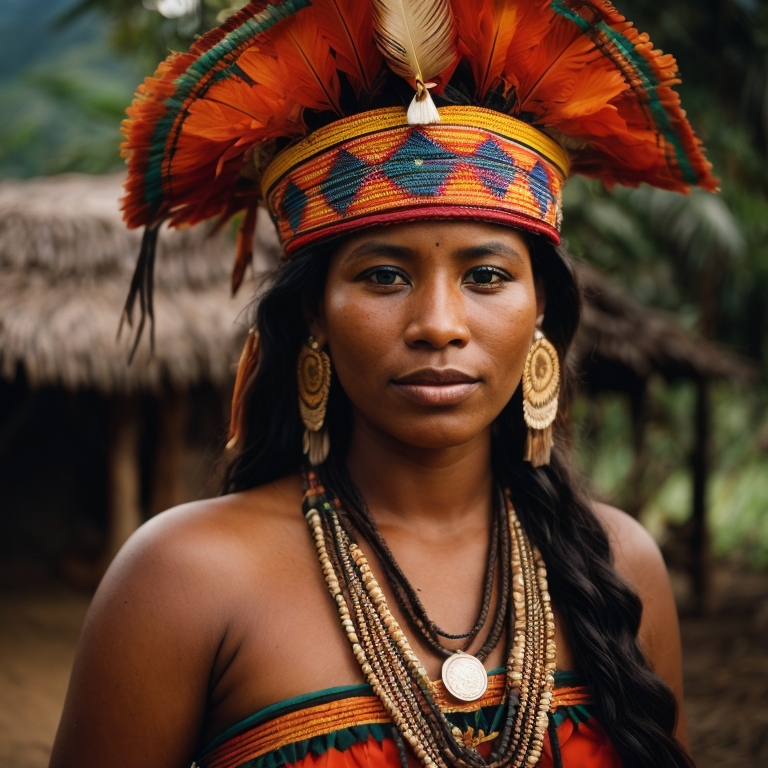
Emberá
same region (South America)
Mapuche
same region (South America)
White Argentine
same region (South America)
Mestizo Argentine
same region (South America)
Middle Eastern Argentine
same region (South America)
Typical Apapocuva Phenotypes
Reference for AI generation: hair, eyes, skin, facial structure, build
Apapocuva Body & Anatomy Reference
Per-feature anatomical profile for AI nude generation: South American Indigenous / European-Mestizo / Afro-Latino mix phenotype
Apapocuva Boobs & Breasts
Apapocuva tits and boobs run medium-to-large cup, full, high projection, the classic South American Indigenous / European-Mestizo / Afro-Latino mix bust profile. Apapocuva nipples and areolas show medium-brown to dark-brown areolar pigmentation against the tan-to-deep-brown skin tone, with areolar diameter typically in the 32-46mm range and forward-set positioning rather than the smaller bust profile of Andean Indigenous sub-populations. Apapocuva breasts trend the classic Brazilian / Latina curvy bust profile in lowland populations; smaller and shorter-set in Andean Indigenous populations, a function of the endomorph-to-mesomorph with high gluteal-femoral deposition body habitus and the mean adult female BMI 25-28. For anatomically accurate AI-generated Apapocuva nudes the render preserves the medium-to-large cup, full, high projection shape, 32-46mm areolas with medium-brown to dark-brown pigmentation, and the torso proportions of the South American Indigenous / European-Mestizo / Afro-Latino mix phenotype.
Apapocuva Ass & Hips
Apapocuva hips and butt usually read as full, high projection, the famous Brazilian / Latina bunda profile. The skeletal base is wide iliac crests, very full gluteal-femoral fat deposition (the hallmark Brazilian / Latina hip-to-waist ratio), the South American Indigenous / European-Mestizo / Afro-Latino mix pattern. Set against the slim narrow-hip East Asian profile, the difference is easy to see, and the hip-to-waist ratio is often what identifies Apapocuva women in photos.
Apapocuva Vagina & Pussy
Expect medium-brown to dark-brown labial pigmentation, fuller labia minora on Apapocuva women, in keeping with South American Indigenous / European-Mestizo / Afro-Latino mix ancestry. The pubic hair is wavy-to-curly coarse dark texture, dense distribution. Coloring should run evenly from the tan to deep-brown skin of the thighs to the labia, and Apapocuva nude imagery should keep the hair's wavy-to-curly coarse dark texture.
Apapocuva Dicks & Penis
Apapocuva dick and penile anatomy in adult AI generation should anchor on the regional reference data: regional mean ~13cm erect, moderate-to-above-average girth, and medium-brown shaft pigmentation. The Apapocuva cock profile reflects the South American Indigenous / European-Mestizo / Afro-Latino mix population's anthropometric measurements. The shaft pigmentation should track the surrounding tan to deep-brown skin tone, and the pubic hair should keep its wavy-to-curly coarse dark texture in the typical inverted-V escutcheon.
Apapocuva Body, Curves & Build
Apapocuva body type: endomorph-to-mesomorph with high gluteal-femoral deposition, with mean adult female BMI 25-28. This is the typical South American Indigenous / European-Mestizo / Afro-Latino mix build. Height range, shoulder-to-hip ratio and fat distribution all follow from it, which is what an accurate Apapocuva nude body should show.
Apapocuva Skin Tone & Hair Texture
Apapocuva skin tone falls in the tan to deep-brown (Fitzpatrick III-VI) band, the surface signal most often miscalibrated by generic AI nude generators. Apapocuva hair texture is typically straight-to-curly 1A-3C, varies widely by ancestral composition, characteristic of the South American Indigenous / European-Mestizo / Afro-Latino mix phenotype. In Apapocuva nude renders the skin should hold that band consistently across the body.
Explore phenotype categories
Structured taxonomy with peer-reviewed scales · 22 anatomical categories
Erotic Poses & Sex Positions
From the pose catalog: 219 named positions with reference skeletons
Frequently asked questions about Apapocuva people
Where is the Apapocuva homeland?
The Apapocuva homeland is Originally the Iguatemi River area of southern Mato Grosso do Sul, Brazil, near Paraguay; migrations carried groups east to São Paulo state and the Atlantic coast. in South America.
What language do Apapocuva people speak?
Apapocuva people primarily speak Guarani, Nhandeva dialect (Tupi-Guarani, Tupian); Portuguese widely spoken..
What religion do Apapocuva people practice?
The predominant religion among Apapocuva people is Guarani shamanic religion centered on sung prayer and the Land without Evil; evangelical Christianity present in some communities..






Make your own Apapocuva images
Five a day, free, no credits to buy. The studio starts from this group's phenotype data, so you can set body type, pose and style and keep the traits accurate.
Start with Apapocuva