Help us get this right
Does this portrait look right for Huambisa?
One tap. It takes a second and it is recorded.
1 says it looks right, 0 say it looks off.
Huambisa Erotic
The Santiago and Morona river basins in the Amazonas and Loreto regions of northern Peru, near the Ecuador border.
Wampis, also called Huambisa (Chicham/Jivaroan), closely related to Shuar; Spanish is widely spoken as a second language.
Catholic and Evangelical Christianity alongside traditional beliefs about arutam spirit power and shamanic healing.
One of the Chicham (Jivaroan) peoples, with the Shuar, Achuar and Awajún; organized since 2015 as the Autonomous Territorial Government of the Wampis Nation.
About Huambisa People
The Huambisa call themselves Wampis, and over the past decade they have turned that name into a political claim as much as an ethnic one. In 2015 they declared the Autonomous Territorial Government of the Wampis Nation, the first body of its kind in Peru. It covers roughly 1.3 million hectares of forest in the Santiago and Morona river basins. The declaration put something much older on paper: a people who have spent centuries refusing to be absorbed.
Their country lies in northern Peru, where the Andes break down into the Amazon lowlands near the Ecuador border. Villages sit on riverbanks, and canoes with outboard motors serve as the main roads. Wampis is a Chicham language, from the family long called Jivaroan. It is closely related to Shuar, Achuar and Awajún, and speakers can often understand each other across those lines. The four peoples share much of a way of life. Women do most of the work in the manioc gardens, men hunt and fish, and any visitor who steps inside is offered masato, a fermented manioc drink.
Older spiritual life centers on arutam, a power gained from ancestral spirits through fasting, tobacco water and visionary plants such as ayahuasca. People who met arutam were believed to carry strength and protection, and for earlier generations that strength was tied to feuding and war. Jivaroan peoples held off the Incas, destroyed Spanish towns in an uprising around 1600, and later made the rubber trade upriver a dangerous business. Raiding and taking heads belonged to that world and ended long ago, though the reputation still follows the Wampis in popular writing. Women have powers of their own: anent, short sung spells used to make gardens grow, win affection or keep a household safe.
Catholic and Evangelical missions settled in during the twentieth century, and many Wampis now go to church while still seeing traditional healers. In 2009, Awajún and Wampis protesters blocked a highway near Bagua to oppose decrees that opened Amazon land to investment. The standoff ended in deadly violence that shook the country. Today the fights are over oil blocks, illegal gold mining on the rivers and logging, and the territorial government exists mainly to settle them on Wampis terms. At its assemblies, leaders often wear toucan feather crowns and face paint, and their message to Lima is plain: this forest already has a government.
Related ethnic groups
Groups that share Huambisa's homeland, region, language, or religious tradition. These are likely candidates for comparative phenotype reference.
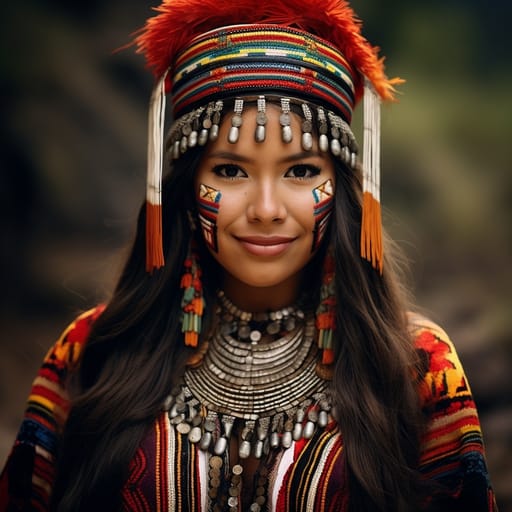
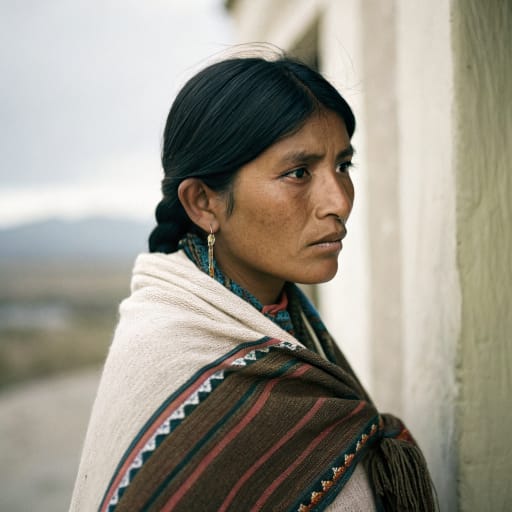
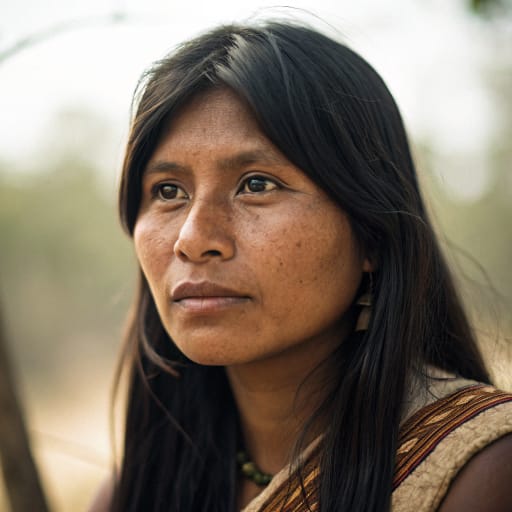
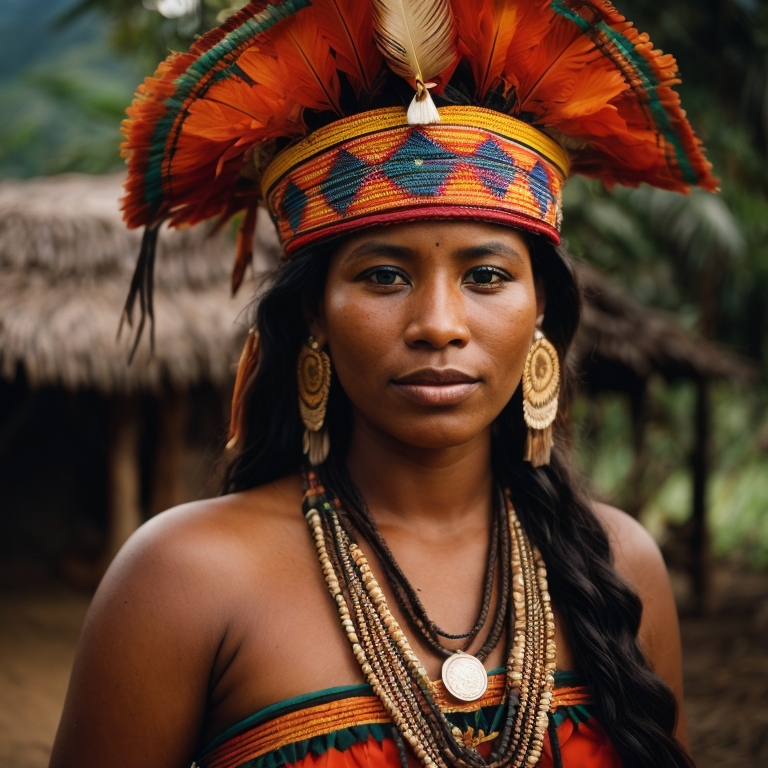
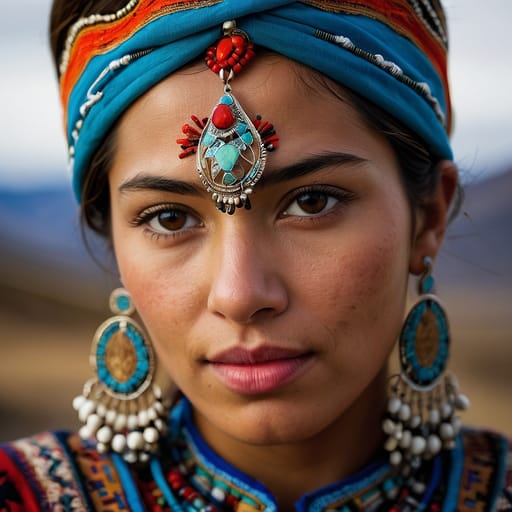
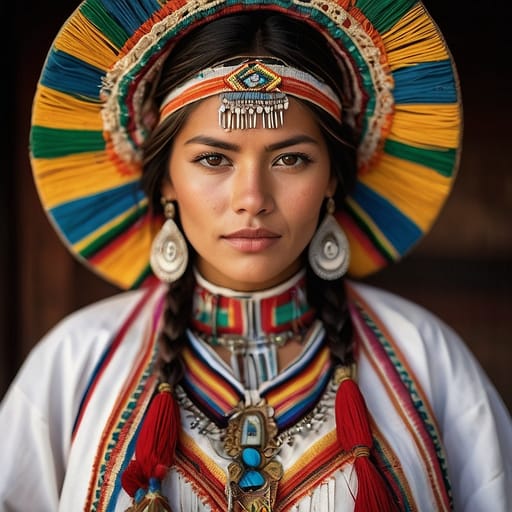
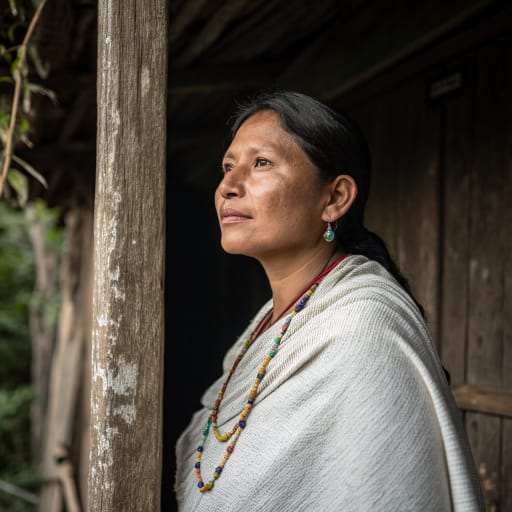
Typical Huambisa Phenotypes
Reference for AI generation: hair, eyes, skin, facial structure, build
Huambisa Body & Anatomy Reference
South American Indigenous / European-Mestizo / Afro-Latino mix phenotype: anatomy reference for AI nude generation
Huambisa Boobs & Breasts
Huambisa boobs follow the South American Indigenous / European-Mestizo / Afro-Latino mix profile: medium-to-large cup, full, high projection. Areolar diameter is usually 32-46mm, and the coloring is medium-brown to dark-brown areolar pigmentation against the tan-to-deep-brown skin tone. Breast shape tracks body composition (endomorph-to-mesomorph with high gluteal-femoral deposition, mean adult female BMI 25-28), so Huambisa breasts tend to be the classic Brazilian / Latina curvy bust profile in lowland populations; smaller and shorter-set in Andean Indigenous populations. Expect a forward-set shape, not the smaller bust profile of Andean Indigenous sub-populations.
Huambisa Ass & Hips
Huambisa ass and hip morphology presents as full, high projection, the famous Brazilian / Latina bunda profile, distinctly different from the slim narrow-hip East Asian profile. The Huambisa pelvic profile shows wide iliac crests, very full gluteal-femoral fat deposition (the hallmark Brazilian / Latina hip-to-waist ratio), anchored in the South American Indigenous / European-Mestizo / Afro-Latino mix skeletal pattern. Huambisa butt shots in adult AI imagery should render the full, high projection, the famous Brazilian / Latina bunda profile silhouette with the overall build (endomorph-to-mesomorph with high gluteal-femoral deposition) and the fat distribution typical of the South American Indigenous / European-Mestizo / Afro-Latino mix phenotype.
Huambisa Vagina & Pussy
Huambisa pussy anatomy typically shows medium-brown to dark-brown labial pigmentation, fuller labia minora. Pubic hair is usually wavy-to-curly coarse dark texture, dense distribution. In AI-generated Huambisa nudes, labial color should blend into the tan to deep-brown skin with a gradual transition, and the hair should keep its wavy-to-curly coarse dark texture.
Huambisa Dicks & Penis
Penis reference for Huambisa men: regional mean ~13cm erect, moderate-to-above-average girth. Coloring: medium-brown shaft pigmentation. An accurate Huambisa cock in AI imagery matches the surrounding tan to deep-brown skin rather than a generic porn default. Circumcision depends on religion and custom, not ancestry.
Huambisa Body, Curves & Build
The Huambisa figure is generally endomorph-to-mesomorph with high gluteal-femoral deposition, with mean adult female BMI 25-28, characteristic of South American Indigenous / European-Mestizo / Afro-Latino mix ancestry. AI image tools tend to flatten regional body types into a few stock shapes; here the Huambisa build is kept as its own reference.
Huambisa Skin Tone & Hair Texture
Skin: tan to deep-brown (Fitzpatrick III-VI). Hair: straight-to-curly 1A-3C, varies widely by ancestral composition. Both are typical of South American Indigenous / European-Mestizo / Afro-Latino mix ancestry. The most common mistake in AI nudes of Huambisa women is a body rendered lighter than the face.
Explore phenotype categories
Structured taxonomy with peer-reviewed scales · 22 anatomical categories
Erotic Poses & Sex Positions
From the pose catalog: 219 named positions with reference skeletons
Frequently asked questions about Huambisa people
Where is the Huambisa homeland?
The Huambisa homeland is The Santiago and Morona river basins in the Amazonas and Loreto regions of northern Peru, near the Ecuador border. in South America.
What language do Huambisa people speak?
Huambisa people primarily speak Wampis, also called Huambisa (Chicham/Jivaroan), closely related to Shuar; Spanish is widely spoken as a second language..
What religion do Huambisa people practice?
The predominant religion among Huambisa people is Catholic and Evangelical Christianity alongside traditional beliefs about arutam spirit power and shamanic healing..






Make your own Huambisa images
Five a day, free, no credits to buy. The studio starts from this group's phenotype data, so you can set body type, pose and style and keep the traits accurate.
Start with Huambisa