Xibe Erotic
Northeast China, mainly Liaoning around Shenyang and parts of Jilin, and the Ili valley of Xinjiang, centered on Qapqal Xibe Autonomous County, China
Xibe (Tungusic, Southern branch, closely related to Manchu), spoken mainly in Qapqal, Xinjiang; Mandarin Chinese (Sino-Tibetan) among the northeastern Xibe and increasingly everywhere
Largely secular today; traditional shamanism and ancestor veneration, with Tibetan Buddhist influence from the Qing period
Tungusic peoples, Manchu branch; two regional communities, the northeastern Xibe of Liaoning and Jilin and the Xinjiang Xibe of Qapqal and the Ili valley
About Xibe People
The Xibe are the people who kept Manchu alive after the Manchus themselves let it go. A Tungusic group of just under 200,000, they live in two places about as far apart as China allows: the counties around Shenyang in Liaoning, where most of them are, and the Ili valley of western Xinjiang, on the Kazakh border. The split has a date. In 1764 the Qianlong emperor ordered roughly a thousand Xibe bannermen and their families to march west from Shenyang and garrison the Ili frontier the Qing had taken from the Dzungars less than a decade earlier. The column assembled at the Xibe family temple in Shenyang, which still stands, and took more than a year to reach the river. The day it left, the eighteenth of the fourth lunar month, is now the Westward Migration Festival, the closest thing the Xibe have to a national holiday.
Language is where the two halves part ways. The northeastern Xibe have spoken Mandarin for generations. The Xibe of Qapqal still speak Xibe, a Southern Tungusic language so close to Manchu that some linguists file it as a dialect, written vertically in a lightly modified Manchu script. The county paper, the Qapqal News, is the only newspaper in the world still printed in that script. Qapqal Xibe have long been multilingual by necessity, moving between Xibe, Mandarin, Uyghur and Kazakh, and the Qing and later governments leaned on them as interpreters across Xinjiang. The language is graying all the same: most fluent speakers are middle-aged or older.
The garrison shaped everything else. The eight banner companies, or niru, settled in eight villages along the south bank of the Ili, and people still call the villages by their numbers, First Niru through Eighth. Between 1802 and 1808 an officer named Tubet led the digging of a canal that turned dry steppe into wheat and rice fields. Qapqal itself means granary. Mounted archery was the bannerman's trade and never quite stopped: the county has fed archers to China's national teams for decades and styles itself the hometown of archery. Religion was layered rather than singular. Shamanism and ancestor veneration came west with the column, Tibetan Buddhism arrived through the Qing court, and household spirits such as Xilimama, a knotted cord hung indoors to record the family line, survive as custom more than creed. Most Xibe today are secular. What marks a Qapqal kitchen is a fermented flatbread baked fresh most mornings and a sour pickle of cabbage, carrot and celery, both closer to Manchu farmhouse cooking than to anything eaten by their Uyghur and Kazakh neighbors.
Related ethnic groups
Groups that share Xibe's homeland, region, language, or religious tradition — likely candidates for comparative phenotype reference.
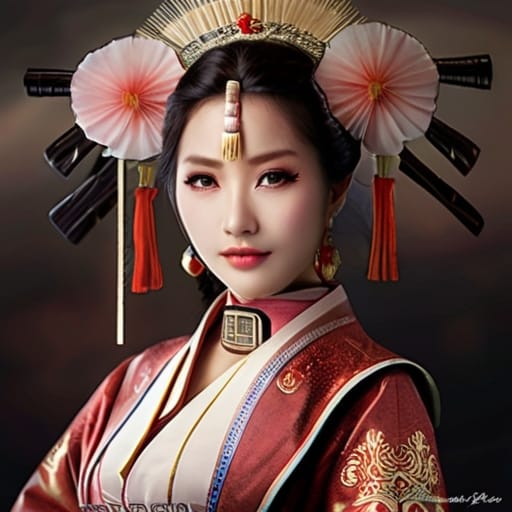
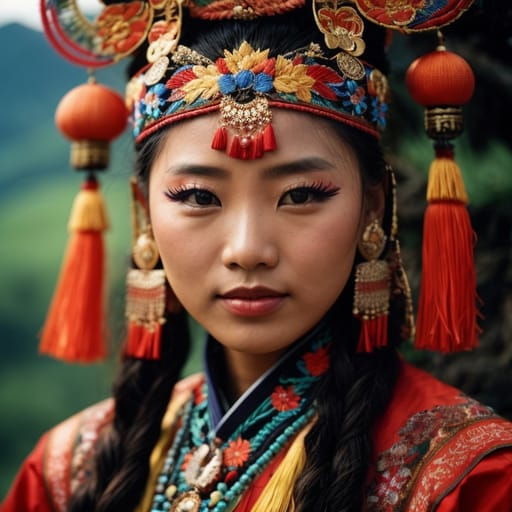
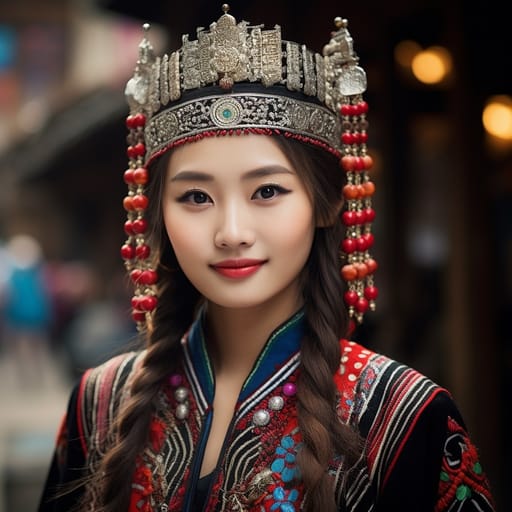
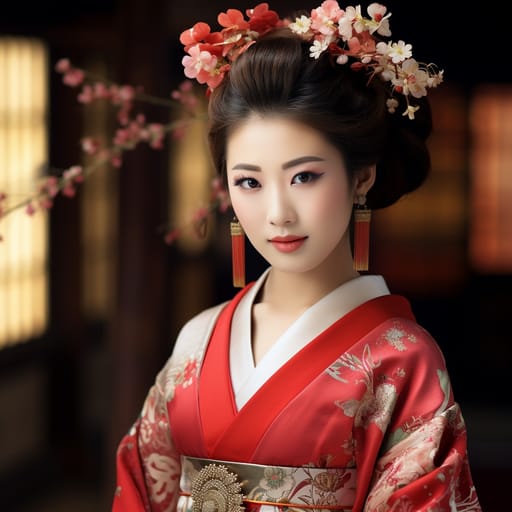
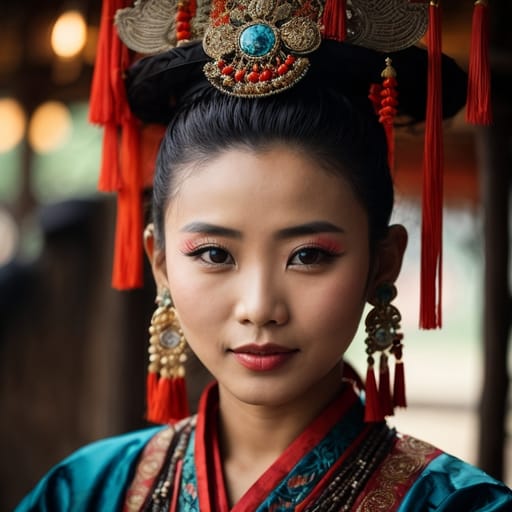
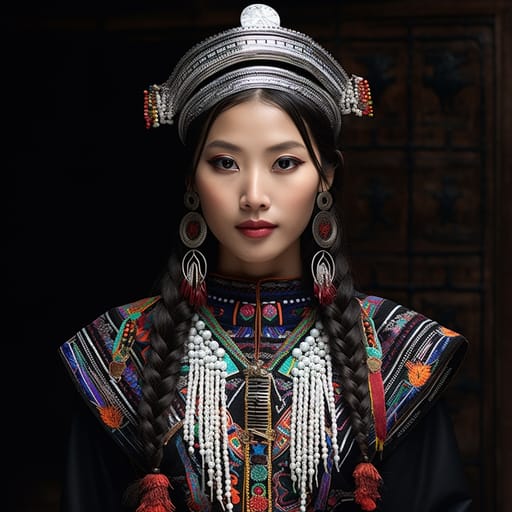
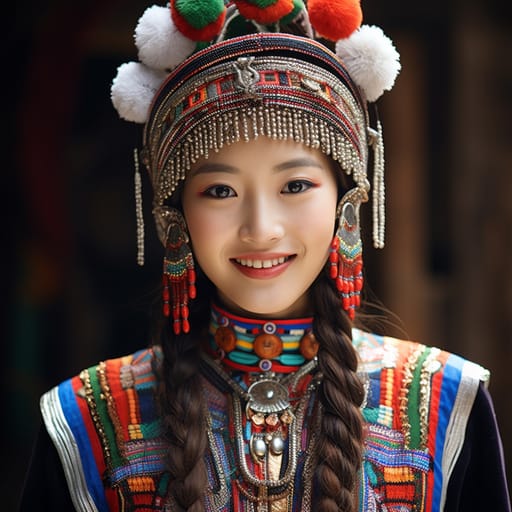
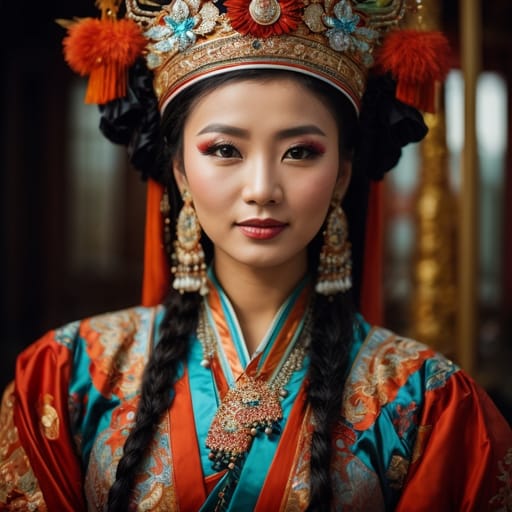
Typical Xibe Phenotypes
Reference for AI generation — hair, eyes, skin, facial structure, build
Xibe Body & Anatomy Reference
Per-feature anatomical profile for AI nude generation — East Asian Sinitic / Mongoloid phenotype
Xibe Boobs & Breasts
Xibe tits and boobs run small-to-medium cup, modest projection — the classic East Asian Sinitic / Mongoloid bust profile. Xibe nipples and areolas show light-pink to medium-brown areolar pigmentation against the light-to-medium skin tone, with areolar diameter typically in the 26-36mm range and forward-set positioning rather than the the fuller South Asian or Levantine bust profile. Xibe breasts trend firm and modestly projecting; smaller cup size than the South Asian or Western Asian average, a function of the ectomorph-to-mesomorph, lean frame body habitus and the mean adult female BMI 20-23. For anatomically-accurate AI-generated Xibe nudes the render preserves: small-to-medium cup, modest projection shape, 26-36mm areolas with light-pink to medium-brown pigmentation, and the torso proportions of the East Asian Sinitic / Mongoloid phenotype.
Xibe Ass & Hips
Xibe ass and hip morphology presents as small-to-medium, modest projection, narrower hip profile — distinctly different from the fuller projected glutes of the West African or Polynesian phenotype. The Xibe pelvic profile shows narrower iliac crests, less gluteal-femoral fat deposition, anchored in the East Asian Sinitic / Mongoloid skeletal pattern. Xibe butt shots in adult AI imagery should render the small-to-medium, modest projection, narrower hip profile silhouette with the ectomorph-to-mesomorph, lean frame build and the gluteal-femoral fat distribution typical of the East Asian Sinitic / Mongoloid phenotype rather than defaulting to a globally-averaged "ethnic" butt that generic AI generators produce. The hip-to-waist ratio characteristic of Xibe women is one of the identifying features of the East Asian Sinitic / Mongoloid regional phenotype.
Xibe Vagina & Pussy
Xibe pussy and vulvar anatomy presents light-pink to medium-brown labial pigmentation, smaller labia minora — consistent with the East Asian Sinitic / Mongoloid phenotype's pigmentation pattern. Xibe pubic hair is typically straight fine texture, sparser distribution than the South Asian norm, distributed in the inverted-triangle pattern with regional-typical density. AI-generated Xibe nude imagery should preserve the light-pink to medium-brown labial pigmentation and the straight fine texture hair texture rather than defaulting to a Western-European pink-and-sparse template. For anatomically-accurate Xibe pussy renders the labial pigmentation and coloration should match the surrounding light to medium skin tone of the East Asian Sinitic / Mongoloid phenotype, with continuous gradient rather than an abrupt color transition.
Xibe Dicks & Penis
Xibe dick and penile anatomy in adult AI generation should anchor on the regional reference data: regional mean ~11-12cm erect, moderate girth, and light-brown shaft pigmentation. The Xibe cock profile reflects the East Asian Sinitic / Mongoloid ancestral population's anthropometric measurements rather than a globally-averaged Western-pornography default. For anatomically-accurate Xibe nude male imagery the shaft pigmentation should track the surrounding light to medium skin tone, the glans-to-shaft pigmentation transition should be continuous, and the pubic hair pattern should match straight fine texture texture distributed in the typical inverted-V escutcheon. Circumcision status in Xibe populations varies by religious-cultural tradition rather than ancestral phenotype.
Xibe Body, Curves & Build
Xibe body type and overall build presents as ectomorph-to-mesomorph, lean frame, with mean adult female BMI 20-23 — the characteristic East Asian Sinitic / Mongoloid habitus. Xibe curves and proportions in adult AI imagery should preserve the regional skeletal frame (height, shoulder-to-hip ratio, limb proportions) rather than scaling to a Western-European mesomorph default. The Xibe nude female form, when rendered with anatomical fidelity, shows the height range, frame width, and adipose distribution pattern typical of the East Asian Sinitic / Mongoloid phenotype. Generic AI image generators tend to collapse regional body types into a few default shapes; the EthnicErotic phenotype-anchored approach preserves the Xibe build as its own reference category.
Xibe Skin Tone & Hair Texture
Xibe skin tone falls in the light to medium (Fitzpatrick II-IV) band — the surface signal most often miscalibrated by generic AI nude generators trained on Western-photographic datasets. Xibe hair texture is typically straight 1A, fine-to-medium, predominantly black, characteristic of the East Asian Sinitic / Mongoloid phenotype. For anatomically-accurate Xibe nude renders the skin should hold the Fitzpatrick band consistently across body surface rather than showing the lighter-than-face body shading that AI generators default to. Xibe hair pigmentation and texture on body, pubic, and head should match across the figure rather than mixing textures (a common AI artefact).
Explore phenotype categories
Structured taxonomy with peer-reviewed scales · 22 anatomical categories
Erotic Poses & Sex Positions
From the pose catalog — 219 named positions with reference skeletons
Frequently asked questions about Xibe people
Where is the Xibe homeland?
The Xibe homeland is Northeast China, mainly Liaoning around Shenyang and parts of Jilin, and the Ili valley of Xinjiang, centered on Qapqal Xibe Autonomous County, China in East Asia.
What language do Xibe people speak?
Xibe people primarily speak Xibe (Tungusic, Southern branch, closely related to Manchu), spoken mainly in Qapqal, Xinjiang; Mandarin Chinese (Sino-Tibetan) among the northeastern Xibe and increasingly everywhere.
What religion do Xibe people practice?
The predominant religion among Xibe people is Largely secular today; traditional shamanism and ancestor veneration, with Tibetan Buddhist influence from the Qing period.
What does a typical Xibe woman look like?
East Asian appearance in the range shared with Manchu and northern Han neighbors: light to medium skin tones, straight black hair, dark eyes commonly with an epicanthic fold, and medium stature. Traditional dress follows Qing banner fashion: a long side-fastened robe for both sexes, the women's version edged with contrasting embroidered borders at collar, cuffs and hem, the men's worn with a short jacket, boots and a cap.






Make your own Xibe images
Five a day, free, no credits to buy. The studio starts from this group's phenotype data, so you can set body type, pose and style and keep the traits accurate.
Start with Xibe