No portrait yet
Tzotzil Erotic
The highland townships of central Chiapas, southern Mexico, ringing the city of San Cristobal de las Casas.
Tzotzil, called bats'i k'op by its speakers (Mayan, Tzeltalan branch), with Spanish as a widespread second language.
Catholicism reworked on local terms, with ancestral mountain deities, cross shrines and ritual healers; a large Protestant and evangelical minority since the mid twentieth century.
A Mayan people of the Tzeltalan branch, closest to the neighboring Tzeltal; identity is municipal, with Chamula, Zinacantec, Chenalho, Larrainzar, Huixtan and Pantelho among the principal townships.
About Tzotzil People
The Tzotzil call their language bats'i k'op, the true language, which tells you where they draw the boundary: between those who speak it and everyone else. Ask a Tzotzil person what they are, though, and the answer usually comes back smaller. Chamula. Zinacantec. From Chenalho, from Larrainzar. The highlands of Chiapas hold twenty-odd townships that share a Mayan language, close kin to Tzeltal next door, and a common religious world, and still keep themselves apart: separate dress, separate patron saints, separate ladders of civic and religious office that men climb over a lifetime. The country is cold and high, pine and oak forest above two thousand meters, maize planted on slopes steep enough that a man works sideways. Sheep came with the Spanish and never left. In Chamula nobody eats them; women pasture and shear them and weave the wool into the heavy tunics that identify a Chamula man from across a market. Zinacantecs went the other direction, into pink and magenta stripes, tassels, flat palm hats trimmed with ribbons. All of it comes off the backstrap loom, and the brocade on a woman's blouse is less ornament than diagram, the world laid out in diamonds with the wearer standing at its center.
Catholicism arrived in the sixteenth century and was absorbed on local terms rather than accepted on Spanish ones. The church at San Juan Chamula has no pews and no resident priest: the floor is pine needles, the saints stand in glass cases along the walls, and healers work by candlelight with copal, eggs and cane liquor. Behind the saints sit older presences, the ancestral fathers and mothers who live inside the mountains, and the understanding that each person has an animal companion penned up there, whose injuries are your injuries. Crosses planted at cave mouths and waterholes are doorways, not crucifixes. That world has been splitting for fifty years. Evangelical conversion broke the consensus that paid for the saints' festivals, and from the 1970s Chamula expelled thousands of Protestant households, who built new neighborhoods on the edge of San Cristobal de las Casas. The Tzotzil have also been in open revolt more than once: Chamulas rose in 1869, and Tzotzil communities were central to the Zapatista uprising of 1994. In 1997 paramilitaries killed forty-five members of the pacifist group Las Abejas as they prayed at Acteal. The work now is maize, greenhouse flowers, wage labor in Cancun, and increasingly the United States.
Related ethnic groups
Groups that share Tzotzil's homeland, region, language, or religious tradition. These are likely candidates for comparative phenotype reference.
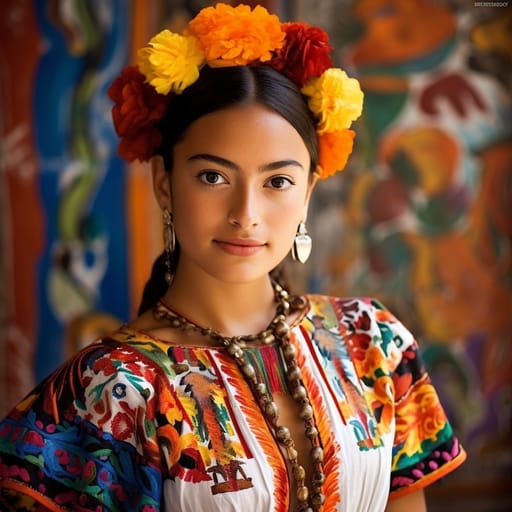
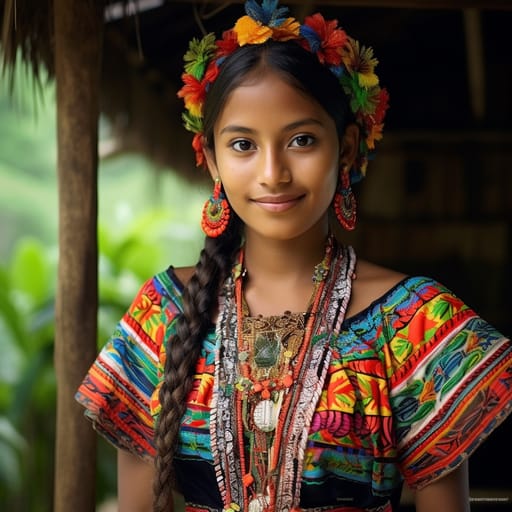
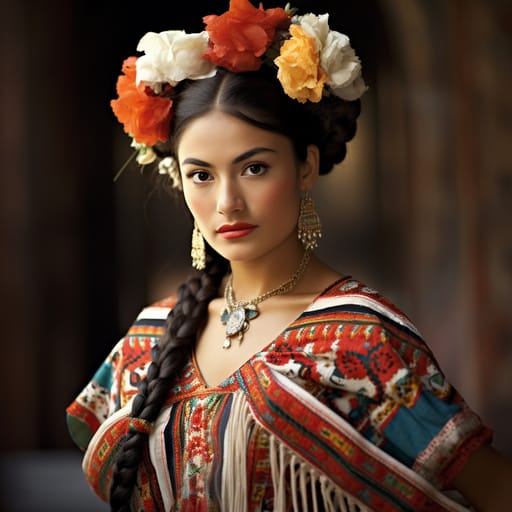
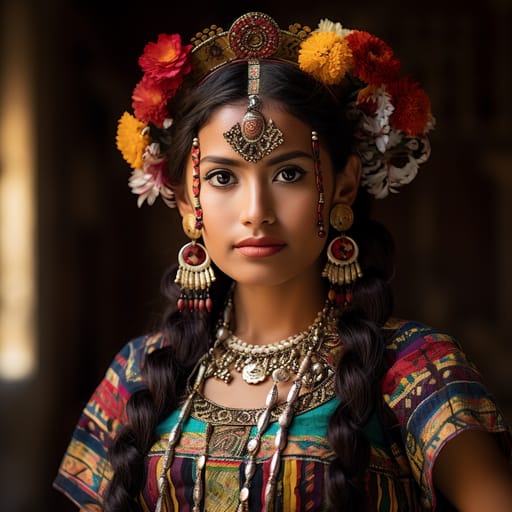
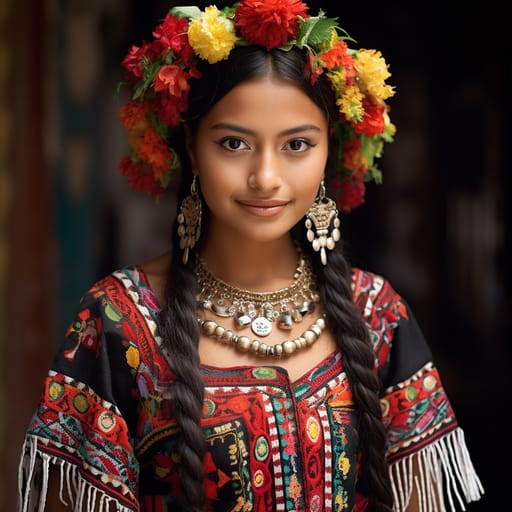
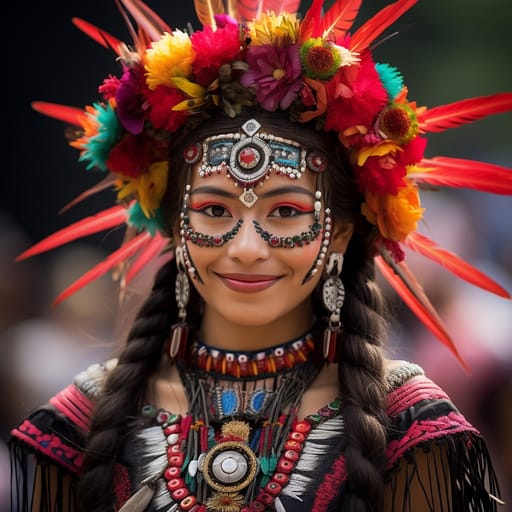
Typical Tzotzil Phenotypes
Reference for AI generation: hair, eyes, skin, facial structure, build
Tzotzil Body & Anatomy Reference
Per-feature anatomical profile for AI nude generation: Mesoamerican Indigenous / Mestizo phenotype
Tzotzil Boobs & Breasts
Tzotzil tits and boobs run medium-to-large cup, full, moderate-to-high projection, the classic Mesoamerican Indigenous / Mestizo bust profile. Tzotzil nipples and areolas show medium-brown to dark-brown areolar pigmentation against the tan-to-medium-brown skin tone, with areolar diameter typically in the 32-46mm range and forward-set positioning rather than the smaller East Asian bust. Tzotzil breasts trend full and projecting, classic Latina curvy bust profile, a function of the endomorph-to-mesomorph with strong hip-and-bust deposition body habitus and the mean adult female BMI 26-29. For anatomically accurate AI-generated Tzotzil nudes the render preserves the medium-to-large cup, full, moderate-to-high projection shape, 32-46mm areolas with medium-brown to dark-brown pigmentation, and the torso proportions of the Mesoamerican Indigenous / Mestizo phenotype.
Tzotzil Ass & Hips
Tzotzil hips and butt usually read as medium-to-full, high projection, classic Latina curvy hip profile. The skeletal base is wide iliac crests, full gluteal-femoral fat deposition, the Mesoamerican Indigenous / Mestizo pattern. Set against the slim narrow-hip East Asian profile, the difference is easy to see, and the hip-to-waist ratio is often what identifies Tzotzil women in photos.
Tzotzil Vagina & Pussy
Expect medium-brown to dark-brown labial pigmentation, fuller labia minora on Tzotzil women, in keeping with Mesoamerican Indigenous / Mestizo ancestry. The pubic hair is straight-to-wavy coarse dark texture, dense distribution. Coloring should run evenly from the tan to medium-brown skin of the thighs to the labia, and Tzotzil nude imagery should keep the hair's straight-to-wavy coarse dark texture.
Tzotzil Dicks & Penis
Tzotzil dick and penile anatomy in adult AI generation should anchor on the regional reference data: regional mean ~13cm erect, moderate girth, and medium-brown shaft pigmentation. The Tzotzil cock profile reflects the Mesoamerican Indigenous / Mestizo population's anthropometric measurements. The shaft pigmentation should track the surrounding tan to medium-brown skin tone, and the pubic hair should keep its straight-to-wavy coarse dark texture in the typical inverted-V escutcheon.
Tzotzil Body, Curves & Build
Tzotzil body type: endomorph-to-mesomorph with strong hip-and-bust deposition, with mean adult female BMI 26-29. This is the typical Mesoamerican Indigenous / Mestizo build. Height range, shoulder-to-hip ratio and fat distribution all follow from it, which is what an accurate Tzotzil nude body should show.
Tzotzil Skin Tone & Hair Texture
Tzotzil skin tone falls in the tan to medium-brown (Fitzpatrick III-V) band, the surface signal most often miscalibrated by generic AI nude generators. Tzotzil hair texture is typically straight-to-wavy 1A-2B, dense dark-brown to black, characteristic of the Mesoamerican Indigenous / Mestizo phenotype. In Tzotzil nude renders the skin should hold that band consistently across the body.
Explore phenotype categories
Structured taxonomy with peer-reviewed scales · 22 anatomical categories
Erotic Poses & Sex Positions
From the pose catalog: 219 named positions with reference skeletons
Frequently asked questions about Tzotzil people
Where is the Tzotzil homeland?
The Tzotzil homeland is The highland townships of central Chiapas, southern Mexico, ringing the city of San Cristobal de las Casas. in Central America.
What language do Tzotzil people speak?
Tzotzil people primarily speak Tzotzil, called bats'i k'op by its speakers (Mayan, Tzeltalan branch), with Spanish as a widespread second language..
What religion do Tzotzil people practice?
The predominant religion among Tzotzil people is Catholicism reworked on local terms, with ancestral mountain deities, cross shrines and ritual healers; a large Protestant and evangelical minority since the mid twentieth century..






Make your own Tzotzil images
Five a day, free, no credits to buy. The studio starts from this group's phenotype data, so you can set body type, pose and style and keep the traits accurate.
Start with Tzotzil