Help us get this right
Does this portrait look right for Belizean Creoles?
Nobody has judged this one yet. You would be the first.
Belizean Creoles Erotic
Belize, centered on Belize City and the villages of the Belize River Valley, with large diaspora communities in the United States, especially Los Angeles, New York and Chicago
Belizean Kriol (English-based Atlantic creole) and English (Indo-European, Germanic); many also speak Spanish (Indo-European, Romance)
Christian: historically Anglican and Methodist, also Roman Catholic, with growing evangelical, Pentecostal and Seventh-day Adventist congregations
Part of the wider Anglophone Afro-Caribbean Creole world; includes urban Belize City Kriols, Belize River Valley village communities, and a large US diaspora
About Belizean Creoles People
Belizean Creoles, who mostly call themselves Kriols, are the people whose language became the country's common tongue. Across Belize, people of every background use Kriol at the market, on the bus and in the schoolyard, which tells you how deeply this group shaped the place. Most Kriols descend from enslaved West and Central Africans and from the British loggers, many of them Scots, who enslaved them. Later arrivals from Jamaica, the Mosquito Shore and other parts of the Caribbean added to the mix. Their historic heartland is Belize City and the villages along the Belize River, such as Burrell Boom, Bermudian Landing and Crooked Tree.
The colony was built on timber, first logwood and then mahogany. Plantation slavery worked differently. In Belize, enslaved men worked in small gangs deep in the forest for months at a time, often carrying machetes and hunting guns, and that shaped both resistance and a rough frontier culture. In 1798, settlers and enslaved men drove off a Spanish attack at St. George's Caye. The battle became the founding story of Creole identity, and it is still celebrated every September 10. It is also argued over, because the shoulder to shoulder version of events plays down slavery and puts one group at the center of a nation with many.
Through most of the colonial era Creoles staffed the civil service, the schools and the professions, and people with lighter skin held the top of a color-conscious social order. That changed in the late twentieth century. Hurricane Hattie wrecked much of Belize City in 1961, and emigration to Los Angeles, New York and Chicago picked up in the years that followed. In the 1980s, refugees fleeing Central America's wars helped make Mestizos the largest group. Creoles are now the second largest, and the community in the United States is big enough that many families live in both countries.
Kriol is an English-based creole. Written down, it looks close enough to English to fool outsiders, but spoken at full speed it quickly loses them. Speakers slide between deep Kriol and standard English depending on who is listening, and language activists have worked for a standard spelling and a dictionary. Most Kriols are Anglican, Methodist or Catholic, with evangelical churches growing, and church ties reach into the schools, most of which churches run. The signature music is brukdown, born in the logging camps and played on accordion, banjo, drums and a donkey's jawbone scraped with a stick. In Gales Point Manatee, villagers still dance sambai to drums around a fire on full-moon nights. At the table, the anchor is rice and beans cooked in coconut milk, served with stew chicken.
Related ethnic groups
Groups that share Belizean Creoles's homeland, region, language, or religious tradition. These are likely candidates for comparative phenotype reference.
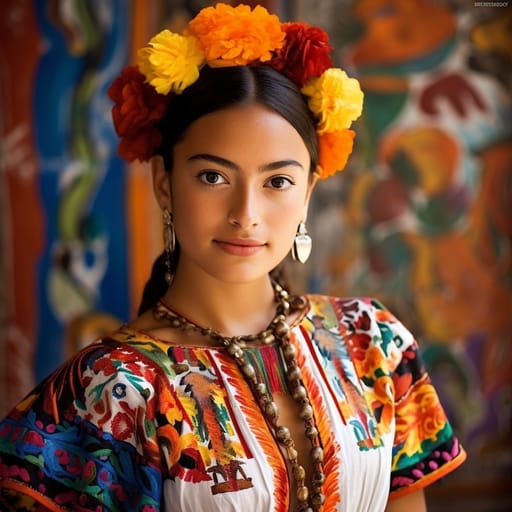
Otomi
same region (Central America)
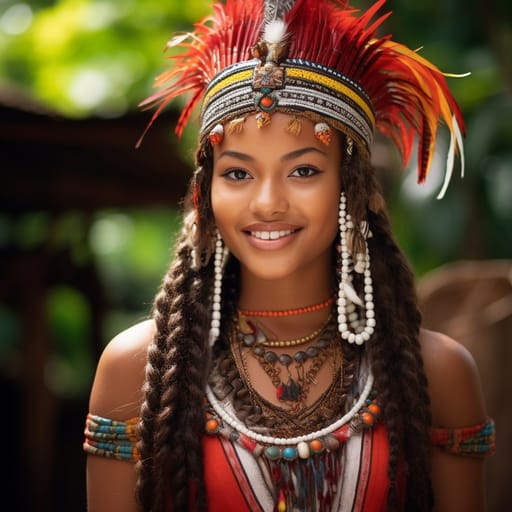
Kalinago
same region (Central America)
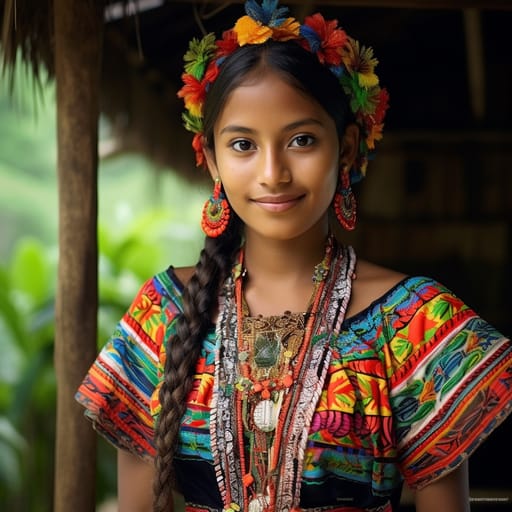
Miskito
same region (Central America)
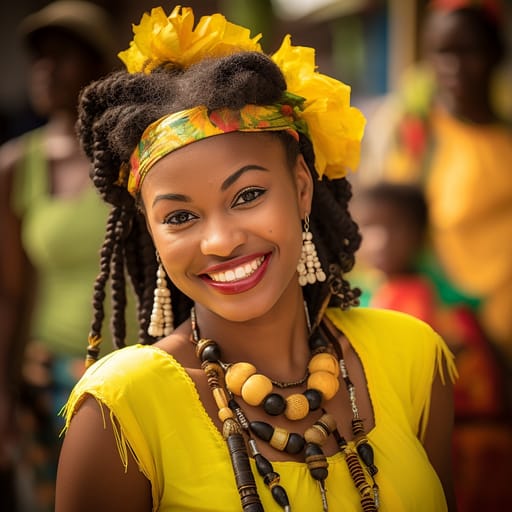
Garifuna
same region (Central America)
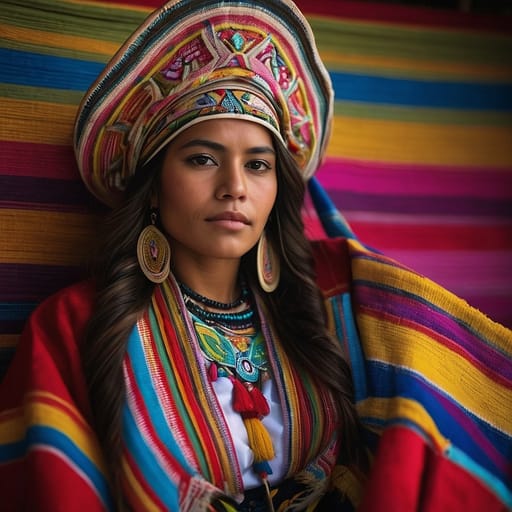
Lenca
same region (Central America)
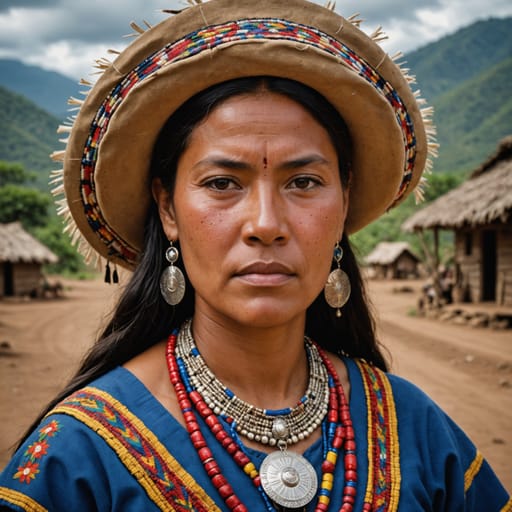
Pipil-Nahua
same region (Central America)
Tektitek
same region (Central America)
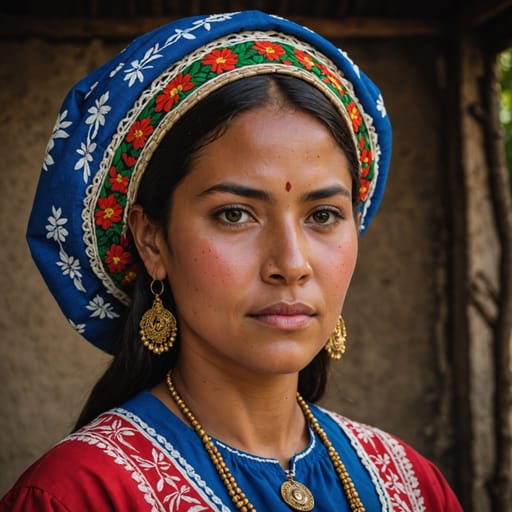
Lenca Salvadoran
same region (Central America)
Typical Belizean Creoles Phenotypes
Reference for AI generation: hair, eyes, skin, facial structure, build
Belizean Creoles Body & Anatomy Reference
Anatomy by feature, Mesoamerican Indigenous / Mestizo phenotype
Belizean Creoles Boobs & Breasts
The typical Belizean Creoles bust is medium-to-large cup, full, moderate-to-high projection, in line with the wider Mesoamerican Indigenous / Mestizo pattern. Areolas usually fall in the 32-46mm range, with medium-brown to dark-brown areolar pigmentation against the tan-to-medium-brown skin tone. Compared with the smaller East Asian bust, Belizean Creoles breasts sit forward and are generally full and projecting, classic Latina curvy bust profile. A faithful AI render of Belizean Creoles tits keeps that shape and areola size.
Belizean Creoles Ass & Hips
Butt shape among Belizean Creoles women: medium-to-full, high projection, classic Latina curvy hip profile, over wide iliac crests, full gluteal-femoral fat deposition. This follows Mesoamerican Indigenous / Mestizo ancestry and looks quite unlike the slim narrow-hip East Asian profile. An accurate Belizean Creoles ass in adult AI imagery keeps both the silhouette and the overall build (endomorph-to-mesomorph with strong hip-and-bust deposition) instead of a generic average.
Belizean Creoles Vagina & Pussy
Vulvar anatomy among Belizean Creoles women: medium-brown to dark-brown labial pigmentation, fuller labia minora. Pubic hair tends to be straight-to-wavy coarse dark texture, dense distribution, in the usual inverted-triangle pattern. Both follow Mesoamerican Indigenous / Mestizo pigmentation, which is why Belizean Creoles pussy renders should not fall back on a pale, sparse Western template.
Belizean Creoles Dicks & Penis
The Belizean Creoles cock profile, from Mesoamerican Indigenous / Mestizo anthropometric data: regional mean ~13cm erect; moderate girth; medium-brown shaft pigmentation. Pubic hair has a straight-to-wavy coarse dark texture and forms the usual inverted-V pattern. Whether Belizean Creoles men are circumcised follows religious and cultural practice rather than phenotype.
Belizean Creoles Body, Curves & Build
Build and curves among Belizean Creoles women follow the Mesoamerican Indigenous / Mestizo pattern: endomorph-to-mesomorph with strong hip-and-bust deposition, mean adult female BMI 26-29. Proportions matter as much as skin tone, so Belizean Creoles figures should keep their regional height and limb ratios.
Belizean Creoles Skin Tone & Hair Texture
The Belizean Creoles skin range is tan to medium-brown (Fitzpatrick III-V), and hair tends to be straight-to-wavy 1A-2B, dense dark-brown to black. That combination marks the Mesoamerican Indigenous / Mestizo phenotype, and skin tone is the trait AI generators most often get wrong for Belizean Creoles women.
Explore phenotype categories
Structured taxonomy with peer-reviewed scales · 22 anatomical categories
Erotic Poses & Sex Positions
From the pose catalog: 219 named positions with reference skeletons
Frequently asked questions about Belizean Creoles people
Where is the Belizean Creoles homeland?
The Belizean Creoles homeland is Belize, centered on Belize City and the villages of the Belize River Valley, with large diaspora communities in the United States, especially Los Angeles, New York and Chicago in Central America.
What language do Belizean Creoles people speak?
Belizean Creoles people primarily speak Belizean Kriol (English-based Atlantic creole) and English (Indo-European, Germanic); many also speak Spanish (Indo-European, Romance).
What religion do Belizean Creoles people practice?
The predominant religion among Belizean Creoles people is Christian: historically Anglican and Methodist, also Roman Catholic, with growing evangelical, Pentecostal and Seventh-day Adventist congregations.






Make your own Belizean Creoles images
Five a day, free, no credits to buy. The studio starts from this group's phenotype data, so you can set body type, pose and style and keep the traits accurate.
Start with Belizean Creoles