No portrait yet
Pame Erotic
Hill country of eastern San Luis Potosí, Mexico, with smaller communities in the Sierra Gorda of Querétaro; historically also parts of Guanajuato, Hidalgo and Tamaulipas.
Pame, Northern and Central varieties (Oto-Manguean, Pamean branch of Oto-Pamean); Spanish widely spoken
Roman Catholic, centered on village patron saint festivals, with older rites tied to rain and maize
Northern Pame and Central Pame; Southern Pame of Hidalgo is extinct. Pamean branch with Chichimeca Jonaz, within the wider Oto-Pamean family.
About Pame People
The Pame are among the few peoples of Mexico's old Chichimec frontier who got through the colonial centuries with their language still in daily use. They call themselves Xi'iuy. Most live in the hill country of eastern San Luis Potosí, where the dry central plateau drops toward the humid Huasteca. Their communities sit in and around Santa María Acapulco, Santa Catarina, Ciudad del Maíz, Alaquines, Rayón and Tamasopo, and a smaller number live in the Sierra Gorda of Querétaro. The land is steep and broken, and for centuries it did much of the work of keeping outsiders away.
Their language belongs to the Pamean branch of the Oto-Manguean family, alongside Chichimeca Jonaz, and is more distantly related to Otomí and Mazahua. Their nearest neighbors speak something else entirely: Huastec, a Mayan language, and Nahuatl. Northern and Central Pame have drifted far enough apart to count as separate languages, and a southern variety once spoken in Hidalgo has died out. Pame is tonal and, like most small Indigenous languages in Mexico, is losing ground to Spanish.
In the sixteenth century the Spanish pushed north toward the silver of Zacatecas. They lumped the Pame in with other peoples under the label Chichimeca and fought them for decades. Unlike some of their nomadic neighbors the Pame farmed, which made it easier to gather them into mission towns once the fighting died down. The decisive push came in the 1740s. José de Escandón's campaigns opened up the Sierra Gorda, and Franciscans built a chain of missions there. At Jalpan, Junípero Serra spent most of the 1750s among the Pame, years before he went to California.
Most Pame are Catholic, but their religion centers on the village more than the diocese: fiestas for the patron saint, the office holders who pay for them, processions, and older rites tied to rain and the maize cycle. The colonial church at Santa María Acapulco still has its palm-thatched roof and is the ceremonial center of the Central Pame. Daily life runs on maize and beans grown with rainfall alone, on weaving hats, mats and baskets from palm, and on seasonal paid work, including the sugarcane harvest in the lowlands and jobs in the cities.
Related ethnic groups
Groups that share Pame's homeland, region, language, or religious tradition. These are likely candidates for comparative phenotype reference.
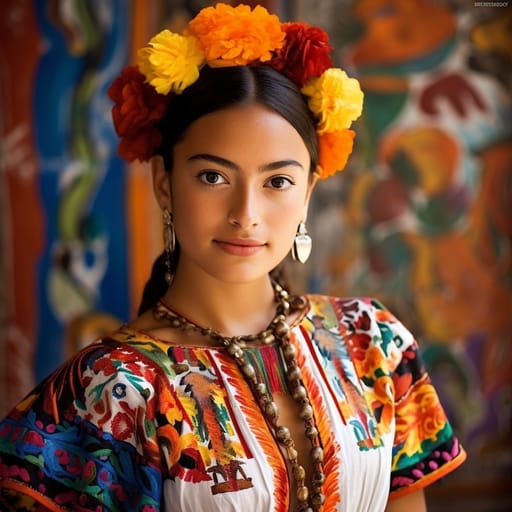
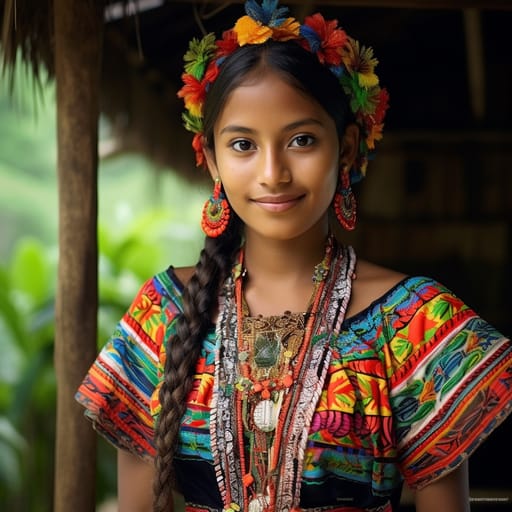
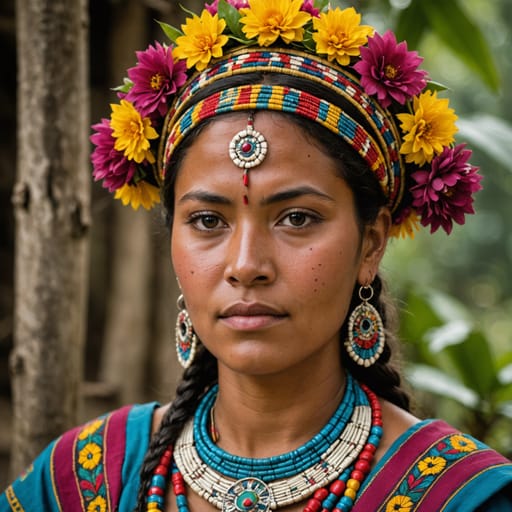
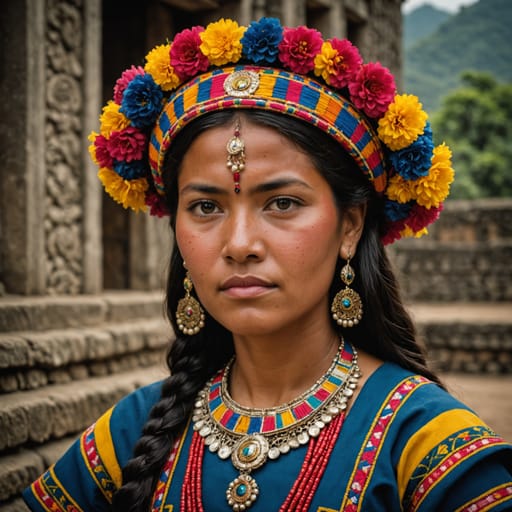
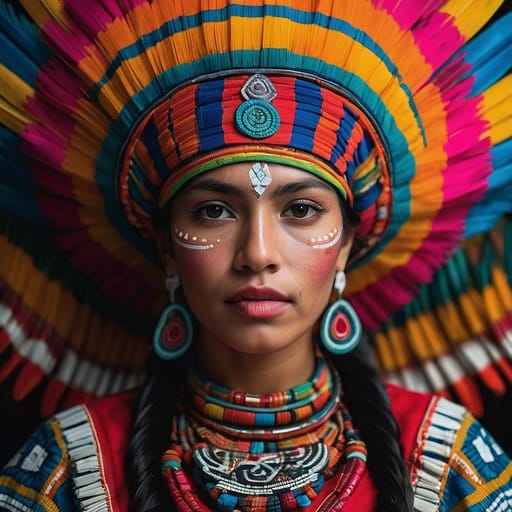
Typical Pame Phenotypes
Reference for AI generation: hair, eyes, skin, facial structure, build
Pame Body & Anatomy Reference
Per-feature anatomical profile for AI nude generation: Mesoamerican Indigenous / Mestizo phenotype
Pame Boobs & Breasts
Bust reference for Pame women: medium-to-large cup, full, moderate-to-high projection, which is typical of Mesoamerican Indigenous / Mestizo ancestry. Areolas measure about 32-46mm across, with medium-brown to dark-brown pigmentation. Body type (endomorph-to-mesomorph with strong hip-and-bust deposition) shapes the bust as well, so Pame tits are usually full and projecting, classic Latina curvy bust profile. In AI imagery, keep the forward-set shape rather than drifting toward the smaller East Asian bust.
Pame Ass & Hips
The Pame ass is typically medium-to-full, high projection, classic Latina curvy hip profile, which sets it apart from the slim narrow-hip East Asian profile. Underneath, the pelvis shows wide iliac crests, full gluteal-femoral fat deposition, part of the Mesoamerican Indigenous / Mestizo skeletal pattern. For Pame butt pics and AI renders, match that silhouette and the overall build (endomorph-to-mesomorph with strong hip-and-bust deposition).
Pame Vagina & Pussy
Pame pussy and vulvar anatomy presents medium-brown to dark-brown labial pigmentation, fuller labia minora, consistent with the Mesoamerican Indigenous / Mestizo phenotype's pigmentation pattern. Pame pubic hair is typically straight-to-wavy coarse dark texture, dense distribution, in the inverted-triangle pattern. For anatomically accurate Pame pussy renders the labial coloration should match the surrounding tan to medium-brown skin tone with a continuous gradient, and the hair should keep its straight-to-wavy coarse dark texture.
Pame Dicks & Penis
Pame dicks follow the Mesoamerican Indigenous / Mestizo reference data: regional mean ~13cm erect; moderate girth; medium-brown shaft pigmentation. Shaft color should track the tan to medium-brown skin tone with a smooth change toward the glans, and Pame pubic hair keeps its straight-to-wavy coarse dark texture.
Pame Body, Curves & Build
Pame body type and overall build presents as endomorph-to-mesomorph with strong hip-and-bust deposition, with mean adult female BMI 26-29: the characteristic Mesoamerican Indigenous / Mestizo habitus. Pame curves and proportions should keep the regional skeletal frame (height, shoulder-to-hip ratio, limb proportions) rather than a generic mesomorph default.
Pame Skin Tone & Hair Texture
Pame skin sits in the tan to medium-brown (Fitzpatrick III-V) band. Hair is typically straight-to-wavy 1A-2B, dense dark-brown to black, in keeping with the Mesoamerican Indigenous / Mestizo phenotype. In nude renders the skin should stay one even tone from face to body, and body, pubic and head hair should match.
Explore phenotype categories
Structured taxonomy with peer-reviewed scales · 22 anatomical categories
Erotic Poses & Sex Positions
From the pose catalog: 219 named positions with reference skeletons
Frequently asked questions about Pame people
Where is the Pame homeland?
The Pame homeland is Hill country of eastern San Luis Potosí, Mexico, with smaller communities in the Sierra Gorda of Querétaro; historically also parts of Guanajuato, Hidalgo and Tamaulipas. in Central America.
What language do Pame people speak?
Pame people primarily speak Pame, Northern and Central varieties (Oto-Manguean, Pamean branch of Oto-Pamean); Spanish widely spoken.
What religion do Pame people practice?
The predominant religion among Pame people is Roman Catholic, centered on village patron saint festivals, with older rites tied to rain and maize.






Make your own Pame images
Five a day, free, no credits to buy. The studio starts from this group's phenotype data, so you can set body type, pose and style and keep the traits accurate.
Start with Pame