Help us get this right
Does this portrait look right for Sundanese?
Nobody has judged this one yet. You would be the first.
Sundanese Erotic
Java (Indonesia)
Islam / Sunni Islam
Bantenese, Baduy, Cirebonese
About Sundanese People
The Sundanese are the second-largest people of Indonesia, roughly forty million strong, and they hold the western third of Java — the highland end, where the island narrows and the volcanoes crowd close together. That geography matters. While the Javanese to the east built their classical civilization on flat rice plains and royal courts, the Sundanese grew up in cooler uplands of terraced sawah, tea gardens, and forested ridges, and the cultural temperament that emerged is correspondingly different: less court-formal, more village-rooted, quicker to laugh, and famously attached to the land itself. Tanah Sunda — the Sunda land — is not a slogan but a working idea, the sense that the people and the volcanic soil are part of the same proposition.
Their language belongs to the Austronesian family, a cousin of Javanese and Malay rather than a dialect of either, and it carries its own elaborate system of speech levels — different vocabularies for addressing elders, peers, and intimates — which Sundanese speakers navigate as second nature and outsiders rarely master. Islam arrived in the sixteenth century through the coastal sultanates of Banten and Cirebon, and today nearly all Sundanese are Sunni Muslims, but the texture of that Islam is shaped by older Hindu-Buddhist and animist layers that never fully dissolved: rice rituals tied to the goddess Nyi Pohaci, reverence for sacred groves and springs, and a continuing belief that the visible landscape has an unseen counterpart that deserves respect.
The internal branches reflect this layered history. The Bantenese in the far west carry the legacy of a powerful trading sultanate and a tradition of Islamic scholarship and martial arts. The Cirebonese on the north coast sit at the cultural seam with the Javanese and speak a creolized variety that borrows from both. And the Baduy — perhaps a thousand people in the Kendeng hills — refused the conversion entirely; they keep an older Sunda Wiwitan faith, walk barefoot, decline electricity and motor vehicles, and have negotiated a quiet exemption from modern Indonesia that has held for four centuries. Beyond these branches, the wider Sundanese cultural inheritance is audible in kacapi suling — the bamboo-flute and zither music of the highlands — in wayang golek rod puppetry, in pencak silat, and in a kitchen built around fresh raw vegetables and sambal that stands apart from anything else in the archipelago.
Related ethnic groups
Groups that share Sundanese's homeland, region, language, or religious tradition. These are likely candidates for comparative phenotype reference.
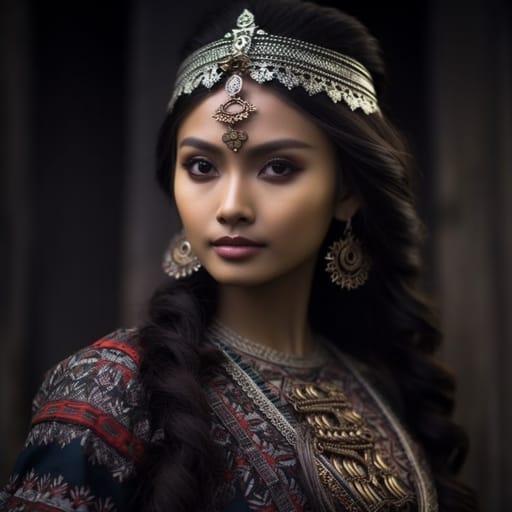
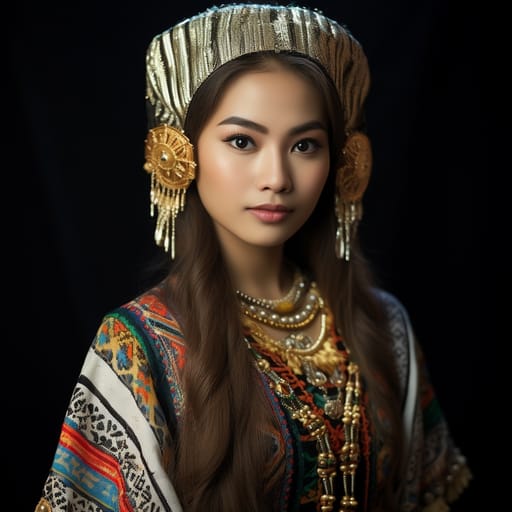
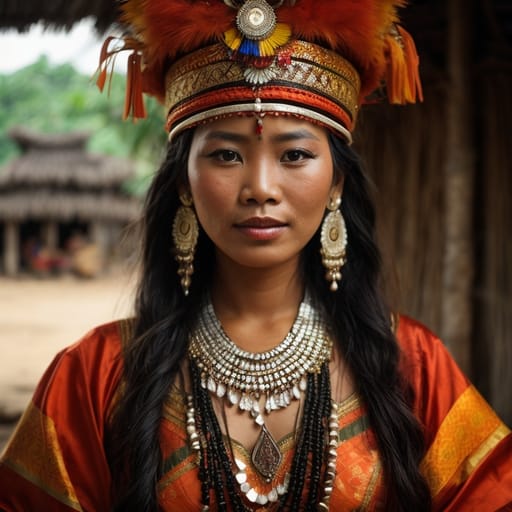
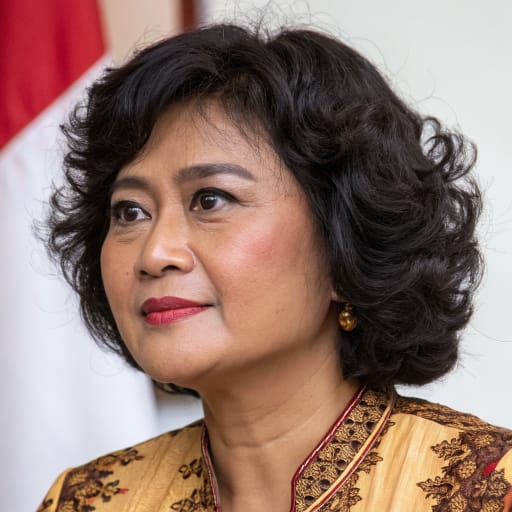
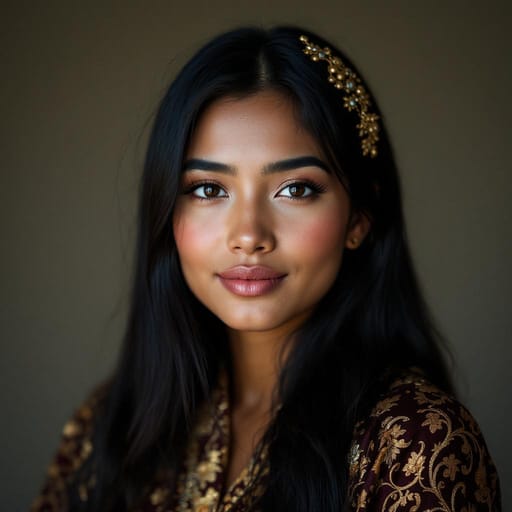
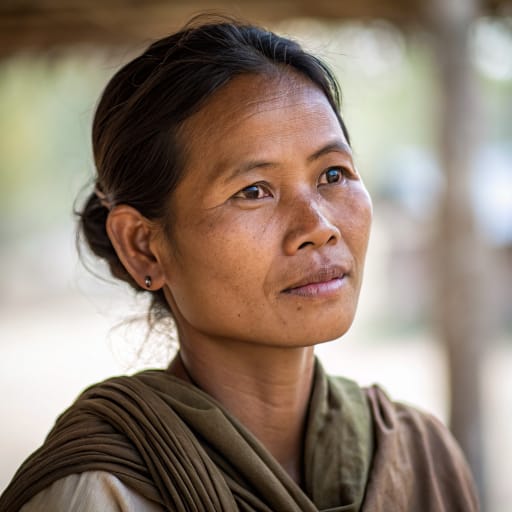
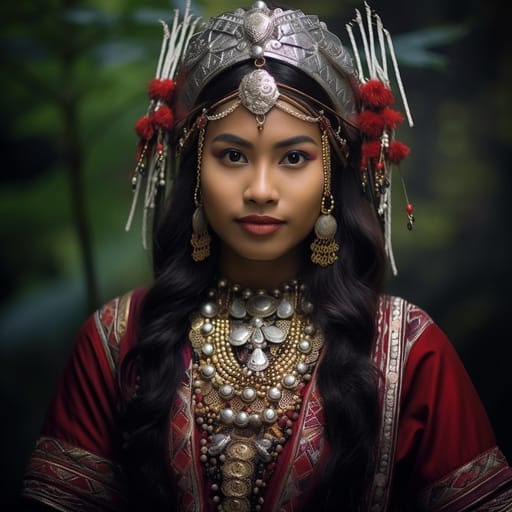
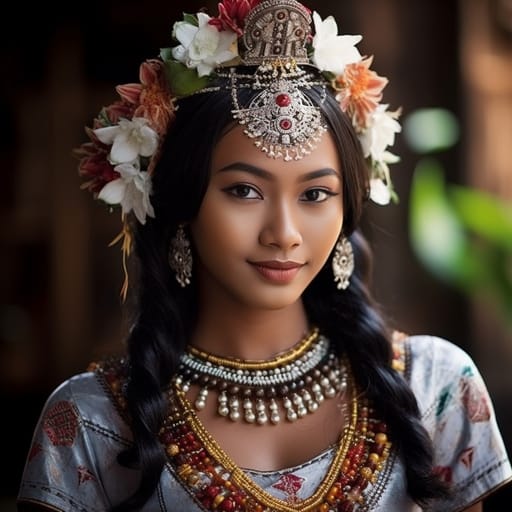
Geographic Distribution: Sundanese populations across 1 country
Each row is ranked by the group's share of that country's population, with the source citation drawn from published census and demographic surveys. Click through for the full per-country phenotype profile.
| Country | Share | Source |
|---|---|---|
| Indonesia | 15.5% | Indonesia 2010-2020 Census, Sundanese (~15.5%, ~37M+); concentrated in West Java and Banten. Distinct from Javanese by language (Sundanese is part of the Western Malayo-Polynesian / Austronesian family, distinct from Javanese in the same broader family) and cultural traditions |
Typical Sundanese Phenotypes
Reference for AI generation: hair, eyes, skin, facial structure, build
The Sundanese phenotype sits within the broader Western Indonesian Austronesian template but holds its own recognizable signature, distinct from neighboring Javanese and Malay populations. Hair is uniformly straight to gently wavy, jet black to very dark brown, with a fine-to-medium shaft and high natural sheen. Premature graying is uncommon; coily or kinky textures essentially do not occur. The hairline tends to sit low and even, framing a relatively rounded forehead.
Eyes run dark brown to near-black, almond-shaped, with a partial epicanthic fold that is softer and less pronounced than in mainland East Asian groups — many Sundanese show only an inner-corner fold or a faint mongolian crease, giving the eye a more open, rounded look. Lashes are typically short and straight. Brows are dark and moderately arched.
Skin sits in the Fitzpatrick III–IV range — a warm light-tan to medium golden-brown with yellow-olive undertones rather than the redder undertones common in Malay populations further west. Sundanese are often described, even within Indonesia, as fairer-skinned than other archipelago groups, a perception reinforced by entertainers like Raffi Ahmad and Isyana Sarasvati, though tone deepens noticeably with sun exposure in agricultural and coastal communities.
Facial structure is the giveaway. Faces tend to be soft-edged and oval-to-round, with full cheeks, a gently tapered jaw, and a small chin. Noses are short with a low-to-medium bridge and moderately wide alae — narrower than typical Malay noses but flatter than Javanese. Lips are medium-full and well-defined, with a clear cupid's bow. Cheekbones are present but not sharply projecting.
Build runs short and slight: adult male stature commonly 162–168 cm, female 150–157 cm, with light bone structure and a tendency toward lean, wiry composition — visible in the long roster of Sundanese footballers and badminton players like Taufik Hidayat. The interior Baduy retain the most homogeneous expression of these traits, while coastal Cirebonese show subtle Javanese and Chinese-Peranakan admixture, and Bantenese trend toward slightly darker skin and rougher facial structure from Banten's older Sumatran and Arab trade contact.
Sundanese Body & Anatomy Reference
Per-feature anatomical profile for AI nude generation: Southeast Asian Austronesian / Austroasiatic phenotype
Sundanese Boobs & Breasts
Sundanese tits and boobs run small-to-medium cup, modest projection, the classic Southeast Asian Austronesian / Austroasiatic bust profile. Sundanese nipples and areolas show medium-brown to dark-brown areolar pigmentation against the tan-to-medium-brown skin tone, with areolar diameter typically in the 26-38mm range and forward-set positioning rather than the fuller South Asian or Polynesian bust. Sundanese breasts trend firm, modest projection, a function of the ectomorph, petite frame body habitus and the mean adult female BMI 20-23. For anatomically accurate AI-generated Sundanese nudes the render preserves the small-to-medium cup, modest projection shape, 26-38mm areolas with medium-brown to dark-brown pigmentation, and the torso proportions of the Southeast Asian Austronesian / Austroasiatic phenotype.
Sundanese Ass & Hips
Sundanese hips and butt usually read as small-to-medium, modest projection, narrower hip profile. The skeletal base is narrow-to-medium iliac crests, the Southeast Asian Austronesian / Austroasiatic pattern. Set against the fuller glutes of the Pacific Islander phenotype, the difference is easy to see, and the hip-to-waist ratio is often what identifies Sundanese women in photos.
Sundanese Vagina & Pussy
Expect medium-brown to dark-brown labial pigmentation on Sundanese women, in keeping with Southeast Asian Austronesian / Austroasiatic ancestry. The pubic hair is straight-to-wavy fine-to-medium texture. Coloring should run evenly from the tan to medium-brown skin of the thighs to the labia, and Sundanese nude imagery should keep the hair's straight-to-wavy fine-to-medium texture.
Sundanese Dicks & Penis
Sundanese dick and penile anatomy in adult AI generation should anchor on the regional reference data: regional mean ~11cm erect, moderate girth, and medium-brown shaft pigmentation. The Sundanese cock profile reflects the Southeast Asian Austronesian / Austroasiatic population's anthropometric measurements. The shaft pigmentation should track the surrounding tan to medium-brown skin tone, and the pubic hair should keep its straight-to-wavy fine-to-medium texture in the typical inverted-V escutcheon.
Sundanese Body, Curves & Build
Sundanese body type: ectomorph, petite frame, with mean adult female BMI 20-23. This is the typical Southeast Asian Austronesian / Austroasiatic build. Height range, shoulder-to-hip ratio and fat distribution all follow from it, which is what an accurate Sundanese nude body should show.
Sundanese Skin Tone & Hair Texture
Sundanese skin tone falls in the tan to medium-brown (Fitzpatrick III-V) band, the surface signal most often miscalibrated by generic AI nude generators. Sundanese hair texture is typically straight-to-wavy 1A-2A, dark-brown to black, characteristic of the Southeast Asian Austronesian / Austroasiatic phenotype. In Sundanese nude renders the skin should hold that band consistently across the body.
Data depth
0/100Coverage of image-grounded phenotype observations · drives AI generation diversity
- Sample size
- 0/40· 0 images
- Image quality
- 0/30· 0% high
- Confidence
- 0/20
- Source diversity
- 0/10
- ·No image observations yet
Explore phenotype categories
Structured taxonomy with peer-reviewed scales · 22 anatomical categories
Notable Sundanese People
75 reference figures, sourced from Wikipedia
- Dewi Sartika, Indonesian female activist in the Dutch colonial era, Indonesian national hero
- Oto Iskandar di Nata, Indonesian nationalist activist in the Dutch colonial era, Indonesian nationa…
- Erwin Gutawa, composer (half-Malay)
- Addie MS, composer
- Asep Sunandar Sunarya, Sundanese wayang golek (rod puppet) master
- Abdul Aziz Lutfi Akbar, footballer
- Asep Berlian, footballer
- Atep Rizal, footballer
- Cahya Supriadi, footballer
- Cecep Supriatna, footballer
- Dedi Kusnandar, footballer
- Dicky Indrayana, footballer
- Djadjang Nurdjaman, footballer
- Eka Ramdani, footballer
- Febri Hariyadi, footballer
- Henhen Herdiana, footballer
- Jajang Mulyana, footballer
- Jajang Sukmara, footballer
- Ricky Subagja, badminton player
- Robby Darwis, footballer
- Ryan Kurnia, footballer
- Saepulloh Maulana, footballer
- Shahar Ginanjar, footballer
- Taufik Hidayat, badminton player, 2004 Olympic gold medalist
- Wawan Hendrawan, footballer
- Yandi Sofyan, footballer
- Zaenal Arif, footballer
- Ajip Rosidi, Indonesian poet and short story writer
- Betti Alisjahbana, former CEO of IBM Indonesia
- Ali Alatas, former minister of foreign affairs of Indonesia (half-Arab)
- Hassan Wirajuda, former minister of foreign affairs of Indonesia
- Marty Natalegawa, former minister of foreign affairs of Indonesia
- Mochtar Kusumaatmadja, former minister of foreign affairs of Indonesia
- Adhisty Zara, actress, singer, ex member of JKT48
- Kevin Liliana, actress, model, Winner of Miss International 2017
- Raffi Ahmad, actor, presenter
- Rianti Cartwright, actress, model, presenter and VJ (half- Welsh)
- Elvy Sukaesih, Dangdut singer
- Evie Tamala, Dangdut singer
- Melly Goeslaw, singer-songwriter (half Mollucans)
- Gita Gutawa, soprano singer (one quarter Malays)
- Happy Salma, actress, writer, model; became a princess and member of the Lordship of Ubud …
- Ikke Nurjanah, actress, singer
- Isyana Sarasvati, singer, actress
- Jamie Aditya, TV host, actor, entertainer (half-Australian)
- Jojon, comedian
- Ebet Kadarusman, radio and TV host, talk show entertainer
- Kamidia Radisti, presenter, Miss Indonesia World 2007
- Asyifa Latief, presenter. Miss Indonesia World 2010 (half-Arabs)
- Nining Meida, Sundanese campursari singer
- Nia Ramadhani, actress (half-Dutch)
- Rhoma Irama, Dangdut singer, actor
- Harry Roesli, rock singer, musician
- Rossa, pop and R&B singer
- Dira Sugandi, jazz and soul singer
- Sule, comedian
- Nia Dinata, film director
- Armida Alisjahbana, Indonesian minister
- Amirmachmud, chairman of the People's Consultative Assembly
- Agum Gumelar, former Indonesian government minister
- Ahmad Heryawan, former governor of West Java
- Dedi Mulyadi, governor of West Java
- Ridwan Kamil, former governor of West Java
- Ginandjar Kartasasmita, former Indonesian government minister
- Ma'ruf Amin, Vice President
- Djuanda Kartawidjaja, 11th Prime Minister of Indonesia
- Dada Rosada, former mayor of Bandung
- Ali Sadikin, former governor of Jakarta
- Suharna Surapranata, Indonesian minister
- Soekaesih, colonial era activist and political prisoner
- Ateng Wahyudi, former mayor of Bandung
- Umar Wirahadikusumah, former Indonesian vice president
- Rachmat Witoelar, former Indonesian government minister
- Willy Soemita, Deputy Vice President of Suriname
- Iti Octavia Jayabaya, regent of Pandeglang Regency
Erotic Poses & Sex Positions
From the pose catalog: 219 named positions with reference skeletons
Frequently asked questions about Sundanese people
Where is the Sundanese homeland?
The Sundanese homeland is Java (Indonesia) in Southeast Asia.
What countries do Sundanese people live in?
Sundanese populations are documented across 1 country: Indonesia.
What language do Sundanese people speak?
Sundanese people primarily speak Austronesian / Sundanese.
What religion do Sundanese people practice?
The predominant religion among Sundanese people is Islam / Sunni Islam.






Make your own Sundanese images
Five a day, free, no credits to buy. The studio starts from this group's phenotype data, so you can set body type, pose and style and keep the traits accurate.
Start with Sundanese