Help us get this right
Does this portrait look right for Sindhis?
One tap. It takes a second and it is recorded.
2 say it looks right, 0 say it looks off.
Sindhis Erotic
Also known as: Sindhi
Sindh (Pakistan)
Islam / Sunni Islam, Hinduism
Jat, Memon, Arain, Indian Sindhis
About Sindhis People
Sindhis are the people of the Indus — specifically the lower Indus, where the river broadens, slows, and finally loses itself in the marshes and tidal creeks above the Arabian Sea. Their homeland, Sindh, is one of those places where geography did most of the cultural work: a long, irrigated floodplain bordered by the Thar Desert to the east and the Kirthar range to the west, with Karachi anchoring the southern coast. The Indus Valley civilization rose here four and a half millennia ago, and Sindhis tend to carry that depth of tenure with quiet matter-of-factness rather than chest-thumping. They have lived in the same river bend for a very long time.
The Sindhi language is Indo-Aryan, a cousin to Punjabi and Gujarati, but it sounds notably different — heavy with implosive consonants that most neighboring tongues don't have, and written in an extended Perso-Arabic script in Pakistan and in Devanagari among Indian Sindhis. The 1947 Partition cleaved the community in two: most Hindu Sindhis left for India, settling in Mumbai, Ulhasnagar, and Ahmedabad, where they kept the language alive without a territory to anchor it. The Muslim majority remained in Sindh proper, where Sufi Islam — particularly the shrines and poetry of Shah Abdul Latif Bhittai and Lal Shahbaz Qalandar — sits closer to the surface of daily life than orthodox jurisprudence does. The annual urs at Sehwan still draws hundreds of thousands of pilgrims who dance the dhamaal at dusk.
The branches reflect different social histories more than different ethnicities. Jats are the agricultural and pastoralist backbone of the interior. Memons are a mercantile community, originally Hindu Lohanas who converted in the fifteenth century and went on to dominate trade routes from Karachi to East Africa. Arains are cultivators, more numerous in Punjab but present in Sindh's northern districts. Indian Sindhis — the diaspora created by Partition — became one of the most commercially successful displaced communities in modern history, with networks running through Hong Kong, Lagos, the Canary Islands, and Panama.
What unites them, beyond language, is a strong attachment to Sindhiyat — a sense of regional identity that predates and often quietly resists the religious nationalism that has defined the subcontinent since 1947. A Sindhi feudal landlord, a Karachi Memon trader, and a Mumbai businesswoman speaking the same tongue across a partition line all generally agree they are first Sindhi.
Related ethnic groups
Groups that share Sindhis's homeland, region, language, or religious tradition. These are likely candidates for comparative phenotype reference.
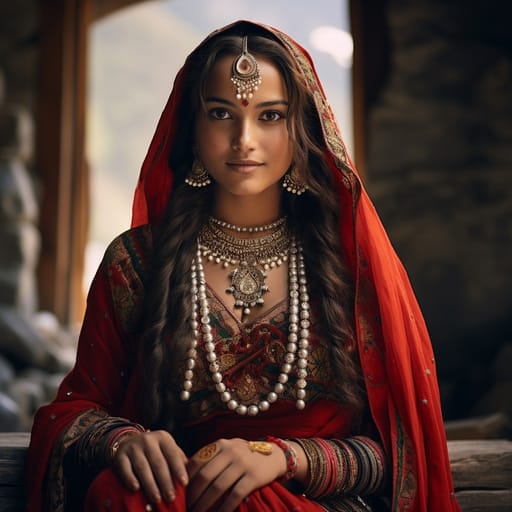
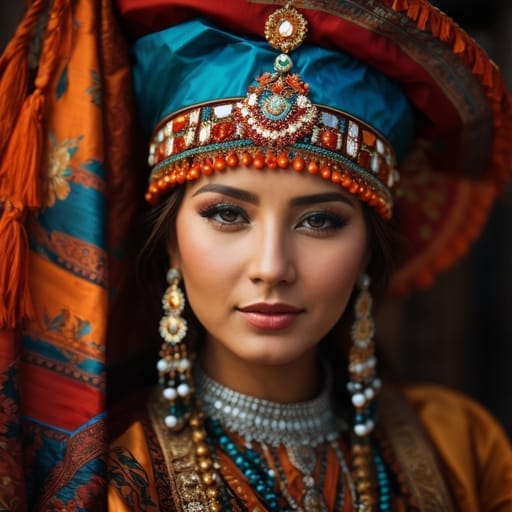
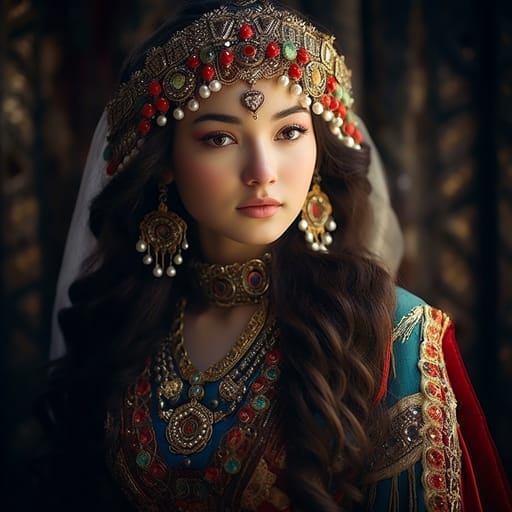
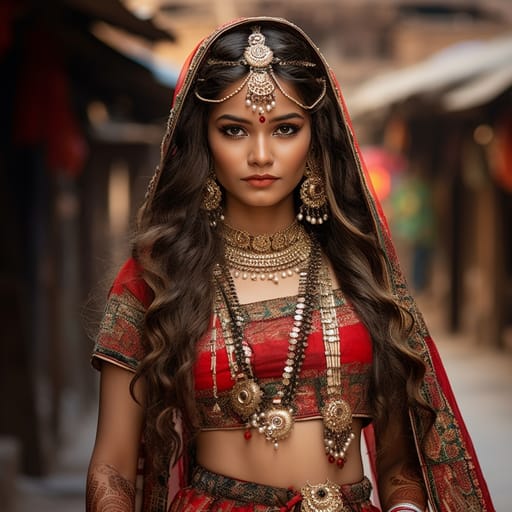
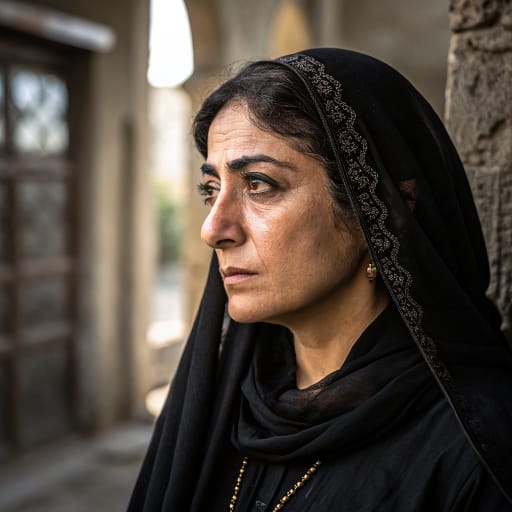
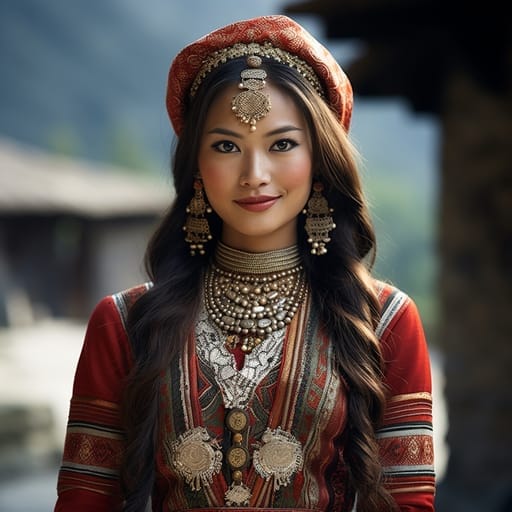
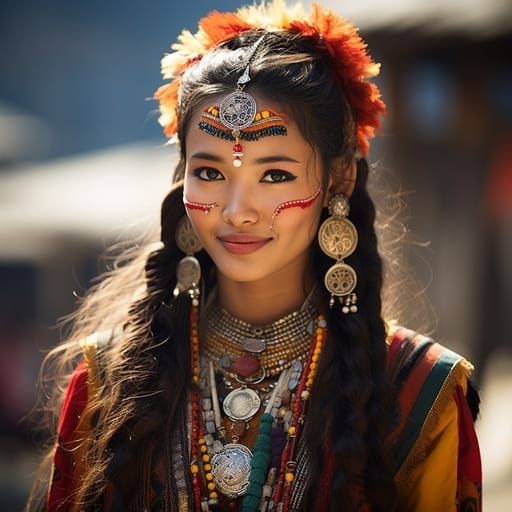
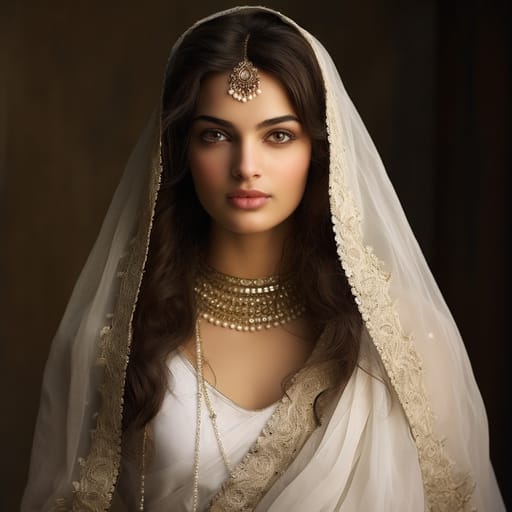
Typical Sindhis Phenotypes
Reference for AI generation: hair, eyes, skin, facial structure, build
Sindhis sit at a phenotypic crossroads — Indo-Aryan core stock with measurable Iranian, Baloch, and Arab admixture along the lower Indus, plus a Dravidian undercurrent that distinguishes them from Punjabis to the north. The result is a population that reads broadly South Asian but trends slightly warmer-toned, sharper-featured, and less uniform than neighboring groups.
Hair is almost universally black or very dark brown, with brown highlights surfacing under sun. Texture runs straight to loosely wavy in most of the population, with tight waves and soft curls more common among coastal and Memon lineages tied to Arab maritime trade. Heavy beard growth and dense brow hair are typical in men; body hair is moderate to heavy. Premature graying at the temples is a recognized regional pattern.
Eyes are predominantly dark brown to near-black, almond-shaped, often deep-set under defined brow ridges. Hazel and light-brown eyes turn up in roughly one in fifteen Sindhis, concentrated in interior districts with older Iranian and Baloch contact. No epicanthic fold. Lashes are long and dark; lid lines are crisp rather than hooded.
Skin spans Fitzpatrick III to V, centered on warm wheatish IV with golden-olive undertones. Rural Jats and agrarian sub-groups skew darker from sun exposure; urban Memon and merchant-caste lineages often present lighter, with cooler beige undertones. The signature Sindhi face is long rather than round — narrower than the Punjabi norm, with high cheekbones, a straight or slightly aquiline nose with a defined bridge and moderate alar width, and lips that are medium-full with a clearly drawn vermilion border. Jawlines are typically defined; chins are firm rather than receding.
Build is medium-tall by South Asian standards — men commonly 5'7" to 5'10", women 5'2" to 5'5" — lean to wiry in rural Sindh, fuller and shorter-limbed in urban Memon populations. Indian Sindhis (post-Partition Hindu diaspora) skew lighter-skinned and more gracile on average than their Pakistani Muslim counterparts, reflecting both selection at migration and merchant-class endogamy.
Sindhis Body & Anatomy Reference
Per-feature anatomical profile for AI nude generation: Indo-Aryan / Dravidian South Asian phenotype
Sindhis Boobs & Breasts
Sindhis boobs follow the Indo-Aryan / Dravidian South Asian profile: medium-to-large cup, moderate-to-full projection. Areolar diameter is usually 32-46mm, and the coloring is medium-brown to dark-brown areolar pigmentation against the wheatish-to-brown skin tone. Breast shape tracks body composition (endomorph-to-mesomorph with fuller hip deposition, mean adult female BMI 22-25), so Sindhis breasts tend to be full and soft, generally fuller than the East Asian norm. Expect a forward-set shape, not the smaller East Asian bust profile.
Sindhis Ass & Hips
Sindhis ass and hip morphology presents as medium-to-full, moderate-to-high projection, classic curvy hip profile, distinctly different from the slim hip profile of East Asian women. The Sindhis pelvic profile shows medium-to-wide iliac crests, full gluteal-femoral fat distribution, anchored in the Indo-Aryan / Dravidian South Asian skeletal pattern. Sindhis butt shots in adult AI imagery should render the medium-to-full, moderate-to-high projection, classic curvy hip profile silhouette with the overall build (endomorph-to-mesomorph with fuller hip deposition) and the fat distribution typical of the Indo-Aryan / Dravidian South Asian phenotype.
Sindhis Vagina & Pussy
Sindhis pussy anatomy typically shows medium-brown to dark-brown labial pigmentation, fuller labia minora projection. Pubic hair is usually straight-to-wavy coarse texture, dense distribution. In AI-generated Sindhis nudes, labial color should blend into the wheatish to brown skin with a gradual transition, and the hair should keep its straight-to-wavy coarse texture.
Sindhis Dicks & Penis
Penis reference for Sindhis men: regional mean ~13cm erect, moderate girth. Coloring: medium-brown shaft pigmentation. An accurate Sindhis cock in AI imagery matches the surrounding wheatish to brown skin rather than a generic porn default. Circumcision depends on religion and custom, not ancestry.
Sindhis Body, Curves & Build
The Sindhis figure is generally endomorph-to-mesomorph with fuller hip deposition, with mean adult female BMI 22-25, characteristic of Indo-Aryan / Dravidian South Asian ancestry. AI image tools tend to flatten regional body types into a few stock shapes; here the Sindhis build is kept as its own reference.
Sindhis Skin Tone & Hair Texture
Skin: wheatish to brown (Fitzpatrick III-V). Hair: straight-to-wavy 1A-2B, dense, dark-brown to black. Both are typical of Indo-Aryan / Dravidian South Asian ancestry. The most common mistake in AI nudes of Sindhis women is a body rendered lighter than the face.
Data depth
0/100Coverage of image-grounded phenotype observations · drives AI generation diversity
- Sample size
- 0/40· 0 images
- Image quality
- 0/30· 0% high
- Confidence
- 0/20
- Source diversity
- 0/10
- ·No image observations yet
Explore phenotype categories
Structured taxonomy with peer-reviewed scales · 22 anatomical categories
Notable Sindhis People
1 reference figure, sourced from Wikipedia
- Makhdoom Lutufullah, AKA Makhdoom Sarwar Nooh
Erotic Poses & Sex Positions
From the pose catalog: 219 named positions with reference skeletons
Frequently asked questions about Sindhis people
Where is the Sindhis homeland?
The Sindhis homeland is Sindh (Pakistan) in Southern Asia.
What language do Sindhis people speak?
Sindhis people primarily speak Indo-European / Indo-Aryan / Sindhi.
What religion do Sindhis people practice?
The predominant religion among Sindhis people is Islam / Sunni Islam, Hinduism.
What does a typical Sindhis woman look like?
Sindhi women typically have black or very dark brown hair, straight to loosely wavy, and dark brown almond-shaped eyes with long lashes, with hazel or light brown eyes in about one in fifteen. Skin spans Fitzpatrick III to V, centered on a warm wheatish IV with golden-olive undertones. Faces are long rather than round, with high cheekbones, a straight or slightly aquiline nose and medium-full lips, and women commonly stand 5'2" to 5'5".
What are other names for Sindhis people?
Sindhis people are also known as Sindhi.






Make your own Sindhis images
Five a day, free, no credits to buy. The studio starts from this group's phenotype data, so you can set body type, pose and style and keep the traits accurate.
Start with Sindhis