Help us get this right
Does this portrait look right for Siberian Tatars?
Nobody has judged this one yet. You would be the first.
Siberian Tatars Erotic
Tyumen, Omsk and Novosibirsk Oblasts, Western Siberia, Russia
Sunni Islam (Hanafi)
Tobol-Irtysh, Baraba and Tomsk Tatar groupings
About Siberian Tatars People
The Siberian Tatars are a Turkic-speaking, predominantly Muslim people of Western Siberia, Russia, living mainly in Tyumen, Omsk, Novosibirsk and Tomsk Oblasts along the Tobol, Irtysh and Ob rivers. They are the indigenous Turkic population of the region, historically associated with the Khanate of Sibir, and today number on the order of one to two hundred thousand, though many are officially counted together with Volga Tatars. Their language, Siberian Tatar, belongs to the Kipchak branch of Turkic and is distinct from, though related to, Volga Tatar. Whether they form a distinct people or a regional branch of the wider Tatar nation remains debated among scholars and communities.
Society and subsistence
Siberian Tatars have traditionally combined farming, cattle raising, fishing, hunting and trade, living in villages of timber houses across the forest-steppe and river valleys. Long positioned on caravan and river routes between Central Asia, the Urals and Siberia, many were also merchants and craftsmen. They are overwhelmingly Sunni Muslims of the Hanafi school, with mosques and Islamic learning long central to community life, alongside customary practices and pre-Islamic survivals. Extended patrilineal families and village communities structured social organization, and the subgroups are commonly divided into Tobol-Irtysh, Baraba and Tomsk Tatars. The Khanate of Sibir, centered on Isker near modern Tobolsk, was overthrown by Yermak's Cossacks in the late sixteenth century, bringing the region under Russian control.
Appearance and adornment
Siberian Tatars display a range of appearances blending Turkic, Uralic and Central Asian features, generally with dark hair, brown eyes and moderately broad faces, and both lighter and more strongly North Asian looks occur. Traditional dress reflects Muslim custom and a cold climate: for men, embroidered skullcaps, long coats and boots; for women, headscarves or ornamented caps, long dresses, jewelry and coin ornaments. Everyday clothing today is modern Russian and urban, with festival and religious dress worn for holidays and observances.
Related ethnic groups
Groups that share Siberian Tatars's homeland, region, language, or religious tradition. These are likely candidates for comparative phenotype reference.
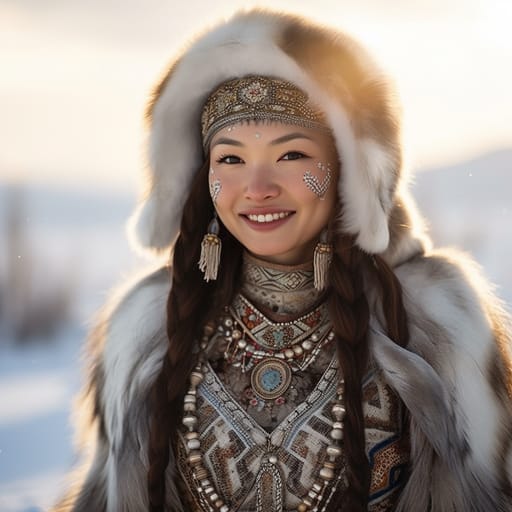
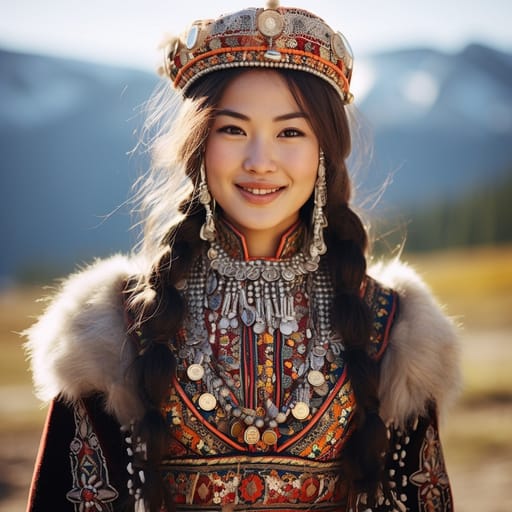
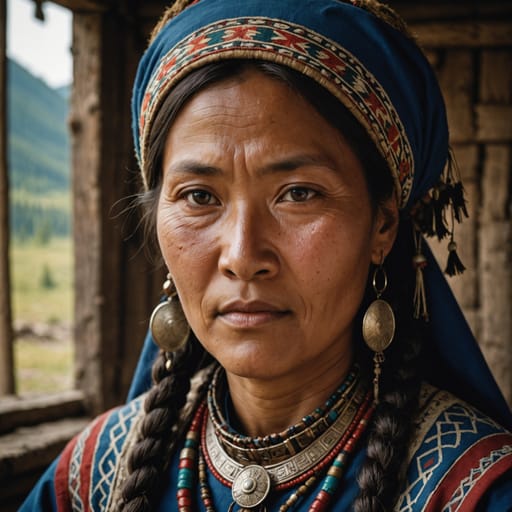
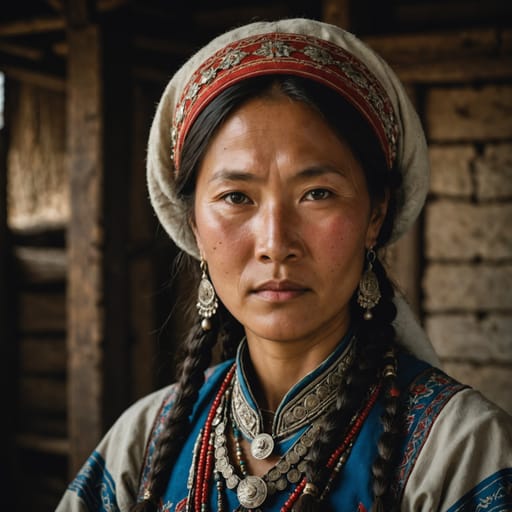
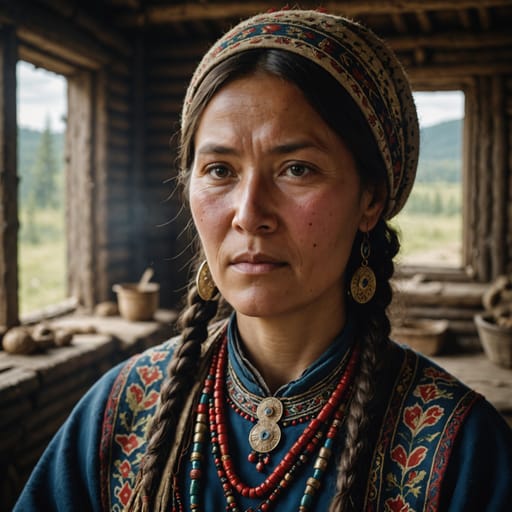
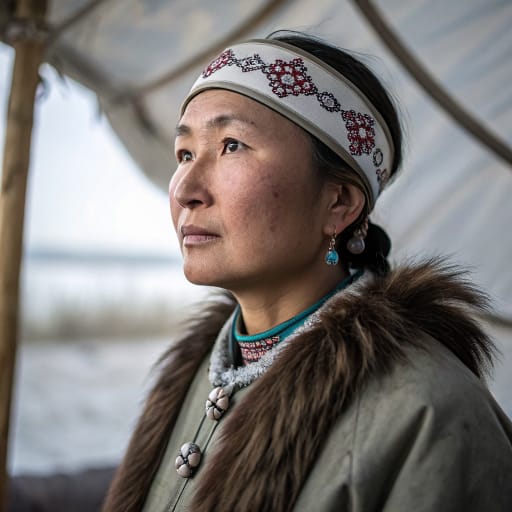
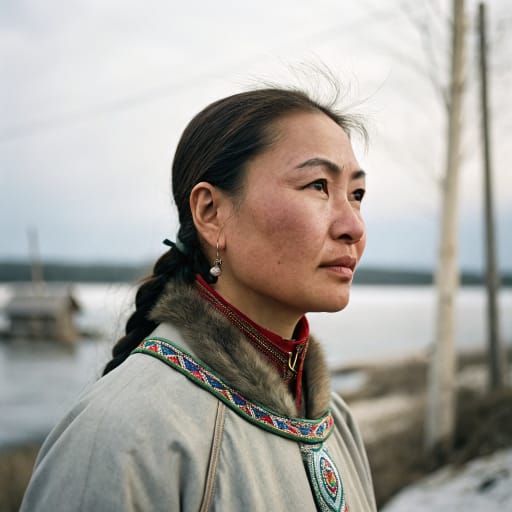
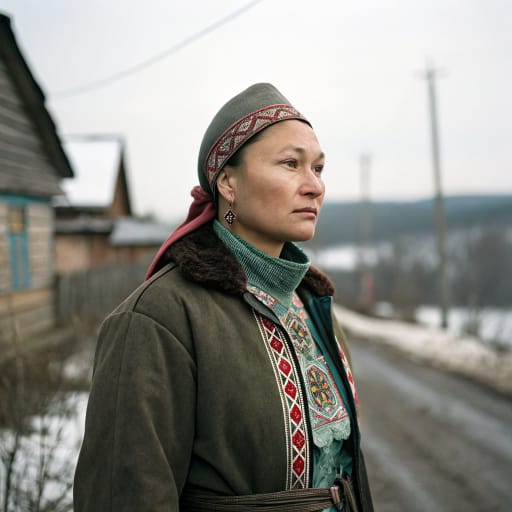
Typical Siberian Tatars Phenotypes
Reference for AI generation: hair, eyes, skin, facial structure, build
Explore phenotype categories
Structured taxonomy with peer-reviewed scales · 22 anatomical categories
Erotic Poses & Sex Positions
From the pose catalog: 219 named positions with reference skeletons
Frequently asked questions about Siberian Tatars people
Where is the Siberian Tatars homeland?
The Siberian Tatars homeland is Tyumen, Omsk and Novosibirsk Oblasts, Western Siberia, Russia in Northern Asia.
What language do Siberian Tatars people speak?
Siberian Tatars people primarily speak Siberian Tatar (Turkic, Kipchak).
What religion do Siberian Tatars people practice?
The predominant religion among Siberian Tatars people is Sunni Islam (Hanafi).






Make your own Siberian Tatars images
Five a day, free, no credits to buy. The studio starts from this group's phenotype data, so you can set body type, pose and style and keep the traits accurate.
Start with Siberian Tatars