No portrait yet
Rajputs Erotic
Rajasthan and the plains and hills of northern and western India (Uttar Pradesh, Bihar, Gujarat, Madhya Pradesh, Himachal Pradesh, Haryana, Jammu); Punjab and Sindh in Pakistan; parts of Nepal.
No single language: Rajasthani languages such as Marwari and Mewari, Hindi, Awadhi, Bhojpuri, Gujarati, Punjabi, Sindhi, Dogri and other Pahari languages, Nepali (all Indo-Aryan, Indo-European).
Predominantly Hindu, with strong clan goddess (kuldevi) worship; large Muslim Rajput communities, mainly in Pakistan; some Sikhs.
Three lineage divisions (Suryavanshi, Chandravanshi, Agnivanshi) spanning many clans including Sisodia, Rathore, Kachwaha, Chauhan, Bhati, Parmar, Solanki, Tomar, Jadeja and Bundela; regional groupings include Rajasthani, Purbiya, Pahari and Gujarati Rajp
About Rajputs People
Ask what makes someone a Rajput and the answer is a pedigree, not a place. The name comes from Sanskrit rajaputra, son of a king, and it is carried by a web of patrilineal clans across northern and western India, Pakistan and the Nepali hills who trace descent through one of three mythic lines: the Suryavanshi from the sun, the Chandravanshi from the moon, and the Agnivanshi born of a fire pit on Mount Abu. Rajasthan is the heartland, its name literally the land of kings, but Rajputs are thick on the ground in Uttar Pradesh, Bihar, Gujarat, Himachal Pradesh and the Punjab on both sides of the border. Sisodias of Mewar, Rathores of Marwar, Kachwahas of Amber, Chauhans, Bhatis, Jadejas, Bundelas: each has a clan goddess, a set of forts, and hereditary bards, the Charans and Bhats, who have kept the marriage pedigrees for centuries. There is no Rajput language. They speak whatever Indo-Aryan tongue the region speaks, Marwari and Mewari in Rajasthan, Awadhi and Bhojpuri to the east, Gujarati, Dogri, Punjabi, Sindhi, Nepali in the hills.
The reputation is martial and the history supplies it: Prithviraj Chauhan's defeat at Tarain in 1192, Rana Sanga's stand against Babur at Khanwa, Maharana Pratap refusing Akbar at Haldighati, the jauhars of Chittorgarh where women burned themselves rather than be captured while the men rode out in saffron to die. Yet historians note that Rajput identity was long an open door for anyone who could hold land and fight, and only hardened into a closed hereditary caste under the Mughals, when Kachwaha princesses married into the imperial family and Rajput generals led its armies. Most Rajputs were never kings. They were, and are, farmers and soldiers, and the Rajput Regiment and Rajputana Rifles still recruit heavily from their villages. Most are Hindu, worshipping Shakta clan goddesses like Karni Mata alongside Shiva, but millions in Pakistan and northern India are Muslim Rajputs, Bhattis, Janjuas and Ranghars who converted centuries ago and kept the clan names. Some are Sikh. Honor, izzat, is the organizing idea: clan exogamy, hypergamous marriage, the veil in the courtyard, the mustache curled upward, the sword worn at weddings. It still has teeth. In 2018 Rajput groups shut down cinemas over a film they felt insulted Rani Padmini. The other face is Mirabai, a Rathore princess who left her Sisodia in-laws to write devotional poetry to Krishna, and the miniature painting schools of Mewar, Bundi and Kishangarh born in Rajput courts. Today the old royal houses run their forts as heritage hotels, and a Rajput in a Jodhpur suit is as likely to be a hotelier, a politician or an army officer as a landlord.
Related ethnic groups
Groups that share Rajputs's homeland, region, language, or religious tradition. These are likely candidates for comparative phenotype reference.
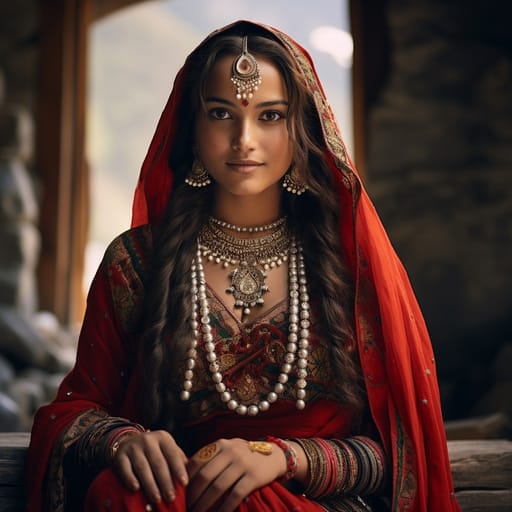
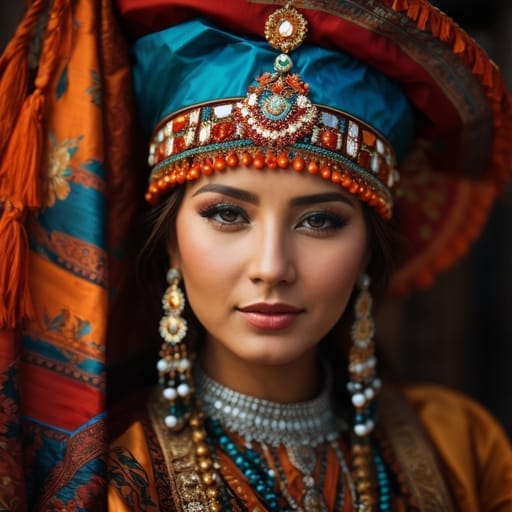
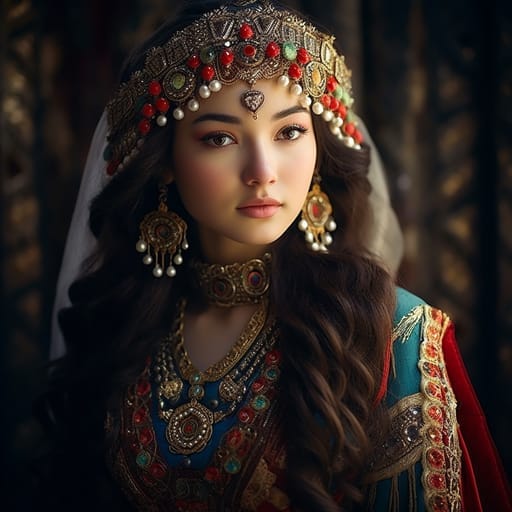
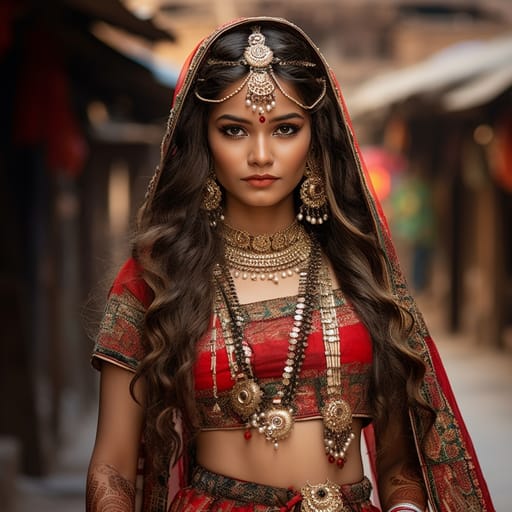
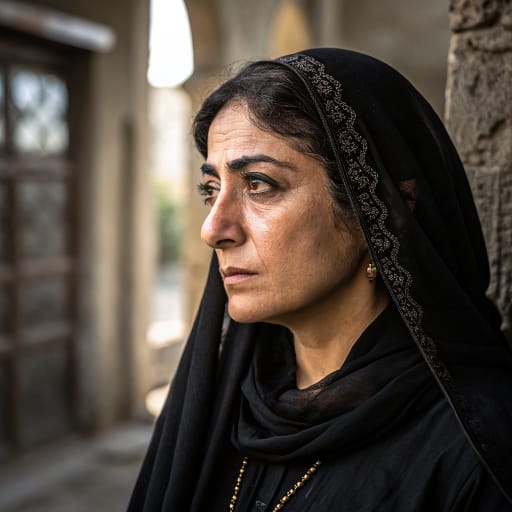
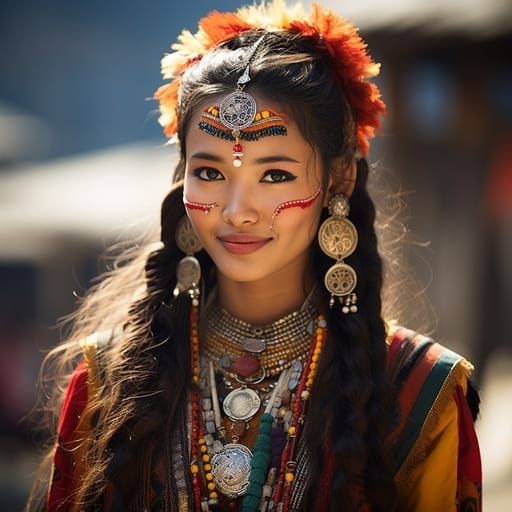
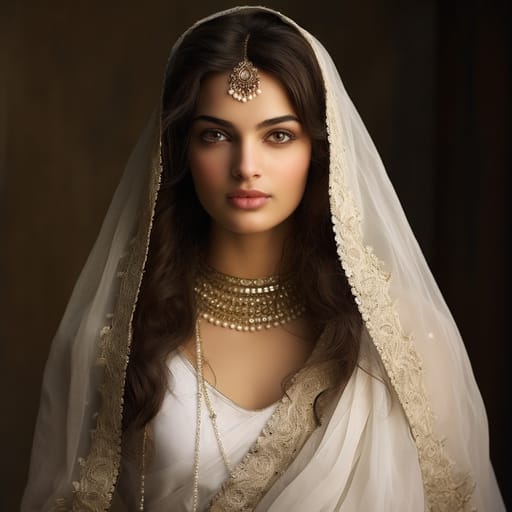
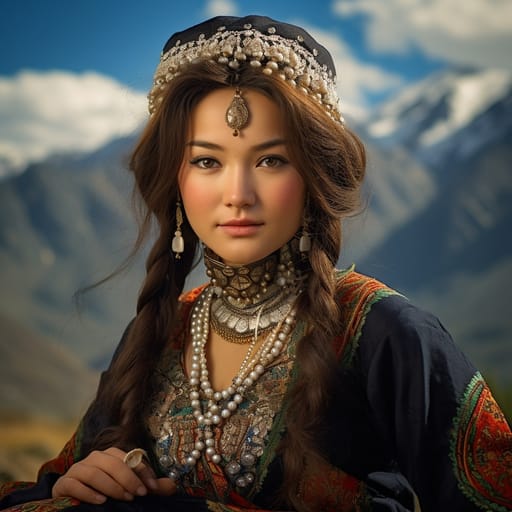
Typical Rajputs Phenotypes
Reference for AI generation: hair, eyes, skin, facial structure, build
Rajputs Body & Anatomy Reference
Per-feature anatomical profile for AI nude generation: Indo-Aryan / Dravidian South Asian phenotype
Rajputs Boobs & Breasts
Bust reference for Rajputs women: medium-to-large cup, moderate-to-full projection, which is typical of Indo-Aryan / Dravidian South Asian ancestry. Areolas measure about 32-46mm across, with medium-brown to dark-brown pigmentation. Body type (endomorph-to-mesomorph with fuller hip deposition) shapes the bust as well, so Rajputs tits are usually full and soft, generally fuller than the East Asian norm. In AI imagery, keep the forward-set shape rather than drifting toward the smaller East Asian bust profile.
Rajputs Ass & Hips
The Rajputs ass is typically medium-to-full, moderate-to-high projection, classic curvy hip profile, which sets it apart from the slim hip profile of East Asian women. Underneath, the pelvis shows medium-to-wide iliac crests, full gluteal-femoral fat distribution, part of the Indo-Aryan / Dravidian South Asian skeletal pattern. For Rajputs butt pics and AI renders, match that silhouette and the overall build (endomorph-to-mesomorph with fuller hip deposition).
Rajputs Vagina & Pussy
Rajputs pussy and vulvar anatomy presents medium-brown to dark-brown labial pigmentation, fuller labia minora projection, consistent with the Indo-Aryan / Dravidian South Asian phenotype's pigmentation pattern. Rajputs pubic hair is typically straight-to-wavy coarse texture, dense distribution, in the inverted-triangle pattern. For anatomically accurate Rajputs pussy renders the labial coloration should match the surrounding wheatish to brown skin tone with a continuous gradient, and the hair should keep its straight-to-wavy coarse texture.
Rajputs Dicks & Penis
Rajputs dicks follow the Indo-Aryan / Dravidian South Asian reference data: regional mean ~13cm erect; moderate girth; medium-brown shaft pigmentation. Shaft color should track the wheatish to brown skin tone with a smooth change toward the glans, and Rajputs pubic hair keeps its straight-to-wavy coarse texture.
Rajputs Body, Curves & Build
Rajputs body type and overall build presents as endomorph-to-mesomorph with fuller hip deposition, with mean adult female BMI 22-25: the characteristic Indo-Aryan / Dravidian South Asian habitus. Rajputs curves and proportions should keep the regional skeletal frame (height, shoulder-to-hip ratio, limb proportions) rather than a generic mesomorph default.
Rajputs Skin Tone & Hair Texture
Rajputs skin sits in the wheatish to brown (Fitzpatrick III-V) band. Hair is typically straight-to-wavy 1A-2B, dense, dark-brown to black, in keeping with the Indo-Aryan / Dravidian South Asian phenotype. In nude renders the skin should stay one even tone from face to body, and body, pubic and head hair should match.
Explore phenotype categories
Structured taxonomy with peer-reviewed scales · 22 anatomical categories
Erotic Poses & Sex Positions
From the pose catalog: 219 named positions with reference skeletons
Frequently asked questions about Rajputs people
Where is the Rajputs homeland?
The Rajputs homeland is Rajasthan and the plains and hills of northern and western India (Uttar Pradesh, Bihar, Gujarat, Madhya Pradesh, Himachal Pradesh, Haryana, Jammu); Punjab and Sindh in Pakistan; parts of Nepal. in Southern Asia.
What language do Rajputs people speak?
Rajputs people primarily speak No single language: Rajasthani languages such as Marwari and Mewari, Hindi, Awadhi, Bhojpuri, Gujarati, Punjabi, Sindhi, Dogri and other Pahari languages, Nepali (all Indo-Aryan, Indo-European)..
What religion do Rajputs people practice?
The predominant religion among Rajputs people is Predominantly Hindu, with strong clan goddess (kuldevi) worship; large Muslim Rajput communities, mainly in Pakistan; some Sikhs..






Make your own Rajputs images
Five a day, free, no credits to buy. The studio starts from this group's phenotype data, so you can set body type, pose and style and keep the traits accurate.
Start with Rajputs