No portrait yet
Querandí Erotic
The pampas and river margins around the Río de la Plata, in present-day Buenos Aires Province and neighboring areas of Argentina
Querandí (unclassified; extinct and known from only a few words, sometimes linked to the Het languages)
Traditional Indigenous beliefs, almost entirely unrecorded by Spanish observers
Pampas hunter-gatherers; sometimes linked to the Het peoples of the pampas, though the connection is uncertain
About Querandí People
The Querandí were hunter-gatherers who lived on the pampas along the Río de la Plata, in what is now Buenos Aires Province, Argentina, until the Spanish arrived in the 1530s. After that, war, disease and forced labor broke them apart. By the eighteenth century their survivors had been absorbed into other Pampas peoples and the rural mestizo population. They left no written record of their own, but they nearly killed one of South America's great cities at birth.
They followed the seasons between open grassland and the edges of the rivers. They hunted guanaco, pampas deer and rhea, fished the estuary and dug roots. Their signature weapon was the boleadora: stones tied to cords and thrown to tangle an animal's legs. They also used bows and arrows. Ulrich Schmidl, a German soldier who came with the Spanish, wrote that when water ran short on the plains they drank the blood of the animals they killed. The name that stuck came from outsiders and is commonly traced to a Guaraní word for grease or fat. Nobody recorded what they called themselves. Their language survives only as a handful of words, too few to classify with confidence, though some scholars link it to the Het languages of the pampas. The Spanish wrote down almost nothing about their beliefs.
The turning point came in 1536, when Pedro de Mendoza founded the first Buenos Aires. At first the Querandí brought fish and meat to the newcomers. Within weeks that arrangement fell apart, and the fighting that followed cost the Spanish dearly. Mendoza's brother Diego died in battle against them, and the settlement, starving and under attack, was abandoned by 1541. When Juan de Garay founded the city again in 1580, the Querandí resisted again. This time the odds were worse. Epidemics, forced labor and the spread of horses and cattle across the grasslands wore them down as a separate people over the next century.
Their legacy is quieter than their story. The boleadora outlived them and became a standard tool of the gauchos who later worked the same plains. Their clash with Mendoza stands at the opening of Buenos Aires's history. Their descendants live on, mostly unseen, in the mixed rural population of the region. They show how a people can disappear from the records without disappearing from the bloodlines.
Related ethnic groups
Groups that share Querandí's homeland, region, language, or religious tradition. These are likely candidates for comparative phenotype reference.
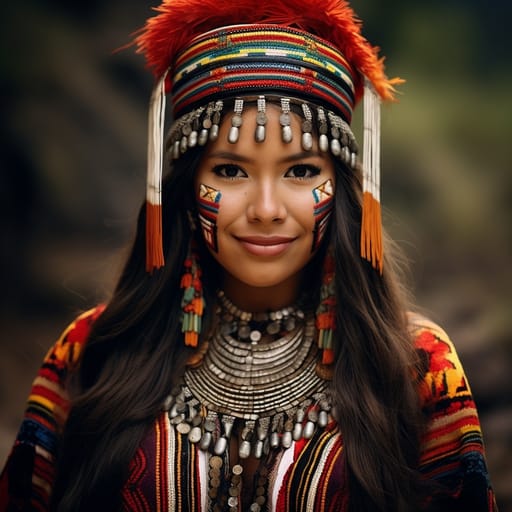
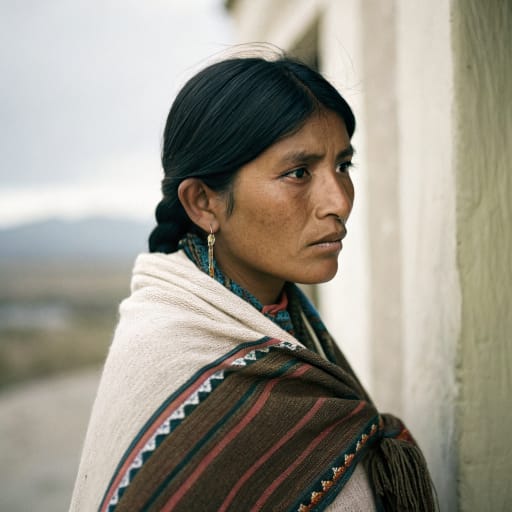
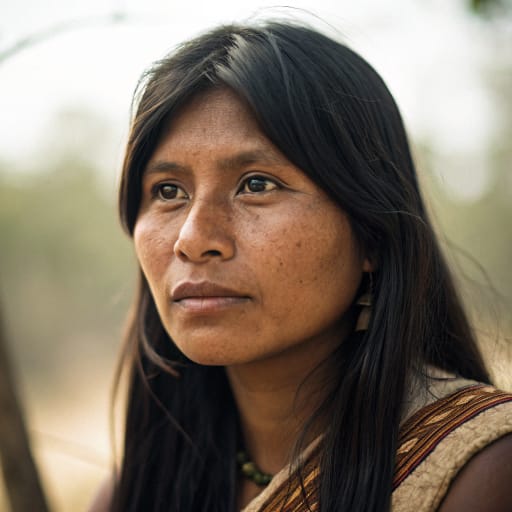
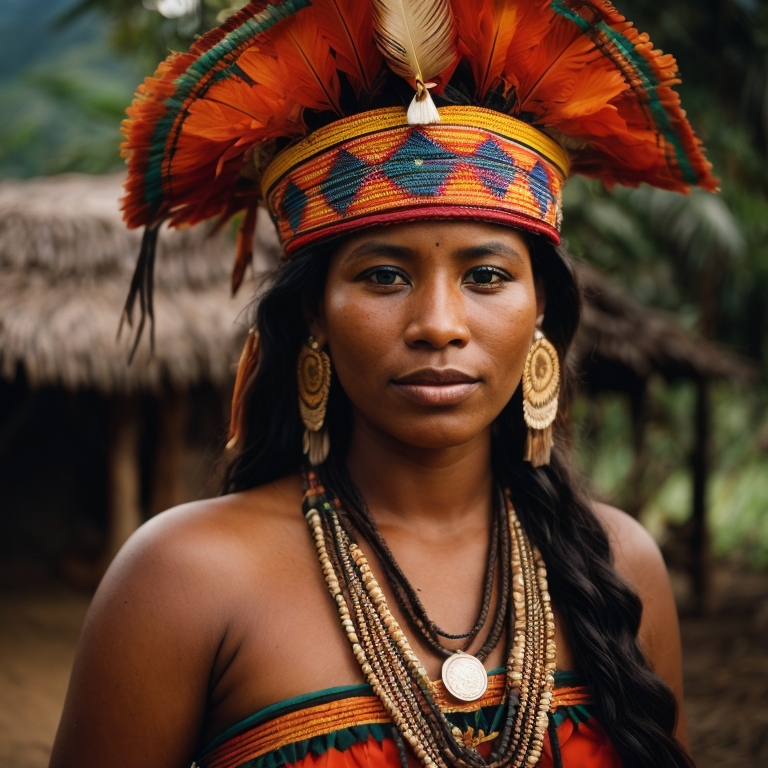
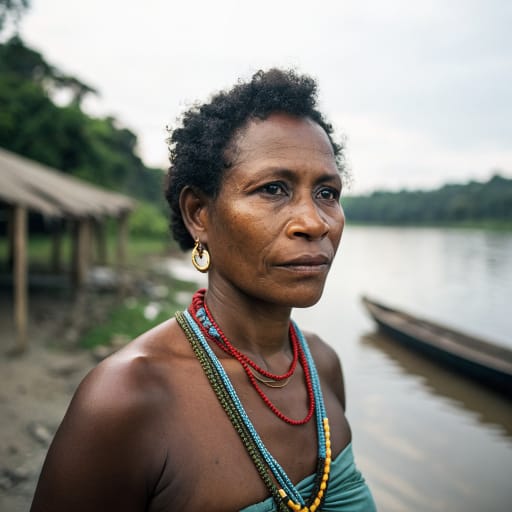
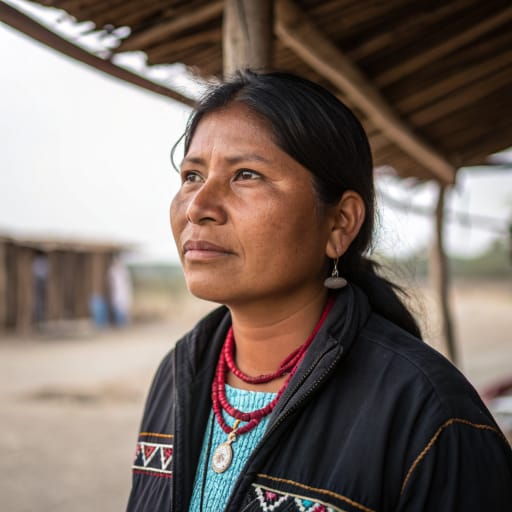
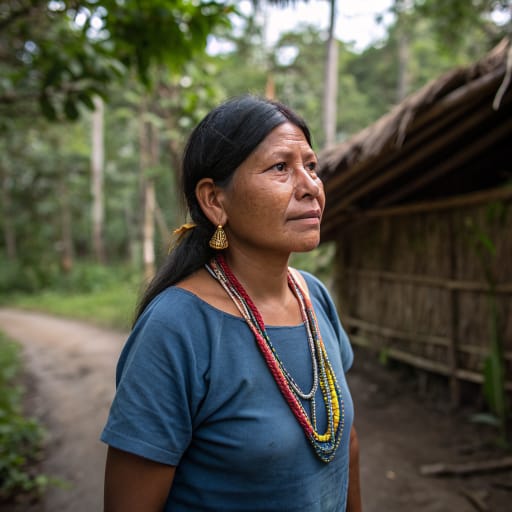
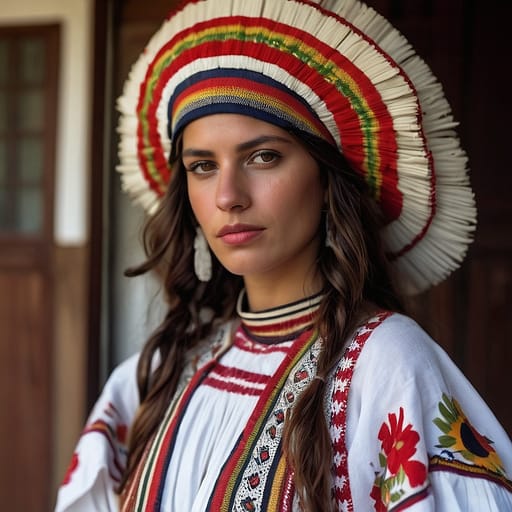
Typical Querandí Phenotypes
Reference for AI generation: hair, eyes, skin, facial structure, build
Querandí Body & Anatomy Reference
South American Indigenous / European-Mestizo / Afro-Latino mix phenotype: anatomy reference for AI nude generation
Querandí Boobs & Breasts
Bust reference for Querandí women: medium-to-large cup, full, high projection, which is typical of South American Indigenous / European-Mestizo / Afro-Latino mix ancestry. Areolas measure about 32-46mm across, with medium-brown to dark-brown pigmentation. Body type (endomorph-to-mesomorph with high gluteal-femoral deposition) shapes the bust as well, so Querandí tits are usually the classic Brazilian / Latina curvy bust profile in lowland populations; smaller and shorter-set in Andean Indigenous populations. In AI imagery, keep the forward-set shape rather than drifting toward the smaller bust profile of Andean Indigenous sub-populations.
Querandí Ass & Hips
The Querandí ass is typically full, high projection, the famous Brazilian / Latina bunda profile, which sets it apart from the slim narrow-hip East Asian profile. Underneath, the pelvis shows wide iliac crests, very full gluteal-femoral fat deposition (the hallmark Brazilian / Latina hip-to-waist ratio), part of the South American Indigenous / European-Mestizo / Afro-Latino mix skeletal pattern. For Querandí butt pics and AI renders, match that silhouette and the overall build (endomorph-to-mesomorph with high gluteal-femoral deposition).
Querandí Vagina & Pussy
Querandí pussy and vulvar anatomy presents medium-brown to dark-brown labial pigmentation, fuller labia minora, consistent with the South American Indigenous / European-Mestizo / Afro-Latino mix phenotype's pigmentation pattern. Querandí pubic hair is typically wavy-to-curly coarse dark texture, dense distribution, in the inverted-triangle pattern. For anatomically accurate Querandí pussy renders the labial coloration should match the surrounding tan to deep-brown skin tone with a continuous gradient, and the hair should keep its wavy-to-curly coarse dark texture.
Querandí Dicks & Penis
Querandí dicks follow the South American Indigenous / European-Mestizo / Afro-Latino mix reference data: regional mean ~13cm erect; moderate-to-above-average girth; medium-brown shaft pigmentation. Shaft color should track the tan to deep-brown skin tone with a smooth change toward the glans, and Querandí pubic hair keeps its wavy-to-curly coarse dark texture.
Querandí Body, Curves & Build
Querandí body type and overall build presents as endomorph-to-mesomorph with high gluteal-femoral deposition, with mean adult female BMI 25-28: the characteristic South American Indigenous / European-Mestizo / Afro-Latino mix habitus. Querandí curves and proportions should keep the regional skeletal frame (height, shoulder-to-hip ratio, limb proportions) rather than a generic mesomorph default.
Querandí Skin Tone & Hair Texture
Querandí skin sits in the tan to deep-brown (Fitzpatrick III-VI) band. Hair is typically straight-to-curly 1A-3C, varies widely by ancestral composition, in keeping with the South American Indigenous / European-Mestizo / Afro-Latino mix phenotype. In nude renders the skin should stay one even tone from face to body, and body, pubic and head hair should match.
Explore phenotype categories
Structured taxonomy with peer-reviewed scales · 22 anatomical categories
Erotic Poses & Sex Positions
From the pose catalog: 219 named positions with reference skeletons
Frequently asked questions about Querandí people
Where is the Querandí homeland?
The Querandí homeland is The pampas and river margins around the Río de la Plata, in present-day Buenos Aires Province and neighboring areas of Argentina in South America.
What language do Querandí people speak?
Querandí people primarily speak Querandí (unclassified; extinct and known from only a few words, sometimes linked to the Het languages).
What religion do Querandí people practice?
The predominant religion among Querandí people is Traditional Indigenous beliefs, almost entirely unrecorded by Spanish observers.






Make your own Querandí images
Five a day, free, no credits to buy. The studio starts from this group's phenotype data, so you can set body type, pose and style and keep the traits accurate.
Start with Querandí