No portrait yet
Prussian Lithuanians Erotic
Lithuania Minor in former East Prussia: today the Klaipėda region of Lithuania and the northern Kaliningrad Oblast of Russia. Most descendants now live in Germany.
Lithuanian, western Aukštaitian and Samogitian dialects (Baltic, Indo-European); German, widely bilingual and later dominant
Evangelical Lutheran, with a strong lay pietist movement (surinkimininkai)
A regional branch of the Lithuanians, within the Baltic peoples. It includes the Memellanders of the Klaipėda region and the Lietuvininkai of the Tilsit, Ragnit and Gumbinnen districts.
About Prussian Lithuanians People
Prussian Lithuanians, who called themselves lietuvininkai, were Lithuanian speakers who spent centuries on the Prussian side of a border. They were subjects of a German Protestant state, never of the Polish-Lithuanian Commonwealth or, later, the Russian Empire. They shared a language with the Lithuanians across that line, but nearly everything built around the language was different. They were Lutheran, not Catholic. Their church wanted scripture read in the mother tongue, and they were loyal to the Prussian crown. Their homeland, Lithuania Minor (Mažoji Lietuva, or Kleinlitauen in German), ran along the lower Nemunas and the Curonian Lagoon. It took in Memel, Tilsit and Ragnit and the farm country south toward Insterburg and Gumbinnen. Today that land is split between Lithuania's Klaipėda region and Russia's Kaliningrad Oblast.
That position made them the unlikely engine of Lithuanian writing. The first book printed in Lithuanian, Martynas Mažvydas's catechism, came off a Königsberg press in 1547. For the next two centuries Lutheran clergy turned out hymnals, sermons and Bible translations for country parishes. Kristijonas Donelaitis, a pastor in the village of Tolminkiemis, wrote Metai (The Seasons), a long poem about the peasant year that remains a cornerstone of Lithuanian literature. From 1864 to 1904 the Russian Empire banned Lithuanian printed in the Latin alphabet. During those years, presses in Tilsit and nearby towns printed the books and newspapers that smugglers carried over the border.
Faith ran through ordinary life. In the nineteenth century a pietist movement, the surinkimininkai, met for prayer in farmhouses under lay preachers. It kept Lithuanian alive as the language of hymns and devotion while schools and military service pulled the young toward German. Village cemeteries held krikštai, flat wooden grave markers carved with stylized plant and bird motifs, a form quite unlike the crosses of Catholic Lithuania.
The twentieth century broke the community apart. After the First World War, the Memel territory was split off from Germany, and Lithuania took it over in 1923. Many locals resisted the new arrangement: they called themselves Memellanders and voted for German parties. Germany took the region back in 1939. In 1944 and 1945 most of the population fled the Red Army or was expelled soon after, and Soviet settlers filled the emptied villages. Many of those who stayed in the Klaipėda region later left for West Germany. What remains lives mostly in family memory, in the German diaspora and in the books they printed for a nation next door.
Related ethnic groups
Groups that share Prussian Lithuanians's homeland, region, language, or religious tradition. These are likely candidates for comparative phenotype reference.
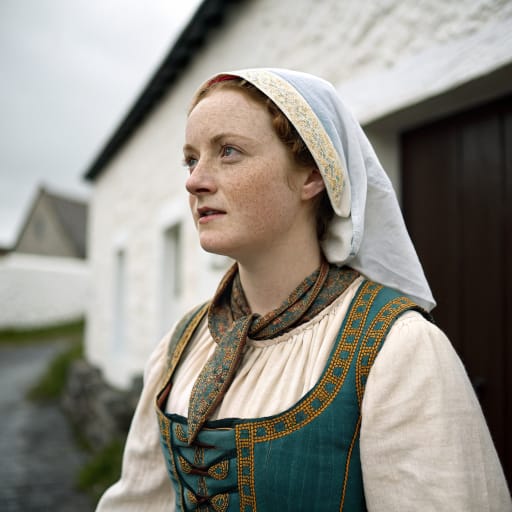
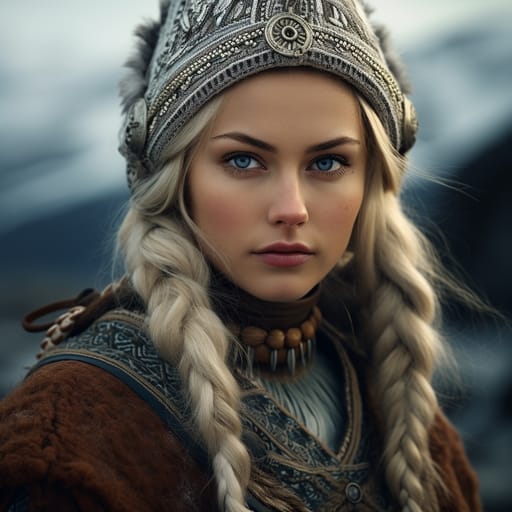
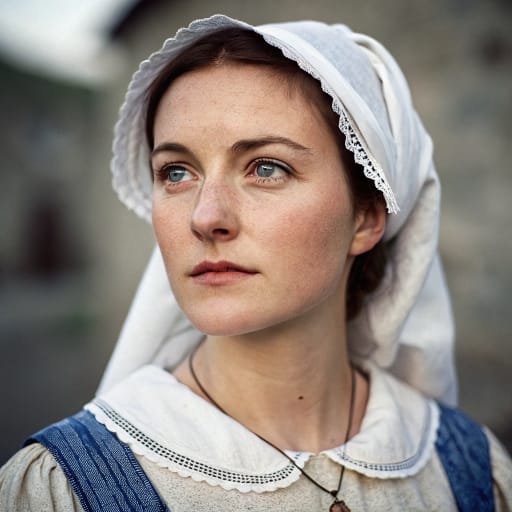
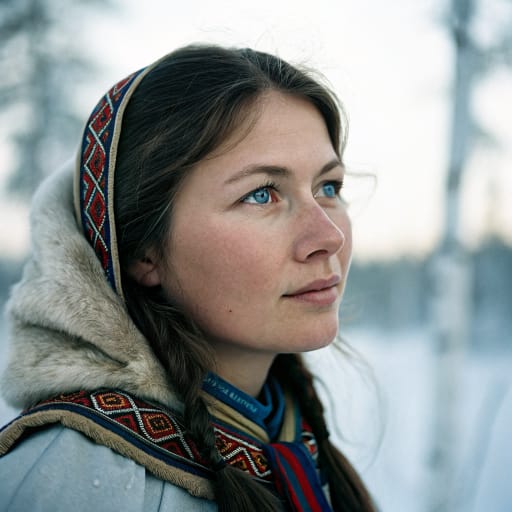
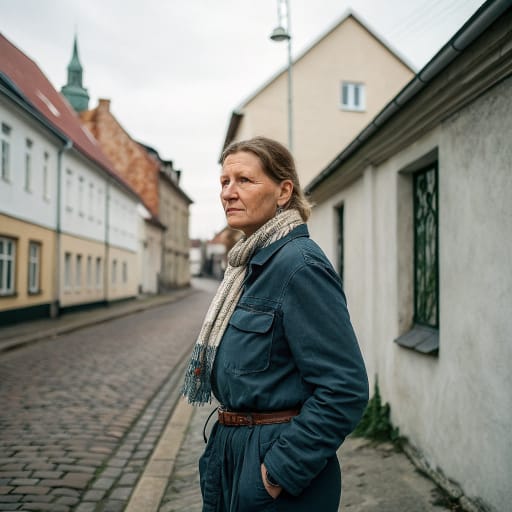
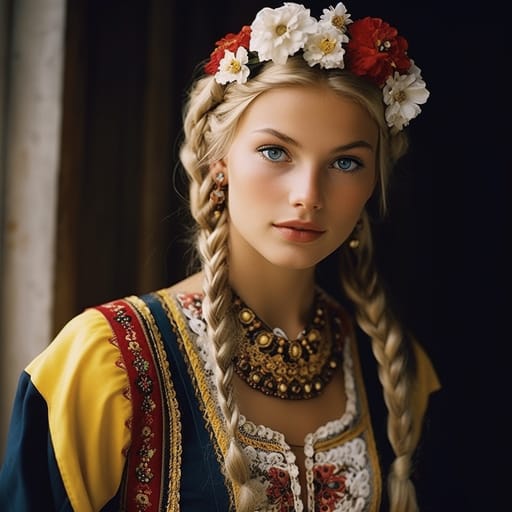
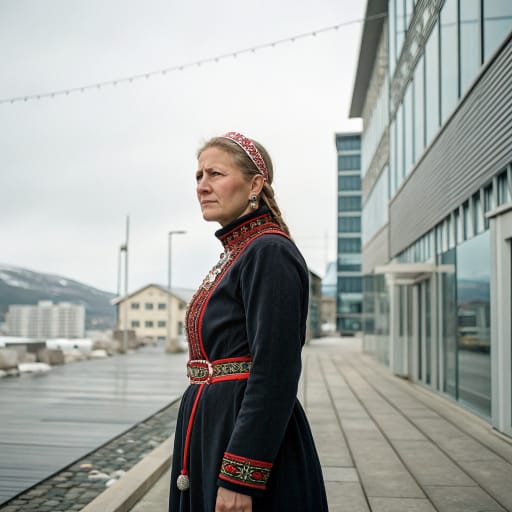
Typical Prussian Lithuanians Phenotypes
Reference for AI generation: hair, eyes, skin, facial structure, build
Prussian Lithuanians Body & Anatomy Reference
Anatomy by feature, Northern European / Germanic-Scandinavian phenotype
Prussian Lithuanians Boobs & Breasts
Bust reference for Prussian Lithuanians women: medium-to-large cup, full, high projection, which is typical of Northern European / Germanic-Scandinavian ancestry. Areolas measure about 32-48mm across, with light-pink to medium-pink pigmentation. Body type (mesomorph with taller stature; ectomorph-to-mesomorph split) shapes the bust as well, so Prussian Lithuanians tits are usually full and projecting, often the largest cup-size band in regional comparisons. In AI imagery, keep the forward-set shape rather than drifting toward the smaller East Asian bust.
Prussian Lithuanians Ass & Hips
The Prussian Lithuanians ass is typically medium-to-full, moderate-to-high projection, which sets it apart from the slim East Asian narrow-hip profile. Underneath, the pelvis shows medium-to-wide iliac crests, part of the Northern European / Germanic-Scandinavian skeletal pattern. For Prussian Lithuanians butt pics and AI renders, match that silhouette and the overall build (mesomorph with taller stature; ectomorph-to-mesomorph split).
Prussian Lithuanians Vagina & Pussy
Prussian Lithuanians pussy and vulvar anatomy presents light-pink to medium-pink labial pigmentation, varied labia minora projection, consistent with the Northern European / Germanic-Scandinavian phenotype's pigmentation pattern. Prussian Lithuanians pubic hair is typically fine-to-medium wavy texture, often lighter-pigmented (blond to dark-brown), in the inverted-triangle pattern. For anatomically accurate Prussian Lithuanians pussy renders the labial coloration should match the surrounding fair skin tone with a continuous gradient, and the hair should keep its fine-to-medium wavy texture.
Prussian Lithuanians Dicks & Penis
Prussian Lithuanians dicks follow the Northern European / Germanic-Scandinavian reference data: regional mean ~13-14cm erect; moderate-to-above-average girth; light-pink to light-brown shaft pigmentation. Shaft color should track the fair skin tone with a smooth change toward the glans, and Prussian Lithuanians pubic hair keeps its fine-to-medium wavy texture.
Prussian Lithuanians Body, Curves & Build
Prussian Lithuanians body type and overall build presents as mesomorph with taller stature; ectomorph-to-mesomorph split, with mean adult female BMI 24-27: the characteristic Northern European / Germanic-Scandinavian habitus. Prussian Lithuanians curves and proportions should keep the regional skeletal frame (height, shoulder-to-hip ratio, limb proportions) rather than a generic mesomorph default.
Prussian Lithuanians Skin Tone & Hair Texture
Prussian Lithuanians skin sits in the fair (Fitzpatrick I-III) band. Hair is typically straight-to-wavy 1A-2B, blond to medium-brown common, in keeping with the Northern European / Germanic-Scandinavian phenotype. In nude renders the skin should stay one even tone from face to body, and body, pubic and head hair should match.
Explore phenotype categories
Structured taxonomy with peer-reviewed scales · 22 anatomical categories
Erotic Poses & Sex Positions
From the pose catalog: 219 named positions with reference skeletons
Frequently asked questions about Prussian Lithuanians people
Where is the Prussian Lithuanians homeland?
The Prussian Lithuanians homeland is Lithuania Minor in former East Prussia: today the Klaipėda region of Lithuania and the northern Kaliningrad Oblast of Russia. Most descendants now live in Germany. in Northern Europe.
What language do Prussian Lithuanians people speak?
Prussian Lithuanians people primarily speak Lithuanian, western Aukštaitian and Samogitian dialects (Baltic, Indo-European); German, widely bilingual and later dominant.
What religion do Prussian Lithuanians people practice?
The predominant religion among Prussian Lithuanians people is Evangelical Lutheran, with a strong lay pietist movement (surinkimininkai).






Make your own Prussian Lithuanians images
Five a day, free, no credits to buy. The studio starts from this group's phenotype data, so you can set body type, pose and style and keep the traits accurate.
Start with Prussian Lithuanians