No portrait yet
Pemon Erotic
Gran Sabana and Canaima region of Bolívar state in southeastern Venezuela, extending into Roraima state, Brazil, and western Guyana
Pemon (Cariban), with Arekuna, Kamarakoto and Taurepan dialects; Spanish, Portuguese or English also spoken depending on country
Mostly Catholic, with Seventh-day Adventist villages; belief in mountain spirits and healing incantations persists alongside both
Arekuna, Kamarakoto and Taurepan (Taurepang); closely related to the Kapon peoples (Akawaio, Patamona) within the Cariban-speaking family
About Pemon People
Pemon means "people," and it is the name the Carib-speaking villagers of the Gran Sabana use for themselves. Their country is the high savanna and forest of southeastern Venezuela, where sheer tepuis rise out of the grassland, and it crosses the borders into Brazil's Roraima state and a corner of Guyana. Anyone who has seen photos of Angel Falls, which the Pemon call Kerepakupai Merú, or of hikers on Roraima has seen Pemon land, and often a Pemon guide, cook or boat pilot. There are three branches, each with its own dialect and territory: Kamarakoto around the Kamarata valley and Canaima, Taurepan in the south toward Brazil, and Arekuna across much of the rest. Their language is Cariban and so close to Kapon, spoken by the Akawaio and Patamona in Guyana, that linguists often treat the two as one cluster. Nearly everyone on the Venezuelan side now also speaks Spanish, and on the Brazilian side Portuguese.
Village life still turns on the conuco, the cleared forest plot of bitter cassava that gets grated, squeezed dry in a woven press and baked into flat casabe bread. Each community elects a capitán, and groups of villages answer to a capitán general. Capuchin missions founded from the 1930s at Santa Elena de Uairén, Kavanayén and Kamarata made many Pemon Catholic. Other villages became Seventh-day Adventist and gave up kachiri, the fermented cassava drink served on communal work days. Neither church wiped out what came before. The tepuis are still homes of the mawari spirits. People still blame sudden death on kanaima, a figure of secret vengeance killing. And taren, spoken incantations, are still recited to heal and protect. The trickster hero Makunaima, whose stories the German ethnographer Theodor Koch-Grünberg wrote down before World War I, became the raw material for Mário de Andrade's 1928 Brazilian novel Macunaíma.
The modern story is mostly about land. Diamond and gold miners have worked Pemon rivers for generations, and many Pemon now mine too. Around 2000, communities knocked down towers of a power line being built across the Gran Sabana to Brazil. In February 2019, during the standoff over humanitarian aid at the border, soldiers opened fire on Pemon in Kumarakapay and Santa Elena. Several people were killed and hundreds fled into Brazil. The Pemon have answered by organizing: they run their own territorial guard, keep pressing for collective land titles and hold a firm grip on tourism in Canaima National Park.
Related ethnic groups
Groups that share Pemon's homeland, region, language, or religious tradition. These are likely candidates for comparative phenotype reference.
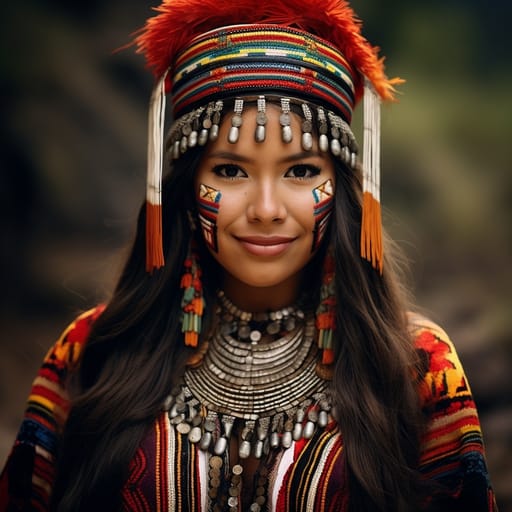
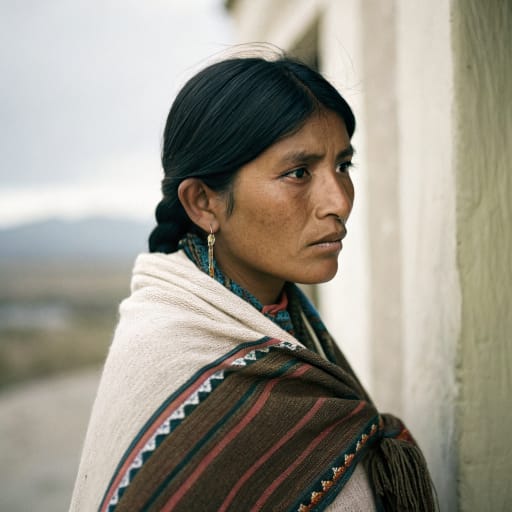
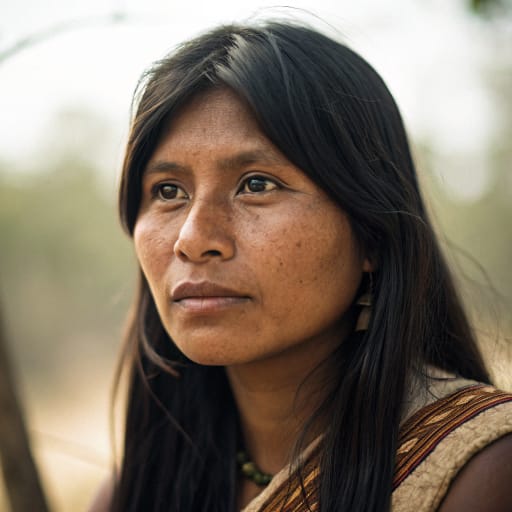
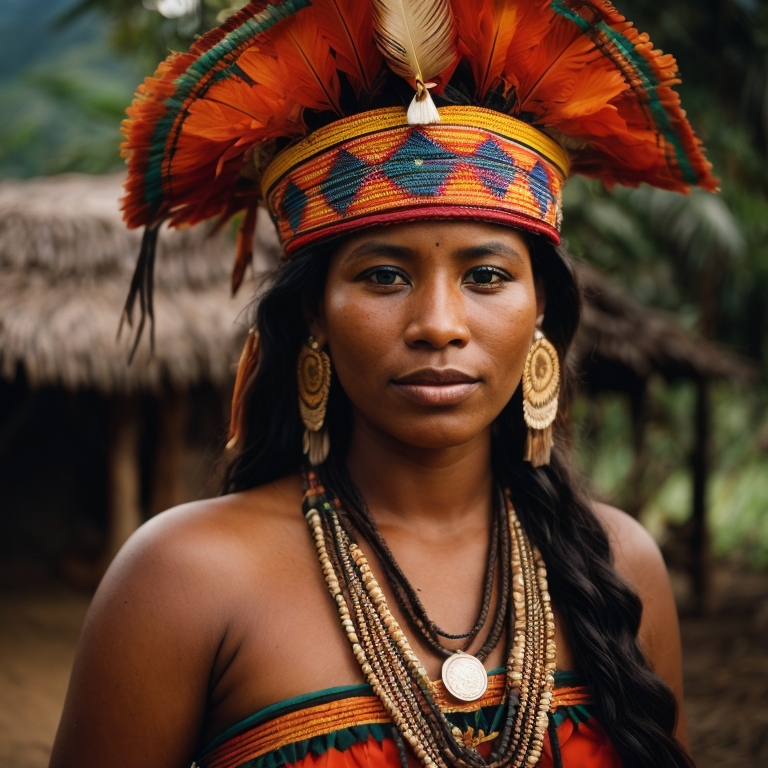
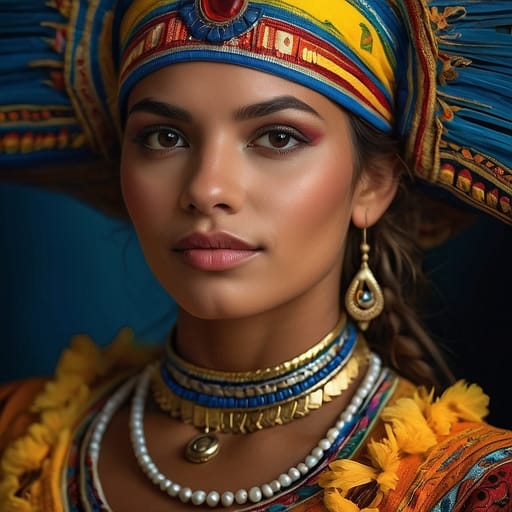
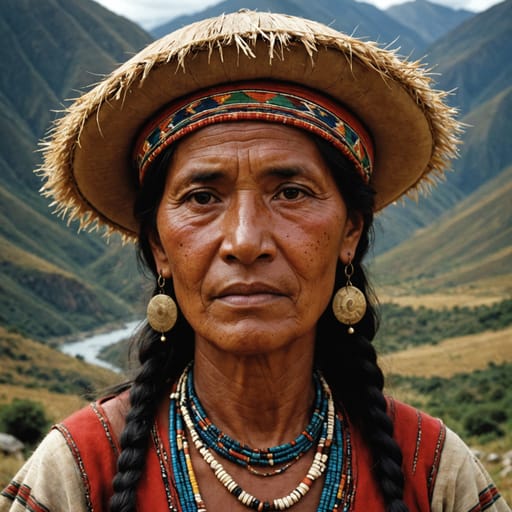
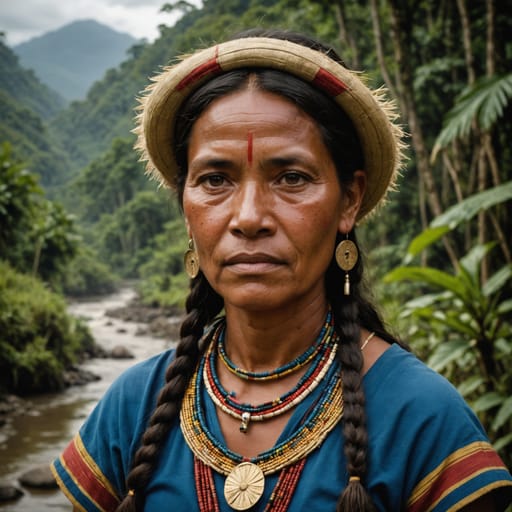
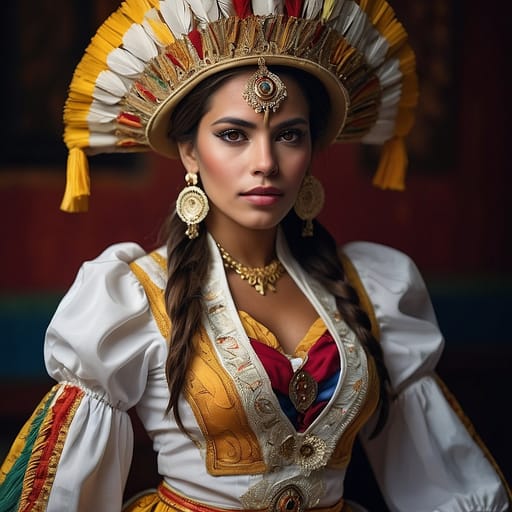
Typical Pemon Phenotypes
Reference for AI generation: hair, eyes, skin, facial structure, build
Pemon Body & Anatomy Reference
South American Indigenous / European-Mestizo / Afro-Latino mix phenotype: anatomy reference for AI nude generation
Pemon Boobs & Breasts
Bust reference for Pemon women: medium-to-large cup, full, high projection, which is typical of South American Indigenous / European-Mestizo / Afro-Latino mix ancestry. Areolas measure about 32-46mm across, with medium-brown to dark-brown pigmentation. Body type (endomorph-to-mesomorph with high gluteal-femoral deposition) shapes the bust as well, so Pemon tits are usually the classic Brazilian / Latina curvy bust profile in lowland populations; smaller and shorter-set in Andean Indigenous populations. In AI imagery, keep the forward-set shape rather than drifting toward the smaller bust profile of Andean Indigenous sub-populations.
Pemon Ass & Hips
The Pemon ass is typically full, high projection, the famous Brazilian / Latina bunda profile, which sets it apart from the slim narrow-hip East Asian profile. Underneath, the pelvis shows wide iliac crests, very full gluteal-femoral fat deposition (the hallmark Brazilian / Latina hip-to-waist ratio), part of the South American Indigenous / European-Mestizo / Afro-Latino mix skeletal pattern. For Pemon butt pics and AI renders, match that silhouette and the overall build (endomorph-to-mesomorph with high gluteal-femoral deposition).
Pemon Vagina & Pussy
Pemon pussy and vulvar anatomy presents medium-brown to dark-brown labial pigmentation, fuller labia minora, consistent with the South American Indigenous / European-Mestizo / Afro-Latino mix phenotype's pigmentation pattern. Pemon pubic hair is typically wavy-to-curly coarse dark texture, dense distribution, in the inverted-triangle pattern. For anatomically accurate Pemon pussy renders the labial coloration should match the surrounding tan to deep-brown skin tone with a continuous gradient, and the hair should keep its wavy-to-curly coarse dark texture.
Pemon Dicks & Penis
Pemon dicks follow the South American Indigenous / European-Mestizo / Afro-Latino mix reference data: regional mean ~13cm erect; moderate-to-above-average girth; medium-brown shaft pigmentation. Shaft color should track the tan to deep-brown skin tone with a smooth change toward the glans, and Pemon pubic hair keeps its wavy-to-curly coarse dark texture.
Pemon Body, Curves & Build
Pemon body type and overall build presents as endomorph-to-mesomorph with high gluteal-femoral deposition, with mean adult female BMI 25-28: the characteristic South American Indigenous / European-Mestizo / Afro-Latino mix habitus. Pemon curves and proportions should keep the regional skeletal frame (height, shoulder-to-hip ratio, limb proportions) rather than a generic mesomorph default.
Pemon Skin Tone & Hair Texture
Pemon skin sits in the tan to deep-brown (Fitzpatrick III-VI) band. Hair is typically straight-to-curly 1A-3C, varies widely by ancestral composition, in keeping with the South American Indigenous / European-Mestizo / Afro-Latino mix phenotype. In nude renders the skin should stay one even tone from face to body, and body, pubic and head hair should match.
Explore phenotype categories
Structured taxonomy with peer-reviewed scales · 22 anatomical categories
Erotic Poses & Sex Positions
From the pose catalog: 219 named positions with reference skeletons
Frequently asked questions about Pemon people
Where is the Pemon homeland?
The Pemon homeland is Gran Sabana and Canaima region of Bolívar state in southeastern Venezuela, extending into Roraima state, Brazil, and western Guyana in South America.
What language do Pemon people speak?
Pemon people primarily speak Pemon (Cariban), with Arekuna, Kamarakoto and Taurepan dialects; Spanish, Portuguese or English also spoken depending on country.
What religion do Pemon people practice?
The predominant religion among Pemon people is Mostly Catholic, with Seventh-day Adventist villages; belief in mountain spirits and healing incantations persists alongside both.






Make your own Pemon images
Five a day, free, no credits to buy. The studio starts from this group's phenotype data, so you can set body type, pose and style and keep the traits accurate.
Start with Pemon